Electronic components and printed circuit boards (PCBs) can be sensitive to contamination. This, in turn, may bring about reduced performance, intermittent faults, corrosion, or even the complete failure of affected equipment.
Using a suitable electronic cleaner spray can help maintenance teams remove certain contaminants safely, as long as the chosen cleaner is compatible with the components and materials involved.
However, it might not always be immediately obvious whether a given device or machine has become contaminated, or what consequences this might have.
Here, then, are some of the most frequently occurring contaminants that can impact on electronic equipment, along with their typical sources and effects.
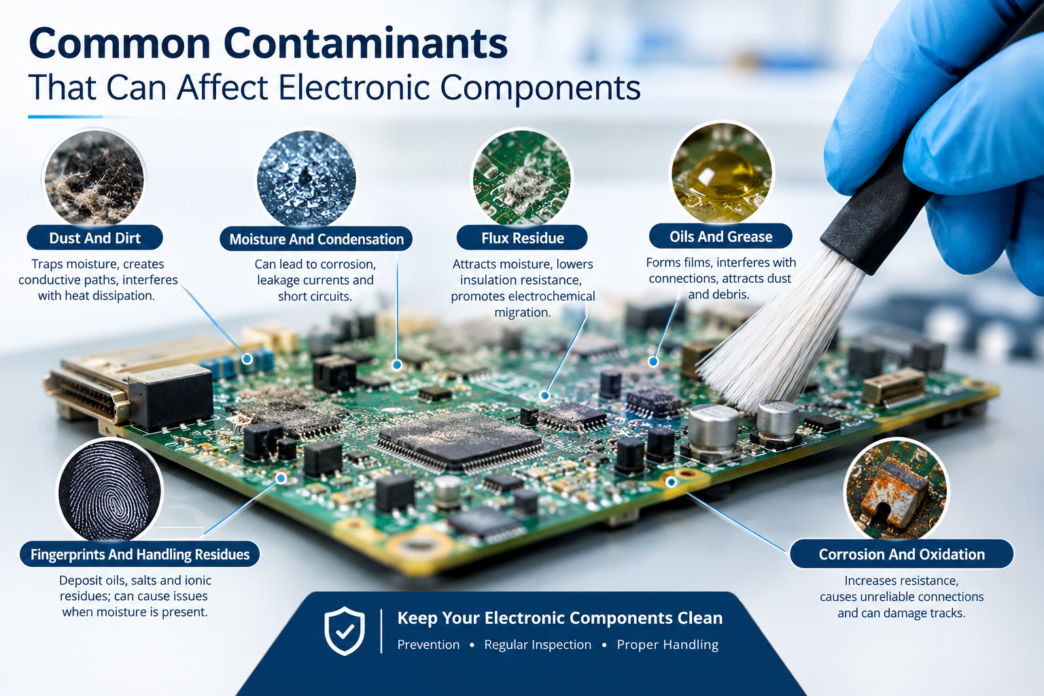
- Dust And Dirt
Whether during manufacturing, storage, or other everyday use, electronic equipment can easily attract dust, fibres, skin flakes, metal particles, and general airborne debris.
Dust might get into machinery through ventilation openings, cooling fans, and other gaps. As it does, it may gradually accumulate on circuit boards and components.
Dust and dirt can trap moisture, create unintended conductive paths, and interfere with heat dissipation. They may even be to blame for short circuits, particularly on densely packed modern boards.
- Moisture And Condensation
Electronic assemblies can be put at significant risk if water and moisture are permitted to take hold. These common contaminants may get into devices and equipment through spills, leaks, high humidity, or condensation caused by temperature changes.
In addition to potentially contributing to corrosion, moisture may allow ionic contaminants on a circuit board to become conductive. As a result, the risk of leakage currents, electrochemical migration, and even short circuits can be heightened.
- Flux Residue
The importance of flux in the soldering process cannot be denied, given how it helps solder flow and bond effectively to metallic surfaces.
However, depending on the type of flux used and the requirements of the application, residues left behind after soldering may need to be removed to prevent contamination-related reliability problems.
A particular issue with some flux residues is their hygroscopic nature, meaning they can attract and absorb moisture from the surrounding environment.
In the presence of humidity, then, such residues can lower surface insulation resistance, promote electrochemical migration, and lead to leakage currents or dendritic growth between closely spaced tracks.
- Oils And Grease
Whether they find their way into electronic equipment through handling, maintenance activities, or contamination in the wider environment, there’s no question that oils and greases can present major issues for such devices.
These substances can form films over components and contacts. From there, they may interfere with electrical connections or attract dust and other debris.
- Fingerprints And Handling Residues
Even “just” the day-to-day handling of electronic assemblies can lead to them becoming contaminated. Fingerprints alone can deposit oils, salts, and other residues on surfaces.
Many observers might presume that contamination arising this way would be moderate and largely harmless.
However, if moisture is present alongside such ionic residues, this can lead to greater problems. It underlines why good handling practices are crucial when working with sensitive electronic assemblies.
- Corrosion And Oxidation
Metallic surfaces being exposed to moisture, contaminants, or corrosive environments can lead to the development of corrosion and oxidation.
If oxidation or corrosion is allowed to happen on a contact, this can heighten resistance and potentially contribute to unreliable connections. In more severe cases, corrosion can cause damage to conductive tracks or other parts of a circuit board.
Don’t Underestimate the Importance of Keeping Electronic Components Clean
The prevention of contamination is generally preferrable to waiting until it causes a malfunction. Fortunately, contamination levels on electronic components can be reduced through the right combination of regular inspection, appropriate environmental controls, and sound handling practices.
By developing a strong understanding of the various types of contaminants that can impact on electronic components, maintenance teams can help ensure they take a suitably targeted approach to cleaning and preventative maintenance.
Ultimately, keeping boards free of common contaminants can be one of the simplest and most effective ways to drive down the risk of electronics failures.