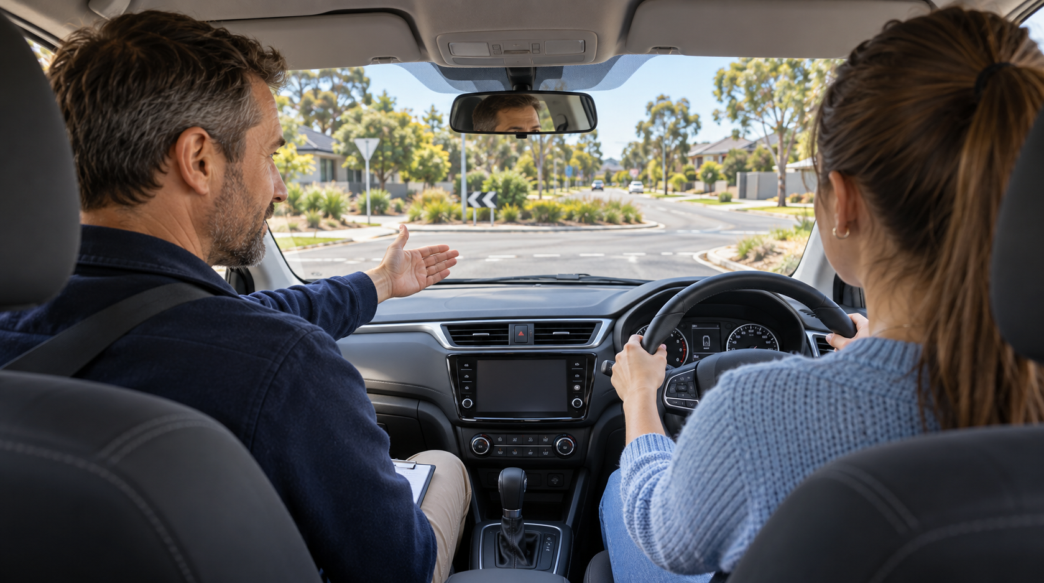
The person sitting beside you can shape how you feel about learning to drive. A patient instructor can help you understand a difficult junction and try again with a clearer plan. An instructor who gives vague directions or rushes through mistakes can leave you unsure what to practise next.
If you are looking for a driving instructor in Pakenham or elsewhere in Cardinia, it helps to compare more than lesson prices. Ask how the instructor teaches, what the lessons include and how they will help you become comfortable on different roads. These questions matter whether you are taking your first lesson or preparing for a drive test.
Check the instructor’s credentials
Before booking, ask whether the instructor holds the current authority or accreditation needed to provide professional driving instruction in Victoria. You can also ask what experience they have teaching someone at your stage of learning. A beginner, a nervous driver and a learner close to a test may each need a different kind of lesson.
Find out which vehicle you will use. Is it automatic or manual? Does it have dual controls? If you plan to use an instructor’s car for your drive test, ask about its availability and the arrangements well before booking the test. You should feel familiar with the vehicle’s controls by the time you sit an assessment.
A professional presentation can make a good first impression, but clear answers to practical questions tell you more. An instructor should be able to explain what you are paying for and how they approach safety during a lesson.
Ask what the first lesson will involve
A useful first lesson starts with your experience. The instructor should ask what you have already practised, which situations worry you and what you want to work toward. Someone who has never moved a car off the kerb needs a different starting point from a learner who drives regularly with a parent.
The lesson should then match your ability. An early session may focus on steering, speed control and observation on quieter streets. A more experienced learner may work on lane changes, roundabouts or driving in heavier traffic. You should not feel pushed onto a road that is beyond your current skill just to fill the hour.
At the end, ask what went well and what needs further practice. Good feedback names a behaviour you can recognise. “Looked for the lane arrow too late” gives you something to work on. “Be more confident” does not explain how to improve.
Look for a clear path from simple to complex roads
Pakenham and the surrounding Cardinia area offer different driving situations, from residential streets to larger connecting roads. Local knowledge can help an instructor choose practice locations that introduce a new challenge at the right time.
Ask how lessons will progress. Will you first practise an intersection with light traffic before attempting a busier one? When will you begin changing lanes or driving on faster roads? How will the instructor decide that you are ready to take on a more difficult task?
There does not need to be a rigid timetable. Learners progress at different speeds. What matters is that each lesson has a purpose and builds on the last one. An instructor should be willing to revisit a skill when you need more practice.
Notice how the instructor responds to mistakes
Everyone makes mistakes while learning. What happens immediately afterward can make a large difference. An effective instructor deals with any immediate safety issue, then explains the mistake calmly and specifically when it is safe to talk.
Suppose you approach a roundabout too quickly and struggle to judge a gap. Useful feedback might focus on slowing earlier, reading the lane markings and watching circulating traffic. The next attempt can take place at a simpler roundabout. Repeating “you need to be more careful” gives you much less help.
You should be able to ask questions without feeling embarrassed. If you did not understand an instruction, say so. A good instructor can explain it another way or demonstrate the manoeuvre. Learning to drive requires honest communication, especially when something feels difficult.
Compare lesson costs properly
An hourly price is only part of the cost. Confirm how long a lesson lasts, whether pickup and drop-off are available in your area, and whether there are extra charges for test-day car use. If you are considering a package, ask about its payment, cancellation and expiry terms before committing.
It is also worth asking whether you can book the same instructor for several lessons. Continuity helps because that person can see your progress and recognise recurring difficulties. If a different instructor is assigned, a clear record of what you have practised can help the next lesson continue from the right point.
The cheapest option is not automatically the best value, and a higher price alone does not guarantee better teaching. Look at what you learn during the session and whether you leave knowing what to practise next.
Connect lessons with supervised driving
A professional lesson can introduce a skill, but suitable practice with an eligible supervisor helps you repeat it. Ask the instructor for one or two goals to take into your next supervised drive. These might be checking mirrors before slowing, choosing a lane earlier or leaving more space behind traffic ahead.
Share that feedback with your supervisor. If everyone uses a similar approach, you are less likely to receive conflicting instructions. Keep practice routes appropriate for your ability, and save detailed discussion for when the car is parked safely.
Not every supervised trip needs to be long or difficult. A short drive with a clear focus can be more useful than an hour in which you repeat familiar roads without thinking about what you are learning.
Be cautious about test promises
Familiarity with the Pakenham East testing area may help an instructor select relevant practice roads. It cannot guarantee a pass or tell you exactly which route and traffic conditions you will face. Be wary of anyone who presents a memorised route as a substitute for learning to make safe decisions independently.
Before booking your drive test, ask for an honest assessment of your readiness. Can you notice signs without prompts, manage your speed, give way correctly and respond calmly if you miss a turn? A mock drive with limited coaching can reveal which skills still need attention.
The right instructor helps you prepare for the test while building habits that will matter afterward. If you are comparing a driving instructor in Pakenham with other options, ask about credentials, lesson structure and feedback. Choose someone who can explain your progress clearly and help you become a safer, more independent driver.