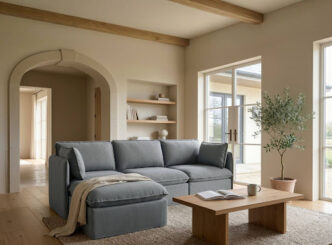
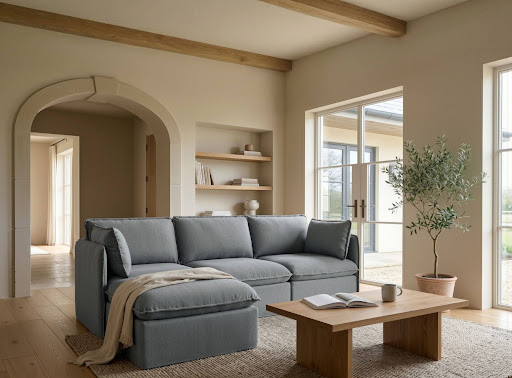
A sofa in a home with children or pets is not the same object it is in a showroom. It absorbs spills, endures daily use, and collects the marks of a household in motion. For many consumers, that reality creates a familiar tension: furniture needs to look good in a living space, but it also needs to hold up to the way families actually use it. Anabei has built its furniture system around that practical tension, with washable covers, modular construction,customizable comfort options and materials selected for everyday durability. The collection starts at $699.
How Anabei Approaches the Demands of Today’s Households
Families, pet owners, and design-conscious homeowners often face a version of the same problem. Some furniture is built for appearance but requires careful handling. Other pieces are marketed around durability but may not fit the style expectations of a main living room. For buyers comparing Anabei furniture reviews, the central question is whether the brand’s product features address both concerns in a practical way.
Anabei’s sofa and sectional systems are built around removable, machine-washable cushion covers and frame covers. That design changes the ownership experience for households where spills, pet hair, and daily wear are routine. Instead of treating cleaning as a specialized service or a last resort, the system makes regular care part of the product design.
Washable Covers for Family and Pet Use
The strongest differentiator in Anabei’s furniture line is full washability. Both cushion covers and frame covers can be removed and machine washed, which gives owners a way to clean the furniture without professional treatment. For families with young children or pets, that matters because stains and messes are not occasional exceptions. They are part of normal use.
Washability also changes the long-term cost calculation. A sofa that can be cleaned at home may stay presentable longer, reducing the pressure to replace furniture once fabric begins to show wear. The design also gives buyers more flexibility when choosing colors and fabrics, since upkeep does not depend solely on spot cleaning.
Performance Fabric Built for Daily Wear
Anabei’s upholstery uses performance fabric engineered to resist liquids, stains, and abrasion. That feature supports the washable cover system by addressing what happens before a cover reaches the washing machine. A fabric designed for daily use can help reduce the visible impact of spills, pets, and repeated seating.
This is especially relevant in the rooms where furniture sees the heaviest traffic. Living rooms, media rooms, and family spaces all expose upholstery to routine use that can shorten the life of a conventionally upholstered piece. Anabei’s approach gives buyers a furniture system designed around maintenance rather than replacement.
A Steel Frame Beneath the Fabric
The fabric and covers are only part of the system. Beneath the upholstery, Anabei uses powder-coated steel frames. That construction detail matters because buyers researching furniture often want to know whether a sofa or sectional will keep its shape over time.
Powder-coated steel provides a structural foundation intended for regular household use.Paired with high-resilience foam cushion options designed to maintain their shape and support over time, the system supports a longer ownership cycle: the outer materials can be cleaned or refreshed while the underlying structure remains in place.
Modular Furniture for Changing Households
One of the practical realities of furniture ownership is that homes change. A sofa that fits one apartment may not work in the next living room. A household may need more seating as a family grows, or a different layout after a move. Conventional furniture often handles those changes poorly because it is fixed in one size and shape.
Anabei’s modular construction is designed with that reality in mind. Seats and sections connect and separate, allowing a configuration to expand, contract, or shift as a space changes. This makes the product less like a single fixed purchase and more like a flexible system that can adjust over time.
Direct-to-Consumer Access and CABA Design
Anabei operates as a direct-to-consumer furniture brand under CABA Design, a parent company with experience in design, manufacturing, and supply chain operations. That structure supports the brand’s focus on product control, customization, and shorter lead times compared with traditional showroom-based furniture channels.
The direct-to-consumer model also fits the way many buyers research furniture now. Instead of relying only on a showroom visit, shoppers compare materials, construction details, care instructions, and ownership experiences online. For review-intent audiences, clear information about washability, modularity, and frame construction helps answer the questions that matter most before purchase.
A Practical Answer to a Common Furniture Problem
Anabei’s furniture system is not built around a single feature. Its value comes from how the main features work together: removable machine-washable covers, performance fabric, powder-coated steel frames, and modular configurability. Each addresses a different point of friction in furniture ownership.
For households with children, pets, and changing spaces, those details create a practical alternative to furniture that must be treated carefully or replaced when it no longer fits. The result is a product line designed around daily life, long-term flexibility, and the routine care that modern households require.
About Anabei
Anabei is a direct-to-consumer furniture brand operating under parent company CABA Design. The company specializes in machine-washable, modular sofa and sectional systems built on powder-coated steel frames and performance upholstery designed for households with children and pets. With CABA Design’s background in design and manufacturing behind it, the brand focuses on furniture engineered for everyday durability and long-term flexibility. More information about Anabei washable furniture is available through the company’s direct-to-consumer storefront.
Last updated: July 16, 2026