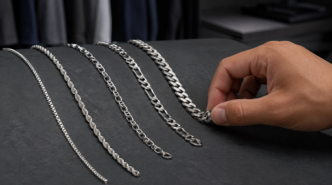
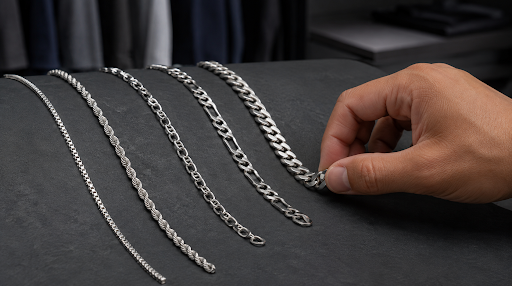
A chain may be a relatively small part of an outfit, but it can significantly influence the overall appearance. A slim necklace can add a refined detail to smart-casual clothing, while a wider chain can become the focal point of a streetwear look. The right choice depends on more than what appears attractive in a product photograph.
Link style, width, length, weight, material, finish, and clasp design all affect how a chain looks and feels. Clothing preferences and daily routines matter as well. A necklace intended for occasional evenings may not need the same comfort or versatility as one worn throughout the week.
Understanding these details makes it easier to choose a chain that complements an existing wardrobe and remains comfortable enough for regular use.
Start with Your Personal Style
The most useful chain is one that works with clothing you already own. Before comparing link patterns and metal finishes, think about the outfits you wear most often.
A minimal wardrobe built around plain T-shirts, neutral shirts, tailored trousers, and clean sneakers usually works well with slim or medium-width chains. These pieces add detail without interrupting the outfit’s simple lines.
Streetwear provides more freedom to experiment. Oversized shirts, hoodies, cargo pants, varsity jackets, and bold sneakers can support wider links, layered necklaces, unusual pendants, and contrasting finishes.
Men who prefer rugged clothing may gravitate toward darker metals, brushed finishes, leather details, and heavier links. Those who dress in a classic or smart-casual style may find polished silver or gold chains easier to combine with collared shirts and structured outerwear.
When browsing men’s chains, avoid selecting a necklace solely because it looks dramatic in isolation. Consider whether it complements at least three outfits already in your wardrobe. Versatility is often more valuable than novelty.
Understand the Main Chain Styles
The link pattern determines much of a necklace’s appearance. Some styles are designed to remain subtle, while others naturally attract attention.
Cuban Chains
Cuban chains use tightly interlocking rounded links that usually lie flat. Their smooth, continuous pattern gives them a strong and recognizable appearance.
Slim Cuban chains can work with casual and smart-casual clothing. Medium and wide versions are commonly used as statement pieces, particularly in streetwear.
Because the links already provide substantial texture, Cuban chains generally look complete without a pendant. Wider versions are often best worn alone.
Curb Chains
Curb chains also use interlocking links designed to lie flat, but they are often flatter and more open than Miami Cuban links.
Their relatively simple construction makes them highly versatile. A fine curb chain can support a pendant, while a heavier design can be worn by itself.
Curb chains suit men who want a classic link pattern without the visual density of a wide Cuban necklace.
Figaro Chains
Figaro chains feature a repeating pattern of several short links followed by one longer link. The variation creates a decorative rhythm without requiring additional elements.
They are available in fine and substantial widths and can be worn with or without a pendant. Their recognizable structure works well with open shirts and plain T-shirts.
Because the link pattern already contains visual movement, a Figaro chain can make an impression at a moderate width.
Rope Chains
Rope chains are constructed from twisted components that resemble a rope. Their many angled surfaces reflect light, making them appear bright and textured.
Thinner rope chains often support pendants, while wider versions can stand alone. The twisting pattern may make the chain appear more decorative than a curb or box necklace of the same width.
Rope chains work well for men who want noticeable shine without choosing extremely broad links.
Box Chains
Box chains consist of square links connected into a smooth, geometric pattern. Their structured shape makes them a common choice for pendants.
A fine box chain has a clean, modern appearance and can fit into minimal wardrobes. Wider versions provide more visual presence but generally remain less rounded than Cuban chains.
The regular structure also helps the necklace feel balanced when worn with rectangular pendants or dog tags.
Franco Chains
Franco chains use tightly woven V-shaped links. Their dense construction creates a substantial profile and often provides good flexibility.
They can support heavier pendants, but medium and wide Franco chains also look complete on their own. Their angular texture suits modern streetwear and contemporary casual outfits.
Snake Chains
Snake chains use closely connected plates or bands to create a smooth, flexible surface. They do not display individual open links in the same way as Cuban, curb, or Figaro designs.
Their streamlined appearance can complement minimalist clothing, but the smooth structure may require careful storage to avoid kinks.
Choose the Right Width
Width determines how noticeable the chain will be.
Thin chains create a subtle effect. They work beneath shirt collars, with small pendants, or as supporting pieces in layered arrangements. They are often suitable for workplaces and men who are new to wearing jewelry.
Medium-width chains provide a balance between presence and versatility. They remain visible over a T-shirt without necessarily becoming the dominant feature. For many buyers, this range offers the greatest everyday flexibility.
Wide chains are natural statement pieces. They work particularly well with plain clothing and oversized streetwear. Because they occupy more visual space, they generally look best with fewer supporting accessories.
Body proportions can influence the result. A medium-width chain may appear relatively subtle on a broad frame but make a stronger statement on someone with a slimmer build. This is not a rule about who can wear a particular size; it is simply a factor in how the proportions will look.
Product photographs can make widths difficult to judge. Check the listed measurement in millimeters and compare it with an existing necklace or mark the width on paper.
Select a Comfortable Length
Length controls where a chain rests and how it interacts with different necklines.
Short chains sit close to the base of the neck. They create a clean, visible line but require accurate sizing, particularly for men with larger neck circumferences.
Medium lengths usually rest around the collarbone or upper chest. They work with crew-neck shirts, open collars, hoodies, and jackets, making them adaptable for everyday use.
Long chains create a relaxed appearance and can complement oversized clothing. However, they move more and may disappear beneath zipped outerwear.
The same stated length will fit differently depending on neck size, height, shoulder width, and chest proportions. Use a flexible measuring tape or non-stretching string to reproduce several proposed lengths before choosing.
Test the measurement with the shirts you commonly wear. This reveals whether the necklace will remain visible or sit awkwardly against a neckline.
If the chain will carry a pendant, include the pendant’s height when calculating the total drop.
Consider the Chain’s Weight
Two chains with similar widths can feel completely different if one is solid and the other is hollow.
Solid chains contain more material and usually feel substantial. They may also be more resistant to denting under normal conditions, although durability depends on the metal and construction.
Hollow chains provide the appearance of wider links at a lower weight and often at a lower price. They can be comfortable for men who like bold designs but do not want a heavy necklace.
However, hollow links may be more vulnerable to crushing or deformation. Repairs can also be difficult depending on the material.
Check the listed weight whenever possible. A chain that feels comfortable for a short fitting may become tiring after several hours.
Pick a Suitable Material
Material affects price, appearance, durability, weight, maintenance, and skin compatibility.
Stainless Steel
Stainless steel is commonly used for everyday men’s jewelry. It is strong, relatively affordable, and available in polished, brushed, gold-tone, and black finishes.
It can be a practical choice for frequent styling, although coated surfaces still require appropriate care. Buyers with metal sensitivities should review the specific steel grade and full material description.
Sterling Silver
Sterling silver provides a bright precious-metal appearance. It works with casual, streetwear, and smart-casual outfits but naturally tarnishes over time.
Appropriate polishing can restore the surface. Closely connected chains may require careful cleaning because residue collects between the links.
Solid Gold
Solid gold offers lasting material value and a distinctive finish. Different purities affect color, hardness, and price.
Higher-purity gold contains more gold but is generally softer. Lower-purity alloys may be better suited to frequent wear, depending on their composition.
Because broad solid-gold chains contain a substantial amount of metal, width and weight have a significant effect on cost.
Gold-Plated Chains
Gold-plated chains use a layer of gold over another metal. They create a gold-colored appearance at a lower price than solid gold.
Plating can gradually wear, particularly around edges and areas exposed to friction. Its lifespan depends on coating thickness, construction quality, frequency of wear, and care.
Abrasive cleaners should be avoided unless specifically approved for the finish.
Other Materials
Titanium is valued for its strength and light weight. Brass and other base metals may be used in fashion jewelry, often with additional coatings.
The color name alone does not identify the material. “Silver” may refer to sterling silver, stainless steel, or a silver-colored coating. Always review the complete specification.
Decide Between Silver, Gold, and Black
Metal color should complement both the wardrobe and other accessories.
Silver-tone chains have a clean, modern appearance. They work naturally with black, white, gray, navy, denim, and cool colors. They also coordinate easily with stainless-steel watches.
Gold-tone chains introduce warmth and attract more attention. They pair well with black, cream, brown, olive, burgundy, and warm neutrals.
Black chains create a quieter, industrial effect. They suit monochrome streetwear, leather jackets, utility clothing, and dark technical fabrics.
Mixed-metal designs can connect accessories of different colors. To keep the combination intentional, allow one color to remain dominant and repeat the secondary tone in a smaller item such as a ring or watch detail.
Examine the Finish
Finish affects both shine and character.
Highly polished chains reflect more light and tend to look dressier or more prominent. They work well as focal points against plain clothing.
Brushed or matte finishes provide a more restrained appearance. They may suit rugged, minimal, or workwear-inspired wardrobes.
Oxidized and antiqued finishes emphasize texture by creating darker areas around the links. These designs can have a vintage or industrial quality.
Stone-covered chains produce maximum visual impact and are typically easier to style for evenings, performances, or special occasions than for conservative daily environments.
Check the Clasp
The clasp should be secure, easy to operate, and appropriately sized for the chain.
Lobster clasps are common on slim and medium necklaces. Their spring-loaded design is compact and familiar.
Box clasps are frequently used on wider Cuban and statement chains. They slide together and may include additional safety latches.
Spring-ring clasps are small and lightweight but can be difficult to handle, particularly on substantial necklaces.
Toggle clasps can add a decorative element, although their security depends on proper sizing and construction.
Before wearing a new chain, close the clasp and apply gentle pressure. It should remain secure without sticking or opening unexpectedly. Inspect the links near the closure, as these points experience regular movement.
Choosing a Chain for a Pendant
A pendant and chain need to be compatible in both appearance and construction.
The chain should be strong enough to support the pendant’s weight. A delicate necklace may not be appropriate for a heavy dog tag or medallion.
Check the pendant’s bail opening. The chain and its clasp must pass through this loop unless the necklace is assembled permanently.
Proportion matters as well. A small pendant can disappear on a wide chain, while a large pendant may overwhelm a fine necklace.
Box, curb, rope, and Franco chains are often used with pendants. Wide Cuban chains usually provide enough visual interest without an additional piece.
Styling a Chain with T-Shirts
A plain T-shirt offers one of the easiest backgrounds for men’s jewelry.
Silver stands out sharply against black, while gold adds warmth to white, cream, olive, and dark clothing. Black chains can create subtle contrast over gray or white.
Crew-neck shirts work with short and medium lengths. The chain can sit above the collarbone or rest over the fabric. Avoid a size that repeatedly slips beneath and reappears above the collar.
Graphic T-shirts already contain a focal point. A simple chain or one positioned away from the main artwork will usually create better balance.
Oversized shirts can support wider and longer necklaces, while fitted shirts often look more balanced with slim or medium widths.
Wearing Chains with Hoodies and Jackets
A chain worn over a plain hoodie creates a strong streetwear look. Medium and wide designs are generally more visible against thick fabric than very fine necklaces.
Hoodie drawstrings, zippers, and graphics already add details around the upper body. A clean link pattern helps prevent the area from becoming overcrowded.
Open denim jackets, bomber jackets, varsity jackets, and overshirts naturally frame a necklace. Wear the chain over a plain shirt beneath the outer layer to create depth.
A fully zipped jacket may conceal longer chains. If visibility is important, a shorter necklace or partially open jacket may work better.
Adding a Chain to Smart-Casual Outfits
A chain can complement smart-casual clothing when its proportions are restrained.
Choose a slim or moderate width and wear it partially visible beneath an open-collar shirt. This introduces personality without making the necklace the only noticeable feature.
Knitted polos, plain button-down shirts, unstructured blazers, tailored trousers, and dark denim all provide suitable foundations.
Highly polished wide chains may feel too strong for conservative settings. A slim silver, gold, or brushed-metal necklace will generally be easier to incorporate.
Always consider the dress expectations of the specific workplace or event.
Layering Multiple Chains
Layering works best when each necklace has enough space to remain visible.
Use different lengths to prevent the pieces from occupying the same position. A shorter slim chain can sit above a medium-width necklace, or a longer pendant chain can fall beneath a shorter Cuban design.
Varying texture also helps. Combining identical chains may look repetitive, while pairing a curb chain with a box or rope design creates contrast.
One necklace should serve as the primary piece. Supporting chains should be lighter or simpler so that the arrangement has a clear visual hierarchy.
Two necklaces are usually sufficient for everyday styling. Additional layers require simple clothing and careful spacing to avoid tangling.
Styling a Cuban Link Chain
A Cuban link chain for men can work as either a subtle accessory or a bold focal point depending on its width and finish.
A slim silver Cuban chain can complement a fitted T-shirt, open shirt, and clean sneakers. A medium-width version works well with denim jackets, hoodies, and casual outerwear.
Wide Cuban chains are best treated as leading accessories. Pair one with a plain shirt and keep the watch, rings, and bracelets relatively restrained.
Because the Cuban pattern lies flat and reflects light across its connected links, it generally does not require a pendant. Wearing it alone allows the construction to remain clearly visible.
Coordinate Other Accessories
Accessories do not need to match perfectly, but they should share some visual connection.
Repeating the chain’s metal color through a watch, bracelet, ring, belt buckle, or shoe hardware creates consistency.
Visual weight matters as much as color. A wide necklace paired with an oversized watch and several large rings may make the outfit feel crowded.
Choose one leading accessory and allow the others to support it. If the chain is slim, there is more freedom to wear a substantial watch or bracelet. If the necklace is broad and reflective, simpler supporting pieces will usually create better balance.
Consider Your Daily Routine
A chain intended for regular use needs to suit the wearer’s activities.
Long necklaces and pendants can catch on equipment, furniture, clothing, or machinery. They should be removed before manual work, sports, and activities where snagging may create a risk.
Heavy chains may be comfortable for an evening but tiring over a full day. A lighter necklace may be more practical for frequent wear.
Men who travel regularly should consider storage and security. A simple pouch or compact jewelry case can help protect the chain from scratches and tangling.
Workplace dress codes also matter. A slim necklace can often remain beneath a shirt, while a large statement chain may not be appropriate in every professional environment.
Care for the Chain Properly
Basic maintenance helps preserve a necklace’s appearance and structure.
After wearing the chain, wipe it gently with a soft, dry cloth. This removes skin oils, perspiration, and surface residue.
Store necklaces separately to prevent scratching and tangling. Heavier chains should lie flat or remain loosely arranged rather than being piled on delicate jewelry.
Apply fragrance, lotion, sunscreen, and hair products before putting on the necklace. Allow them to dry so that less residue transfers to the metal.
Cleaning methods depend on the material. Stainless steel, sterling silver, solid gold, plated metal, and coated finishes have different requirements. Follow the manufacturer’s guidance and avoid abrasive products unless specifically recommended.
Remove the chain before swimming, showering, sleeping, or exercising. Chlorine, salt water, moisture, sweat, impact, and repeated friction can affect the finish and connection points.
Common Buying Mistakes
A frequent mistake is choosing a necklace based only on photographs. Close-up images may make a chain appear wider or narrower than it actually is.
Ignoring weight is another problem. Two chains with similar dimensions can feel very different depending on their construction.
Some buyers copy a model’s chain length without considering differences in neck circumference and body proportions. Measuring with string produces a more accurate preview.
Others select an eye-catching design without considering existing clothing. A versatile necklace should work with several outfits rather than one trend-driven combination.
Finally, buyers sometimes overlook the clasp, material description, and return policy. These practical details can be as important as the link pattern.
Making the Final Choice
Choosing the right men’s chain becomes easier when the decision is divided into clear steps.
First, identify the role the necklace should play. Decide whether it will be a subtle everyday detail, a pendant chain, or the main statement accessory.
Next, select a link style that reflects the wearer’s wardrobe. Choose a width and length based on actual measurements, then compare materials according to appearance, maintenance, durability, and budget.
Check the weight, clasp, finish, and construction before ordering. Finally, consider whether the chain can be styled with several existing outfits.
The best necklace is not necessarily the widest, brightest, or most expensive one. It is the chain that fits comfortably, reflects personal style, and becomes a natural part of the wearer’s wardrobe.