We’re seeing a big change in computers, with something called the new computer ai. It’s not just about making things faster, but about making your computer smarter and more helpful, right on your own device. Think of it like your computer finally getting a brain of its own, ready to help you out in ways we haven’t seen before. This could really change how we use our computers every day.
Key Takeaways
- The new computer ai is moving intelligence from the cloud directly onto your device, thanks to special chips like NPUs.
- This on-device processing means better privacy because your data stays with you, not on a remote server.
- Your computer will become more helpful, anticipating your needs and making tasks like writing or searching much easier.
- Creativity gets a boost, allowing you to make content like images or text faster and more directly on your PC.
- This shift is changing the whole computer world, making AI a standard part of personal computing, not just an extra feature.
The Dawn Of On-Device Intelligence
We’re seeing a big change in computers right now. It’s not just about making chips faster, though that’s part of it. The real story is about bringing artificial intelligence right onto your computer, instead of relying on the internet all the time. Think of it like having a super-smart assistant built directly into your machine.
The Architectural Revolution: More Than Just A Faster Chip
This isn’t your grandpa’s computer. The insides are changing. We’re seeing new parts, like Neural Processing Units (NPUs), specifically designed to handle AI tasks. These work alongside the regular processor (CPU) and graphics chip (GPU) to make AI stuff happen much quicker and use less power. It’s a whole new way of building computers, focused on making them smart from the ground up.
The Power Of Local Intelligence: Why On-Device AI Matters
So, why is having AI on your computer a big deal? For starters, it’s way faster. When your computer doesn’t have to send data back and forth to a server somewhere else, things just happen. You ask it to do something, and it does it, almost instantly. This means:
- Speed: No more waiting for the cloud. Tasks like summarizing documents or creating images are nearly immediate.
- Availability: Your AI tools work even if you don’t have internet. Perfect for planes or places with spotty Wi-Fi.
- Privacy: This is huge. When AI runs on your machine, your personal information stays put. It doesn’t get sent off to some company’s server, which means your data is much safer.
Unprecedented Privacy And Security
Let’s talk more about privacy because it’s a really important point. Imagine you’re working on something sensitive, like a business plan or personal notes. With AI running locally, that information never leaves your computer. It’s not uploaded, it’s not stored elsewhere, and it can’t be accidentally seen or used by others. This is a massive step up from older systems where your data was constantly being sent out. It means your digital life stays private, right where it belongs – with you.
Transforming Everyday Experiences
This new wave of AI PCs isn’t just about faster processing; it’s about making your computer genuinely helpful in ways we’re only starting to imagine. Think of your computer not just as a tool, but as a partner that actually gets what you’re trying to do.
The Operating System As An Anticipatory Concierge
Your computer’s operating system is about to get a whole lot smarter. Instead of just waiting for your commands, it’ll start anticipating your needs. It might notice you always open a certain set of apps when you start working on a project and have them ready before you even click. Or perhaps it learns that your video calls always lag when you’re downloading a large file, and it’ll automatically adjust things in the background to keep your call smooth. Searching for files will also change. Forget trying to remember exact file names; you’ll be able to ask things like, "Find that report I wrote about the Q3 sales figures last year," and your PC will pull it up, no problem. It’s like having a personal assistant built right into the core of your computer.
Supercharged Creativity And Content Creation
For anyone who makes things – whether it’s writing, designing, coding, or editing videos – these AI PCs are a game-changer. Imagine you’re writing a blog post. Your AI could help you brainstorm ideas based on your previous writing style, suggest better ways to phrase sentences, or even help you find relevant research material you’ve saved somewhere on your hard drive without you having to search for it. If you’re editing photos, the AI might suggest edits based on what it knows you usually do, or help you quickly remove unwanted objects from a picture. It’s about making the creative process smoother and faster, letting you focus more on the ideas and less on the technical steps.
Unleashing Personalized And Contextual Awareness
This is where things get really interesting. Because the AI lives on your device, it can learn about your habits and preferences without sending your personal data off to some distant server. This means your computer can adapt to you. It might adjust its display settings based on the time of day and what you’re working on, or prioritize notifications so you only see what’s important when you’re busy. It can understand the context of what you’re doing. For example, if you’re working on a presentation, it might automatically pull up related documents or websites you’ve visited recently. This level of personal understanding means your computer feels less like a generic machine and more like an extension of yourself.
A New Computing Paradigm
This whole AI PC thing feels like a pretty big deal, honestly. It’s not just about getting a faster machine for your spreadsheets or emails. We’re talking about a real shift in how computers work, moving the smarts from big servers way out there to right here on your desk. It’s like going from a calculator to a supercomputer, but for everyday stuff.
Wider Significance And Societal Implications
So, what does this mean for us, you know, as people using computers? Well, for starters, it means our devices can actually understand us better. Think about it: your computer could start anticipating what you need before you even ask. It’s a big change from just telling it what to do. This also means a lot more of our personal information can stay put, right on our own machines, which is a good thing for privacy. It’s a move towards smarter, more personal tech that’s less reliant on sending everything off to the cloud.
The Enduring Significance Of AI PCs
These AI PCs are more than just a trend; they’re setting a new standard. They’re built differently, with special parts designed just for AI tasks. This makes them really good at handling complex jobs locally, which means things can run faster and smoother. Plus, because the heavy lifting happens on your device, your data is generally safer.
Here’s a quick look at what makes them stand out:
- Local Processing: AI tasks run directly on your PC, not in the cloud.
- Enhanced Privacy: Your personal data stays with you.
- Improved Performance: Faster response times for AI-driven features.
- Personalized Experiences: The computer learns and adapts to you.
A New Chapter In Personal Computing
Honestly, it feels like we’re at the start of something big, like when the internet first became a thing or when we all got our first graphical computer. We’re moving from just using a tool to having a partner. This is the end of the computer as just a dumb box and the beginning of it as an intelligent assistant. It’s about making things easier, more creative, and more connected to what you actually want to do. It’s a whole new way of interacting with technology, and it’s happening right now.
The Horizon Of Intelligence
Future Developments and Expert Predictions
The journey of AI PCs is really just getting started, and honestly, it’s pretty exciting. We’re seeing more powerful chips designed specifically for AI tasks, called NPUs, showing up everywhere. Some folks are saying that by 2027, about half of all new computers shipped will have these AI capabilities, and that number could jump to 80% by 2028. It’s like when the internet first became common – things are about to change in a big way. These new chips are getting faster, and memory is improving too, so they can handle all the complex AI stuff without breaking a sweat. This shift is comparable to the original personal computer revolution, bringing advanced computing power directly to your desk. It’s not just about faster processing; it’s about making AI a normal part of your everyday digital life, much like how the internet changed everything.
The Engineering Marvel: Diving Deep Into AI PC Architecture
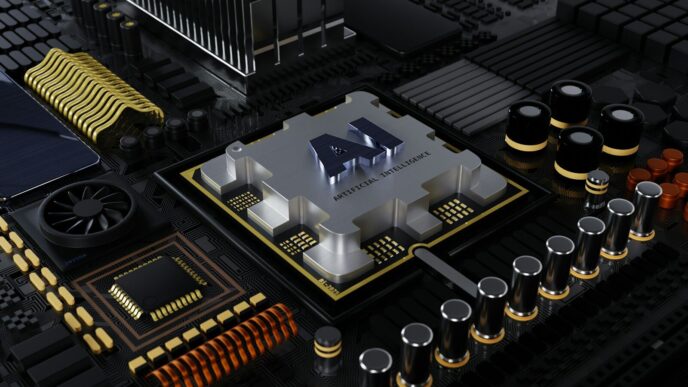
At the heart of these new machines are Neural Processing Units, or NPUs. Think of them as specialized brains built just for AI. Unlike general-purpose processors that do a bit of everything, NPUs are incredibly efficient at the specific calculations AI needs, like recognizing images or understanding speech. This means your computer can run complex AI tasks right on the device, without needing to send data to a distant server. This local processing is a game-changer for speed and privacy. Plus, engineers are constantly working on making these chips use less power, so your laptop battery lasts longer even when doing heavy AI work.
Navigating Privacy and the Human Factor
Now, with all this local intelligence, privacy is a big topic. It’s great that your data stays on your machine, but we need to be sure it’s protected. Companies are working on strong security measures, but it’s also up to us, the users, to understand what data our AI PC is using and to control it. Transparency is key here. You should always know what information the AI has access to and be able to turn it off if you want. It’s a balancing act between getting helpful AI features and keeping our personal information safe. We’re also seeing a shift in how we think about using computers. Instead of just giving commands, it’s becoming more like a conversation or a partnership. This means we all need a little time to get used to these new ways of working and interacting with our devices.
The AI PC Ecosystem
So, what does this whole AI PC thing mean for the people actually building and using computers? It’s a pretty big deal, honestly. We’re talking about a whole new world opening up for software folks and hardware makers.
Software Mobilization and Developer Empowerment
Developers are getting a whole new playground. Instead of always sending data off to some far-off server, they can now build smart features right into the apps we use every day. This means things can run faster, and our personal information can stay put on our own machines. This shift is making on-device AI the new hotness for app creation. Think about it: apps that can help you write emails, edit photos, or even code, all without needing a constant internet connection or worrying about sending your private stuff elsewhere.
Here’s a quick look at what developers are getting:
- New Tools: Special software kits are popping up to help them use the new AI chips (NPUs) effectively.
- Local Processing Power: They can now build AI features that run directly on your PC, making them quicker and more private.
- Hybrid Approaches: Developers can mix and match – using the PC’s AI for quick tasks and the cloud for bigger jobs.
Hardware Advancements and Future Cycles
It’s not just software, though. The hardware inside these AI PCs is getting seriously upgraded. We’ve got these new chips, called NPUs, that are specifically designed to handle AI tasks super efficiently. This means your computer can do smart things without draining the battery or overheating.
| Component | Primary Role in AI PCs |
|---|---|
| CPU | General computing tasks, orchestrating AI workloads |
| GPU | Handling graphics and some parallel AI computations |
| NPU | Specialized for efficient, low-power AI processing |
This means we’re likely going to see a lot of new computers coming out, each one a bit smarter and more capable than the last. It’s going to be an exciting few years for anyone buying a new laptop or desktop.
Disrupting Cloud-Centric AI Models
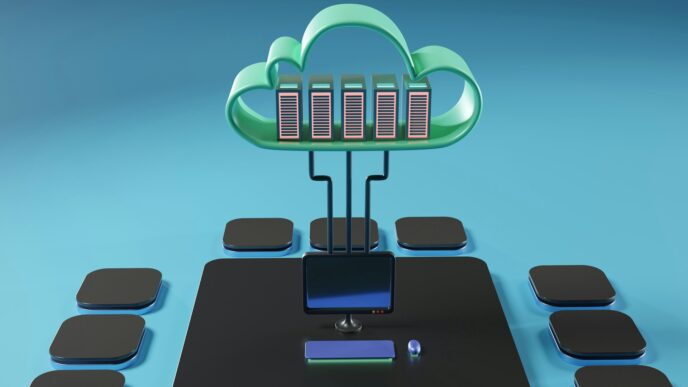
For a long time, if you wanted to use AI, you were pretty much tied to the cloud. Your data went up to a big server farm, got processed, and the results came back down. AI PCs are changing that game. By doing more AI work right on your device, they reduce the need to send so much data back and forth. This is good for a few reasons:
- Privacy: Less data leaving your computer means fewer chances for it to be seen by the wrong eyes.
- Speed: Processing locally can be much faster, especially for tasks that need quick responses.
- Cost: For companies, running AI on individual PCs could eventually be cheaper than managing massive cloud infrastructure for every single user.
This doesn’t mean the cloud is going away, but it does mean AI is becoming more distributed. It’s a big shift from how things have been done, and it’s going to shape how we use computers for years to come.
A New Era Dawns
So, what does all this mean for us, the everyday computer users? It means our machines are about to get a whole lot smarter, and frankly, more helpful. We’re moving past just typing commands and getting basic responses. Think of it like upgrading from a simple calculator to a personal assistant who actually gets what you’re trying to do. This shift to having AI right on our devices, not just somewhere out in the cloud, is a pretty big deal. It promises better privacy, faster results, and a computer that feels more like a partner in whatever we’re working on. It’s not just about doing things faster; it’s about doing things we couldn’t before, making our digital lives richer and more intuitive. The future of personal computing is here, and it’s intelligent.
Frequently Asked Questions
What exactly is an AI PC?
An AI PC is a computer that has special parts, like a Neural Processing Unit (NPU), that let it do smart AI tasks right on the computer itself. Instead of sending information to a faraway server, it handles things like understanding your voice or creating images locally, making it faster and more private.
Why is having AI on my computer better than using the cloud?
When AI runs on your computer, it’s much faster because it doesn’t have to wait for information to travel to and from the internet. Also, your personal information stays on your computer, which is way more private and secure than sending it to a company’s servers.
Will AI PCs make my computer work better?
Yes! AI PCs can help your computer do things more smoothly. For example, it can manage your computer’s power better to make apps run faster, help you find files just by describing them, or even help you write and create things more easily.
Are AI PCs safe to use with my personal information?
AI PCs are designed to be safer for your information. Since the AI processing happens on your device, your data doesn’t need to be sent out over the internet. This greatly reduces the risk of your private information being seen by others or used without your permission.
Do I need a super-fast internet connection for an AI PC?
Not really! One of the biggest advantages of AI PCs is that they can do many smart tasks even without an internet connection. This means you can still use AI features when you’re on a plane, in a place with bad Wi-Fi, or if your internet goes down.
When will AI PCs become common?
Many experts believe that AI PCs are becoming the new standard. We’re already seeing them, and by around 2027 or 2028, most new computers sold are expected to be AI PCs, changing how we use computers every day.