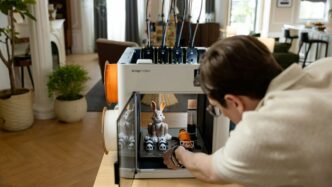
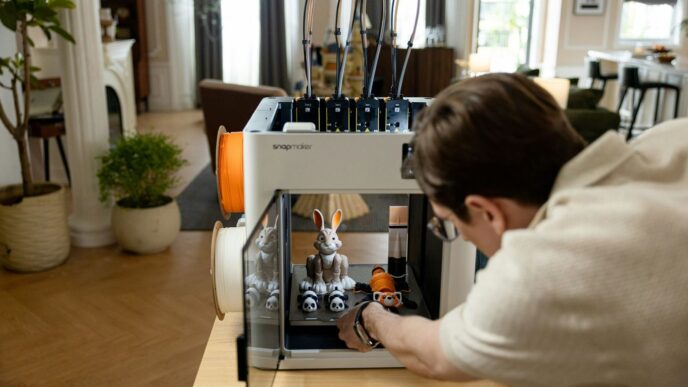
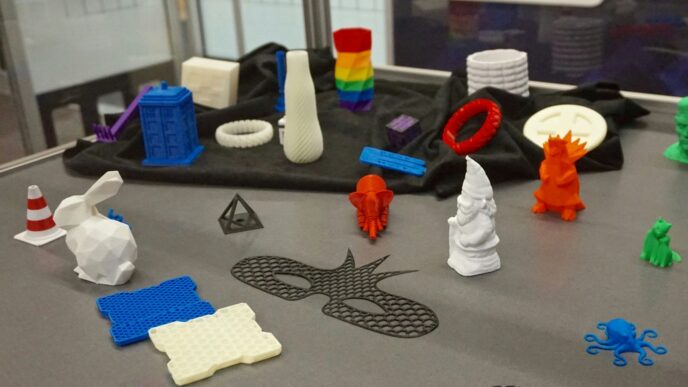
So, you’ve got a product idea and you’re wondering how to actually make it. Two big names that pop up are 3D printing and injection molding. They both make plastic parts, but they go about it in totally different ways, and that means their costs can be worlds apart. Deciding between 3D printing cost vs injection molding isn’t always straightforward. It really depends on what you need, how many parts you want, and how fast you need them. Let’s break down the factors so you can figure out which one is the better fit for your project.
Key Takeaways
- For small batches or just a few prototypes, 3D printing usually wins because you skip the big upfront cost of making a mold. It’s faster to get started, too.
- When you need thousands of identical parts, injection molding becomes way more cost-effective. The initial mold cost gets spread out over so many parts that the price per piece drops significantly.
- Complex designs with intricate details or internal structures are often easier and cheaper to make with 3D printing, especially if you’re not making a ton of them.
- Injection molding offers more material choices and typically results in a stronger, more consistent part with a better surface finish right out of the machine, which can save on post-processing.
- The ‘crossover point’ is that magic number of parts where injection molding starts to be cheaper than 3D printing. Knowing this number for your specific project is key to making the right manufacturing choice.
Tooling Costs
When it comes to tooling costs, 3D printing and injection molding couldn’t be more different. 3D printing pretty much eliminates traditional tooling costs entirely—no expensive metal molds, no long wait for a tool shop to cut and polish components. Instead, setup is mostly digital: you prep your CAD file, maybe configure some support structures, and then you’re off to the races. You might need to invest a little in custom build plates or some fixturing if you’re planning post-processing steps, but that’s usually minor compared to the costs of molds for injection molding.
Now, injection molding is a different beast. Here’s what you’re looking at:
- Very high upfront tooling investment. A custom steel mold, even a simple one, can run you thousands of dollars.
- More complex parts drive the cost up fast: slides, cams, extra cavities, and special finishes all add to the bill.
- If you need changes? That probably means physically reworking the mold, which isn’t cheap or fast.
Here’s a quick comparison for a basic mold:
| Method | Typical Tooling Cost |
|---|---|
| 3D Printing | $0 – $500 (setup accessories) |
| Injection Molding | $3,000 – $50,000+ (per mold) |
These are ballpark numbers. If you’re aiming for small runs or quick prototypes, 3D printing will always win on tooling costs. But if you want thousands—or millions—of parts, investing in an injection mold spreads that high upfront cost out over many parts, dropping the cost-per-piece way down after a certain point.
Material Costs
When you’re looking at the cost of making parts, the materials themselves are a big piece of the puzzle. For 3D printing, the price tag on materials can really swing depending on what you’re printing with and how you’re printing it. Think about it: a basic PLA filament for your desktop printer is way cheaper than the fancy, high-strength resins used in industrial machines. Plus, there are all those little extras that add up – things like adhesives for the build plate, special support materials that dissolve away, and cleaning solutions. These aren’t huge costs individually, but they do contribute.
Generally speaking, 3D printing materials tend to be more expensive per pound than the plastics used in injection molding. A big reason for this is how they’re sold. 3D printing materials often come in smaller packages – spools, cartridges, or bottles. Injection molding, on the other hand, buys plastics in massive bulk quantities. Buying in bulk usually means better prices because of economies of scale. While both methods can sometimes use recycled materials to cut down on costs, it’s less common with 3D printing materials compared to injection molding plastics.
Here’s a quick look at some factors influencing material costs:
- Type of Material: Commodity plastics (like PLA, ABS for 3D printing, or Polypropylene for injection molding) are cheaper than engineering-grade or specialized materials (like PEEK, ULTEM, or flame-retardant compounds).
- Quantity Purchased: As mentioned, buying in bulk for injection molding significantly reduces the per-unit cost compared to the smaller quantities typical for 3D printing.
- Additives and Colorants: If your part needs specific properties like UV resistance, color, or flame retardancy, these additives will increase the base material cost for both processes.
- Consumables: Don’t forget the supporting materials for 3D printing, such as support filament, resin tanks, build plates, and cleaning agents, which don’t have a direct parallel in standard injection molding material costs.
Build Time
When we talk about build time, we’re really looking at how long it takes to actually make the part. For 3D printing, this can be a pretty big deal. Think about it: the printer is building your part layer by layer. If a part is solid, or if it needs a lot of support structures to print correctly, it’s going to take longer. And longer print times mean higher costs, plain and simple. Some complex parts can take many hours to print.
Injection molding, on the other hand, is usually much faster once the mold is ready. The actual cycle time for an injection molding machine to produce a part can be just a minute or even less. However, you have to factor in the time it takes to create the mold itself, which can be a significant chunk of time upfront. So, while the individual part production is quick with molding, the initial setup can be lengthy.
Here’s a rough idea of how build times can stack up:
- 3D Printing: Can range from minutes for small, simple parts to many hours for larger or more complex designs. Support structures and infill density directly impact this.
- Injection Molding: Cycle times are typically very fast (seconds to a couple of minutes per part), but this doesn’t include the considerable time needed for mold creation and setup.
The speed of 3D printing is often a major advantage for getting prototypes quickly, but for mass production, injection molding’s rapid cycle times usually win out.
Post-Processing
After your part is printed, whether it’s with 3D printing or injection molding, there’s usually a bit more work to do. For 3D printing, this is almost always the case. You’ll likely need to remove support structures, which are printed to hold up overhangs during the build. Depending on the specific 3D printing technology, you might also need to clean off excess material, like uncured resin from SLA prints, or powder from SLS prints. Some advanced 3D printing techniques even offer smoothing processes, like vapor smoothing, to improve the surface finish and strength, but these add time and cost.
Injection molded parts, on the other hand, often come out of the mold looking pretty good right away. They’re usually ready to go or need very little done to them. While you can do things like add textures, engrave logos, or insert threaded hardware, these are typically optional steps to make the part look or function a certain way, not because the part itself isn’t finished. The level of post-processing required is a significant differentiator between the two methods.
Here’s a quick look at what’s typically involved:
- 3D Printing:
- Support removal (often manual)
- Cleaning (resin, powder, etc.)
- Curing (for some resin prints)
- Surface finishing (sanding, polishing, vapor smoothing, painting)
- Assembly (if the part is printed in multiple pieces)
- Injection Molding:
- Trimming excess material (flash removal)
- Optional: Adding inserts, texturing, painting, assembly
Labor
When you’re figuring out the costs for 3D printing versus injection molding, don’t forget about the people involved. Both methods need skilled hands, but the amount and type of labor can really differ.
With 3D printing, the actual printing part is pretty automated. You still need folks to set things up, load the materials, and keep an eye on the machine to make sure nothing goes wrong. Then there’s the post-processing – cleaning up the parts, removing supports, and sometimes doing extra finishing. If your parts need a lot of this cleanup, the labor costs can add up pretty quickly.
Injection molding, on the other hand, often requires more hands-on work, especially during the setup phase. You’ve got the mold to deal with, machine adjustments, and making sure everything runs smoothly. Quality control is also a big part of it, so you might need people just for inspecting the finished pieces. The more complex your part and the higher the quality you need, the more skilled labor you’ll likely need for both processes.
Here’s a quick look at where labor fits in:
- 3D Printing: Design optimization, material loading, machine monitoring, support removal, cleaning, and finishing.
- Injection Molding: Mold setup and adjustments, machine operation, process monitoring, quality inspection, and potentially assembly.
Think about the total time and skill level needed for each step. Sometimes, what looks cheaper upfront can end up costing more in labor down the line.
Equipment And Maintenance
When you’re looking at the costs of 3D printing versus injection molding, don’t forget about the machines themselves and what it takes to keep them running. This is a big one, especially for injection molding.
For 3D printing, the initial cost can range quite a bit. You can get a decent desktop printer for a few hundred bucks, but if you’re looking at industrial-grade machines that can handle production runs, you’re easily talking tens of thousands of dollars. Plus, these machines need regular TLC. Think cleaning, calibrating, and replacing parts that wear out, like nozzles or the build surface. You also have to factor in the electricity they use, which can add up, especially for longer prints or machines that need a lot of heat.
Injection molding, on the other hand, has a much higher barrier to entry when it comes to equipment. The big ticket item is the mold itself. Designing and machining a mold, especially for complex parts, can cost a fortune. Then there’s the injection molding machine, which is also a significant investment. Maintenance is similar to 3D printers – regular upkeep, part replacements, and yes, they use a good chunk of energy to heat up the materials. The upfront investment for tooling and machinery in injection molding is typically much, much higher than for 3D printing.
Here’s a quick look at what you might expect:
- 3D Printers:
- Desktop/Hobbyist: $300 – $3,000
- Professional/Prosumer: $3,000 – $20,000
- Industrial: $20,000 – $1,000,000+
- Injection Molding:
- Mold Tooling: $1,000 – $100,000+ (depending on complexity, material, and cavity count)
- Injection Molding Machine: $50,000 – $500,000+
So, while 3D printing can be more accessible to start with, the long-term costs of maintenance and potential upgrades are something to keep in mind for both processes.
Part Complexity
When we talk about part complexity, it really boils down to how intricate the design of your piece is. For injection molding, a simple shape is usually cheaper and easier to make. Think about adding undercuts, internal cavities, or features that require moving parts within the mold itself – these all add layers of complexity. Each of these elements means a more complicated, and therefore more expensive, mold. Sometimes, a small part might need a surprisingly large mold if it has tricky geometry that needs special tooling inserts or side actions to form correctly. This can really drive up the initial cost of the mold.
3D printing, on the other hand, often handles complex shapes with much less fuss. Because it builds parts layer by layer, it can create internal structures, intricate lattices, or organic shapes that would be incredibly difficult or even impossible to achieve with traditional molding. This ability to create complex geometries without significantly increasing manufacturing time or cost is one of 3D printing’s biggest advantages.
Here’s a quick look at how complexity impacts each method:
- Injection Molding:
- Undercuts and internal features require more complex (and costly) molds.
- Designs needing side-actions or inserts increase mold size and price.
- Very intricate designs might be impossible or prohibitively expensive.
- 3D Printing:
- Can produce highly complex internal and external geometries.
- Complexity often has minimal impact on per-part cost once the design is set.
- Support structures might be needed, adding to print time and post-processing, but the core geometry is usually manageable.
Design Constraints
When you’re thinking about how to make your part, the design itself really matters. Some shapes are just way easier to make with one method than the other. For injection molding, things like undercuts or features that need to come in from the side can make the mold way more complicated and expensive. You might need extra moving parts in the mold, called side-actions or lifters, just to get the part out. This adds to the tooling cost and can even affect how long it takes to make each part.
3D printing, on the other hand, is pretty good at handling complex shapes. It builds parts layer by layer, so it can create internal channels, intricate lattices, or overhangs without needing special mold pieces. This freedom in design is a big win for 3D printing, especially when you’re trying to make a part that’s difficult or impossible to produce with traditional methods.
Here’s a quick look at how design complexity can play a role:
- Injection Molding:
- Undercuts and side features increase mold complexity and cost.
- Thin walls can be tricky to fill evenly.
- Draft angles are usually needed for easy part ejection.
- 3D Printing:
- Handles complex internal geometries well.
- Overhangs and bridges can be printed, sometimes with support structures.
- Design freedom is much higher, allowing for more organic or intricate shapes.
Time To Market
When you’re trying to get a new product out the door, speed is often the name of the game. How quickly can you go from a cool idea to having actual parts in your hand? This is where the differences between 3D printing and injection molding really start to show.
3D printing generally wins when you need something now or if you’re still figuring out the exact design. You can upload a design, and in a matter of days, sometimes even hours, you’ve got a physical part. If you spot a problem, you tweak the digital file and print another one. It’s super fast for making changes. This rapid iteration is a huge advantage when you’re prototyping or need a small batch of parts quickly.
Injection molding, on the other hand, takes longer to get started. You first have to make a mold, which is a whole process in itself and can take weeks. Once the mold is ready, though, making parts is incredibly fast. So, while the initial setup is slow, the production speed for each individual part is much higher.
Here’s a quick look at how they stack up:
- 3D Printing:
- Fastest for initial prototypes and design changes.
- Ideal for getting a product to market quickly in low volumes.
- Lead times for parts can be as short as a day or two.
- Injection Molding:
- Longer lead times for the initial mold creation (weeks).
- Once the mold is made, part production is very rapid.
- Best for getting large volumes of parts to market once the design is finalized.
Per-Part Cost
When we talk about the cost of making a part, the ‘per-part cost’ is what you pay for each individual item produced. This is where the big differences between 3D printing and injection molding really start to show, especially as you make more parts.
For low volumes, 3D printing usually wins on per-part cost because it skips the expensive tooling setup. You’re mainly paying for the material, the machine time, and a bit of labor. The cost doesn’t change much whether you print one part or fifty. However, as you print more, the cost per part stays pretty much the same, which can be quite high compared to other methods.
Injection molding, on the other hand, has a massive upfront cost for the mold. But once that mold is made, the cost to produce each additional part drops dramatically. Think of it like this:
- 3D Printing: Cost per part is relatively high but stays consistent, no matter the quantity.
- Injection Molding: High initial cost, but the cost per part plummets as you produce more.
This is why choosing the right manufacturing method depends heavily on how many parts you actually need. If you’re just making a handful, 3D printing is often the way to go. But if you’re looking at hundreds or thousands, injection molding becomes much more economical. You can explore how different quantities affect pricing by looking at 3D printing vs injection molding cost comparisons.
Here’s a general idea of how it can play out:
| Quantity | 3D Printing (Est. Per-Part Cost) | Injection Molding (Est. Per-Part Cost) |
|---|---|---|
| 1-10 | $15 – $50 | $50 – $200+ |
| 100-500 | $10 – $25 | $5 – $20 |
| 1000+ | $5 – $15 | $1 – $5 |
Keep in mind these are just rough estimates. The actual cost depends on material, part complexity, and the specific technologies used.
Volume Production
When we talk about volume production, we’re really getting into the territory where injection molding starts to shine. While 3D printing is fantastic for getting a few parts quickly, it just doesn’t scale well cost-wise when you need hundreds or thousands of identical items. The cost per part in 3D printing tends to stay pretty flat, no matter if you print one or fifty. Injection molding, on the other hand, has a big upfront cost for the mold, but once that’s paid for, the cost to make each additional part drops significantly.
Think of it like this:
- High initial investment: You’ve got to pay for the mold itself, which can be thousands of dollars depending on the material and complexity.
- Low per-part cost: Once the mold is ready, churning out parts is relatively cheap. The more you make, the less each one costs.
- Speed: Injection molding machines can produce parts very quickly, often in seconds per part.
This is why, for anything beyond a few hundred units, injection molding usually becomes the more economical choice. It’s the workhorse for mass manufacturing for a reason. If you’re planning to produce a product that you expect to sell in significant quantities over time, injection molding is almost always the way to go. It’s built for this kind of output.
Short Runs
When you only need a handful of parts, like maybe a few dozen or up to a couple hundred, the whole cost picture changes. For these smaller batches, 3D printing often wins out. Why? Because injection molding requires making a custom tool, a mold, and that can cost thousands, even tens of thousands of dollars. That upfront expense is just too much to swallow if you’re not making a ton of parts.
With 3D printing, you skip the mold-making step entirely. You send over your digital design, and the printer just starts building your part, layer by layer. This means:
- No Tooling Costs: You avoid the big expense of creating a custom mold.
- Faster Turnaround: You can get your parts much quicker because there’s no tooling to manufacture.
- Design Flexibility: It’s easy to make changes to your design between prints if needed.
Think about it like this: if you need just one or two custom cookies, you’re not going to buy a whole new cookie cutter set, right? You’d probably just shape them by hand. 3D printing is kind of like that for manufacturing. It’s perfect for when you need a small quantity of something without breaking the bank on tooling costs. It’s a great way to test the waters or get those initial parts out there.
Long Runs
When you’re talking about really big batches of parts, like thousands or even tens of thousands, the game changes quite a bit. For these kinds of numbers, injection molding really starts to shine. Think about it: that initial cost for the mold, which seemed pretty steep at first, gets spread out over so many parts that the cost per piece drops way down. It’s like buying in bulk at the warehouse – the more you buy, the less you pay for each item.
Injection molding machines are built for speed and consistency. Once the mold is set up and running, they can churn out parts much faster than most 3D printers. This means you get a steady stream of identical parts, which is super important if you’re supplying a product to a market or need a reliable supply chain. Plus, the materials used in injection molding are often more robust and come with a better surface finish right out of the machine, meaning less work for you later.
Here’s a quick look at why injection molding wins for long runs:
- Lower Per-Part Cost: This is the big one. The upfront tooling cost is amortized over a huge number of parts.
- Speed of Production: Once the mold is ready, injection molding is significantly faster than 3D printing for mass production.
- Material Variety and Properties: You get access to a wider range of industrial-grade plastics with specific performance characteristics.
- Consistent Quality: Each part is made to the same tight tolerances, reducing variation.
While 3D printing is fantastic for getting things done quickly or for smaller quantities, when you need a massive number of identical parts, injection molding is usually the way to go. It’s the workhorse for mass production for a reason.
Prototyping
When you’re first developing a new product, you need to make a few test versions, right? That’s where prototyping comes in. It’s all about creating a basic model to check out the design, see how it works, and maybe catch any problems before you commit to making a ton of them.
3D printing really shines when it comes to making prototypes. Why? Because you can tweak the design on your computer and have a new physical version in your hands pretty quickly, often within days. This means you can try out different ideas, make changes, and test them out without spending a fortune or waiting weeks for each adjustment. It’s like having a rapid-fire way to get feedback and refine your idea.
Think about it like this:
- Quick Iterations: You print a part, test it, find a flaw, change the digital file, and print it again. This cycle can happen many times in the time it would take to make just one mold for injection molding.
- Lower Initial Cost: Setting up for a single 3D print is way cheaper than creating a whole injection mold. You don’t need expensive tooling upfront, which is a big deal when you’re just starting out.
- Flexibility: You can experiment with different shapes and sizes without worrying about how a mold would handle it. If your design is really complex or has intricate details, 3D printing can often handle it more easily than traditional molding methods.
While injection molding can be used for prototyping, especially if you need to test a part under more production-like conditions or with specific materials, it’s usually a more involved process. Often, companies will use a simpler, single-cavity aluminum mold for prototyping with injection molding. This is faster and cheaper than a full production mold, but still generally more time-consuming and costly per iteration than 3D printing.
Rapid Prototyping
When you’re just starting out with a new product idea, getting a physical model into your hands quickly is super important. That’s where rapid prototyping, often done with 3D printing, really shines. It lets you test out your design ideas without breaking the bank or waiting forever.
Think about it: you tweak your design on the computer, hit print, and a few days later, you’ve got a physical part. If something’s not quite right, you can change the digital file and print another one. This back-and-forth is way faster and cheaper than trying to do the same with traditional methods like injection molding, which require expensive molds that take a long time to make. Changing a mold after it’s made? That’s a whole new headache and cost.
Here’s a quick look at why rapid prototyping is so useful:
- Speed: Get physical parts in days, not weeks or months.
- Flexibility: Easily make changes to your design and print again.
- Cost-Effectiveness: Much lower upfront costs compared to tooling for mass production.
- Validation: Helps you catch design flaws early before committing to expensive production.
While 3D printing is the go-to for this stage, sometimes even injection molding can be used for prototyping if you need to test a specific material or process that 3D printing can’t replicate, often using a single aluminum mold. But for most quick design iterations, 3D printing is the clear winner.
Cost Analysis
When you’re trying to figure out if 3D printing or injection molding makes more sense for your project, a good old-fashioned cost analysis is where you should start. It’s not just about the sticker price of the final part; you’ve got to look at the whole picture.
Think about it like this:
- Initial Investment: Injection molding usually means a big upfront cost for the mold itself. This can be thousands, even tens of thousands, depending on how complicated your part is. 3D printing, on the other hand, often has a much lower barrier to entry, especially for small batches or prototypes. You might just need a printer or pay a service per part.
- Per-Part Costs: For high volumes, injection molding’s per-part cost plummets because the expensive mold is amortized over many units. 3D printing’s per-part cost tends to stay more consistent, or even increase, as you print more, mainly due to machine time and material usage.
- Hidden Costs: Don’t forget about things like labor for setup and quality checks, material waste, energy consumption, and ongoing maintenance for both machines and molds. Sometimes, a process that looks cheaper initially can end up costing more down the line.
Ultimately, the ‘cheaper’ option really depends on how many parts you need and how quickly you need them. For a few prototypes, 3D printing wins. For millions of identical parts, injection molding is usually the way to go. It’s all about finding that sweet spot for your specific production run.
Crossover Point
So, you’ve got your project idea, and you’re weighing up 3D printing versus injection molding. It’s not always a clear-cut decision, right? That’s where the ‘crossover point’ comes in. Think of it as the magic number of parts where one method starts making more financial sense than the other.
For low quantities, 3D printing usually wins because you skip the big upfront cost of making a mold. You can print a few parts, test them out, maybe tweak the design, and print again. Easy peasy. But as you need more and more parts, the cost per part for 3D printing stays pretty much the same. Injection molding, on the other hand, has a hefty initial tooling cost, but once that’s paid for, the cost for each individual part drops significantly.
The crossover point is that specific quantity where the total cost of producing parts with injection molding finally catches up to, and then becomes cheaper than, the total cost of producing the same number of parts with 3D printing.
Here’s a general idea of how it plays out:
- Low Volume (e.g., 1-500 parts): 3D printing is often the winner due to lower setup costs.
- Medium Volume (e.g., 500-10,000 parts): This is where the crossover often happens. Depending on the part’s complexity and the tooling costs, injection molding might start to become more economical.
- High Volume (e.g., 10,000+ parts): Injection molding is almost always the more cost-effective choice.
It’s not just about the number of parts, though. The complexity of your design and the material you choose also play a role. A really intricate part might be easier and cheaper to 3D print initially, even if you plan on high volumes later. But for simpler parts, the crossover point might be at a lower quantity. Figuring out this point helps you make a smart choice that saves you money in the long run.
Break-Even Point
So, you’ve got your project details sorted, and you’re looking at the numbers. The break-even point is basically that magic number where the total cost of making your parts with 3D printing equals the total cost of making them with injection molding. Think of it as the tipping point.
Before you hit this point, 3D printing usually wins out because you’re not paying for expensive tooling upfront. It’s great for small batches or when you’re just testing the waters. But once you start needing more parts, the cost per part for injection molding drops way down, thanks to those initial tooling investments being spread across a larger quantity.
Here’s a simplified way to think about it:
- 3D Printing: Lower initial cost, but the price per part stays pretty much the same, no matter how many you make.
- Injection Molding: High initial cost (for the mold), but the price per part gets cheaper and cheaper the more you produce.
The break-even point is the quantity of parts where the total cost of 3D printing equals the total cost of injection molding.
Knowing this point is super helpful. If you only need, say, 500 parts and your break-even is at 2,000, then 3D printing is likely your best bet. But if you anticipate needing 10,000 parts and your break-even is at 1,500, then injection molding starts looking a lot more attractive, even with the upfront tooling expense. It’s all about matching the manufacturing method to your expected volume.
Unit Price
When you’re looking at the cost of making parts, the unit price is what really matters for larger quantities. It’s the price of a single part after all the setup costs, like making a mold, have been spread out. For 3D printing, the unit price stays pretty much the same whether you’re making one part or a hundred. It’s mostly just the cost of the material and the time the printer spends working on it.
Injection molding is different. The more parts you make, the lower the unit price gets. This is because that big upfront cost of the mold gets divided among all the parts. So, a thousand parts will have a much lower unit price than just ten.
Here’s a rough idea of how it can shake out:
- 3D Printing: Unit price is relatively stable, even with more parts.
- Injection Molding: Unit price drops significantly as quantity increases.
Think of it like buying a custom cake. The first cake might cost a lot because the baker has to design it and set up all their tools. But if you order fifty of the exact same cake, the price per cake goes down a lot because they’ve already done the hard part. That’s kind of what happens with injection molding. The unit price is a big factor when you’re trying to figure out if you’re going to make 50 parts or 5,000.
Lead Time
When you’re trying to get a product out the door, lead time is a big deal. It’s basically the total time from when you decide you need something to when you actually have it in your hands. For 3D printing, this can be pretty fast, especially for prototypes. You send over your design, and a few days later, you’ve got a physical part. This is awesome for testing out ideas quickly.
Injection molding, on the other hand, usually takes longer. You’ve got to make the mold first, and that can take weeks or even months, depending on how complicated it is. Then, once the mold is ready, the actual parts can be made pretty quickly, sometimes in just a minute or less per part. But that initial mold-making time is the big hurdle.
Here’s a rough idea of what you might expect:
- 3D Printing: Days to a couple of weeks for prototypes and small runs.
- Injection Molding: Weeks to months for the mold, then days to weeks for production parts.
The speed of 3D printing makes it a clear winner for getting early versions of your product quickly. If you need something yesterday, 3D printing is probably your best bet. But if you’re gearing up for mass production and have the time to wait for the tooling, injection molding can get you there eventually, just with a much longer initial wait.
Cavity Count
When you’re looking at injection molding, the number of cavities in your mold is a pretty big deal. Think of each cavity as a separate mold for your part. So, a single-cavity mold makes one part at a time, while a multi-cavity mold can churn out several parts in a single cycle. More cavities mean you can produce a lot more parts faster, which usually brings down the cost per part.
This is where things get interesting when comparing it to 3D printing. With 3D printing, you’re essentially printing one part at a time, regardless of how many you need. You can print multiple parts at once on a build plate, sure, but it doesn’t fundamentally change the per-part production time in the same way a multi-cavity mold does.
Here’s a quick rundown:
- Single-Cavity Molds: Great for lower volumes or when you’re just starting out. They have lower upfront tooling costs but take longer to produce large quantities.
- Multi-Cavity Molds: Ideal for high-volume production. The initial investment is higher because the mold is more complex, but the per-part cost drops significantly due to increased output. This is a key factor in achieving lower per-part costs in mass production.
- 3D Printing: Doesn’t really have a
Runner System
When you’re talking about injection molding, the runner system is a pretty big deal. Think of it as the highway that carries the molten plastic from the injection molding machine’s nozzle to the actual mold cavity where your part gets made. It’s not just a simple pipe; its design can seriously affect how your part turns out and how much it costs to make.
The efficiency of the runner system directly impacts cycle time and material waste. A well-designed runner minimizes the distance the plastic has to travel, ensuring it arrives at the cavity at the right temperature and pressure. This helps prevent defects like incomplete fills or uneven cooling. On the flip side, a poorly designed runner might require more material to fill, leading to higher costs and longer cooling times. It can also create more scrap material that needs to be reground and reused, which adds another step and potential for contamination.
Here’s a quick rundown of what goes into runner system design:
- Type of Runner: You’ve got cold runners and hot runners. Cold runners are simpler and cheaper to set up initially, but they create waste because the plastic in the runner cools and has to be cut off and reground. Hot runners, on the other hand, keep the plastic molten all the way to the gate, meaning no waste and faster cycle times, but they’re way more complex and expensive to build and maintain.
- Runner Shape and Size: The dimensions matter a lot. Too small, and you might not fill the cavity properly or could cause excessive pressure drop. Too big, and you’re using more material than you need and increasing cycle time.
- Gate Location: This is where the runner connects to the mold cavity. Where you place the gate can affect how the plastic flows, how the part cools, and even the appearance of the final product. Different gate types (like pin gates, fan gates, or tab gates) are chosen based on the part’s geometry and desired finish.
For 3D printing, there isn’t really a direct equivalent to a runner system. The material is typically deposited or cured layer by layer directly from the print head or build platform, so you don’t have this molten plastic highway concept. This is one of the reasons why 3D printing can be so good for complex internal structures that would be impossible or extremely difficult to achieve with an injection molded runner system.
Surface Finish
When you’re looking at the final look and feel of your parts, surface finish is a big deal. Injection molding generally wins here right out of the gate. Because the plastic is melted and forced into a mold, the parts come out with a really smooth, consistent surface. It’s pretty much production-ready, which is why it’s so popular for consumer goods and anything where aesthetics matter. You can even texture the molds themselves if you need a specific look.
3D printing, on the other hand, often leaves visible layer lines. The way the part is built up layer by layer means the surface texture reflects that process. Depending on the 3D printing technology used, this can range from slightly grainy to quite pronounced. For many applications, this isn’t a problem, especially for prototypes or internal components.
However, don’t count 3D printing out just yet. There are post-processing techniques that can significantly improve the surface finish. Things like vapor smoothing or sanding and polishing can get 3D printed parts looking much closer to injection molded quality. These steps do add time and cost, though, so it’s something to factor into your decision. If a super smooth finish is non-negotiable and you’re not planning on extensive post-processing, injection molding is likely the better choice for production-ready finishes.
Quality Control
When you’re deciding between 3D printing and injection molding, how you’ll check the quality of your parts is a big deal. It’s not just about making the part; it’s about making sure it works the way it’s supposed to, every single time.
With injection molding, you’re generally looking at a very consistent output. Once the mold is dialed in, you get parts that are pretty much identical. This makes quality control a bit more straightforward. You’re mostly checking for:
- Dimensional accuracy: Are the parts within the specified tolerances? This is super important for parts that need to fit together or function precisely.
- Surface finish: Does the part have the expected texture or smoothness? This can affect how it looks and how it performs, especially in consumer products.
- Material integrity: Are there any defects like sink marks, warping, or short shots (where the plastic doesn’t fill the mold completely)?
3D printing, especially for prototypes or low-volume runs, can have a different quality control picture. Because each part is built layer by layer, you might be looking at:
- Layer adhesion: Are the layers sticking together well? Poor adhesion can lead to weaker parts.
- Support removal: If supports were used, are they cleaned up properly without damaging the part surface?
- Overall geometry: While 3D printing can create complex shapes, ensuring the final printed part matches the digital model perfectly can sometimes require more attention, especially with intricate details.
The big difference often comes down to consistency and the level of inspection needed for production-ready parts. For high-volume production where every part needs to be perfect, injection molding usually has a more established and predictable quality control process. 3D printing is getting better, but for critical applications, you might need more rigorous checks, especially if you’re using it for end-use parts rather than just prototypes.
Material Variety
When you’re picking between 3D printing and injection molding, the materials you can use is a big deal. It’s not just about what looks good; it’s about what works for your part’s job.
Injection molding has a huge range of plastics available. We’re talking everything from basic stuff like ABS and Polycarbonate to more specialized engineering plastics like PEEK or Ultem. If you need something super tough, heat-resistant, or with specific electrical properties, injection molding usually has you covered. The sheer variety of polymers available for injection molding is unmatched. This is especially true when you need materials with specific certifications, like for medical or food-grade applications.
3D printing has come a long way, though. A few years ago, your options were pretty limited, mostly to basic plastics like PLA and ABS. Now, you can find resins and filaments that mimic some pretty advanced materials. Think about things like carbon fiber-filled nylon, flexible TPU, or even some high-temperature resistant materials. However, these advanced 3D printing materials can get pricey, and they might not always match the exact performance of their injection-molded counterparts. Plus, the material selection can sometimes depend on the specific 3D printing technology you’re using. For example, SLA printers use liquid resins, while FDM printers use filament.
Here’s a quick look at some common material types:
- Injection Molding:
- Commodity Plastics (e.g., PP, PE, PS)
- Engineering Plastics (e.g., Nylon, PC, ABS, POM)
- High-Performance Plastics (e.g., PEEK, Ultem, PPS)
- 3D Printing:
- Standard Filaments/Resins (e.g., PLA, ABS, PETG, Standard Resin)
- Engineering Filaments/Resins (e.g., NylonX, PC-ABS, High-Temp Resin)
- Specialty Materials (e.g., Flexible TPU, Carbon Fiber Composites, Metal-filled filaments)
So, if your project demands a very specific material property that isn’t readily available or cost-effective in 3D printing, injection molding is likely the way to go. But for many applications, especially those where a wide range of standard plastics will do the job, 3D printing offers a growing number of suitable options. It’s all about matching the material to the project requirements and your budget.
So, Which One Wins?
Alright, so we’ve looked at the nitty-gritty of 3D printing versus injection molding. It’s not really a case of one being ‘better’ than the other, you know? It all boils down to what you’re trying to make and how many you need. If you’re just starting out, need a few parts fast, or have a really wild design, 3D printing is probably your best bet. It’s quicker to get going and doesn’t cost a fortune upfront. But, if you’re planning on making thousands of the same thing, and consistency is key, then injection molding really shines. Yeah, it takes more time and money to get the molds made, but once they’re ready, churning out parts is way cheaper and faster per piece. Think of it like this: 3D printing is great for getting your feet wet or for smaller jobs, while injection molding is the champ for serious, large-scale production. The right choice really depends on your specific project’s needs and your budget.