Key Innovations Shaping the Robotics Landscape
Robots aren’t just clunky machines anymore; they’re getting seriously smart. A big part of this change comes from how we’re teaching them to learn and adapt.
Artificial Intelligence and Machine Learning Integration
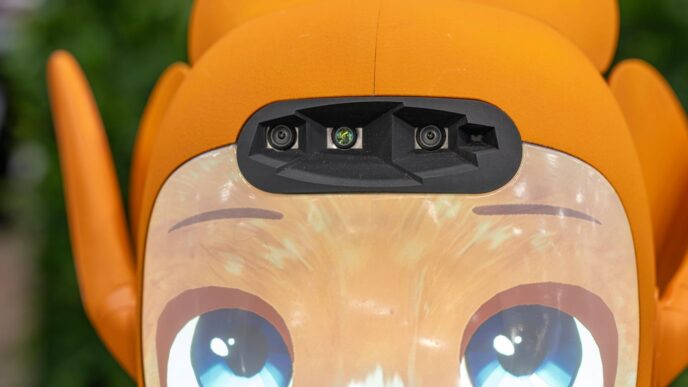
Think about how you learn. You try something, see what happens, and adjust. That’s basically what AI and machine learning are letting robots do, but way faster and on a massive scale. Instead of being programmed for every single situation, robots can now look at data, figure out patterns, and make decisions on their own. This means they can handle tasks that are messy or unpredictable, like sorting different kinds of objects on a conveyor belt or even helping doctors during surgery by spotting things humans might miss. This ability to learn and improve over time is what’s really making robots more useful in the real world.
Here’s a quick look at what this means:
- Better Perception: Robots can now
Emerging Trends in Robotics Development
So, what’s next for robots? It’s not just about making them stronger or faster anymore. We’re seeing some really interesting shifts that are changing how we think about and use robots.
The Growing Influence of Humanoid Robots
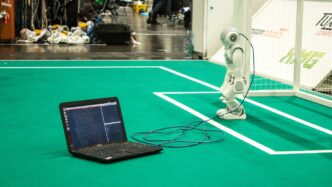
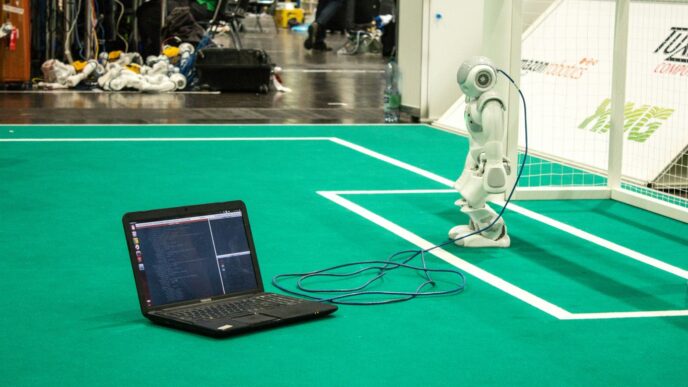
Humanoid robots, the ones that look and move a bit like us, are stepping out of science fiction and into more practical roles. Think about it – they can potentially do jobs that require human-like dexterity and interaction. We’re seeing them in research labs, sure, but also starting to show up in places where they can help out with tasks that are difficult for traditional industrial robots. Their ability to navigate human environments and potentially work alongside us is a big deal.
Robotics-as-a-Service and Democratization
This is a pretty cool trend. Instead of companies having to buy expensive robots outright, they can now rent robotic capabilities as a service. It’s kind of like subscribing to a software service, but for robots. This makes advanced robotics accessible to smaller businesses that couldn’t afford the big upfront costs. It’s really opening the door for more people to use robots.
Here’s a quick look at how this is changing things:
- Lower Entry Costs: Businesses can access robotic automation without massive capital investment.
- Scalability: Companies can scale their robotic use up or down as needed.
- Access to Latest Tech: Service providers often update their robots, giving users access to newer models.
Quantum Computing’s Potential Impact
This one’s a bit more out there, but it’s worth mentioning. Quantum computing is still pretty new, but it has the potential to solve problems that are way too complex for today’s computers. For robotics, this could mean robots that can plan their movements much faster, optimize complex tasks in real-time, or even train AI models more efficiently. It’s still early days, but imagine robots that can handle incredibly intricate situations because their ‘brains’ are powered by quantum computers. It could really change what robots are capable of, especially for things like managing large fleets of autonomous vehicles or complex simulations.
Future Trajectories and Research Frontiers
Energy-Efficient and Sustainable Robotic Systems
As robots become more common, we’re starting to think a lot more about how they use energy and their impact on the planet. It’s not just about making them work, but making them work well without draining resources. Future designs are really focusing on robots that can power themselves for longer periods. This means looking at things like harvesting energy from their surroundings – think solar panels on their backs or capturing kinetic energy from movement. Wireless charging is also a big one, so they can top up without needing someone to plug them in. Plus, there’s a push to use materials that are kinder to the environment, like ones that can be recycled or even break down naturally. The idea is to build robots with their whole life cycle in mind, making them easier to repair, reuse, and eventually dispose of responsibly.
Ethical, Legal, and Governance Frameworks for Robotics
Things are moving so fast in robotics, and the rules and laws just can’t keep up. It’s a bit of a wild west situation sometimes. We really need to figure out how to make sure these smart machines are transparent. What does that mean? It means we should be able to understand why a robot made a certain decision, especially if it affects people. And we have to be super careful about bias. Robots learn from data, and if that data is skewed, the robot will be too, potentially making unfair decisions. Then there’s privacy – with robots in our homes and public spaces, what happens to all the information they collect? Establishing clear lines of responsibility when something goes wrong is also a huge challenge. Who’s to blame if an autonomous system causes an accident? These are the big questions we need solid answers for.
Addressing Economic and Workforce Displacement Concerns
Okay, let’s talk about jobs. Automation is great for efficiency, but it’s also making a lot of people nervous about their livelihoods. While some jobs might get a boost, especially those that require higher skills to manage the new tech, a lot of repetitive or lower-skill jobs are definitely at risk. We can’t just ignore this. It means we need to get ahead of it by focusing on training people for new roles, encouraging lifelong learning, and making sure there are safety nets in place for those who are most affected. It’s about making sure that as robots take on more tasks, people aren’t left behind.
Cross-Sectoral Applications of Robotics
Robots aren’t just for factories anymore; they’re showing up everywhere, changing how we do things in all sorts of fields. It’s pretty wild how quickly they’re becoming part of our daily lives and work.
Transforming Manufacturing and Intralogistics
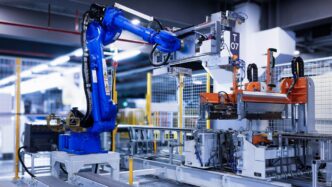
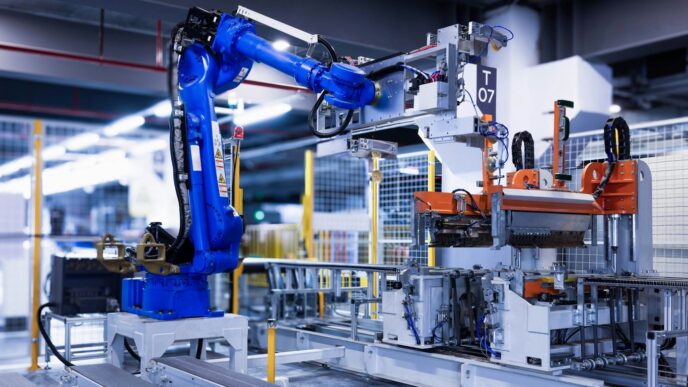
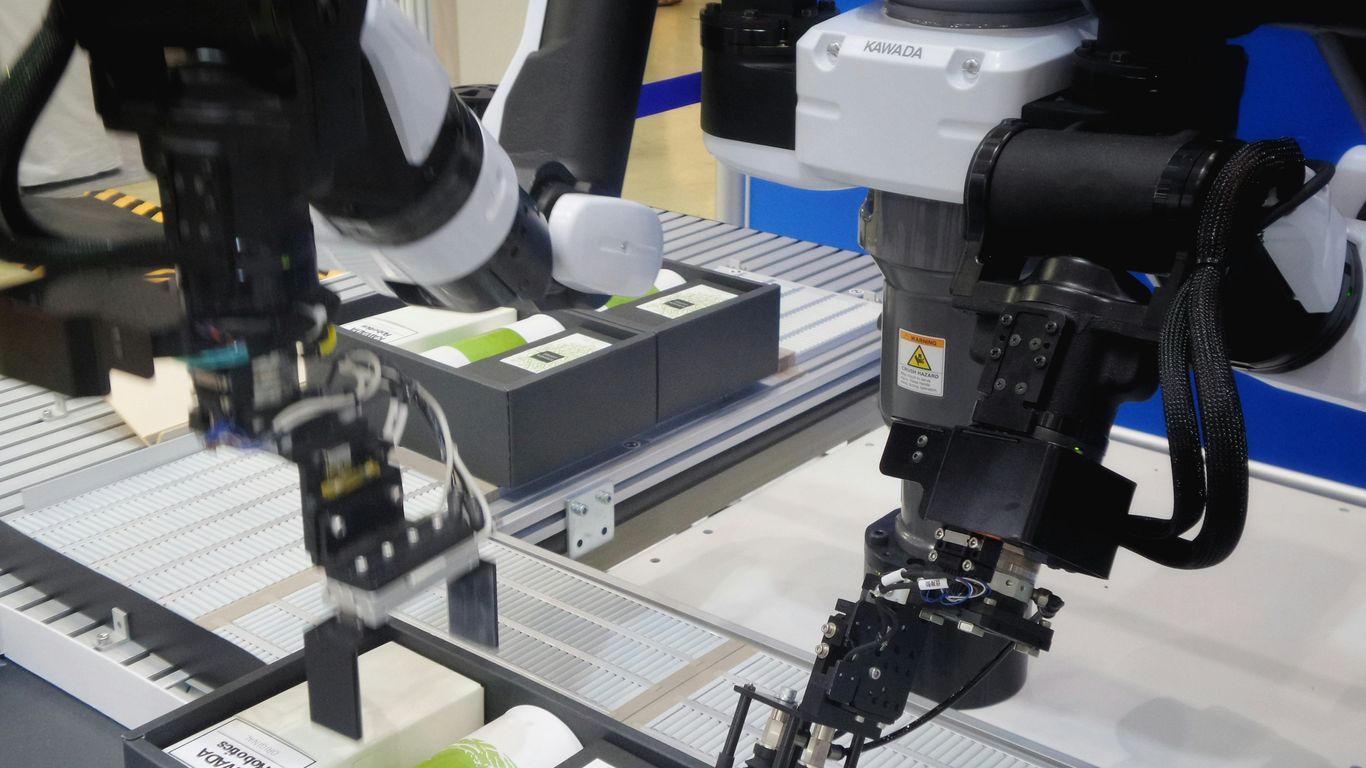
Manufacturing has been the classic home for robots, and it’s still a huge area. Think about all those repetitive tasks like welding, painting, or moving heavy stuff around. Robots do that with amazing consistency, day in and day out. But it’s not just the old-school stuff. We’re seeing "smart factories" now, where robots work with all sorts of connected systems and AI. This means production lines can adjust on the fly, predict when a machine needs fixing before it breaks, and generally run much smoother. Then there are "cobots" – robots designed to work right alongside people. They handle the grunt work, letting humans focus on the trickier bits that need a human touch. This is a big deal for smaller businesses too, as these cobots are becoming more affordable and easier to set up. In warehouses, robots are also taking over the heavy lifting and sorting, making the movement of goods faster and more efficient.
Robotics in Healthcare and Agriculture
In healthcare, robots are doing some pretty incredible things. Surgical robots, for example, give surgeons super steady hands and better vision for delicate operations, often meaning quicker recovery for patients. There are also robots that help people with physical therapy, guiding them through exercises and adapting to their progress. And it’s not just about physical help; robots are being used for remote consultations, bringing medical advice to places that might not have easy access to doctors. AI-powered robots are even helping doctors spot diseases by analyzing scans and patient data. In agriculture, robots are tackling challenges like labor shortages and the need for more sustainable farming. They can plant seeds with precision, monitor crop health, and even harvest produce, all while using resources more efficiently. This helps farmers grow more food with less waste.
Applications in Defense and Domestic Environments
When you think of defense, robots might bring to mind drones or bomb disposal units, and that’s certainly part of it. Robots can go into dangerous situations that humans can’t, performing reconnaissance or clearing hazardous areas. But their use is expanding. In our homes, robots are becoming more common too. We’ve all seen robot vacuums, but there are also robots that can help with lawn care, pool cleaning, and even window washing. For older adults, robots are starting to offer assistance with daily tasks, medication reminders, and even just companionship. In the service industry, robots are popping up in hotels for room service delivery and in retail stores to help manage inventory or guide shoppers. The goal is to make life easier and safer, both in specialized fields and in our everyday surroundings.
Wrapping It Up
So, we’ve looked at a lot of cool stuff happening in robotics. From smart factories getting even smarter with AI to robots that look and act more like us, it’s clear things are moving fast. It’s not just about making things in factories anymore; robots are showing up in all sorts of places. There are definitely some big questions to figure out, like how this affects jobs and what the rules should be. But overall, it feels like robotics has a lot of potential to help us out, as long as we’re thoughtful about how we build and use these machines. It’s going to be interesting to see what happens next.