
It feels like everywhere you look these days, AI is popping up, and healthcare is no exception. Google AI, in particular, is making some pretty big waves when it comes to diagnosing illnesses. Think about it – instead of just relying on what a doctor can see or interpret, we’ve got smart systems that can crunch huge amounts of data and spot things we might miss. This article is going to chat about how this technology is changing things up, from making diagnoses more accurate to making patient care a bit more personal, and even tidying up how hospitals run. We’ll also peek at what’s next for google ai medical diagnosis.
Key Takeaways
- Google AI uses machine learning and deep learning to get better at spotting diseases, especially by looking at medical images like X-rays and scans.
- AI helps create treatment plans that are just for you, based on your genes and health history, and can even predict health problems before they happen.
- Hospitals and clinics can run smoother with AI handling paperwork and making sure resources are used wisely, which also cuts down on mistakes.
- The role of AI in helping doctors make decisions is growing, and it’s expected to become a normal part of how healthcare works, though there are still some hurdles to clear.
- AI is showing real promise in reading medical scans, finding things like pneumonia or skin issues, and even helping with heart and lab test diagnoses.
Enhancing Diagnostic Accuracy With Google AI
It’s pretty wild how much computers can help doctors figure out what’s wrong with people these days. We’re talking about using smart programs, the kind that learn from tons of information, to spot diseases earlier and more accurately than ever before. Think about it: doctors spend years learning, but even then, spotting subtle signs can be tough. That’s where AI steps in.
Leveraging Machine Learning for Precise Disease Identification
Machine learning, or ML, is like teaching a computer by showing it a massive number of examples. For medical stuff, this means feeding it thousands, even millions, of patient records, scans, and test results. The computer then finds patterns that might be too small or complex for a human eye to catch. It’s not about replacing doctors, but giving them a super-powered assistant.
- Spotting Cancer: ML models have shown real promise in identifying cancerous cells in images, like mammograms. Studies have shown AI can reduce mistakes in spotting breast cancer, both by flagging things that aren’t actually cancer (false positives) and by missing actual cancers (false negatives).
- Heart Health: AI can look at EKGs and other heart data to find abnormalities and even predict risks for heart problems down the line.
- Infections: From chest X-rays to detect pneumonia to analyzing blood samples, ML is being trained to identify various infections.
Deep Learning’s Role in Pattern Recognition for Diagnosis
Deep learning is a more advanced type of ML that uses structures called neural networks, kind of inspired by how our own brains work. These networks can automatically learn features from raw data. This is especially useful for things like images.
- Skin Cancer: Deep learning programs have been trained on pictures of skin conditions and can now classify skin lesions with accuracy comparable to dermatologists.
- Diabetic Retinopathy: This is a serious eye condition that can lead to blindness. AI can analyze eye scans to detect it early, which is super important for people with diabetes.
- Appendicitis: In emergency situations, quick and correct diagnosis is key. ML algorithms have been developed to help predict appendicitis early, which can speed up treatment decisions.
AI’s Superiority in Medical Image Analysis
Medical images are a goldmine of information, but interpreting them takes a lot of skill and time. AI is really shining here. It can process these images incredibly fast and often with a higher degree of consistency than humans.
| Condition Detected | AI Sensitivity | Radiologist Sensitivity (Example) |
|---|---|---|
| Pneumonia | 96% | 50% |
| Breast Cancer | 90% | 78% |
This isn’t just about speed; it’s about accuracy. For conditions like pneumonia, AI has shown it can be significantly better at spotting the signs in chest X-rays. This means patients can get the right treatment faster, which can make a big difference in how well they recover. The goal is to make diagnoses more reliable and accessible for everyone.
Personalizing Patient Care Through AI Insights
It’s not just about spotting diseases faster, though that’s a big deal. Google AI is also changing how we think about treating each person as an individual. We’re moving away from one-size-fits-all approaches and towards care that’s really tailored.
Tailoring Treatments with AI-Driven Genomic Analysis
Think about your DNA. It’s unique to you, and it holds clues about how you might respond to different medications or treatments. AI can sift through massive amounts of genetic data, looking for patterns that doctors might miss. This helps in figuring out the best drug or therapy for someone, potentially avoiding trial-and-error.
- Identifying genetic markers linked to drug response.
- Predicting individual risk for certain conditions.
- Suggesting personalized treatment pathways based on genetic makeup.
Predictive Analytics for Proactive Health Interventions
Instead of waiting for someone to get sick, AI can help us see potential problems coming. By looking at a person’s health history, lifestyle, and even data from wearable devices, AI can flag individuals who might be at higher risk for certain health issues down the line. This means doctors can step in earlier, perhaps with lifestyle advice or preventative measures, before a condition becomes serious.
| Risk Factor | Current AI Prediction Accuracy | Potential Intervention |
|---|---|---|
| Cardiovascular Disease | 85% | Lifestyle coaching |
| Type 2 Diabetes | 78% | Dietary adjustments |
| Certain Cancers | 70% | Targeted screening |
AI-Powered Virtual Assistants for Patient Support
Remember calling a doctor’s office and waiting on hold? AI-powered virtual assistants, like chatbots, are changing that. They can answer common questions, help schedule appointments, remind patients to take their medication, and even offer basic health advice. This frees up human staff for more complex cases and gives patients quick access to information whenever they need it. They can also help patients understand their conditions better, making them more active participants in their own care.
Streamlining Healthcare Operations With AI
Running a hospital or clinic is a massive undertaking, and frankly, it often feels like juggling a dozen things at once. There’s always paperwork, scheduling, and making sure everything flows smoothly. It’s easy for things to get bogged down, and honestly, that’s where Google AI is starting to make a real difference.
Automating Administrative Tasks for Increased Efficiency
Think about all the time healthcare staff spend on tasks that don’t directly involve patient care. Things like inputting patient data, scheduling appointments, or managing billing can eat up hours. AI can take over a lot of this. It’s like having a super-efficient assistant who never gets tired. For example, AI can automatically sort and file patient records, freeing up nurses and doctors to spend more time with people who need them. It can also handle appointment reminders and basic patient inquiries, reducing the burden on reception staff.
Optimizing Workflow and Resource Allocation
Beyond just administrative tasks, AI is also helping to make the whole system run better. It can look at patterns in patient flow – when certain departments are busiest, how long people wait, and where resources are being used most. This information helps hospitals figure out how to staff their teams better and make sure equipment is available when and where it’s needed. It’s about making sure the right people and tools are in the right place at the right time.
Here’s a quick look at how AI can help optimize operations:
- Predicting Patient Volume: AI can analyze historical data and current trends to forecast how many patients a clinic or ER might see on any given day. This helps in scheduling staff and managing supplies.
- Improving Patient Flow: By tracking patient movement through different departments, AI can identify bottlenecks and suggest ways to speed up the process, reducing wait times.
- Managing Inventory: AI can monitor the usage of medical supplies and predict when new orders are needed, preventing shortages and reducing waste.
Reducing Errors in Billing and Insurance Processing
Billing and insurance can be incredibly complicated, and mistakes here can cause big headaches for both patients and providers. AI can help by automatically checking claims for accuracy, identifying potential fraud, and making sure everything is coded correctly. This not only saves time and money but also helps prevent billing errors that can lead to patient frustration and delayed payments. It’s a way to bring more accuracy to a process that’s often prone to human error.
The Future of Google AI in Medical Diagnosis
So, what’s next for Google AI in the world of medical diagnosis? It’s a pretty exciting space, and things are moving fast. We’re not just talking about incremental improvements anymore; we’re looking at a real shift in how healthcare works.
AI’s Evolving Role in Clinical Decision Support
Right now, AI is really good at spotting patterns in data that humans might miss. Think about medical images – AI can analyze them with incredible speed and accuracy. But the future is about AI becoming a true partner for doctors. It’s not about replacing them, but about giving them better tools to make decisions. Imagine an AI that can sift through a patient’s entire medical history, cross-reference it with the latest research, and then suggest the most likely diagnoses or treatment options. This kind of advanced clinical decision support could dramatically reduce diagnostic errors and speed up the time to treatment. It’s like having a super-powered assistant who’s read every medical journal ever published.
Integrating AI into Mainstream Healthcare Delivery
Getting these advanced AI tools into everyday doctor’s offices and hospitals is the next big hurdle. It’s not just about building the tech; it’s about making it easy to use and trust. We’re seeing AI start to automate tasks that take up a lot of doctors’ time, like sifting through patient records or scheduling appointments. Google is working on things like Vertex AI Search for Healthcare, which helps doctors quickly find specific information in patient data. The goal is to free up clinicians so they can spend more time actually caring for patients, not buried in paperwork. This integration needs to be smooth, secure, and, of course, compliant with all the healthcare regulations.
Addressing Challenges in AI Implementation
Of course, it’s not all smooth sailing. There are definitely challenges. One big one is making sure AI systems are fair and don’t have biases. If the data used to train an AI isn’t diverse, the AI might not work as well for certain groups of people. Then there’s the issue of data privacy and security – patient information is sensitive, and we need to be absolutely sure it’s protected. Doctors also need to be trained on how to use these new AI tools effectively. It’s a learning curve for everyone involved. Finally, there’s the cost and the infrastructure needed to support these advanced AI systems. But as the technology gets better and more widespread, these challenges are being tackled head-on.
Google AI’s Impact on Medical Imaging
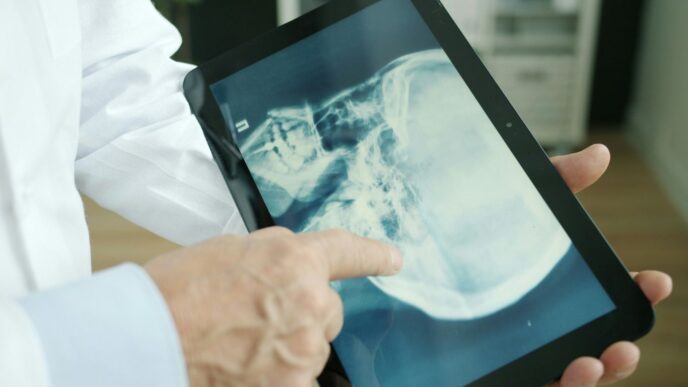
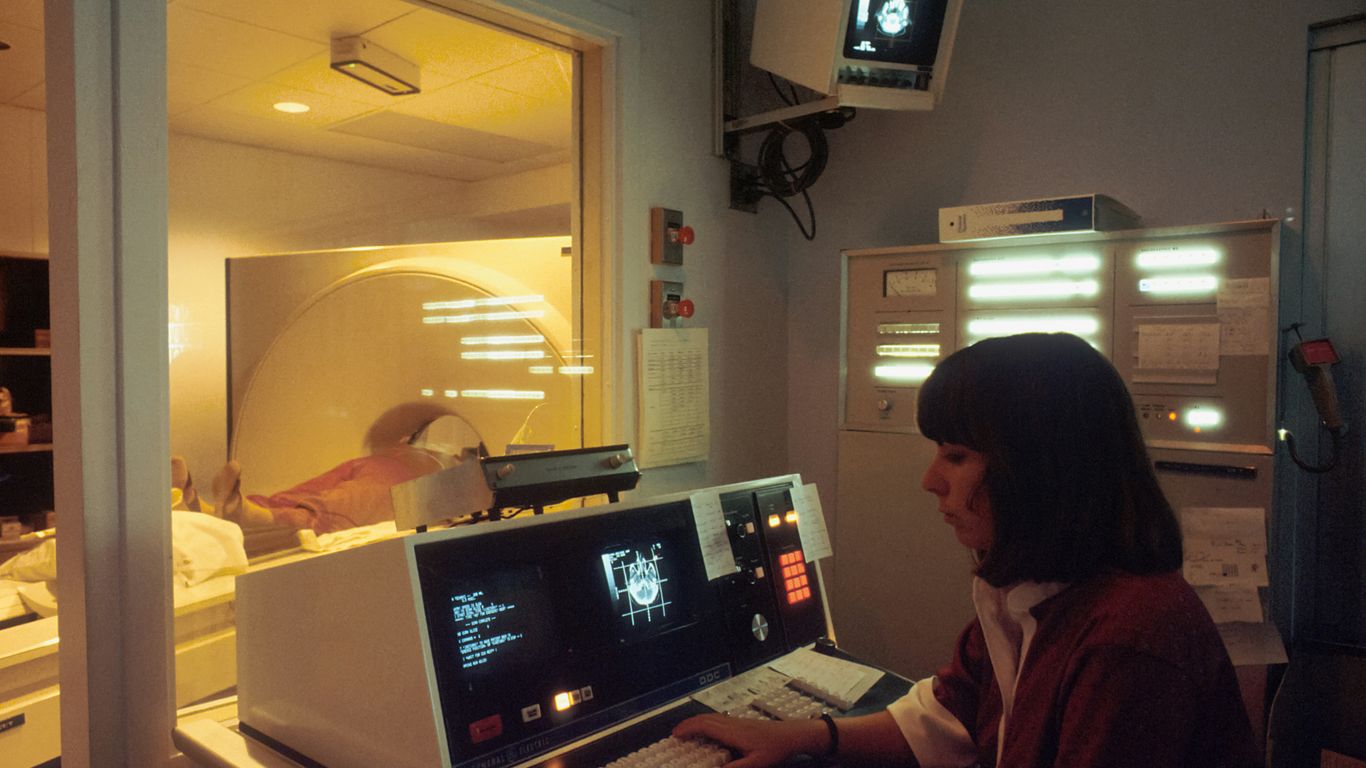
Medical imaging is one area where Google AI is really making a splash. Think about all those X-rays, CT scans, and MRIs doctors look at. AI is getting incredibly good at spotting things in these images, sometimes even better than the human eye.
AI for Automated Classification of Medical Scans
This is a big one. AI systems can be trained on thousands, even millions, of medical images. They learn to recognize patterns associated with different conditions. This means they can sort through scans much faster than a person. For example, an AI might be able to flag scans that look normal, letting radiologists focus their attention on the ones that seem to have something unusual.
Detecting Pneumonia and Skin Lesions with AI
We’re already seeing AI used to help detect specific conditions. In radiology, studies have shown AI algorithms can be quite accurate at identifying signs of pneumonia on chest X-rays. Similarly, in dermatology, AI has been trained to look at images of skin and classify lesions, helping to spot potential skin cancers. It’s like having a super-powered assistant for these visual diagnoses.
AI’s Performance in Cardiology and Pathology Diagnostics
It’s not just X-rays. AI is also showing promise in other fields. In cardiology, AI algorithms are being developed to analyze heart scans and even EKGs to help identify heart problems. And in pathology, where doctors examine tissue samples under a microscope, AI can help analyze slides to find things like cancer cells. The goal here isn’t to replace doctors, but to give them tools that can help them be more accurate and efficient.
The Road Ahead
So, where does all this leave us? It’s pretty clear that Google AI isn’t just a passing trend in healthcare; it’s becoming a real part of how we diagnose and treat people. From spotting diseases in images faster than the human eye to helping sort out all the paperwork, AI is making things more accurate and, hopefully, less stressful for doctors and nurses. It’s not about replacing the human touch, but about giving healthcare pros better tools. There are still some hurdles to jump, like making sure the data is private and fair, but the potential to help more people get better care, sooner, is huge. It feels like we’re just scratching the surface of what’s possible.