It feels like AI is everywhere these days, doesn’t it? From our phones to our cars, it’s changing how we do things. This article looks at what’s happening with AI in the business world right now. We’ll cover what AI really means for companies, how it’s changing different jobs, and what we can expect down the road. It’s a lot to take in, but we’re trying to make sense of it all for you.
Key Takeaways
- AI is more than just computer programs; it’s about making machines work in the real world, which is proving tricky.
- Big names like Marc Andreessen think getting AI to handle real-world stuff, like driving a truck or running a mine, is way harder than just making it work on a computer.
- Companies are looking at AI to help with jobs that are tough or not very popular, like in mining and farming.
- The future of AI might involve more robots and machines doing physical tasks, not just online ones.
- Even though AI is moving fast, there’s a big difference between people who really get it and those who don’t.
Understanding the AI Business Insider Landscape
Defining Artificial Intelligence in Business
So, what exactly are we talking about when we say "Artificial Intelligence" in the business world? It’s not just about robots taking over, though that’s a fun thought. Really, it’s about computer systems that can do tasks that usually need human smarts. Think about things like learning from information, solving problems, or even understanding what people are saying. For businesses, this means tools that can sort through mountains of customer data to find patterns, or systems that can automate repetitive jobs, freeing up people for more complex work. It’s about making computers work smarter, not just harder.
Key Trends Shaping the AI Market
The AI market is moving fast, and a few big things are happening. One is that AI is getting better at understanding the real world, not just digital information. This is sometimes called "Physical AI." Another trend is how AI is changing jobs. Some jobs might change a lot, and new ones will pop up. We’re also seeing a big push to make AI more practical and less like science fiction. Companies are looking for AI that can actually solve problems today.
Here are some of the big shifts:
- More Practical Applications: Moving beyond theoretical ideas to real-world uses.
- Focus on Efficiency: Businesses want AI that cuts costs and speeds things up.
- Talent Shift: The workforce needs to adapt to working alongside AI.
- Physical World AI: AI interacting with and controlling physical systems.
The Role of AI in Business Transformation
AI isn’t just a new tool; it’s changing how businesses operate from the ground up. It can help companies make better choices by looking at data in ways humans can’t. It can also make things run more smoothly, like managing supply chains or handling customer service. This isn’t just about small tweaks; it’s about rethinking entire business models. Companies that don’t pay attention to AI risk falling behind.
Navigating AI’s Impact on Industries
It’s pretty wild how AI is changing things across so many different fields, not just in the digital world. We’re seeing it pop up in places you might not expect, and it’s definitely shaking things up.
AI’s Influence on Talent and Employee Lifecycles
Think about how we hire people or how employees learn new skills. AI is starting to play a role here. It can help sort through resumes, identify candidates who might be a good fit, and even suggest training programs. For instance, some companies are using AI to spot employees who are ready for a promotion or to create personalized learning paths. It’s not just about finding new people; it’s about how everyone grows within a company. This shift means HR departments need to rethink their whole approach to managing people.
Here are a few ways AI is changing the employee journey:
- Recruitment: AI tools can scan thousands of applications quickly, flagging those that match job requirements. This can speed up the initial screening process significantly.
- Training and Development: AI can identify skill gaps and recommend specific courses or resources for employees to improve. It can also create custom learning modules.
- Performance Management: AI might help track progress, provide feedback, and even suggest areas for improvement based on performance data.
- Career Progression: Some systems are being developed to help map out potential career paths within an organization, suggesting roles that align with an employee’s skills and aspirations.
The Rise of Physical AI and Real-World Applications
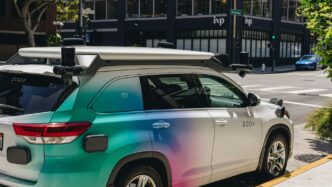
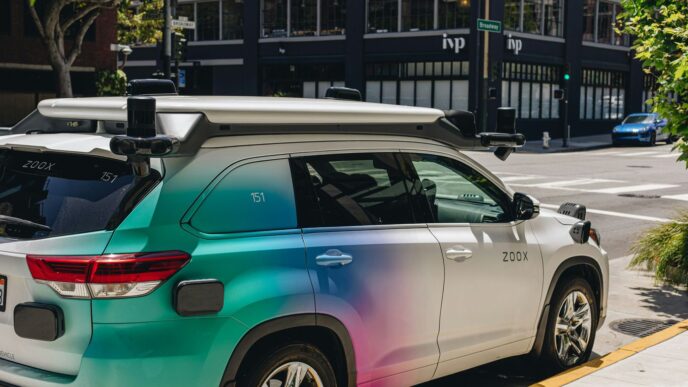
This is where things get really interesting. AI isn’t just for computers anymore. We’re talking about AI that interacts with the physical world. Think robots in factories, self-driving trucks, or even AI systems that help manage complex physical operations like mining. Companies like Applied Intuition are working on making these systems a reality. It’s a tough challenge, though. Getting AI to work reliably in the messy, unpredictable real world is a whole different ballgame compared to a controlled computer environment. It involves dealing with sensors, unpredictable conditions, and making sure these systems are safe and effective.
AI in Logistics and Autonomous Systems
Logistics is a prime example of where physical AI is making waves. AI is being used to optimize delivery routes, manage warehouse inventory, and predict demand. Autonomous systems, like self-driving vehicles, are a big part of this. Imagine a future where trucks drive themselves across the country, or drones deliver packages efficiently. This could drastically change how goods move around the globe. However, there are still hurdles to overcome, like ensuring safety on public roads and integrating these systems with existing infrastructure. The goal is to make the movement of goods faster, cheaper, and more reliable.
Strategic AI Integration for Business Growth
Getting AI to work for your business isn’t just about buying the latest software; it’s about a thoughtful plan. The real win comes when AI becomes a natural part of how you operate, helping you do things better and faster. Think of it like learning to cook a new dish. You don’t just throw ingredients together; you follow steps, understand the flavors, and adjust as you go. That’s what strategic AI integration looks like for a company.
Leveraging AI for Operational Efficiency
Making your day-to-day work smoother is often the first big payoff from AI. It can take over repetitive tasks, freeing up your team for more important work. Imagine customer service bots handling common questions, or AI systems sorting through mountains of data to find what you need. This isn’t just about saving time; it’s about reducing errors and making sure things get done right the first time.
Here are a few ways AI can boost efficiency:
- Automating Routine Tasks: AI can handle things like data entry, scheduling, and basic report generation. This means fewer mistakes and more time for your staff to focus on complex problems.
- Improving Decision Making: AI can analyze large datasets much faster than humans, spotting patterns and trends that might otherwise be missed. This leads to more informed choices about everything from inventory management to marketing campaigns.
- Streamlining Workflows: AI tools can help manage projects, track progress, and even predict potential bottlenecks before they become major issues. This keeps everything moving along smoothly.
Building a Culture of AI-Driven Innovation
For AI to truly make a difference, it needs to be more than just a tool; it needs to be part of your company’s DNA. This means encouraging everyone, from the top down, to think about how AI can solve problems and create new opportunities. It’s about creating an environment where new ideas are welcomed and experimentation is okay, even if not every experiment is a huge success.
Key steps to building this culture include:
- Education and Training: Make sure your employees understand what AI is and how it can help them in their roles. Offer training sessions and resources.
- Encouraging Experimentation: Set up small projects or ‘sandbox’ environments where teams can try out AI tools without high stakes.
- Recognizing AI Champions: Highlight individuals or teams who are successfully using AI to improve their work or come up with new ideas.
Scaling AI Solutions for Competitive Advantage
Once you’ve seen success with AI in one area, the next step is to grow. This means taking what you’ve learned and applying it more broadly across the organization. It’s not always easy; scaling requires careful planning, the right technology, and ongoing support. But when done right, it can give your business a significant edge over competitors who are slower to adopt these technologies.
Consider these points when scaling:
- Infrastructure: Do you have the necessary computing power and data storage to support wider AI use?
- Data Management: Is your data organized, clean, and accessible for AI systems?
- Integration: How will new AI solutions connect with your existing software and systems?
Successfully integrating AI isn’t a one-time event; it’s an ongoing process of learning, adapting, and growing. By focusing on efficiency, innovation, and smart scaling, businesses can use AI to build a stronger, more competitive future.
The Future of AI Development and Adoption
It feels like just yesterday we were talking about AI as some far-off concept, and now? It’s everywhere. But what’s actually next? We’re seeing some pretty big shifts happening, and it’s not just about smarter chatbots anymore.
Predictions for AI’s Next Frontier
People who’ve been in this space for a while are starting to see patterns. Some thought leaders, like Mo Gawdat, made predictions back in 2020 that are starting to look spot-on. The pace of development is really picking up. Think about it: OpenAI’s chief scientist mentioned that AI is getting close to the skill level of a human research intern. That’s a huge leap from where we were just a couple of years ago. We’re moving beyond just processing information to actually performing tasks that require a good deal of understanding. The easy wins are being taken, and now the real challenges are coming into focus.
The Growing Gap Between AI Users
Something interesting is happening with how people are actually using AI. It’s not just a simple matter of everyone being on the same page. Some folks are really diving deep, becoming what you might call power users, while others are still figuring out the basics. Andrej Karpathy, who was at Tesla and OpenAI, even talked about a "growing gap" where these two groups are almost speaking different languages. It means that as AI gets more powerful, the people who know how to use it effectively will have a significant advantage. Worker access to AI tools saw a big jump in 2025, and companies are planning to put more AI projects into production soon. This rapid acceleration means we need to pay attention to who is getting left behind and how we can help everyone catch up.
Emerging AI Startups and Their Ambitions
Keep an eye on the new companies popping up. They’re not all just building the next big chatbot. Some are focused on really specific, tough problems. For instance, there’s a lot of talk about "physical AI" – getting AI to work in the real world, not just on screens. Companies are trying to automate things like mines, farms, and trucks. This is way harder than just writing code because the real world is messy and unpredictable. Marc Andreessen, a big name in venture capital, pointed out that there are two waves of AI: the virtual one, which is easier, and the physical one, which is much more complex. We’re seeing startups trying to tackle this physical wave, aiming to bring AI out of the digital space and into our everyday lives in tangible ways.
AI Business Insider: Expert Insights and Analysis
Marc Andreessen on the Practical Realities of AI
Marc Andreessen, a well-known figure in the tech world, has pointed out that AI’s biggest hurdle right now is simply its ability to function in the real world. It’s one thing for AI to process data or generate text in a controlled digital environment, but quite another for it to interact with the messy, unpredictable physical space. He mentioned that "the practical reality of existing in the world" is a significant challenge for current AI systems. This means AI needs to get better at understanding context, handling unexpected events, and generally just being more robust when it’s not in a perfectly simulated setting. It’s a bit like trying to teach a robot to do your taxes versus teaching it to drive a truck in rush hour traffic – very different levels of difficulty.
OpenAI’s Chief Scientist on AI Progress
While specific quotes from OpenAI’s Chief Scientist aren’t detailed here, the general sentiment from leading AI researchers often revolves around the rapid pace of development and the ongoing quest for more general intelligence. The focus is typically on pushing the boundaries of what AI can learn and achieve, moving beyond specialized tasks to more adaptable capabilities. This progress is often measured by benchmarks and the ability of models to generalize knowledge across different domains. The drive is towards AI that can reason, plan, and understand the world more like humans do, though the timeline for achieving such advanced AI remains a topic of much discussion.
EY’s Talent Chief on AI’s Impact on Careers
EY’s Talent Chief, among other HR leaders, has been discussing how AI is reshaping the job market and the skills people will need. It’s not just about jobs disappearing; it’s also about jobs changing and new ones being created. The key takeaway is that adaptability and continuous learning are becoming more important than ever. People will need to work alongside AI tools, using them to become more productive and effective in their roles. This shift means a greater emphasis on skills that AI can’t easily replicate, such as critical thinking, creativity, and emotional intelligence. For instance, in marketing, experts are exploring innovative ways to use AI for campaign testing.
Here’s a look at how roles might evolve:
- Data Analysts: Will spend less time on data cleaning and more time on interpreting AI-generated insights and strategic planning.
- Customer Service Representatives: May handle more complex, empathetic interactions while AI manages routine queries.
- Creative Professionals: Could use AI as a co-pilot for brainstorming and generating initial drafts, focusing their efforts on refinement and unique artistic direction.
This evolution requires a proactive approach to upskilling and reskilling the workforce to meet the demands of an AI-integrated future.
Challenges and Opportunities in Physical AI
Bringing artificial intelligence out of the digital space and into the real world, what some are calling "Physical AI," is a whole different ballgame. It’s not just about writing clever code anymore; it’s about making machines that can actually do things in environments that are, well, messy and unpredictable. Think about it: an AI that drives a truck needs to handle everything from sudden rainstorms to unexpected road construction, not just a simulated highway. This is where the real difficulty lies. The main obstacles for Physical AI are the long-standing technological and economic challenges that have historically hindered the robotics industry.
The Difficulty of Bringing AI to the Physical World
It’s easy to get excited about AI that can write poems or answer questions. That’s the “virtual wave,” as Marc Andreessen puts it. But the world we live in is physical. Making AI work in this space means dealing with things like weight, balance, and safety. Remember that robot dog that weighed 150 pounds? That’s a good example of how the practicalities of the physical world can trip up even ambitious ideas. The easy wins in AI are already taken, and the harder applications, like complex machinery, are barely touched. Companies are realizing that the most valuable businesses operate in atoms, not just bits, but making that transition is tough.
Applied Intuition’s Vision for Automation
Companies like Applied Intuition are trying to bridge this gap. They’re not building robots from scratch. Instead, they’re putting their AI software onto existing equipment – think big mining excavators or long-haul trucks. Their goal is to automate jobs that are often tough and undesirable, like those in mining and farming. They’ve even deployed autonomous trucks in Japan to help with a driver shortage. It’s about making these machines smarter so they can handle the unpredictable nature of fields, mines, and highways. They see this as AI’s "biggest opportunity and gap."
Addressing Uncertainty in Real-World AI Deployments
So, how do you actually make this work? It’s not just about having a great AI model. It’s about understanding the demands of the real world. This means:
- Dealing with unpredictable environments: AI systems need to adapt to changing weather, uneven terrain, and unexpected obstacles.
- Integrating with existing hardware: Software needs to work reliably with a wide range of physical machines, which often have their own limitations.
- Ensuring safety and reliability: When machines are operating in the physical world, especially around people, safety has to be the top priority.
It’s a complex puzzle, but the potential payoff – automating difficult tasks and improving efficiency across industries – is huge. It’s a long road, but one that many believe is necessary for future progress in autonomous systems.
Wrapping It Up
So, where does all this leave us with AI? It’s clear things are moving fast, maybe faster than we thought. We’ve seen how it’s changing jobs, how companies are trying to figure it all out, and even how it’s starting to interact with the real world, not just our screens. It’s not just about the fancy tech anymore; it’s about how we actually use it day-to-day. There’s a lot to learn and adapt to, for sure. But one thing seems pretty certain: AI isn’t going anywhere, and figuring out how to work with it is going to be a big part of what comes next for all of us.
Frequently Asked Questions
What exactly is Artificial Intelligence in simple terms?
Think of Artificial Intelligence, or AI, as making computers smart enough to do things that usually need human brains. This could be understanding what you say, recognizing pictures, or even making decisions. It’s like teaching a computer to learn and solve problems on its own.
How is AI changing the way businesses work?
AI is like a super helpful tool for businesses. It can help them work faster by doing boring tasks automatically, help them understand what customers want better, and even help them come up with new ideas. It’s making businesses smarter and more efficient.
What does ‘Physical AI’ mean?
Physical AI is about AI that doesn’t just live on computers but actually interacts with the real world. Imagine robots in factories, self-driving trucks, or smart farming machines. It’s AI that can move, build, or do physical jobs.
Will AI take away jobs?
That’s a big question! AI will definitely change jobs. Some tasks might be done by AI, but it will also create new jobs that need people to manage, build, and work with AI. The key is learning new skills to work alongside AI.
Is it hard to make AI work in the real world?
Yes, it’s quite tricky! Computers are good at dealing with clear rules, but the real world is messy and unpredictable. Making AI understand and handle things like bad weather, uneven ground, or unexpected events is a major challenge.
What’s next for AI?
Experts think AI will keep getting better and smarter. It might become even more helpful in science, medicine, and everyday life. We’ll likely see AI helping us solve really big problems and making our lives easier in many new ways.