It’s another busy day in the world of artificial intelligence. We’re seeing new ways AI is being used, from helping doctors figure out health problems to making robots better at their jobs. There’s also a lot of talk about how AI affects us all, and how researchers are working together to push things forward. Let’s check out some of the latest ai news today.
Key Takeaways
- New methods are being developed to spot when AI models, especially language ones, might be too confident and giving wrong answers. This helps us know if we can trust what the AI says.
- Robots are getting smarter and more helpful. One can now pick fruit, and another can be controlled by a simple wristband, mimicking human hand movements.
- AI is showing promise in healthcare, with new models that can help predict if heart failure patients might get worse in the next year. It’s also being used to better understand how tumors grow.
- There are growing concerns about AI being used to create fake content, like sexualized influencers, leading to real-world harm and investigations on platforms like TikTok.
- Researchers and institutions are teaming up to advance AI. This includes collaborations between universities and industry, like the MIT-IBM Watson AI Lab, and new hubs focused on AI and creativity.
AI News Today: Breakthroughs in Machine Learning
It feels like every week there’s something new happening with AI, and this past week was no different. We’re seeing some really interesting work coming out that tackles some of the trickier problems in machine learning.
One of the big topics is how we can trust what AI tells us. Large language models, for example, can sometimes just make things up, a phenomenon often called ‘hallucination’. Researchers have developed a new way to measure how confident these models are, which could help us know when to take their answers with a grain of salt. This is pretty important, especially as we start using AI for more critical tasks. Imagine an AI giving you medical advice; you’d want to know if it’s just guessing or if it’s pretty sure about its diagnosis.
We’re also seeing AI get better at seeing the world, even when things are hidden. There’s a new technique using generative AI that improves wireless vision systems. Think about robots that can ‘see’ through walls or detect objects that are blocked from view. This could be a game-changer for things like warehouse automation or even search and rescue operations. It uses reflected Wi-Fi signals to build a picture of what’s going on, which is pretty wild when you think about it.
And then there’s the push to make AI more… well, humble. An MIT-led team is working on AI systems for medical diagnosis that are more upfront about what they don’t know. Instead of just giving an answer, these systems are designed to be more collaborative and admit when they’re uncertain. This is a big step towards making AI a more reliable partner in fields where mistakes can have serious consequences. It’s all about building AI that’s not just smart, but also honest about its limitations. This kind of development is key for advancing scientific discovery where AI can assist researchers.
AI News Today: Innovations in Robotics and Automation
This week in robotics, we’re seeing some pretty cool advancements that blur the lines between human and machine control, and make robots smarter about their surroundings. It’s not just about building more complex machines anymore; it’s about making them work more intuitively with us and understand the world in new ways.
Wristband Enables Wearers to Control a Robotic Hand with Their Own Movements
Imagine controlling a robotic arm just by moving your own hand. That’s basically what a new wristband technology is allowing people to do. By tracking the subtle movements and muscle signals from your arm and hand, this device translates those intentions into commands for a robotic limb. It’s pretty wild – you can make the robot play a tune on a piano or even shoot a basketball. It’s also being used to manipulate objects in virtual spaces, which could be a game-changer for training or design work. The idea is to create a more natural, direct link between human intention and robotic action.
Fruit-Picking Robot Wins National Award
Farming is getting a high-tech upgrade. A robot designed specifically for picking fruit has just snagged a national award, and for good reason. These machines are capable of not only picking ripe produce but also weighing it and harvesting it with surprising speed. We’re talking about strawberries being picked, weighed, and bagged in mere seconds. This kind of automation could really help address labor shortages in agriculture and make the process of getting food from the farm to our tables more efficient.
A Better Method for Planning Complex Visual Tasks
Robots are getting better at seeing and planning. A new hybrid system is being developed that helps robots figure out how to handle complex visual tasks, especially in environments that are constantly changing. Think about a robot trying to navigate a busy warehouse or a factory floor where things are always being moved around. This system could help robots understand their surroundings better and plan their actions more effectively. It could also make multi-robot teams work together more smoothly on assembly lines, increasing overall productivity.
AI News Today: Healthcare and Prognostic Advancements
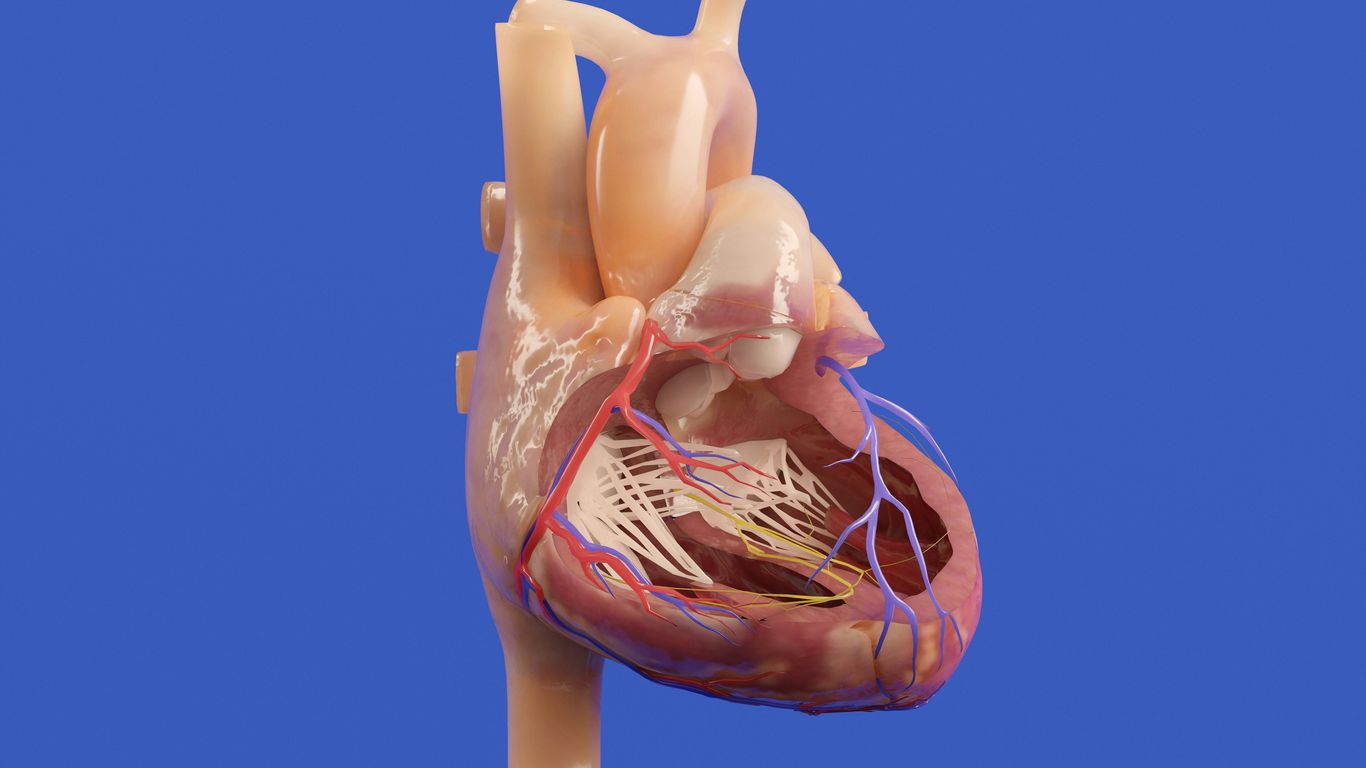
It’s pretty wild how much AI is starting to help out in the medical field. We’re not just talking about administrative stuff either; this is about predicting serious health issues before they get really bad.
Can AI Help Predict Which Heart-Failure Patients Will Worsen Within a Year?
This is a big one. Researchers have been working on a new way to figure out if heart failure patients are likely to get worse over the next year. They’ve developed a deep-learning model, which is basically a smart computer program, that looks at patient data to make these predictions. The goal is to give doctors a heads-up so they can intervene earlier and hopefully change the outcome for these patients. It’s not about replacing doctors, of course, but giving them another tool to help manage complex conditions. This kind of predictive power could really change how we approach chronic disease management.
Building Predictive Models to Characterize Tumor Progression
Cancer is another area where AI is showing a lot of promise. The idea here is to build models that can predict how a tumor will grow and change over time. This involves looking at things on a really small scale, like the genetic makeup of the tumor and its surroundings. By understanding these molecular processes, scientists hope to get better at anticipating when tumors might start resisting treatment. This could lead to more personalized treatment plans, where the therapy is tailored to the specific way a tumor is expected to behave. It’s a complex puzzle, but AI seems to be helping piece it together. For example, similar AI tools are being developed to predict the medical futures of premature infants using blood samples taken shortly after birth, offering a personalized approach to managing their health needs [ea67].
AI News Today: Ethical Considerations and Societal Impact
Fake AI Influencers Are Sexualising Black Women
This is a pretty wild development, and honestly, a bit disturbing. It turns out that some AI-generated influencers, specifically those designed to look like Black women, are being used to push users towards really explicit websites. The BBC did an investigation and found a bunch of these accounts on platforms like TikTok and Instagram. They’re using AI avatars, which are basically computer-generated images, to create these fake personalities. It’s a whole new level of concern when it comes to how AI is being used, and it’s definitely not a good look for anyone involved.
AI Videos of Sexualised Black Women Removed from TikTok After BBC Investigation
Following up on that last point, the BBC’s investigation actually led to action. After they reported on these fake AI influencers sexualising Black women, TikTok stepped in and removed a bunch of these accounts. It’s good that platforms are taking this seriously, but it also makes you wonder how many more of these kinds of issues are out there that haven’t been caught yet. It really highlights the need for better ways to spot and stop this kind of harmful content.
I Tried to Prove I’m Not AI. It Didn’t Go Well
This one’s a bit more personal, and frankly, a little unsettling. Someone apparently tried to prove they weren’t an AI, and it just didn’t work out. The article mentions that even experts, and in one case, a prime minister, had trouble distinguishing between humans and AI. It’s gotten to the point where AI is so convincing, it’s hard to tell what’s real and what’s not. This raises some big questions about identity and authenticity in the age of advanced AI. It makes you think, could you prove you’re not an AI if put to the test? It’s a strange thought, isn’t it?
AI News Today: Academia and Industry Collaborations
It’s pretty interesting how much universities and companies are teaming up these days to push AI forward. It feels like a lot of the big ideas are coming out of these partnerships.
MIT-IBM Watson AI Lab Seed to Signal: Amplifying Early-Career Faculty Impact
This initiative is all about giving a boost to researchers who are just starting out. The idea is that by connecting them with industry folks early on, they can get the support they need to really make their work known and have a bigger impact. It’s like a jump-start for promising careers in AI. They’re aiming to help these new faculty members get their ideas from the initial "seed" stage all the way to "signal" – meaning their research is recognized and influential.
MIT and Hasso Plattner Institute Establish Collaborative Hub for AI and Creativity
This sounds like a really cool project. MIT is teaming up with the Hasso Plattner Institute in Germany to create a place where people can explore how AI and creativity go together. It’s not just about the tech itself, but how it can be used in new and interesting ways, especially when combined with design and human-centered ideas. They want to build a community where these different fields can mix and create something new.
Advancing International Trade Research and Finding Community
Sometimes, the most important part of research isn’t just the data, but the people you work with. This piece talks about how researchers, like Sojun Park, are not only digging into complex topics like intellectual property in international trade but also finding a sense of community at places like MIT. It highlights how interactions with students and mentors can really shape the research process and help people grow in their fields. It’s a reminder that even in highly technical areas, human connection matters.
AI News Today: The Future of AI and Science
It feels like every day there’s something new happening with AI, and it’s not just about chatbots or making funny pictures anymore. The real action, the stuff that could change how we understand the world, is happening at the intersection of AI and science. We’re talking about AI helping us figure out the universe, or even just how our own bodies work.
3 Questions: On the Future of AI and the Mathematical and Physical Sciences
Think about how much we’ve learned from math and physics over the centuries. Now, imagine AI not just helping us crunch numbers, but actually helping us come up with new theories. Professor Jesse Thaler is looking at this exact idea – a two-way street where AI can push the boundaries of science, and science can, in turn, guide AI’s development. It’s like having a super-smart assistant that can also teach you new ways to think.
On Algorithms, Life, and Learning
This is a big one. Dimitris Bertsimas, an expert in operations research, gave a talk recently that looked back at how far we’ve come and where we’re headed. It’s not just about making algorithms faster; it’s about how these algorithms learn and how that learning process might mirror life itself. The way AI learns could give us new insights into biological systems and even consciousness. It makes you wonder if we’re just building tools, or if we’re starting to understand something more profound about intelligence itself.
What’s the Right Path for AI?
With all this progress, it’s natural to ask: where are we going with AI? A recent conference brought together speakers to talk about just that. They discussed how AI is developing and, more importantly, how we can steer it. The goal isn’t just to make AI more powerful, but to make sure it’s built in a way that actually helps people and solves real-world problems. It’s about making sure the technology serves us, not the other way around. Some key points from the discussions included:
- Focusing AI development on areas with clear societal benefit.
- Developing methods to check if AI is being overconfident in its answers.
- Creating AI systems that are more open about what they don’t know.
- Ensuring AI research considers the ethical implications from the start.
AI News Today: AI in Public Services and Policy
It seems like everywhere you look these days, there’s talk about how artificial intelligence is going to change things. And that’s definitely true when we talk about public services and government policy. Scotland, for example, is looking at how AI could really shake things up for the better.
Think about it: AI could help make services more efficient, maybe even predict what people will need before they even ask. This could mean faster responses for citizens and better use of taxpayer money. The government there is forecasting a big jump in AI use and wants to make sure they get the most out of it for both services and the economy. It’s a pretty big shift, and they’re trying to figure out the best way to make it happen. The goal is to use AI to improve how things work for everyone.
Of course, it’s not just about efficiency. There are also questions about how AI can help people engage with the political process. For instance, could AI assist you in making more informed decisions when it’s time to vote? It’s an interesting idea, and something that could make a difference in how people participate in democracy. The administration has been looking into AI initiatives, emphasizing access to these technologies for various applications AI technologies.
Here are a few ways AI might impact public services:
- Better Resource Allocation: AI can analyze data to predict demand for services, helping allocate staff and resources more effectively.
- Improved Citizen Interaction: Chatbots and AI assistants could provide quicker answers to common questions and guide citizens to the right services.
- Data Analysis for Policy: AI can process large datasets to identify trends and inform policy decisions, leading to more targeted and effective government action.
- Predictive Maintenance: For public infrastructure like transportation or utilities, AI could predict when maintenance is needed, preventing failures.
Wrapping Up
So, that’s a quick look at what’s been happening in the world of AI lately. It’s pretty wild how fast things are moving, right? From figuring out how to make AI more honest about what it knows, to using it to help doctors predict health issues, and even getting robots to pick strawberries – it’s all happening. It feels like we’re just scratching the surface, and honestly, it’s going to be interesting to see where all this leads. Keep an eye out, because I have a feeling the next update won’t be far behind.