The Genesis Of The Amazon Kiva System
Acquisition And Early Impact
It all really kicked off for Amazon in 2012. They bought a robotics company called Kiva Systems for a pretty hefty sum, around $775 million. This wasn’t just some small purchase; it was a big signal about where Amazon saw the future of its warehouses heading. Before Kiva, warehouse workers spent a lot of time just walking around, trying to find the items they needed to pick. It was a real time sink. Kiva’s robots changed that game. They’re these squat, mobile robots that could lift entire shelves, called pods, and bring them directly to the human workers. This meant the workers didn’t have to trek miles every day. The core idea was simple: bring the products to the people, not the other way around.
Revolutionizing Warehouse Operations
This shift had a massive effect on how Amazon’s fulfillment centers operated. Suddenly, the layout of the warehouse could be optimized differently. Instead of aisles designed for human reach, they could be designed for robot navigation. The robots, using smart algorithms, could coordinate thousands of them moving around without crashing into each other. This made the whole process of finding and retrieving items much faster. It wasn’t just about speed, though; it also started to make things safer by reducing the amount of walking and heavy lifting humans had to do.
The Scale Of Robotic Deployment
After the Kiva acquisition, Amazon really went all-in. They started deploying these robots everywhere. It wasn’t just a few here and there. We’re talking about a massive rollout. By 2013, Amazon already had about 10,000 Kiva robots. Fast forward to 2023, and that number had exploded to around 750,000 robots across their operations. This sheer scale is what allowed Amazon to process and ship millions of items faster and cheaper than competitors. It created a kind of robotic army working behind the scenes, making the whole ecommerce machine run smoother.
Evolution Of Amazon’s Robotic Fleet
From Kiva To Next-Generation Systems
When Amazon bought Kiva Systems back in 2012, it was a pretty big deal. Suddenly, those squat robots that could lift entire shelves of products and bring them to human workers became a core part of Amazon’s warehouses. This meant employees didn’t have to walk miles every day just to find items. It was a smart move that really changed how things worked. The number of these robots has grown like crazy, from around 10,000 in 2013 to a massive 750,000 by 2023. This sheer scale allows Amazon to get millions of items out the door faster and cheaper than most others.
Introducing Hercules And Titan Drive Units
Most of the robots you see in Amazon warehouses today are called Hercules. They look a bit like a Roomba or a lawnmower and get around using QR codes to know exactly where they are. These robots are key to moving items around. While not explicitly named in every context, the evolution has also seen the development of other drive units, like the Titan, designed for different tasks and scales within the fulfillment network. These drive units are the workhorses that keep the inventory flowing.
The Role Of Sequoia In Inventory Management
Before any order can even be picked, Amazon uses sophisticated systems to make sure the right products are already in warehouses close to customers. Then, a system called Sequoia comes into play. It uses a mix of AI, robotics, and computer vision. What does it do? It helps organize inventory and frees up storage space. This means faster processing of orders because everything is more accessible. Think of it as a super-efficient librarian for the warehouse, constantly rearranging and optimizing where everything is stored.
Advancements In Robotic Capabilities
Amazon’s journey with robotics isn’t just about moving shelves anymore. They’ve been pushing the boundaries, making robots smarter and more capable. It’s pretty wild how far things have come since the early days of Kiva.
The Introduction Of Vulcan’s Sense Of Touch
One of the biggest steps forward is a robot called Vulcan. This isn’t just another bot that zips around; Vulcan is the first Amazon robot with something akin to a sense of touch. This is a pretty big deal because it means Vulcan can actually feel what it’s handling. It works with people, picking and putting away items on the very top and very bottom shelves. This makes the job easier and safer for the human workers, and it helps get orders out the door faster. It’s built using new ideas in robotics and AI, letting it handle objects with more care.
Sparrow: Automating Item Aggregation
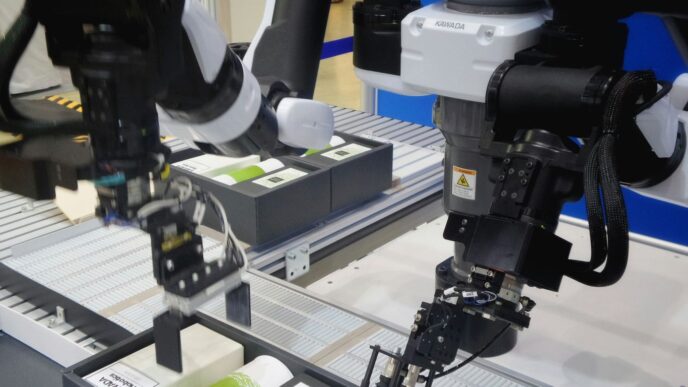
Then there’s Sparrow. Think of Sparrow as a helper for the folks who put together customer orders. It’s a robotic arm that can pick up individual items from big bins and place them into the right boxes, called totes, that are then sent to the human packers. Sparrow uses cameras and AI to figure out exactly which item to grab and put it in the right tote. This takes some of the more tedious, repetitive work off people’s plates.
Packaging Automation Innovations
Once all the items for an order are gathered, they need to be packed. Amazon has put a lot of work into automating this part too, with an eye on being more eco-friendly. They’ve got machines that used to make plastic bags but have been changed to make paper bags. These machines measure the order and then create a perfectly sized paper bag. They use a tougher, weather-resistant paper and seal it with heat. This means they can use materials that are easier for customers to recycle at home. They’ve put over 120 of these machines in more than 20 warehouses across the US, and it’s helped them avoid using more than 130 million plastic bags just this year. It’s a good example of how they’re updating old tech to be better for the environment.
The Role Of Artificial Intelligence
Artificial intelligence is really the secret sauce that makes the whole Amazon Kiva system, and frankly, all of Amazon’s warehouse operations, tick. It’s not just about robots moving around; it’s about them being smart, coordinated, and constantly learning.
DeepFleet: Enhancing Robot Coordination
Think about thousands of robots zipping around a massive warehouse. If they all just went wherever they wanted, it would be chaos, right? That’s where DeepFleet comes in. It’s basically a super-smart traffic control system for robots. DeepFleet uses AI to figure out the best paths for all the robots, making sure they don’t bump into each other and get where they need to go as quickly as possible. This coordination cuts down on wasted travel time for the robots, which adds up to big savings and faster order fulfillment. It’s like having a perfectly choreographed dance, but with robots and millions of packages.
Project Eluna For Workflow Optimization
Beyond just moving robots, AI is also used to make the entire process of getting an order out the door more efficient. Project Eluna is one example of this. It looks at the whole workflow, from when an order comes in to when it’s ready to ship, and finds ways to make it smoother. This could mean figuring out the best way to group orders, assign tasks to different robots or human workers, or even predict when certain items will be needed. It’s all about using data and AI to streamline operations and reduce bottlenecks.
Generative AI’s Influence On Operations
Generative AI, the kind of tech behind things like ChatGPT, is starting to play a role too. While it might not be directly controlling robots on the floor just yet, it’s influencing how Amazon designs and manages its operations. For instance, generative AI can help create simulations to test new warehouse layouts or robot behaviors before they’re actually implemented. It can also assist in analyzing vast amounts of operational data to identify patterns and suggest improvements that humans might miss. Amazon’s CEO, Andy Jassy, has even mentioned generative AI as a driver for changes in how they manage their workforce, suggesting it will lead to shifts in job roles and responsibilities within fulfillment centers.
Impact On Fulfillment Center Workflows
It’s pretty wild to think about how much Amazon’s warehouses have changed, right? Before all these robots, people were doing a lot more walking and bending. Imagine spending your whole day just fetching items from shelves way up high or down low. That’s a recipe for aches and pains, and honestly, it sounds exhausting.
Reducing Human Travel and Repetitive Tasks
The Kiva system, and the robots that came after it, really changed the game by bringing the inventory to the workers. Instead of employees trekking miles a day, robots like Hercules and Titan zip around, bringing shelves, or ‘pods,’ right to their workstations. This means less time spent walking and more time actually picking items for orders. It’s like having a super-efficient assistant who knows exactly where everything is and can bring it to you in a flash. This shift dramatically cuts down on the physical strain and repetitive motions that used to be a huge part of the job.
The Human-Robot Collaboration Model
So, are robots taking over completely? Not exactly. It’s more of a team-up. Humans are still super important for the tasks that need a bit more finesse or judgment. Think about sorting items that might be a bit damaged or have labels in weird spots – robots can struggle with that. Humans step in to handle these tricky situations. The goal seems to be pairing up human smarts with robot efficiency. It’s about making the whole process smoother and faster, with robots handling the heavy lifting and the long hauls, and people focusing on the details and problem-solving.
Addressing the Challenge of Physical Grasping
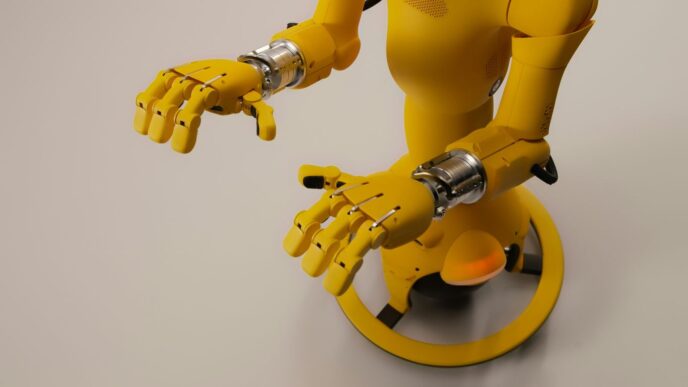
One of the trickiest parts of warehouse work, and robotics in general, is the ‘pick and place’ action. Grabbing an item, especially if it’s oddly shaped or fragile, isn’t as simple as it looks. Amazon’s been working on this, introducing robots like Vulcan that have a ‘sense of touch.’ This allows them to handle items more delicately, whether they’re picking them from a high shelf or stowing them away. It’s a big step towards making robots more capable of handling a wider variety of items, further reducing the need for humans to do the most physically demanding or injury-prone parts of the job.
The Future Of The Amazon Kiva System
So, what’s next for Amazon’s robot army? It’s clear they aren’t slowing down. The company has already deployed over a million robots across its network since 2012, and they’re not just sticking with the old Kiva models. We’re seeing new systems like Hercules and Titan drive units becoming the workhorses, and things like Sequoia are getting really good at sorting inventory. It feels like they’re constantly tweaking and upgrading.
Scaling Robotics Across The Network
Amazon’s big plan is to get these advanced robotics into all their existing warehouses. They’ve even opened up some super high-tech fulfillment centers, like the one in Shreveport, Louisiana, that use a bunch of different robot systems working together. The idea is to make things safer and easier for the people working there, while also getting packages out the door faster. It’s all about spreading the latest tech everywhere.
The Covariant Deal And Dexterity
One of the trickiest parts of warehouse work for robots has always been actually picking up and handling different kinds of items. It’s not as simple as it looks, especially with weirdly shaped or slippery things. That’s where the recent deal with Covariant comes in. They’re bringing in experts who are really good at using AI to give robots a better sense of touch and more nimble hands. This could mean robots can handle a lot more of the picking and packing tasks that humans currently do.
Continued Evolution Of Warehouse Automation
Looking ahead, it’s all about making these robots even smarter and more capable. Think about systems like DeepFleet, which uses AI to help coordinate all the robots so they don’t get in each other’s way and move more efficiently. Then there’s Project Eluna, which helps optimize the actual workflows. It’s a constant cycle of improvement, driven by data and new AI developments. The goal is to automate more, but also to create a better working environment for the people who are still essential to the process.
The Road Ahead
So, it’s been about ten years since Amazon really went all-in with Kiva robots, and wow, things have changed. They started with these little bots lifting shelves, and now they’ve got this whole army, like 750,000 of them, zipping around. It’s pretty wild how much faster and cheaper they can get stuff to us because of it. They’re even working on robots that can grab things, though that’s still a tricky bit. Amazon keeps pushing, adding new systems and AI to make everything run smoother, aiming to make jobs easier and faster for the people working there. It’s clear they’re not stopping here; they’re always looking for the next step to keep things moving, and it’s going to be interesting to see what they come up with next.