AMD is gearing up for 2026 with a new wave of Radeon graphics cards, and it looks like things are about to get interesting for gamers and PC builders. If you’ve been following the ups and downs of the GPU market, you know prices have been all over the place and everyone’s wondering if now is the time to upgrade. The upcoming AMD new GPU 2026 lineup—especially the Radeon RX 9070 XT, RX 9070, and RX 9060 XT—promises better performance, smarter upscaling, and a fresh look at value, all while trying to keep up with Nvidia’s latest. Let’s break down what you can expect from these next-gen Radeons and the changing market.
Key Takeaways
- AMD’s new Radeon RX 9070 XT aims for high-end gaming with a focus on RDNA 4 improvements, 16GB VRAM, and better upscaling tech.
- The RX 9070 offers a balance of performance and price, matching up well against Nvidia’s RTX 5070 but with more VRAM for demanding games.
- For midrange buyers, the RX 9060 XT brings 16GB VRAM and improved ray tracing, making it a solid pick for mainstream gaming in 2026.
- FSR 4 upscaling and ML Frame Generation are AMD’s big moves to compete with Nvidia’s DLSS, though support and image quality can still vary by game.
- GPU prices are rising due to AI hardware demand, so finding the right value is tougher, but AMD’s new lineup tries to give options without breaking the bank.
Radeon RX 9070 XT: The Enthusiast’s Choice
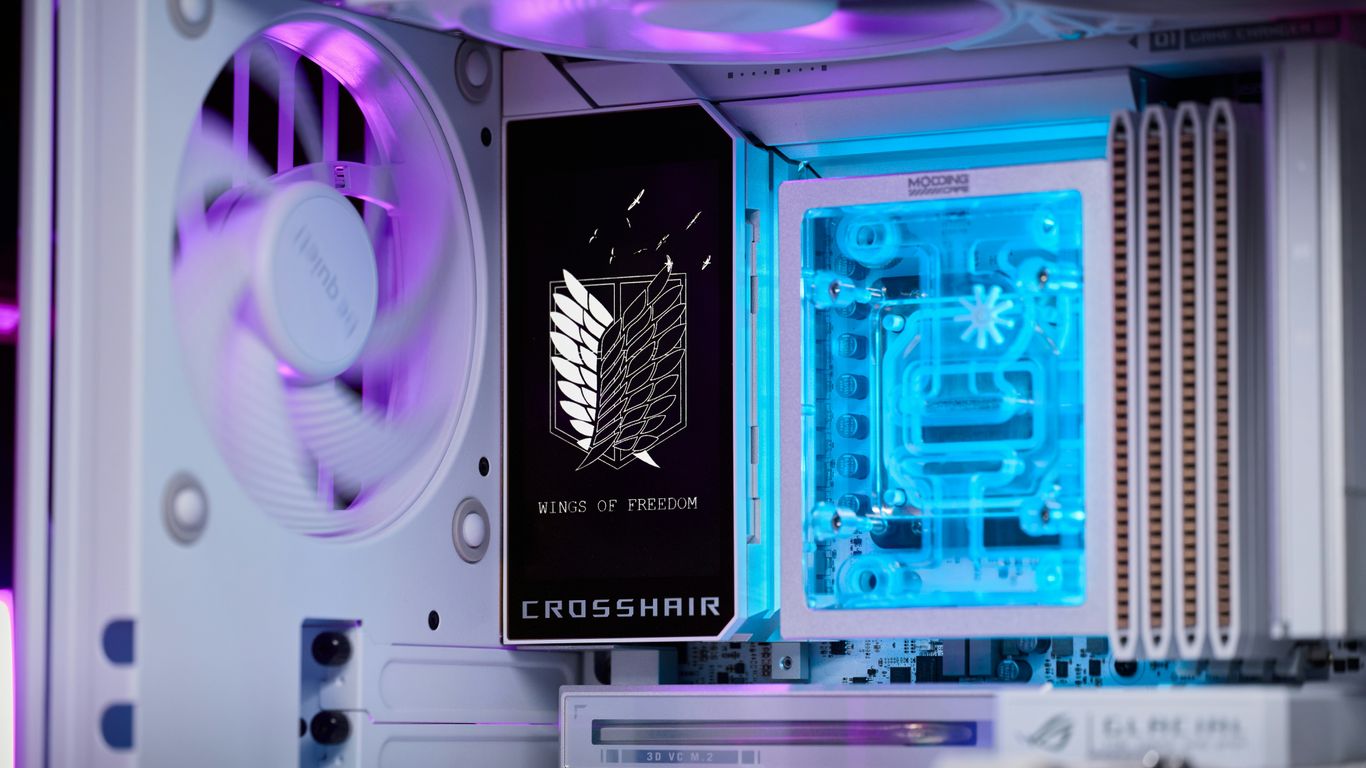
Alright, let’s talk about the big guns. The Radeon RX 9070 XT is shaping up to be AMD’s flagship for 2026, and honestly, it’s looking pretty sweet for anyone who wants top-tier performance without completely emptying their wallet. It’s not just about raw power; AMD seems to be focusing on making this card a well-rounded beast.
RDNA 4 Architecture Enhancements
The RDNA 4 architecture is where the magic really starts. AMD has been working hard to close the gap with Nvidia, especially in areas where they’ve historically lagged a bit. Ray tracing performance is getting a significant boost, making those fancy lighting effects look much better and run smoother. Plus, AI acceleration is much improved, which is becoming more important not just for creative tasks but also for gaming features.
- Improved Ray Tracing Cores: Expect better performance in games that heavily utilize ray tracing.
- AI Acceleration: Faster processing for AI-driven tasks and features.
- Efficiency Gains: RDNA 4 aims to offer more performance per watt, which is always a good thing.
16GB GDDR6 VRAM for High Resolutions
This is a big one for gamers. The RX 9070 XT is slated to come with a hefty 16GB of GDDR6 video memory. What does that mean for you? It means you can crank up those texture settings and play at higher resolutions like 4K without hitting those annoying VRAM limits that can cause stuttering and performance drops. Having ample VRAM is becoming increasingly important as games get more detailed. This card should handle pretty much anything you throw at it at 4K resolutions.
FSR 4 Upscaling and ML Frame Generation
AMD’s FidelityFX Super Resolution (FSR) is getting a major upgrade with version 4. It’s not just about making games look sharper at lower internal resolutions anymore; FSR 4 is supposed to offer a significant jump in image quality over previous versions. On top of that, the inclusion of ML Frame Generation means the card can intelligently create new frames between existing ones, leading to much smoother gameplay, especially in fast-paced titles. While it might not be exactly the same as Nvidia’s DLSS 4, it’s a huge step forward for AMD’s upscaling and frame generation tech, making the RX 9070 XT a very compelling option for high-refresh-rate gaming.
Radeon RX 9070: Sweet Spot Performance
Alright, let’s talk about the Radeon RX 9070. This card is really aiming for that sweet spot, you know? It’s not the absolute top-tier beast like the XT model, but it’s also way beyond your basic gaming card. Think of it as the reliable workhorse that can handle pretty much anything you throw at it without breaking the bank.
Competitive Performance Against RTX 5070
This is where things get interesting. AMD has really put the pressure on Nvidia with the RX 9070. In a lot of our tests, it’s going head-to-head with the RTX 5070. We’re talking about games that push your system, especially at higher resolutions. While the Nvidia card is good, the RX 9070 often matches it, and sometimes even pulls ahead slightly, depending on the game. It’s a really close race, and honestly, that’s great news for us gamers because it means more choice and potentially better prices.
Ample 16GB VRAM for Demanding Titles
One of the biggest advantages the RX 9070 brings to the table is its 16GB of VRAM. In today’s games, especially those with high-resolution textures and complex environments, VRAM can become a bottleneck. We’ve seen cards with less memory struggle, forcing players to turn down settings or deal with stuttering. Having that 16GB means the RX 9070 is much better equipped to handle these demanding titles without a hitch. You can load up those ultra textures and not worry about your card running out of breath.
Power Efficiency and Value Proposition
Beyond just raw performance, AMD seems to have focused on making the RX 9070 a smart buy. It’s designed to be pretty efficient with its power usage. This means less heat, potentially a quieter system, and maybe even a slight saving on your electricity bill over time. When you combine this efficiency with its strong performance and that generous VRAM, the RX 9070 really stands out as a card that offers a lot of bang for your buck. It’s the kind of card that makes you feel like you made a smart decision, not just a flashy one.
Radeon RX 9060 XT: Midrange Value Reimagined
AMD’s Radeon RX 9060 XT is shaping up to be a really interesting option for gamers who want solid performance without completely emptying their wallets. It feels like AMD is trying to hit that sweet spot, you know? The kind of card that can handle most games at 1080p and 1440p without breaking a sweat. This card is all about bringing a strong performance-per-dollar ratio back to the mainstream.
Navi 44 GPU Core and Clock Speeds
Under the hood, the RX 9060 XT uses the Navi 44 GPU. It’s not the absolute top-tier chip, but it’s designed to be efficient and capable. We’re looking at around 2,048 stream processors, which is a decent number for this segment. The boost clock speeds are expected to push past 3,130 MHz, giving it enough grunt for modern titles. It’s built on the RDNA 4 architecture, which means it should see some nice improvements in areas like ray tracing and AI tasks compared to older generations. It’s a step up, for sure, and should make a noticeable difference in games that can take advantage of it.
16GB VRAM for Mainstream Gaming
One of the standout features here is the 16GB of GDDR6 VRAM. Seriously, that’s a lot for a card aimed at the mainstream. Most competitors in this price bracket are still sticking to 8GB or maybe 12GB. Having 16GB means you’re much less likely to run into VRAM limitations, even when you crank up the settings or play newer, more demanding games at 1440p. It gives you a bit of future-proofing and peace of mind, so you’re not constantly worrying about whether your card can handle the next big release. This is a big deal for anyone who wants their hardware to last a few years.
Improved Ray Tracing and AI Capabilities
The RDNA 4 architecture brings some significant upgrades to how the RX 9060 XT handles ray tracing and AI workloads. While it might not be trading blows with the absolute highest-end Nvidia cards, it’s getting much closer. This means you can expect a more playable ray tracing experience in supported games, and potentially better performance in AI-driven features. AMD’s FSR 4 upscaling technology is also on board, which can give your frame rates a nice boost with a relatively small hit to visual quality. It’s not quite the same as Nvidia’s DLSS 4, especially with its frame generation, but FSR 4 is a solid step forward for AMD and makes the RX 9060 XT a more compelling package. You can check out more about the RDNA 4 architecture and its benefits.
Advancements in Upscaling and Frame Generation
Okay, so graphics cards aren’t just about raw power anymore, right? The software side of things, especially how games look smoother and sharper, has gotten pretty wild. AMD’s pushing hard with FSR 4, and Nvidia’s got its DLSS 4. Let’s break down what’s new and how it stacks up.
FSR 4 vs. DLSS 4
This is where things get interesting. Both AMD’s FidelityFX Super Resolution (FSR) 4 and Nvidia’s Deep Learning Super Sampling (DLSS) 4 are trying to do the same thing: make games run faster by rendering them at a lower resolution and then intelligently scaling them up. But they go about it a bit differently.
- DLSS 4: Nvidia’s latest uses a fancy AI model, and it’s supposed to give you top-notch image quality. It works best on their newer RTX 50-series and even the 40-series cards. The cool part is that even older RTX cards, like the 20-series, can still get some of the benefits, especially if you use the Nvidia App to force it in games that don’t have it built-in. It also has this "Multi-Frame Generation" thing that can add extra frames, making things look super smooth, though sometimes it can make the game feel a little less responsive.
- FSR 4: AMD’s FSR 4 is also using AI, but it’s officially only for their new Radeon RX 9000 series cards. While older FSR versions work on pretty much any graphics card out there, FSR 4’s frame generation tech is locked down. The image quality with FSR 4 is getting much closer to DLSS, which is great news for AMD fans.
ML Frame Generation on RDNA 4
So, AMD’s RDNA 4 architecture, found in cards like the RX 9070 XT, is getting its own flavor of AI-powered frame generation. This is called "ML Frame Generation," and it showed up with the FSR Redstone update. Like FSR 4 upscaling, this feature is exclusive to the RX 9000 series. You can actually turn it on in compatible games through a control panel override if the game doesn’t support it directly. It’s AMD’s answer to Nvidia’s frame generation, aiming to give you that silky-smooth gameplay experience without needing a super-powerful GPU to begin with.
Cross-Compatibility and Image Quality
This is a big one for gamers. Nobody wants to buy a card and then find out half the cool features don’t work with their favorite games. Nvidia’s DLSS 4, while best on newer cards, has decent backward compatibility. AMD’s FSR 3 and earlier versions are pretty much universal – they’ll run on almost any GPU. However, the image quality on those older FSR versions isn’t always as good as the newer AI-powered stuff from either AMD or Nvidia. The real question is how well FSR 4 and DLSS 4 hold up in terms of visual fidelity. Early signs suggest FSR 4 is closing the gap significantly, making it a much more attractive option for those sticking with Radeon.
Here’s a quick look at how the frame generation tech generally works:
- Frame Interpolation: The core idea is to create new frames that didn’t exist in the original render. This is done by analyzing the motion between existing frames.
- AI Assistance: Newer technologies like ML Frame Generation and DLSS 4 use artificial intelligence to predict and generate these intermediate frames more accurately, leading to better visual results.
- Performance Boost: The main goal is to significantly increase the frames per second (FPS) you see on screen, making fast-paced games feel much smoother and more responsive.
- Input Lag Consideration: A common trade-off is a slight increase in input lag. While the visual smoothness is nice, gamers sensitive to responsiveness might notice a small delay. Newer versions are working to minimize this.
Navigating the 2026 GPU Market Landscape
So, let’s talk about what’s actually happening with graphics card prices and availability in 2026. It’s not exactly the best time to be a PC gamer looking for a deal, honestly. We saw this coming, with warnings about how AI chip production would eat into the supply for gaming GPUs and memory. Remember those sweet deals around Black Friday 2025? Yeah, that feels like a lifetime ago now.
Impact of AI Wafer Demand on Gaming GPUs
This whole AI boom is really shaking things up. Companies that make the chips, the foundries, are booked solid with orders for AI processors. This means less space and fewer resources for making the graphics cards we actually want for gaming. It’s a bit of a bummer, but that’s the reality. Intel, for instance, is seeing huge demand for its server CPUs from hyperscalers, with capacity already sold out for the year due to AI needs. This shift means they’re in a strong position, potentially even outperforming others in certain AI tasks.
Price Hikes and Supply Constraints
Because of that AI demand, prices for pretty much everything have gone up. The RTX 50-series cards are now costing a whole tier more than they were supposed to. For example, a 16GB RTX 5060 Ti is now priced like an RTX 5070 used to be, and the RTX 5070 Ti is creeping up to RTX 5080 prices. This really stings if you’re trying to get good value and want that 16GB of VRAM for things like DLSS 4 and AI frame generation. AMD’s Radeons aren’t immune either. The RX 9060 XT 16GB, which used to be a great value pick, has seen a significant price jump, now costing about $100 more than just a few months ago. It’s still the cheapest way to get 16GB of VRAM, but that price hike is tough to swallow.
Shifting Value Propositions for Gamers
It’s not all doom and gloom, though. Some cards are holding their value better. The RX 9070 XT prices are pretty stable, around $750, and the RX 9070 and RTX 5070 are among the least affected by price hikes. This means high-end gaming is still possible, but you might need to be open to switching brands to find the best deals. For instance, with the RTX 5060 Ti 16GB getting so pricey, you’re only a little bit away from a much faster RX 9070 or an RTX 5070. It’s a weird market, for sure. Even if you can’t build a whole new PC, slapping a new graphics card into an older system can still give you a nice performance boost, especially if you upgrade your monitor too. We’ve seen this kind of market disruption before, and PC gamers will adapt.
Here’s a quick look at how some cards stack up:
| Graphics Card | Median Street Price (vs. MSRP) | Avg. Power |
|---|---|---|
| Radeon RX 9070 XT | $769 ($600) | 280W |
| Radeon RX 9070 | $629 ($550) | 220W |
| GeForce RTX 5070 | $669 ($549) | 250W |
| Radeon RX 9060 XT | $459 ($349) | 160W |
| GeForce RTX 5060 | $369 ($299) | 145W |
Keep in mind, these prices are what we’re seeing on the street, not just the manufacturer’s suggested prices. If you can find a card for less than these numbers, you’re probably getting a good deal. It’s a tough market, but there are still ways to get good performance without completely breaking the bank. Just be prepared to do a bit of digging and maybe consider options you hadn’t before.
Wrapping It Up
So, looking ahead to 2026, it seems AMD’s Radeon GPUs are shaping up to be pretty solid contenders. While Nvidia still has its strengths, especially with software features, AMD is really closing the gap. Cards like the RX 9070 XT and RX 9060 XT are offering good performance for the money, even with the current market craziness driving prices up. The RDNA 4 architecture is bringing improvements, and FSR 4 is looking like a real step up. It’s not a perfect picture, and prices are definitely something to watch, but if you’re building or upgrading a PC, AMD’s next-gen offerings look like they’ll be worth considering.
Frequently Asked Questions
What’s new with AMD’s RDNA 4 graphics cards?
AMD’s RDNA 4 architecture is bringing some cool upgrades! Think better performance, especially when it comes to things like ray tracing (which makes game graphics look more realistic) and AI stuff. Plus, they’re keeping things efficient, meaning they use power well.
How much video memory (VRAM) will these new GPUs have?
Most of the new cards, like the RX 9070 XT and RX 9060 XT, are packing 16GB of VRAM. This is great because it means you won’t run out of memory when playing demanding games at high screen resolutions.
What’s FSR 4 and how is it different from older versions?
FSR 4 is AMD’s latest way to make games run smoother by using smart tech to create extra frames. It’s a big step up from older FSR versions, offering better picture quality. It also works with AI to help generate these extra frames, making games feel more fluid.
How does AMD’s frame generation compare to Nvidia’s?
AMD’s FSR Frame Generation can double your frame rate, which is nice. Nvidia’s DLSS 4 with Multi-Frame Generation is a bit more flexible, letting you boost frame rates even more in some cases. Both are getting better, but Nvidia’s might offer more options right now.
Are graphics card prices going up in 2026?
Unfortunately, yes. Because companies making computer chips are busy making AI chips, there are fewer chips available for gaming graphics cards. This means prices for new GPUs are higher than they used to be.
Which new AMD GPU is the best choice for most gamers?
For gamers who want a great balance of price and performance, the Radeon RX 9070 XT is a top pick. It offers strong performance, plenty of VRAM, and good value, especially when you compare it to similar Nvidia cards that cost a lot more.