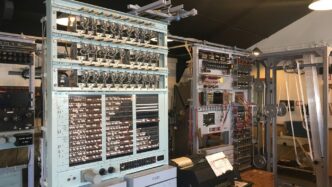
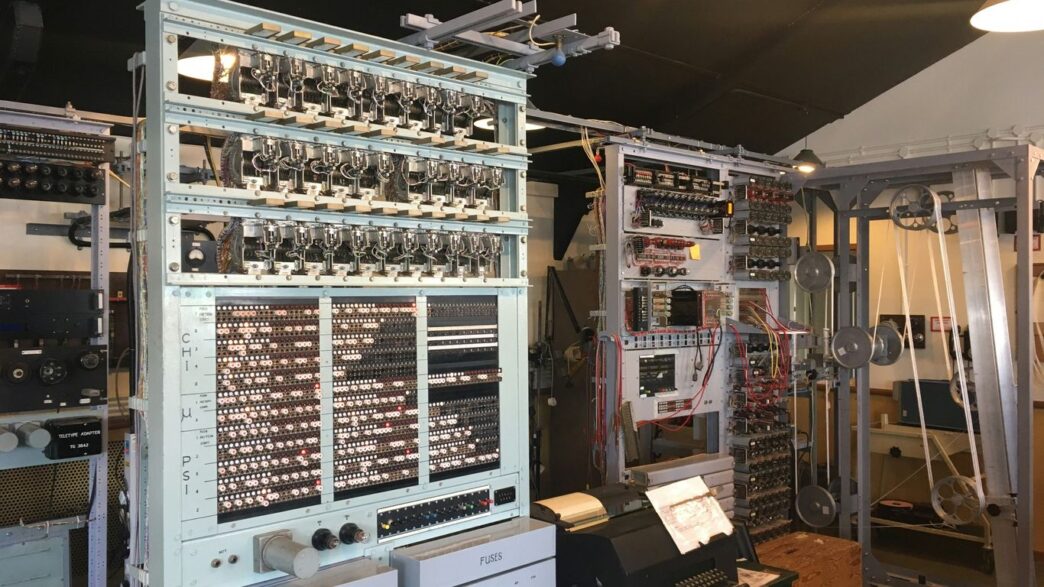
So, Xanadu just dropped some pretty big news about their new quantum computer, Aurora. It’s a big deal because it’s supposedly the first of its kind that uses light particles, or photons, and it’s designed to be scaled up. Think of it like building with LEGOs, but for quantum computing. They’ve managed to connect several parts together, and it even works without needing to be super cold, which is a major plus. This aurora quantum computer could change how we do a lot of complex calculations.
Key Takeaways
- Xanadu has introduced Aurora, a new type of quantum computer that uses light particles (photons).
- This aurora quantum computer is built in a modular way, with four connected server racks, and can work at room temperature.
- The system is designed to be scaled up significantly, potentially connecting thousands of racks and millions of qubits.
- Photonics offers advantages over other quantum computing methods, like easier scaling and networking.
- Xanadu is focusing on improving performance by reducing errors and optical loss in their photonic system.
Introducing Aurora: A Scalable Photonic Quantum Computer
So, Xanadu just dropped a pretty big announcement: they’ve built what they’re calling the world’s first universal photonic quantum computer, and they’re calling it Aurora. This isn’t just some small lab experiment; it’s a whole system made up of four interconnected server racks. Think of it like building blocks for quantum computing. What’s really neat is that it uses light particles, or photons, to do its computing and connect everything. This is different from a lot of other quantum computers out there that need super cold temperatures. Aurora, on the other hand, works just fine at room temperature. That’s a pretty significant deal for making these things more practical.
Xanadu Unveils World’s First Universal Photonic Quantum Computer
Xanadu has officially revealed Aurora, a machine that’s being hailed as the first of its kind – a universal photonic quantum computer. This system is built using light, which is a pretty clever approach. It’s designed to be scaled up, meaning they can add more of it later on. It’s a big step forward in the whole quantum computing race.
Aurora’s Modular Architecture: Four Interconnected Server Racks
Aurora isn’t just one big box. It’s actually made of four separate server racks that are all linked together using special light-based technology. This modular design is key because it makes the whole system easier to build and, more importantly, easier to expand. They’ve packed a lot into these racks, including 35 photonic chips and a whopping 13 kilometers of fiber optics. It’s quite the setup.
Room Temperature Operation: A Significant Advancement
One of the standout features of Aurora is that it operates at room temperature. Many quantum computers require extreme cold, which adds a lot of complexity and cost. Being able to run at normal temperatures makes Aurora a much more accessible and potentially cheaper option for future quantum computing applications. This could really change how we think about deploying these powerful machines.
The Power of Photonics in Quantum Computing
Leveraging Light Particles for Computation and Networking
So, why are we talking so much about photons, the tiny packets of light, when it comes to building these super-powerful quantum computers? Well, it turns out they’re pretty good candidates for the job. Photons zip around really fast, and they don’t get bothered by their surroundings as much as other quantum bits might. Plus, we’re already pretty good at sending light signals through fiber optic cables, which is handy for connecting things up. This makes photons a natural fit for both doing the actual quantum calculations and for networking those calculations together.
Advantages Over Traditional Quantum Computing Methods
When you compare this light-based approach to other ways of building quantum computers, like those using supercooled circuits or trapped ions, photonics has some neat perks. For starters, many photonic systems can operate at room temperature. That’s a big deal because it means less complicated and expensive cooling equipment is needed. Also, the components used in photonics, like the tiny waveguides on chips, are made using manufacturing techniques similar to those used for regular computer chips. This hints at a more straightforward path to making lots of them.
Here’s a quick look at some of the upsides:
- Speed: Photons move at the speed of light, which is as fast as it gets.
- Connectivity: We already have a massive fiber optic network; photons fit right in.
- Manufacturing: Uses processes similar to standard chip making, suggesting easier scaling.
- Room Temperature: Many photonic systems don’t need extreme cold.
Commercial Photonic Chips for Practicality and Future-Proofing
One of the really exciting parts of Xanadu’s Aurora system is how it uses actual, physical chips. These aren’t just lab experiments; they’re built using silicon nitride, a material common in the regular semiconductor industry. This means they can be made on large wafers, just like the chips in your phone or computer. This manufacturing approach is key because it points towards a future where we can produce these quantum components reliably and in large numbers. It’s about making quantum computing practical, not just theoretical. The goal is to build systems that are not only powerful but also something we can actually build and deploy in the real world, using technology that’s already familiar to manufacturers.
Scalability and Networkability: Pillars of Aurora
Aurora isn’t just a single quantum computer; it’s designed to grow. Think of it like building with LEGOs, but for quantum stuff. The whole system is built from smaller, independent parts – these are the server racks. What’s really neat is how these racks can be linked together. This makes it possible to add more and more computing power down the line.
Seamless Networking of Independent Modules
Xanadu’s approach uses light, or photons, to connect these different parts. It’s like having super-fast fiber optic cables, but for quantum information. This makes linking up new server racks pretty straightforward. You don’t have to rebuild the whole thing every time you want to add more power. This modular setup is a big deal because it means we can connect as many of these units as we need.
Potential for Thousands of Server Racks and Millions of Qubits
So, how big can this get? Well, the company says that in theory, they could link up thousands of these server racks. If you string enough of them together, you’re looking at the potential for millions of qubits. That’s a massive jump from where we are now. It’s not just about having a lot of qubits, though; it’s about being able to connect them in a way that actually works for complex problems.
A Realistic Path to Large-Scale Quantum Implementations
This whole setup gives us a practical way to build really big quantum computers. Instead of one giant, hard-to-manage machine, you have a network of smaller, more manageable ones. This makes the whole process of scaling up much more realistic. It’s a step towards having quantum computers that are not just lab experiments but actual tools we can use for big tasks.
Addressing Quantum Challenges with Aurora
Building a quantum computer is tough, and Xanadu’s Aurora isn’t immune to the usual headaches. One of the biggest issues they’re tackling head-on is making these machines reliable, which means dealing with errors. Quantum bits, or qubits, are super sensitive and can easily get messed up by noise from their surroundings. Aurora is designed with this in mind, using robust qubit states and real-time error correction. It’s like having a constant spell-checker for the quantum calculations.
Another major hurdle is something called optical loss. Think of it like trying to send a signal through a really long, leaky pipe – some of the light just gets lost along the way. This loss can mess up the delicate quantum information. Xanadu is working hard to minimize this by:
- Optimizing chip design: They’re tweaking how the tiny components on their chips are laid out to guide light more efficiently.
- Improving fabrication processes: Working with manufacturing partners, they’re refining how the chips are actually made to reduce imperfections that cause loss.
- Quantifying loss tolerances: Aurora’s design includes detailed measurements of how much loss it can handle, giving them a clear target for improvements.
These aren’t small problems, but by focusing on them, Xanadu is building a more practical and powerful quantum computer. It’s a step-by-step process, but the progress with Aurora shows they’re making real headway.
The Transformative Potential of the Aurora Quantum Computer
So, what does this all mean? Basically, Aurora isn’t just another quantum computer; it’s a big step towards making quantum computing actually useful for real-world problems. Think about it – problems that would take today’s best supercomputers ages to solve could potentially be tackled by Aurora much, much faster. This could change a lot of things.
Enabling Faster and More Complex Calculations
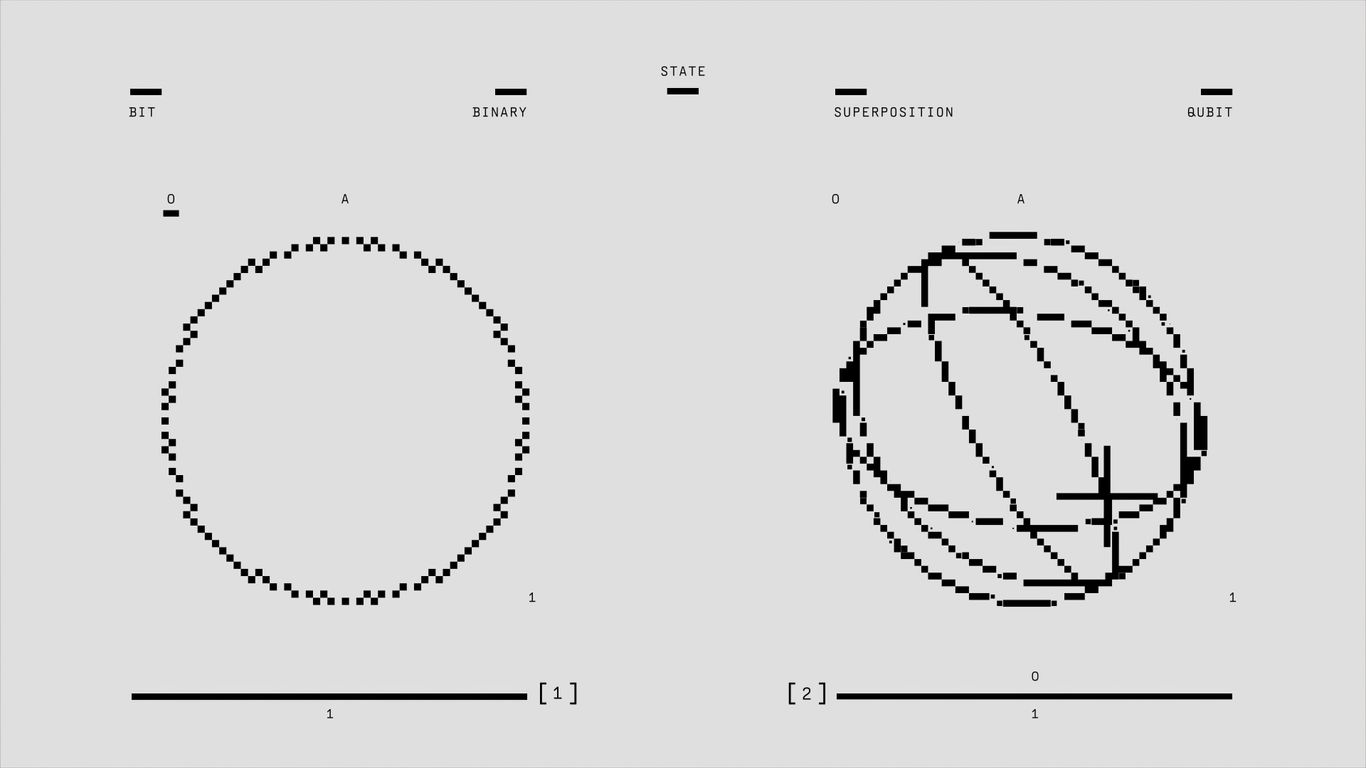
The core idea is that quantum computers, like Aurora, can explore many possibilities at once. This is thanks to something called qubits, which are different from the bits in your laptop. While a regular bit is either a 0 or a 1, a qubit can be both at the same time, and even somewhere in between. This allows quantum computers to crunch numbers in ways that are just not possible for classical machines. We’re talking about calculations that are exponentially faster. This opens the door to solving problems that are currently out of reach.
Applications Across Healthcare, Logistics, and Finance
What kind of problems? Well, imagine speeding up the discovery of new medicines. By simulating how molecules interact, quantum computers could help scientists find new drugs much quicker. In the world of shipping and delivery, they could figure out the most efficient routes, saving time and fuel. And in finance, they might help manage investments better and assess risks more accurately. It’s pretty wild to think about.
Here are just a few areas where Aurora could make a difference:
- Healthcare: Accelerating drug discovery and personalized medicine.
- Logistics: Optimizing supply chains and transportation networks.
- Finance: Improving risk analysis and portfolio management.
- Materials Science: Designing new materials with specific properties.
Laying the Groundwork for Utility-Scale Quantum Computing
Building something like Aurora is a huge undertaking. Xanadu has focused on making it modular and networked, which is key for scaling up. They’ve essentially figured out how to connect multiple quantum computing units together, which is a major hurdle that many have struggled with. This approach means that, in theory, you could link up thousands of these server racks to create a massive quantum system. It’s about building a practical path towards what’s called "utility-scale" quantum computing – meaning it’s powerful and reliable enough to be used for everyday tasks, much like electricity is today. This is a significant milestone for the entire field, and you can read more about Xanadu’s journey in quantum computing.
Key Innovations Driving Aurora’s Success
Aurora didn’t just appear out of nowhere; it’s built on a solid foundation of Xanadu’s past work. Think of it like upgrading your phone – you get all the new features, but it’s still recognizably from the same company, just way better. The team took what they learned from earlier systems like X8 and Borealis, which were also pretty big deals, and integrated those lessons into Aurora. This means they’re not reinventing the wheel, but rather refining it to spin much faster and more reliably.
One of the really neat things about Aurora is how it handles its qubits. These aren’t just any old qubits; they’re designed to be really stable and dependable. This robustness is super important because it allows for more complex quantum operations. We’re talking about things like real-time error correction and decoding, which are absolutely necessary if you want a quantum computer that actually works well in the real world. It’s like having a really steady hand when you’re trying to build something delicate.
Here’s a quick look at what makes Aurora tick:
- Building on Past Success: Aurora incorporates technologies proven in Xanadu’s X8 and Borealis systems, showing a clear progression in their quantum hardware development.
- Robust Qubit States: The system uses stable qubit states that can handle advanced quantum operations, which is a big step for practical quantum computing.
- Real-Time Error Correction: Aurora includes capabilities for correcting errors as they happen and decoding quantum information, making the system more reliable.
These aren’t just minor tweaks. They represent significant advancements that make Aurora a more practical and powerful quantum machine. It’s this combination of building on what works and pushing the boundaries of what’s possible that really sets Aurora apart.
What’s Next for Aurora and Quantum Computing?
So, Xanadu’s Aurora machine is pretty neat. It’s a big step, showing that building these complex quantum computers in a modular way, and connecting them, is actually possible. They’ve tackled the whole scalability thing, which is a huge deal. Now, the big challenge is making it more reliable, you know, fixing those little errors that creep in. They’re working on reducing signal loss and making the whole system more robust. It’s not quite ready for your everyday tasks yet, but it’s definitely moving us closer to a future where quantum computers can tackle some really tough problems. Keep an eye on Xanadu; they seem to have a solid plan.
Frequently Asked Questions
What is Aurora and why is it special?
Aurora is a new kind of quantum computer made by a company called Xanadu. It’s special because it uses light particles, called photons, to do its calculations. This means it can be built in a modular way, like connecting building blocks, and can be easily linked together with other Aurora computers. It’s also unique because it works at room temperature, unlike many other quantum computers that need to be super cold.
How does Aurora use light for computing?
Instead of using tiny switches like regular computers, Aurora uses photons (light particles) as its basic units for calculations, called qubits. These photons can carry information and interact in special ways to solve complex problems. Using light also makes it easier to connect different parts of the computer and even link multiple computers together, which is great for making them bigger and more powerful.
What does ‘scalable’ and ‘networked’ mean for Aurora?
‘Scalable’ means that Aurora can be made much bigger. Imagine adding more and more server racks, like plugging in more computers to make a super-supercomputer. ‘Networked’ means these different parts or even separate Aurora computers can talk to each other. This allows them to work together on even bigger and harder problems than a single machine could handle.
Are there any challenges that Aurora helps solve?
Quantum computers can sometimes make mistakes, like a computer glitch. Aurora is designed to help fix these errors, making its calculations more reliable. It also focuses on reducing ‘optical loss,’ which is when light signals get weaker as they travel. By minimizing this loss and improving how the computer’s parts are made, Aurora gets closer to being a truly practical quantum computer.
What kinds of problems can Aurora help solve in the future?
Quantum computers like Aurora could help us solve really tough problems much faster than today’s computers. This could lead to new medicines being discovered faster, making shipping and delivery routes more efficient, and helping banks manage money better. It’s like having a super-smart assistant for science, business, and technology.
What is different about Aurora compared to Xanadu’s older quantum computers?
Aurora builds on the ideas from Xanadu’s earlier machines, like X8 and Borealis. It takes those lessons and puts them together in a more advanced way. The key difference is how Aurora is built using connected server racks that can be easily linked together, making it much easier to scale up and network. It’s a bigger, more connected, and more capable step forward.