New enterprise systems constructed using the .NET must be able to accommodate the increased user needs and at the same time should be simple to upgrade. Scalability and maintainability, however, tend to work against each other. Scalable optimized systems can be intricate and tricky to oversee, and high maintainability systems can fail to perform when there are heavy workloads. To get the correct balance is thus an important architectural issue.
Understanding the Trade-off
Scalability is the capacity of a system to cope with an increase in the number of users, data, and traffic without experiencing a performance decline. Maintainability, on the other hand, is concerned about how readily a system can be changed, debugged and expanded with time.
Much more scalable architectures, including microservice, allow scaling and resilience to be independent, but add more layers of complexity. In the meantime, more basic architectures are simpler and faster to develop but can be restricted by scale.
Scalable systems – particularly microservices – allow flexibility and independent scaling, but also come with a number of challenges:
- Operational Complexity – Managing multiple services, containers, and environments
- Debugging Difficulties – Tracing failures across distributed components
- Deployment Overhead – Coordinating releases across services
- Service Coordination Issues – Increased dependency management
- Data Consistency Risks – Handling distributed data reliably
Architectural Approaches in .NET
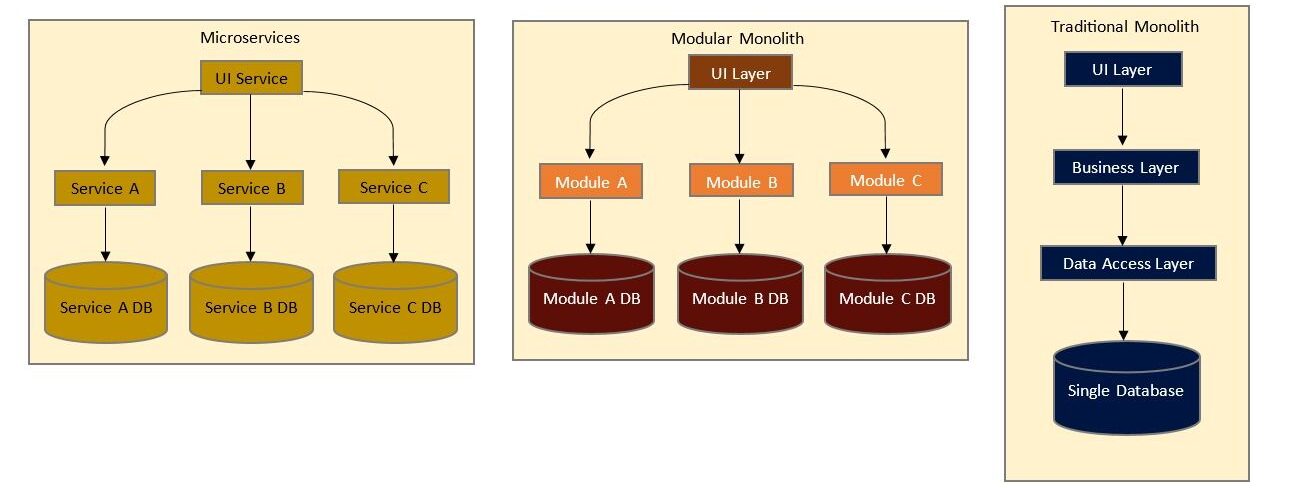
A middle ground will start with an ASP modular monolith.NET Core, which makes it simple and maintainable. During the increase in demand, the systems can be developed into micro services where the domain boundaries are well defined through Domain-Driven Design (DDD).
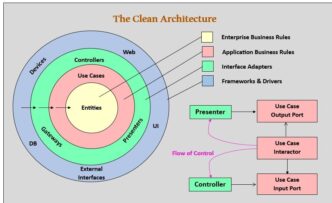
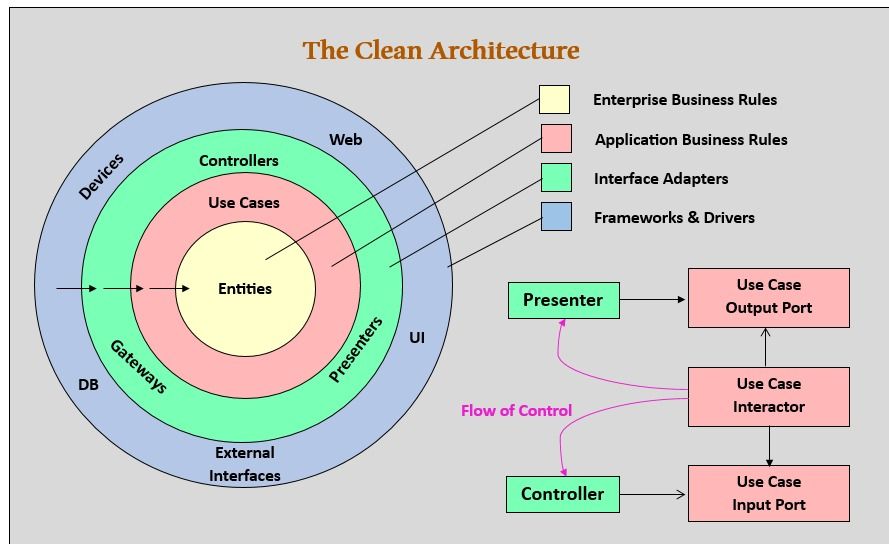
Separation of concerns is further enhanced by applying Clean Architecture which results in systems that are testable and flexible. Using cloud services like Microsoft Azure will allow auto-scaling, managed services, and distributed caching, which will decrease the infrastructure load.
1. Monolith First, Then Modular Evolution
An enterprise practice in business. To start with, .NET architecture is to be a modular monolith that is developed based on ASP.NET Core. This enables teams to create, test and deploy the application as a unit which greatly simplifies the complexity of its functions at the initial stages. Developers can have good maintainability, better coding structure and easier debugging by designing the system in well-structured modules that have clear boundaries. These modules can be progressively extracted and developed into microservices as the system scales and certain components become overloaded or need to be scaled separately. This evolutionary style does not introduce the complexities too soon and ensures that the system is scalable, flexible and also easy to manage in the long run.
2. Microservices with Boundaries
In adopting microservices in the secret to defining out clear and meaningful boundaries of the service lies in .NET core, Domain-driven design (DDD). The services should be personal business capabilities, and these should be loosely coupled and highly cohesive. This enhances scalability as services can be deployed and scaled separately. However, the over-break should be circumvented since divisibility will make the services too thin and will complicate communication and operation. The second error made is implementing microservices prematurely that leads to a distributed monolith, where services are closely intertwined although they are independent. Microservices can be scaled, maintained and adapted to real business needs rather than the fads of architecture as is done with a strict and domain-oriented strategy.
3. Clean Architecture for Longevity
Clean Architecture in .NET systems provide a good decoupling between business logic and infrastructure issues. This also makes applications testable, flexible and resistant to change as core logic is not bound to frameworks or external systems. Consequently, the maintainability increases substantially with time. Twinned with cloud providers such as Microsoft Azure, systems acquire in-built scaling capability, such as auto-scaling services, managed databases, and distributed caching. These features eliminate the requirement of tailored scaling logic and infrastructure control. Clean Architecture combined with cloud integration allows systems to easily grow and stay efficient, flexible and long-term sustainable.
Key Design Patterns
Modern enterprise .NET architectures have been built on established design patterns to maintain trade-offs in the aspect of balancing scalability and maintainability. Such trends are useful in organizing systems to facilitate growth and decrease complexity and enhance resilience.
CQRS (Command Query Responsibility Segregation)
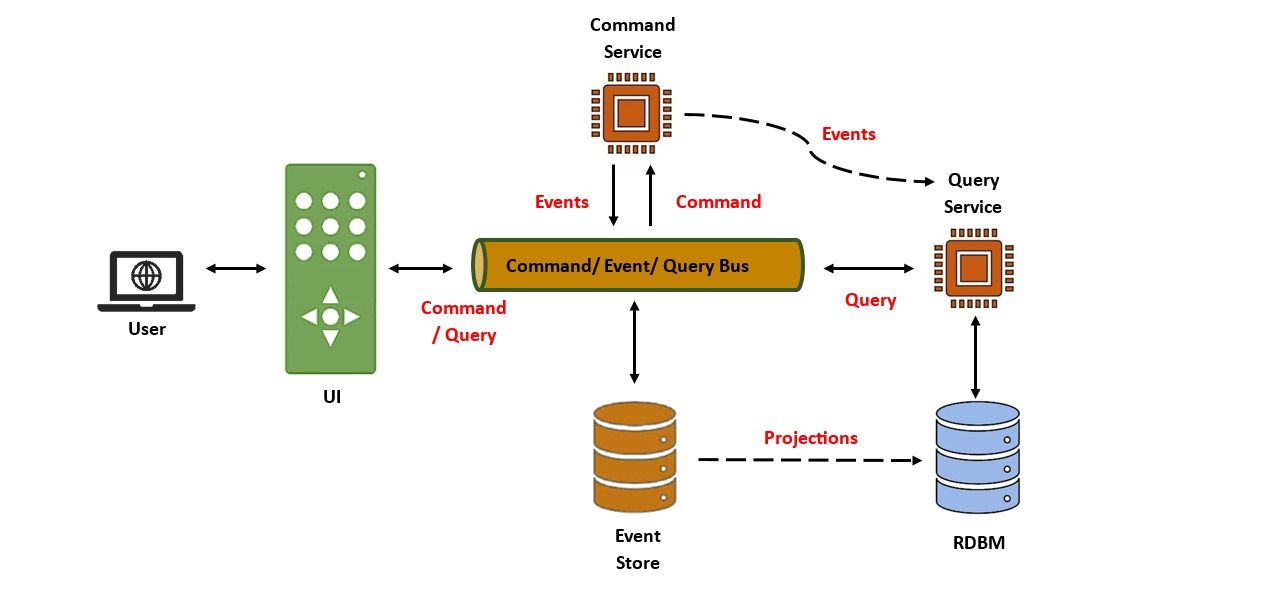
CQRS divides query (read) and command (write) operations into different models. This allows optimization of both sides, including the optimization of fast reads by lightweight, denormalized data models and write transactional integrity. This greatly enhances the performance and scalability in read-heavy systems. Furthermore, CQRS enhances maintainability as the roles are well defined and hence the system becomes easier to comprehensively understand and change. It can also be used with other patterns such as event sourcing and changes are more audited and traced.
Event-Driven Architecture
Event-driven architecture supports loose coupling by allowing services to interact via events instead of making direct calls. After a change is made on one service, the service emits an event that other services can in an asynchronous fashion respond to. This reduces interaction between components and improves flexibility of systems. It is also more scalable, as services can service events in parallel and scale as the demand increases. This is easier in maintainability terms, as sometimes new functionality is simply a matter of subscribing to existing events, without having to make changes to existing code. However, it entails extra consideration of consistency and monitoring of the events.
Circuit Breaker Pattern
Circuit breaker pattern is an important aspect of the distributed systems to prevent the cascading failures. In case of repeated failure of a service, the circuit breaker opens, and requests to that service are blocked temporarily to give time to recover. This helps to avoid the fact that the whole system will be overwhelmed with failures. In It is possible to realize this pattern with the help of such tools as Polly. It enhances system resilience and stability and facilitates maintainability as it isolates faults and simplifies fault diagnosis and management.
Practical Strategies and Common Pitfalls
Designing scalable yet maintainable .NET systems require disciplined, practical decision-making. Instead of premature optimization, teams ought to use actual performance indicators like CPU utilization, memory usage and response time to tell when they need to scale. This helps to avoid unnecessary complexity.
Simplicity must also be kept at the first place. One had better start with less services and not to over-abstract the system to manage it better. This type of overengineering at this early stage often leads to maintenance issues in the long-term.
The other issue that is of importance is investing in observability. In the new distributed systems, there is need to have an efficient logging, distributed tracing, and monitoring dashboards. These tools allow quick detection and diagnosis of problems, system behaviour and provide reliability with increased complexity.
In addition, automation of all conceivable activities should be done, including CI/CD pipelines, Infrastructure as Code, and automated testing. Automation minimizes human error, accelerates deployments and provides consistency across environments.
Nevertheless, there are a number of traps that need to be avoided. They are an early embrace of microservices, excessive coupling of services, API versioning, and documentation. The boundaries of services were not clearly defined in one enterprise system and this led to the frequent occurrence of failures in deployments. With refactoring into domain-oriented services, failures had reduced by 40 percent, and the stability and development rate had increased dramatically.
Conclusion
Scalability and maintainability are not an aspect of prioritizing one over the other but the aspect of changing system architecture according to the actual demands. The merit of NET systems is a realistic methodology that starts with a simple design, and well-structured and maintainable designs and then adds complexity when it is required. By initially pursuing designs such as a modular monolith, teams can maintain things clean and manageable and at the same time enable them to grow over time into more scalable designs (including microservices).
Scaling intelligently refers to decision-making that is made by basing on the actual patterns of usage, performance metrics and business requirements as opposed to trends or assumptions. This guarantees that only the complexity which adds real value is brought in. Meanwhile, to achieve long-term agility, it is essential to have a high level of architectural discipline, well-defined boundaries and do refactoring so that technical debt does not build up.
These systems can be enhanced to make them have more impact in the real world. The illustration of architectural diagrams (the monolith-microservices transition) is beneficial to communicate design. The code samples (e.g., CQRS or Dependency Injection) help to better understand it. Besides, one could present a systematic idea, like a Technical Debt Control Framework (TDCF) to offer a unique contribution, and assist teams to actively regulate technical debt, and scale sustainably.