The Evolving Landscape Of Humanoid Robots
It feels like just yesterday we were marveling at robots that could barely walk in a straight line. Now, here we are in 2025, and the landscape of humanoid robotics has completely shifted. We’re not just talking about clunky machines anymore; we’re seeing robots that are starting to look, move, and even interact in ways that were pure science fiction a decade ago. This isn’t just about making robots that look like us, though that’s part of it. It’s about giving them the brains and the brawn to actually do useful things in our world.
Understanding The Evolution Of Humanoid Robotics
Think back to the early days. Robots were mostly confined to factory floors, performing the same repetitive task over and over. Humanoid robots, with their complex designs mimicking human form, were even more of a challenge. Early attempts were often slow, awkward, and expensive, more like proof-of-concept projects than practical tools. But a lot has changed. The big leap forward has been in artificial intelligence and the sensors that allow robots to ‘see’ and ‘feel’ their surroundings. This combination means they can now handle tasks that require more thought and adaptability.
Key Innovations Driving Humanoid Robot Capabilities
So, what’s making these robots so much better now? A few things really stand out:
- Advanced AI and Machine Learning: Robots can now learn from experience and adapt to new situations, rather than just following pre-programmed instructions.
- Improved Sensors: Better vision, touch, and spatial awareness allow robots to understand their environment more accurately.
- More Efficient Power Sources: Longer operating times mean robots can perform tasks for extended periods without needing frequent recharging.
- Better Actuation and Dexterity: Joints and limbs are becoming more fluid and precise, allowing for a wider range of movements and finer manipulation.
The Dawn Of Advanced Humanoid Robots In 2025
As we hit 2025, the progress is really starting to show. We’re seeing prototypes that are not only more capable but also closer to being mass-produced. Companies are talking about making thousands of these robots, not just a handful for research. This shift from research labs to potential factory floors and even homes is a huge deal. The focus is moving towards practical application and making these advanced machines a common sight. It’s an exciting time, and the robots we’re seeing now are paving the way for even more incredible developments just around the corner.
Pioneering Humanoid Robots Redefining Industries
It feels like just yesterday we were marveling at robots that could barely walk in a straight line. Now, here we are in 2025, and the landscape of humanoid robotics has completely shifted. We’re not just talking about clunky machines anymore; we’re seeing robots that are starting to look, move, and even interact in ways that were pure science fiction a decade ago. This isn’t just about making robots that look like us, though that’s part of it. It’s about giving them the brains and the brawn to actually do useful things in our world.
Ameca: Engineered Arts’ Masterpiece Of Human-Robot Interaction
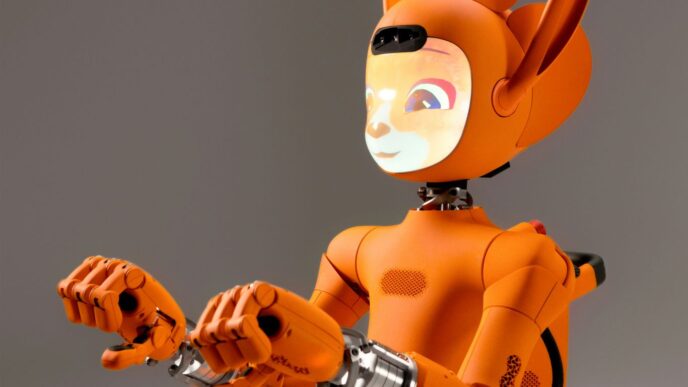
Engineered Arts has really outdone themselves with Ameca. This robot isn’t just about looking human; it’s built for interaction. Think about its facial expressions – they’re incredibly lifelike, which helps people feel more comfortable around it. Ameca is designed to be a partner, capable of understanding and responding to human emotions and cues. It’s being looked at for roles in customer service, where a friendly and responsive presence is key, or even in healthcare settings to help patients feel more at ease. The goal is to create machines that can work alongside us, taking on the dangerous, dull, or difficult jobs.
Tesla’s Optimus Gen2: Revolutionizing Daily Tasks
Tesla’s Optimus Gen2 is another big name making waves. Elon Musk has talked about producing these robots in large numbers, aiming for 10,000 units this year alone. The focus here is on practical applications, making Optimus capable of handling everyday tasks that humans currently do. Think about tasks in warehouses, factories, or even potentially in homes. The idea is to have a robot that can learn and adapt to different jobs, making it a versatile tool for various industries. It’s a bold vision, and if they pull it off, it could really change how we think about labor.
Unitree G1 And Kepler K2: Emerging Contenders
It’s not just the big players, though. Companies like Unitree and Kepler are also putting out some impressive hardware. Unitree’s G1, for instance, came out with a price tag that made people take notice, starting around $16,000. Then there’s Kepler’s K2, showing that innovation is happening across the board. These robots might not have the same name recognition yet, but they represent the growing competition and rapid development in the field. They’re pushing the boundaries on what’s possible and making advanced robotics more accessible.
Here’s a quick look at some of the recent introductions:
- Unitree G1: Introduced with a focus on affordability and capability.
- Kepler K2: Another strong entry, showcasing advancements in bipedal locomotion and dexterity.
- 1XTech NEO: A bipedal robot that has also garnered attention for its design and potential applications.
These machines are moving beyond simple demonstrations and are starting to show real promise for integration into our work and lives.
Advancements In Humanoid Robot Autonomy
It’s wild how fast robots are starting to think for themselves, right? We’re moving beyond just pre-programmed actions. Think of it like this: robots are graduating from just following a script to actually understanding what’s going on around them and making smart choices.
Defining Autonomy Levels In Humanoid Robotics
To get a handle on where we are, it helps to think about different levels of robot independence. It’s kind of like how self-driving cars are categorized. We’re seeing a clear progression:
- Level 0: No Autonomy – These are basically remote-controlled toys. They do exactly what you tell them, no thinking involved.
- Level 1: Auxiliary Control – These can record and play back simple movements. Think of a robot arm doing the same weld over and over.
- Level 2: Partial Autonomy – Here, robots can plan their own paths to do a specific job, but only in very controlled spaces, like a factory floor.
- Level 3: Conditional Autonomy – This is where things get interesting. Robots start using sensors to see and understand their surroundings. They can recognize objects and move around without constant human input, but they still need things to be somewhat predictable.
- Level 4: High Autonomy – These robots can figure things out on their own. They observe, reason, and solve problems without much help. They can handle unexpected stuff and keep working for a while.
- Level 5: Full Intelligence – This is the ultimate goal, like a robot with human-level smarts. It can be creative and figure out totally new problems. We’re not there yet, not by a long shot.
Right now, most advanced humanoid robots are somewhere between Level 2 and Level 3, with some pushing into early Level 4. It’s a big jump from just following orders to actually adapting.
The Transition Towards High Autonomy
What’s really changing the game is how robots are starting to ‘see’ and ‘feel’ the world. It’s not just cameras anymore. They’re using all sorts of sensors – like lidar, depth sensors, and even touch sensors – to get a much richer picture of their environment. This means they can do more than just avoid obstacles; they can understand textures, identify different objects, and react to subtle changes. This improved sensory input is key to robots moving beyond structured factory settings into more dynamic, unpredictable spaces like homes or public areas.
On top of that, the ‘brains’ of these robots, their AI, is getting way better. They can process all that sensor data in real-time, making decisions on the fly. If a robot is carrying something and someone walks by, the AI needs to tell it to stop or adjust its path instantly. This rapid decision-making is what allows them to work safely and effectively alongside people.
The Pursuit Of Full Intelligence In Robots
While we’re making huge strides, the idea of a robot with true, human-like general intelligence is still a long way off. Current AI is really good at specific tasks, but it doesn’t have the broad understanding, creativity, or common sense that humans do. Think about it: can a robot truly understand humor or empathy? Probably not anytime soon. The focus now is on making robots more capable and reliable in practical ways, rather than trying to replicate human consciousness. It’s about building tools that can help us, not necessarily creating artificial people. The path to full intelligence is a marathon, not a sprint.
The Most Advanced Humanoid Robot 2025: A Glimpse
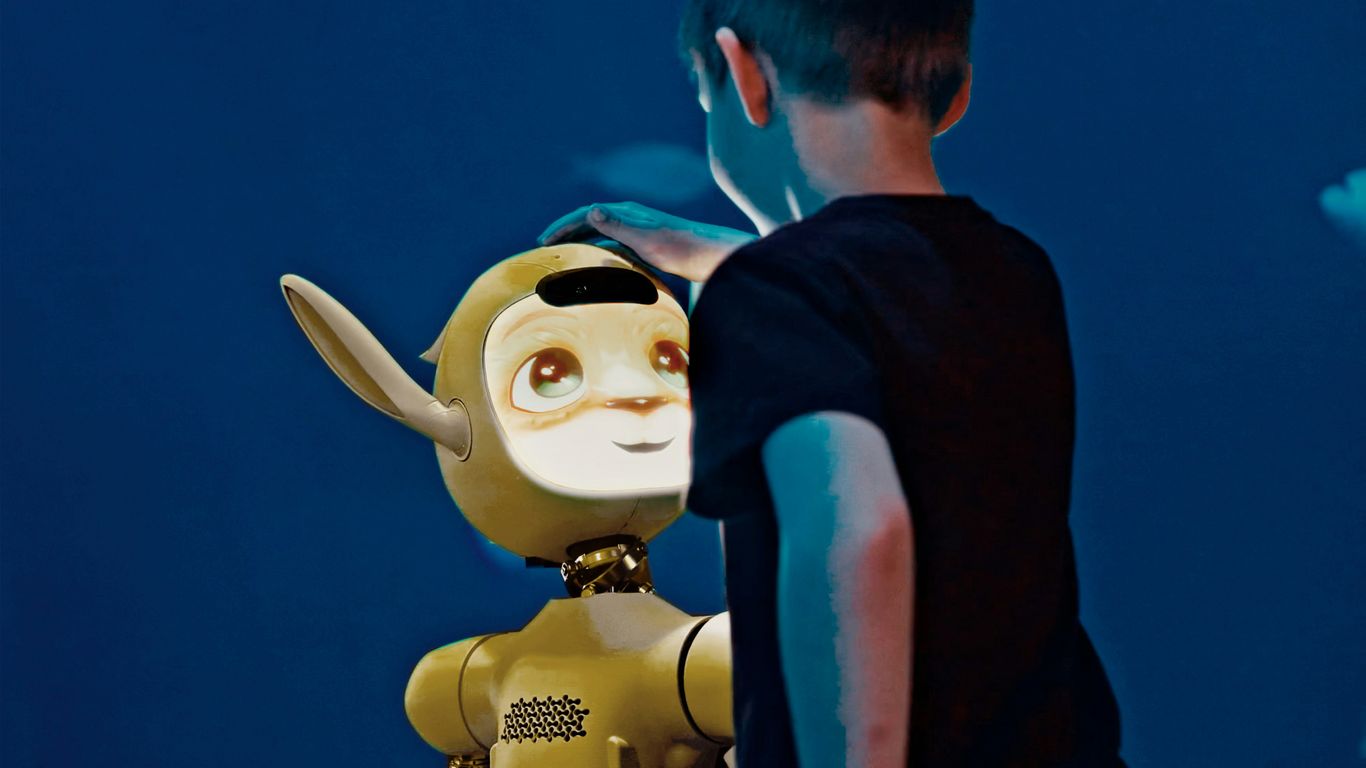
It feels like just yesterday we were marveling at robots that could barely walk in a straight line. Now, here we are in 2025, and the landscape of humanoid robotics has completely shifted. We’re not just talking about clunky machines anymore; we’re seeing robots that are starting to look, move, and even interact in ways that were pure science fiction a decade ago. This isn’t just about making robots that look like us, though that’s part of it. It’s about giving them the brains and the brawn to actually do useful things in our world.
Commercialization And Mass Production
This year, 2025, is really shaping up to be the year where humanoid robots move from the lab to the factory floor, and maybe even into our homes. Companies are talking about making thousands of these machines. Tesla, for instance, has plans to ramp up production of its Optimus robot significantly. They’re aiming for a big number of units this year, with the idea of making even more later on if things go well. It’s a big step from just having a few prototypes to actually churning them out.
Real-World Deployment At Scale
We’re starting to see these advanced robots actually doing jobs. Think about factories, where robots like Agility’s Digit are being used for tasks that are repetitive or maybe a bit risky for people. Companies are ordering them, too. UBTech’s Walker S1, for example, has seen a good number of orders from major manufacturers. This isn’t just about showing off what a robot can do; it’s about putting them to work to help with things like labor shortages and making operations smoother. It’s a real shift from just research to practical application.
Future Outlook And Key Trends
Looking ahead, the pace isn’t slowing down. We can expect to see robots getting smarter and more capable. Key things driving this are improvements in AI, which gives them better decision-making skills, and the cost of parts coming down, making them more affordable. We’re also seeing breakthroughs in what we can call their "brains" and "limbs" – essentially, how they think and how they move. The big trend is moving towards robots that can handle more complex tasks with less human oversight.
Here’s a quick look at what’s driving this progress:
- AI Model Improvements: Smarter algorithms mean robots can learn and adapt better.
- Component Cost Reduction: Making the parts needed for these robots cheaper.
- Technological Breakthroughs: Advances in the systems that control movement and processing.
- Increased Investment: Big tech companies are putting money into this field, which speeds things up.
Applications Driving Humanoid Robot Adoption
So, where are these advanced humanoid robots actually going to be useful? It’s not just about having a cool-looking bot around the house, though that might happen eventually. Right now, the focus is on places where their human-like abilities can make a real difference. Think about it: tasks that require dexterity, the ability to move around in spaces built for people, or even just interacting in a way that feels natural. We’re seeing them pop up in a few key areas.
Manufacturing Environments: Enhancing Efficiency
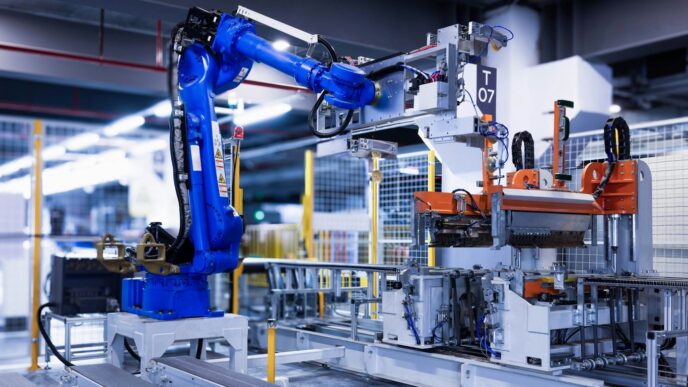
This is probably the most obvious place to start. Factories are already full of robots, but humanoid ones can do more than just repetitive assembly line work. They can handle more complex tasks, like picking and placing oddly shaped parts or performing quality checks that need a bit of visual inspection. Some are even being used to help with logistics, moving materials around the factory floor. The goal here is to make production lines more flexible and efficient, especially when dealing with a variety of products.
Here’s a quick look at what’s happening:
- Component Handling: Robots are sorting and moving parts with high accuracy, sometimes coordinating with other automated systems.
- Flexible Production: They can adapt to different tasks on a line, which is great for making custom orders or switching between product types.
- Assembly Assistance: Humanoid robots are helping with tasks that need precise movements, like fitting car doors, where even a tiny error matters.
Social Service Settings: Augmenting Human Interaction
This is where things get a bit more interesting, and maybe a little futuristic. In places like retail stores or educational settings, humanoid robots can act as assistants. Imagine a robot that can greet customers, answer questions in multiple languages, or even help teach kids about coding and AI. They can recognize faces and voices, making interactions feel more personal. In healthcare, they might help with patient care, like reminding people to take medication or assisting with physical therapy. It’s about providing support and information in a way that’s easy for people to understand.
Specialized Operations: Tackling Extreme Conditions
Then there are the jobs that are just too dangerous or difficult for humans. Think about working in hazardous environments, like handling dangerous materials or performing maintenance in places with extreme temperatures or radiation. Humanoid robots can be trained for these kinds of tasks. They can also be used in simulations for things like space exploration, practicing complex repairs in conditions that mimic outer space. Their ability to operate in environments unsafe for humans is a major advantage.
- Hazardous Material Handling: Moving dangerous substances without risking human lives.
- Extreme Environment Operations: Performing tasks in places too hot, cold, or radioactive for people.
- Simulated Training: Practicing complex procedures for high-risk jobs like space missions.
The Future Of Humanoid Robotics
So, where are we headed with all these amazing humanoid robots? It’s a big question, and honestly, the possibilities seem pretty endless right now. We’re seeing a real push towards getting these machines into more parts of our lives, not just in factories but in places like homes and hospitals too. The global demand for robots that can actually work alongside people is only going to grow, especially as many countries face fewer workers. It’s not just about having a cool gadget; it’s about filling real needs.
Global Demand And Demographic Shifts
Demographics are playing a huge role here. With birth rates dropping in many parts of the world, there’s a growing concern about having enough people to do all the necessary jobs. Humanoid robots are looking like a pretty good solution to this problem. They can take on tasks that are repetitive, dangerous, or just plain hard for humans to do consistently. Think about elder care, for instance. As populations age, having robots that can assist with daily tasks or provide companionship could become really important.
Cybersecurity Considerations For Advanced Robots
Now, with all this advanced tech comes a big responsibility: security. These robots are basically sophisticated computers on legs, connected to networks. That means they’re going to be targets for cyberattacks. We’re talking about everything from someone trying to steal data the robot collects to outright hijacking it to do something malicious. It’s super important that we develop strong security measures for these robots right from the start, treating them like any other critical connected system. We can’t afford to have a fleet of robots turned into a digital army.
Long-Term Integration Into Human Society
Looking way down the road, it’s not hard to imagine a future where humanoid robots are just a normal part of our society. Some folks are predicting that by 2060, billions of these robots could be integrated into our daily lives. They might be helping out in our homes, working alongside us in offices, or even taking on roles we haven’t even thought of yet. It’s a massive shift, and it’s going to change how we live and work in ways we’re only just beginning to understand.
What’s Next?
So, looking at all this, it’s pretty clear we’re not just talking about robots that can walk anymore. We’ve seen how far things have come, from early clunky models to machines that can actually do useful stuff, even interact with us in ways that feel more natural. Companies are really pushing the limits, and it seems like these advanced humanoids are going to become a bigger part of our lives, helping out in factories, maybe even in our homes. It’s a big shift, and while there are still challenges, especially with making them super smart and safe, the direction is set. The future with these robots is definitely closer than we think.