

Alright, so everyone’s talking about what’s next in tech, especially for 2026. It’s easy to get caught up in the hype, right? Like, every year there’s some new gadget or software that’s supposed to change everything. But what’s actually going to be a real game-changer, a true technological breakthrough, and what’s just more noise? We’re going to look past the buzzwords and figure out what’s really going to make a difference.
Key Takeaways
- Artificial intelligence is moving past just playing around to being used in real business operations, but companies are still figuring out how to use it well, and there’s a lot of less-than-great AI content out there to sort through.
- Precision medicine is shifting from being a cool idea in labs to actually being used by doctors, with a big focus on putting different kinds of patient data together to get a full picture.
- Robots that can move and interact with the world, like humanoid robots, are getting a lot of attention and investment, but getting them out of the factory and into everyday use is still a big challenge.
- AI is becoming a standard tool in science and medical imaging, helping speed up drug discovery and making diagnoses more consistent, with researchers even looking inside AI to see how it works.
- Software development is changing because of AI, with tools helping coders more, and developers are now more like managers of AI systems, focusing on building strong systems and coming up with new ideas.
The Maturation of Artificial Intelligence Beyond Hype

Alright, let’s talk about AI. It feels like just yesterday we were all buzzing about the latest generative AI tool, right? Now, in 2026, things are starting to settle down a bit, and we’re seeing a real shift from just playing around with AI to actually making it work for businesses. It’s not quite the wild west anymore, but it’s also not a perfectly smooth ride for everyone.
Generative AI: From Experimentation to Enterprise Integration
Many companies jumped on the generative AI bandwagon early, and some are now pretty good at using it. They’ve moved past just trying out a few prompts and are actually weaving AI into their daily operations. But for a lot of others, it’s still early days. They’re stuck in the pilot project phase or just trying to figure out if AI can actually help them make more money or save costs. It’s a bit like that new gadget everyone wants – exciting at first, but then you realize you need to actually learn how to use it properly.
- Many enterprise GenAI pilots don’t make it to full production. This is a big hurdle. It means a lot of effort goes into testing, but the tools never quite get adopted widely.
- Focus is shifting to measurable business value. Companies are getting smarter about asking, "What problem does this AI solve?" instead of just "Can we use AI?"
- Integration is key. The real wins aren’t just from using AI for one task, but from connecting it across different parts of the business.
The "Year of the Agents": Corporate Reality vs. Expectation
We heard a lot about "AI agents" being the next big thing, supposed to automate complex tasks. While the tech itself has made strides, most businesses haven’t seen the massive changes they expected. CEOs are reporting that they’re not really seeing the financial benefits yet. It turns out that getting these agents to work reliably in a real company setting is way harder than it sounds. It’s not quite the revolution we were promised, at least not yet.
Combating AI-Generated "Slop" with Discernment
This is a big one. We’re drowning in AI-generated content – articles, reports, social media posts – that’s technically okay but totally lacks substance. It’s like digital junk food. This "slop" makes it harder to find good information and can even make workplaces feel less productive. We need to be smarter about how we use AI, making sure it adds real value instead of just adding noise. It’s about using AI as a tool to help us, not just letting it churn out endless mediocre content. We have to learn to tell the difference between helpful AI output and just… well, slop.
Precision Medicine’s Leap from Potential to Clinical Practice
For years, precision medicine felt like a science fiction concept, something we talked about in hushed tones in research labs. We had all these amazing tools, mostly "for research use only," that hinted at a future where treatments were tailored to the individual. Well, that future is finally knocking on the clinic door. 2025 was a big year for moving these ideas out of the lab and into actual patient care. We saw some regulatory wins and a clear shift in how companies and investors are thinking. It’s less about "what if" and more about "does it work and can we get paid for it?" Capital is flowing towards companies that can actually execute and show their tech is sticking around, not just those with the flashiest new idea.
The Integration Imperative in Multi-Omic Patient Views
The big story for 2026 isn’t just about having cool new technology; it’s about putting it all together. How do we take all these different data streams – genetics, proteins, imaging – and create a single, clear picture of a patient? The companies that win won’t be the ones with the most groundbreaking single tool, but those who can prove their tools are necessary, covered by insurance, and ready for everyday doctors to use. Think of it like building a really complex puzzle; you need all the pieces to see the whole picture.
- NGS is getting specific: Next-generation sequencing isn’t just about reading a whole genome anymore. Now, it’s about using the right sequencing tool for the exact job. This means optimizing for specific applications, like finding rare genetic diseases or tracking how well a cancer drug is working.
- Proteomics is finding its place: Protein analysis is becoming a key part of the multi-omic puzzle. We’re seeing major genomics companies buying up proteomics firms, recognizing that understanding proteins is just as important as understanding genes. The challenge here is to avoid the mistakes of early genomics – don’t just build fancy tech; find clear clinical problems it can solve.
- Liquid biopsies are expanding: Blood tests that can detect cancer are moving beyond just late-stage treatment selection. They’re starting to be used for earlier detection and to monitor for minimal residual disease after treatment, helping doctors make better decisions about follow-up care.
Next-Generation Sequencing: Application-Specific Optimization
Remember when everyone was racing to sequence a whole human genome as fast and cheap as possible? That’s old news. In 2026, the focus for next-generation sequencing (NGS) is all about tailoring the technology to specific clinical needs. It’s not a one-size-fits-all world anymore. We’re seeing long-read sequencing, which is great for figuring out really complex genetic issues that short reads miss, gain traction. Also, sequencing tiny bits of DNA from microbes in the body is starting to replace slower lab tests for things like diagnosing sepsis. While the basic short-read machines are still the workhorses, the real innovation is in using them for very precise, validated tasks, not just general screening.
Proteomics: Strategic Integration and Proving Clinical Utility
The world of proteomics, which studies proteins, got a shake-up in 2025. Big players in genomics and spatial biology started moving in, showing that understanding proteins is seen as a vital piece of the overall health picture. This is partly because we’re finding important protein markers for diseases like Alzheimer’s, and new technologies are emerging that can measure proteins with incredible detail. However, proteomics needs to learn from the past. It can’t just be about impressive technology; it needs to show real-world value. The goal for 2026 is to follow the playbook of genomics: start with clear patient problems, agree on how to measure things, and prove that it actually helps people get better. The companies that can show their proteomics tools are essential for specific clinical questions will be the ones to watch.
Physical AI: Bridging the Gap Between Prototypes and Production
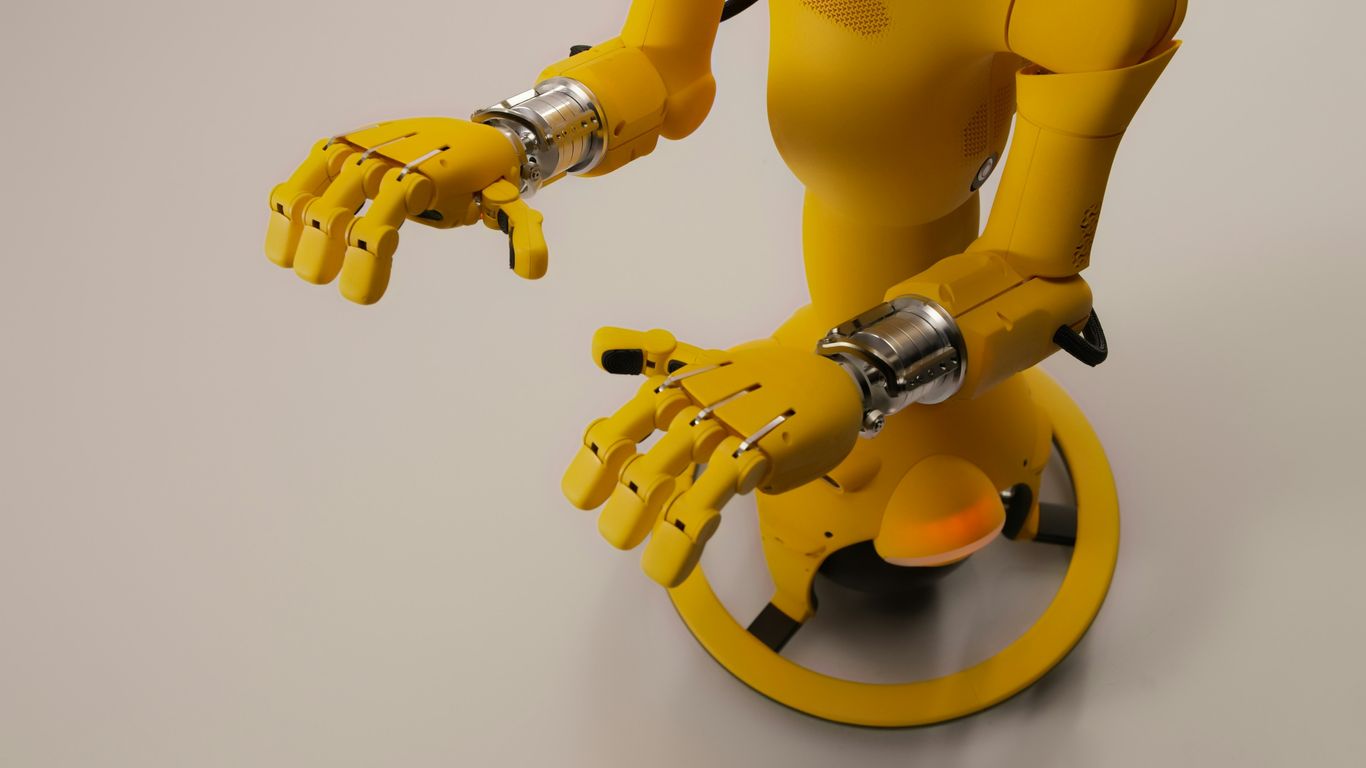
Okay, so we’ve heard a lot about robots and AI doing cool stuff in labs. Humanoid robotics and embodied AI saw a huge surge in investment last year, with startups raking in billions and a bunch of new unicorns popping up. It sounds like the future is here, right? Well, not quite. While the excitement is real, getting these advanced systems out of the lab and into actual factories or homes is proving to be a much tougher climb than many expected. Most of what we’re seeing are still in pilot programs or research settings, not really in everyday use by big companies. The journey from a cool prototype to something you can actually buy and use at scale is, frankly, pretty complex.
Humanoid Robotics and Embodied AI Investment Surge
It’s true, the money poured into this area last year was wild. Over $2 billion went into startups, and eight companies hit unicorn status. This level of investor confidence shows people believe in the potential. We’re talking about AI that can interact with the physical world, not just process data. Think robots that can learn tasks, adapt to new environments, and maybe even help out with jobs that are dangerous or repetitive for humans. This isn’t just about making a robot walk; it’s about giving it the intelligence to perform meaningful work.
Vision-Language-Action Models Powering Real-World Tasks
What’s really making some of these physical AI systems smarter are these new Vision-Language-Action, or VLA, models. Unlike regular AI that just predicts the next word in a sentence, VLA models treat actions like words. So, they can understand what they see and what you’re telling them, and then figure out the physical steps needed to do something. It’s like teaching a robot to not just see a screw, but to understand you want it screwed in and then execute the precise movements to do it. This is how we’re starting to see AI tackle more complex jobs, like those in manufacturing leaders.
The Complex Journey from Prototype to Scaled Deployment
So, if the tech is getting better, why aren’t robots everywhere? Several reasons. First, making these systems reliable enough for mass production is hard. They need to work consistently, day in and day out, without constant human supervision. Second, the cost is still a major hurdle. While investment is up, the price tag for advanced robots remains high, making widespread adoption difficult. Finally, integrating these systems into existing workflows requires significant changes, not just for the robots, but for the people working alongside them. It’s a big shift, and it takes time and careful planning to get right. We’re seeing progress, but it’s more of a marathon than a sprint.
AI’s Foundational Role in Scientific Discovery and Pathology
It feels like just yesterday AI was this futuristic idea, but now, it’s become a real workhorse in labs and hospitals. In pathology, AI tools are getting FDA nods and actually helping doctors be more consistent, especially when looking at really complex samples. Think of it like having a super-powered assistant that never gets tired. This isn’t just about speed, though; it’s about accuracy, too.
AI Platforms Enhancing Diagnostic Consistency and Efficiency
We’re seeing AI platforms move beyond just research and into actual clinical practice. These systems are getting better at spotting subtle signs in images that might be missed by the human eye, leading to earlier and more accurate diagnoses. For instance, AI is being used to analyze tissue samples, helping pathologists identify cancerous cells with greater precision. This consistency is a big deal because it means patients can get more reliable results, no matter where they are or who is reading their slides. It’s a shift towards a more standardized approach to diagnostics, which is something the medical field has been aiming for. The goal is to make sure everyone gets the best possible care, based on solid, repeatable findings. We’re also seeing AI help manage the sheer volume of data generated by modern diagnostics, making the whole process smoother.
Accelerating Drug Discovery Timelines with Machine Learning
Drug discovery used to take ages, right? Well, machine learning is changing that game. Companies are now using AI to sift through mountains of data, identify potential drug targets, and even predict how effective a new compound might be. This means fewer dead ends and a faster path to getting new treatments to people who need them. It’s like having a super-smart researcher who can explore thousands of possibilities in a fraction of the time it would take a human. This acceleration is not just about saving time and money; it’s about bringing life-saving medicines to market much sooner. The ability to model complex biological interactions is a huge step forward, and AI is making it happen. This is a big reason why we’re seeing a lot more investment in AI for R&D.
Understanding the "Archeology" of High-Performing Neural Nets
So, AI models are doing amazing things, but sometimes it’s hard to know why they work so well. Scientists are now digging into the
The Evolving Landscape of Software Engineering with AI
Alright, let’s talk about software development in 2026. It’s not quite the sci-fi movie some folks imagined, but AI is definitely shaking things up. We’re past the initial shock, and now it’s about making this stuff actually work in the real world.
AI as a Force Multiplier Across the Development Lifecycle
Think of AI not as a replacement for developers, but as a super-powered assistant. It’s starting to pop up everywhere, from figuring out what a project needs in the first place, all the way through to keeping it running smoothly after launch. It’s not just about writing code faster anymore; it’s about making the whole process better.
- Requirements Gathering: AI can help sift through user feedback and market data to pinpoint what features are really needed.
- Design & Architecture: Suggesting design patterns or identifying potential bottlenecks before they become problems.
- Coding & Testing: Automating repetitive coding tasks and generating test cases to catch bugs early.
- Deployment & Maintenance: Streamlining deployment pipelines and even predicting when systems might need attention.
The real gains come when AI is woven into every step, not just tacked on at the end.
Redefining the Developer’s Role: Orchestrating AI Agents
Remember all that talk about AI taking programmers’ jobs? It hasn’t really panned out that way. Instead, developers are becoming more like conductors of an orchestra. They’re not just typing code; they’re directing AI agents, making sure they work together and produce the right results. This shift means developers can spend less time on grunt work and more time on the big picture stuff.
- Problem Solving: Tackling complex challenges that require human creativity and strategic thinking.
- System Design: Building robust and scalable software architectures that can grow.
- Product Vision: Contributing to defining what the software should actually do and how it helps users.
It’s a move from being a coder to being a software architect and strategist, with AI handling a lot of the heavy lifting.
Building Robust Architectures and Creative Solutions
With AI taking on more of the routine tasks, developers have the bandwidth to focus on what truly matters: building solid foundations and coming up with innovative ideas. This means we’re seeing a greater emphasis on designing systems that are not only functional but also resilient and adaptable. The focus is shifting towards creating software that’s built to last and can handle whatever the future throws at it. It’s about using AI to free up human ingenuity for the tasks that really need it.
Measuring AI’s Economic Impact and Workforce Diffusion
Okay, so we’ve all heard the big talk about AI changing everything, right? But what does that actually mean for jobs and the economy? It’s easy to get caught up in the hype, but by 2026, we’re going to start seeing some real numbers. Forget just guessing; we’re talking about "AI economic dashboards" that will track things in real-time. Think of them like the weather reports for our jobs and businesses.
These dashboards will look at where AI is actually making things more productive, where it might be taking jobs, and even where new kinds of work are popping up. They’ll pull data from payrolls, online platforms, and how much people are actually using AI tools. It’s a bit like having a live feed of the economy, but specifically for AI’s influence.
We’re already seeing early signs. For instance, some research shows that younger workers in jobs that use a lot of AI might be seeing slower job growth and lower pay. In 2026, this kind of information won’t be old news from years ago; it’ll be updated monthly. Business leaders will be checking these AI impact numbers alongside their sales figures, and policymakers will use them to figure out where to put money for training programs or support for workers.
AI Economic Dashboards for Real-Time Productivity Tracking
This is where things get interesting. Instead of just talking about AI’s potential, we’ll have tools that show us what’s happening now. These dashboards will break down AI’s impact by specific jobs and tasks. It’s about moving from broad statements to concrete data.
- Tracking Productivity Gains: Identifying which tasks AI speeds up and by how much.
- Monitoring Job Displacement: Pinpointing roles where AI is taking over tasks previously done by humans.
- Spotting New Opportunities: Discovering entirely new job functions that emerge because of AI.
The "Year of the Agents": Corporate Reality vs. Expectation
Remember all the talk about "AI agents" taking over? Well, the reality in many companies is a bit more complicated. While the technology is impressive, most businesses haven’t seen the massive financial returns they expected yet. A lot of this comes down to how companies are trying to use AI.
- Isolated Projects: Many companies are treating AI like a side project rather than a core part of their business strategy. This means AI tools don’t always connect well with existing work processes.
- The "Shadow AI" Economy: It turns out, over 90% of employees are already using personal AI tools for work, often without their company’s official backing. This creates a fragmented landscape where AI isn’t being used to its full potential.
- Generic vs. Specialized Tools: Even when companies invest in AI, the agents they deploy often aren’t smart enough to handle unique business tasks. They might struggle to remember past conversations or understand specific company jargon, leading to frustration.
Combating AI-Generated "Slop" with Discernment
As AI gets better at creating content, we’re also going to face a bigger challenge: figuring out what’s actually useful and what’s just noise. Think of it as AI-generated "slop" – a lot of text, images, or code that looks okay on the surface but lacks real substance or accuracy.
- The Need for Critical Evaluation: We’ll need new skills to sift through AI-generated material, checking for factual errors, biases, or just plain silliness.
- Focus on Quality Over Quantity: The goal will shift from just producing more content with AI to producing better, more reliable content.
- Human Oversight Remains Key: AI can be a powerful assistant, but human judgment will be more important than ever to guide its output and ensure it meets real-world standards.
Identifying Early-Career Worker Vulnerabilities
This is a big one. The data is starting to show that newer workers, those just starting their careers, are often the first to feel the impact when AI changes a job. If AI can do parts of a job more cheaply or efficiently, it’s often the entry-level tasks that get automated first.
- Impact on Entry-Level Roles: Jobs that involve repetitive tasks or data processing are particularly susceptible.
- Slower Wage Growth: Early-career workers in AI-affected fields might see their wages grow more slowly compared to previous generations.
- Need for Adaptable Skills: This highlights the importance of continuous learning and developing skills that complement AI, rather than compete with it.
Targeting Policy for Broad-Based Prosperity
So, what do we do with all this information? The idea is to use these real-time economic insights to make smarter decisions. It’s not just about letting AI do its thing; it’s about guiding its integration so that more people benefit.
- Smart Training Programs: Directing resources to train workers for the jobs of the future, focusing on skills AI can’t easily replicate.
- Updated Safety Nets: Rethinking unemployment benefits and support systems to better help workers transition between roles.
- Encouraging Innovation: Creating policies that support the development of AI in ways that create new jobs and opportunities, not just automate existing ones.
Basically, by 2026, we’re moving past the "wow" factor of AI and into the nitty-gritty of how it’s reshaping our economy and our work lives. It’s about understanding the real effects and making sure the benefits are shared widely.
Generative AI’s Direct-to-User Approach in Healthcare
Bypassing Enterprise Decision Cycles with End-User Applications
Okay, so we’ve talked a lot about AI in big companies and hospitals, right? Well, things are getting interesting because the folks building these AI tools are getting a bit tired of waiting around for the big bosses to make decisions. You know how long it can take for a hospital to adopt something new? It’s like watching paint dry sometimes. So, what’s happening is these AI creators are starting to skip the whole corporate approval process and go straight to the people who actually need the tools – doctors, nurses, maybe even patients.
Think about it like this: instead of a hospital system buying a whole new software package that takes months to roll out, you might start seeing apps that do specific things, like summarizing medical research papers or answering quick questions about patient care. These might even be free to start, just to get them into people’s hands. It’s a bit of a gamble for the companies, sure, but it could speed things up a lot.
Forecasting Diagnoses and Disease Progression with Transformers
Now, on the tech side of things, there’s this really neat type of AI called transformers. We’re seeing them get really good at looking at patient data and making educated guesses about what might be going on. This means they could potentially predict future illnesses or how well a treatment might work, all without needing someone to manually label tons of examples first. This is a big deal because labeling medical data is super time-consuming and expensive. Imagine an AI that can look at your medical history and flag potential issues down the line, or suggest the best treatment path based on patterns it finds. It’s not quite crystal ball territory, but it’s getting closer to helping doctors make more informed decisions faster.
The Crucial Need for Transparency in AI-Assisted Healthcare
With all these new AI tools popping up, especially ones that end-users can access directly, there’s a big question we need to ask: how do we know why the AI is suggesting something? If an AI helps a doctor diagnose a condition, or suggests a treatment, we need to be able to understand its reasoning. It’s not enough for the AI to just be right; we need to trust how it got there. This is especially important when patients are involved. We need clear explanations, not just a black box spitting out answers. This transparency is key to making sure these AI tools are used responsibly and safely in healthcare, building trust rather than just relying on the latest tech trend.
Looking Ahead: Beyond the Buzzwords
So, as we wrap up our look at what’s next, it’s clear that 2026 isn’t just about the next shiny object. We’ve seen how technologies like AI are moving past the initial excitement and into real-world use, sometimes with great results and sometimes with a bit of a learning curve. It’s not always about completely replacing people, but more about figuring out how tools can help us do our jobs better. Think of it like getting a new power tool; it doesn’t mean you stop being a carpenter, it just means you can build things faster and maybe even build new kinds of things. The real breakthroughs won’t be the loudest announcements, but the quiet, steady work of integrating these new capabilities into everyday tasks, making them more useful and reliable. The companies and individuals who succeed will be the ones who are good at adapting, learning, and figuring out how to make these powerful new tools actually work for them, not just adding to the noise.
Frequently Asked Questions
What is “Physical AI” and why is it important?
Physical AI is about making robots and machines that can do things in the real world. Think of robots that can walk, build things, or even drive cars. While there’s been a lot of excitement and money put into this area, getting these robots from just being cool ideas to actually being used everywhere is a big challenge. It’s like they’re still learning how to do things well outside of a lab.
How is Artificial Intelligence changing medicine?
AI is helping doctors understand diseases better and find new ways to treat people. It can look at a lot of information about a patient, like their genes and other health details, to give more personalized care. It’s also speeding up the process of finding new medicines and making sure tests for diseases are more accurate and quicker.
What does “Generative AI” mean for businesses?
Generative AI is the type of AI that can create new things, like text, images, or code. While many companies are still figuring out how to use it, some are already putting it to work to make their businesses run smoother. The trick is to use it for real tasks that help the company, not just for fun experiments. It’s important to make sure the AI-generated stuff is actually good and useful.
Are robots going to take over all the jobs?
It’s a common worry, but AI is more likely to change jobs than eliminate them completely. In areas like writing computer code, AI can help programmers do their jobs faster and better. This means people might focus more on planning, designing, and solving tricky problems, rather than just the basic tasks. It’s about working *with* AI, not being replaced by it.
What is “slop” in the context of AI?
“Slop” refers to the huge amount of AI-created content that might seem okay at first but lacks real value or originality. This can make it hard to find good information because there’s so much low-quality stuff out there. Companies need to be careful to use AI in ways that produce high-quality results and avoid just adding to the noise.
How will we know if AI is really helping the economy?
In 2026, we’ll start seeing better ways to measure AI’s impact. Think of it like a dashboard that shows in real-time how AI is making things more productive, changing jobs, or creating new ones. This will help leaders and governments understand where AI is working best and how to make sure everyone benefits from these changes, not just a few.