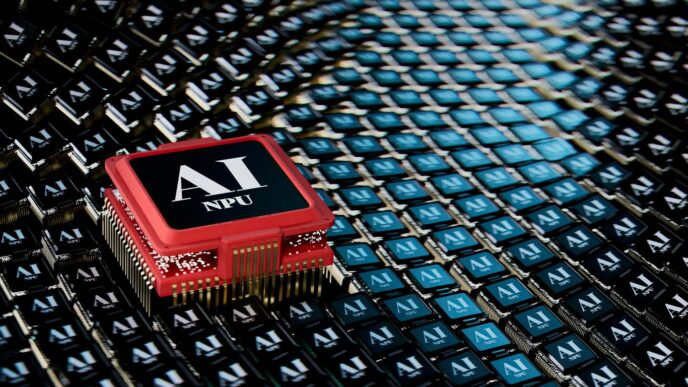

Quantum warfare. It sounds like something out of a sci-fi movie, right? But what if I told you it’s becoming a real thing, and not just in theory? We hear a lot about how quantum computers will change everything, from breaking codes to creating new materials. But how much of that is real, and how much is just hype? This article is going to break down what quantum warfare actually means, looking at the actual science behind it, the potential threats, and what we can do about it. We’ll try to cut through the noise and see what’s really going on.
Key Takeaways
- The idea of quantum artificial intelligence and super-powered quantum computers is often hyped. In reality, current quantum computers have many limitations and are far from the science fiction versions we imagine.
- Quantum communication and cryptography pose a significant future threat, especially with the possibility of ‘Q-Day’ when current encryption could be broken. Developing new, quantum-resistant encryption is a major focus.
- Quantum sensing and metrology offer new ways to detect things like stealth technology and subtle environmental changes, potentially leading to advanced tools like quantum radar.
- Quantum computing could be used for complex simulations, like calculating missile paths or troop movements, but distinguishing between peaceful and harmful uses is difficult.
- Regulating quantum technologies is tricky because they have ‘dual-use’ potential, meaning they can be used for both good and bad. Traditional rules don’t quite fit, and balancing innovation with security is a big challenge.
Debunking Quantum Warfare Myths
It’s easy to get swept up in the futuristic visions of quantum technology, especially when it comes to warfare. We hear about quantum artificial intelligence that can outthink any human general, or quantum computers that will instantly break all our current encryption. Sounds like something straight out of a sci-fi movie, right? Well, not quite. The reality of quantum warfare is far more nuanced and, frankly, less dramatic than the headlines suggest.
The Allure of Quantum Artificial Intelligence
The idea of AI powered by quantum computing is certainly captivating. Imagine machines that can process information and learn at speeds we can barely comprehend. However, the leap from theoretical quantum AI to practical battlefield applications is enormous. Current quantum computers are incredibly sensitive and prone to errors. They require super-cold environments and are still very much in the experimental phase. We’re a long way from having quantum AI running drone swarms or strategizing complex military campaigns. It’s more like comparing a horse-drawn carriage to a concept car – both are vehicles, but the practical application and readiness are worlds apart.
Quantum Computing’s Current Limitations
Let’s talk about quantum computing itself. While it holds immense promise for certain types of problems, it’s not a magic bullet for everything. Building and maintaining stable qubits, the basic units of quantum information, is incredibly difficult. They are easily disturbed by their surroundings, leading to errors. Think of it like trying to balance a pencil on its tip – it takes a lot of precision and a very stable environment. Many of the grand predictions about quantum computers breaking all encryption tomorrow are based on a misunderstanding of their current state. We’re not on the cusp of a quantum code-breaking apocalypse; rather, we’re in the early stages of development. Research into quantum materials is ongoing, but practical, large-scale quantum computers are still a distant goal.
Separating Science Fiction from Reality
So, how do we tell the difference between what’s possible and what’s just hype? It helps to look at the actual progress being made. While quantum computing is advancing, it’s doing so incrementally. The same goes for other quantum technologies. The sensationalized stories often skip over the immense engineering challenges involved. It’s important to remember that even advanced technologies have limitations. For instance, AI, while powerful, still struggles with common sense reasoning and adaptability in novel situations. The idea of a quantum singularity, where AI rapidly surpasses human intelligence, remains a theoretical concept, not an immediate threat. Understanding the actual state of quantum tech helps us prepare for its real impact, rather than getting lost in fantastical scenarios. It’s a bit like understanding ancient myths; they aren’t static stories but evolve and accumulate meaning over time, and a closer look reveals more than simple interpretations [40c0].
Quantum Communication and Cryptography’s Role
Quantum tech isn’t just about supercomputers crunching impossible math equations. It’s also a big deal for how we keep our secrets and communicate securely. Let’s break down what this tech means for real-world security, the fear around the so-called ‘Q-Day,’ and what’s being done to keep digital info safe.
The Imminent Threat of ‘Q-Day’
People in cybersecurity circles talk a lot about ‘Q-Day,’ which is when quantum computers could break most of today’s encryption. That might sound like science fiction, but it’s a serious concern. Here are some reasons why:
- Attackers could be collecting loads of encrypted info right now, just waiting for the day they can finally decode it with quantum machines.
- Sensitive data – government secrets, bank records, personal info – all depend on encryption that quantum computers might unlock much sooner than we’d like.
- The actual date for ‘Q-Day’ is unknown, but prepping for it isn’t something we can ignore.
So, organizations are hustling to figure out what info really needs protection for years to come. Think old political files, confidential business deals, even medical records. The risk isn’t just about today’s data, but long-term secrets.
Developing Post-Quantum Cryptography
Since quantum computers could make a mess of current encryption, researchers and industry folks are building something called post-quantum cryptography (PQC). This means algorithms that are supposed to be "quantum-resistant," or much harder for quantum computers to crack. It’s not foolproof yet, but here’s what this process looks like in practice:
- Audit your systems: Find out what’s vulnerable to future quantum attacks (not everything is equally risky).
- Test new standards: Agencies like NIST are finalizing quantum-safe encryption methods right now.
- Transition gradually: Once standards are ready and supported by software libraries, organizations replace old encryption with these new quantum-resistant tools.
| Stage | What Happens | Timeframe |
|---|---|---|
| Review | Audit for vulnerable systems | Ongoing |
| Standard Selection | NIST finalizes PQC algorithms | 2026-2027 (projected) |
| Implementation | Replace and upgrade old encryption | 1-2 years or more |
This is a process, not a one-off event. It’s not about flicking a switch—every company and government is going to move at a different pace, but no one can afford to ignore it.
Ensuring Network Security in the Quantum Era
The shift to quantum-secure networks means thinking ahead – way ahead. Besides just swapping out old algorithms, there are broader changes in how communication is protected. Some practical steps:
- Store critical data offline if possible: Sensitive files on paper or air-gapped computers can’t be stolen over the internet.
- Use quantum key distribution (QKD): Some countries (like China) are experimenting with satellites that use quantum principles to send ultra-secure messages, where any tampering is instantly detectable.
- Plan for "harvest now, decrypt later" attacks: Even if your info looks safe today, quantum computers could crack it later. So, what’s safe today may not be in a decade.
Here’s a short list of strategies for organizations on the quantum security to-do list:
- Map and label your most sensitive digital assets.
- Keep an eye on advances in quantum computers and cryptography.
- Talk to vendors and partners about how they’re handling quantum risks.
- Don’t panic, but don’t ignore the development. Early action makes the future much less stressful.
In a nutshell? Quantum communication and cryptography are forcing everyone to rethink what it means to keep secrets safe. The folks who start acting now are the ones who won’t get caught scrambling when Q-Day finally comes around.
Quantum Sensing and Metrology Applications
Quantum technology isn’t just about faster computers or unbreakable codes. It’s also quietly revolutionizing how we measure and detect things, with some pretty big implications for national security. Think about it: being able to spot something that’s designed to be invisible, or measure tiny changes in the environment that could signal something important. That’s where quantum sensing and metrology come in.
Detecting Stealth Technologies
One of the most talked-about applications is the idea of ‘quantum radar’. The theory is that by using entangled photons, this kind of radar could potentially see through stealth technology that confounds current radar systems. It’s also suggested that it could be harder for jammers to mess with. However, a lot of experts think that true quantum radar is still a long way off, maybe even science fiction for the foreseeable future. Still, the idea of a sensor that can’t be easily fooled is a big deal.
Measuring Subtle Environmental Anomalies
Beyond just spotting hidden planes or submarines, quantum sensors can measure incredibly small changes. For instance, a quantum sensor could potentially detect the tiny magnetic field disturbances caused by a submerged submarine. This level of precision opens up new ways to monitor things happening in the environment that we can’t currently detect. Imagine a device that can pick up on minute shifts in Earth’s magnetic field – it sounds like something out of a movie, but it’s becoming a real possibility.
The Future of Quantum Radar
While the concept of quantum radar is exciting, it’s important to be realistic. Current technical assessments suggest it’s not something we’ll see in widespread use anytime soon. However, other quantum sensing technologies are already making their way into practical applications. For example, atomic clocks have been around for decades and are incredibly precise. Quantum navigation systems are also being developed, which could eventually reduce our reliance on GPS, especially in environments where satellite signals might be unreliable. The real impact of quantum sensing might be in its ability to provide unprecedented precision and detection capabilities across a range of applications, even if ‘quantum radar’ remains a distant dream.
Here’s a quick look at some potential impacts:
- Enhanced Surveillance: Detecting previously undetectable targets.
- Improved Navigation: More accurate positioning, independent of satellite systems.
- Environmental Monitoring: Measuring subtle changes that could indicate threats or anomalies.
- Scientific Discovery: Pushing the boundaries of what we can measure and understand about the physical world.
Quantum Computing in Simulation and Analysis
Quantum computers, with their ability to handle calculations far beyond the reach of today’s machines, are poised to revolutionize simulation and analysis. Think about it: instead of just crunching numbers like a regular computer, quantum systems can explore a vast number of possibilities all at once. This opens doors for incredibly complex modeling.
Calculating Ballistic Trajectories
Predicting the exact path of a projectile, especially over long distances or in complex atmospheric conditions, is a tough math problem. Quantum computers could potentially model these trajectories with unprecedented accuracy. This isn’t just about hitting a target; it’s about understanding the physics involved at a much deeper level, factoring in variables that are currently too difficult to compute.
Modeling Troop and Submarine Deployments
Imagine being able to simulate troop movements or submarine patrols in intricate detail, accounting for countless environmental factors and potential enemy responses. Quantum simulations could offer a dynamic, multi-faceted view of battlefield scenarios or naval operations. This could help in planning strategies, understanding risks, and even predicting outcomes with greater confidence. It’s like having a crystal ball for military strategy, but based on solid computation.
Differentiating Benign and Malign Simulations
This is where things get tricky. The same power that allows for sophisticated military simulations can also be used for less savory purposes. For instance, a quantum computer could be used to model molecular structures for developing new medicines. However, that same capability could be turned towards designing new chemical or biological weapons. The line between a beneficial simulation and a dangerous one can be incredibly thin, making oversight a real challenge. The ability to perform these complex simulations means we need to be extra careful about who has access to this technology and for what purposes.
The Dual-Use Dilemma of Quantum Technologies
Okay, so we’ve talked about some pretty wild quantum stuff, right? AI, super-secure communication, fancy sensors. But here’s where things get a bit sticky, and honestly, kind of confusing. It’s this whole ‘dual-use’ idea. Basically, it means a technology can be used for good things, like scientific research or making our lives better, but it can also be used for not-so-good things, like, you know, military stuff or causing trouble.
Challenges in Regulating Emerging Tech
Trying to keep up with new tech is already a headache. Think about it – just when you figure out how one thing works, something else pops up. Quantum tech is like that on steroids. Most of this research happens in universities, which are usually more about sharing knowledge than locking it down. This is a big problem because some countries are really good at, let’s just say, ‘borrowing’ ideas and tech without asking. It makes it tough to control who gets what and what they do with it.
The Pointlessness of Traditional Dual-Use Classifications
Honestly, the whole ‘dual-use’ label feels a bit outdated when it comes to quantum stuff. It’s like trying to put a square peg in a round hole. For example, what if we develop a new material that can hide things from radar? Is that a military item? Or is it just a cool new fabric? Or what about a device that can detect tiny changes in the Earth’s magnetic field? It could help find submarines, sure, but it could also be used for geological surveys. The lines are just so blurry. It’s getting to the point where almost any technology could have some kind of ‘dual-use’ potential, making the classification almost meaningless.
Balancing Innovation with Security Concerns
So, what do we do? We want to keep pushing the boundaries of science, right? We want those amazing breakthroughs. But we also need to be smart about security. It’s a tough balancing act. We can’t just shut down research because something might be misused. That would stifle progress. But we also can’t just let anything go unchecked. It’s a real puzzle, and figuring out the right rules for quantum tech is going to be one of the biggest challenges we face in the coming years. It’s not just about what the tech can do, but what people might do with it, and that’s a much harder thing to predict or control.
Research Security in the Quantum Age
When we talk about quantum technologies, it’s not just about the cool science or the potential for new gadgets. There’s a whole other side to it: keeping that research safe. Think of it like protecting your most valuable secrets, but on a national and international scale. This isn’t just about preventing theft; it’s about stopping sensitive knowledge from falling into the wrong hands, which could have serious implications for national security and economic stability.
Protecting Quantum Science and Technology
So, what does "research security" actually mean in this context? It’s a bit of a fuzzy term, honestly, and different countries define it a little differently. Generally, it’s about safeguarding research from things like foreign interference, espionage, and the misuse of sensitive findings. For quantum tech, this is especially tricky because so much of it has potential military or intelligence applications. It’s like trying to put a lid on something that’s inherently powerful and can be used in many ways. The FBI even has a special team dedicated to this, the Quantum Information Science Counterintelligence Protection Team (QISCPT), which shows how seriously this is being taken.
Addressing National Security Risks
One of the biggest headaches is the "dual-use" problem. Almost any advancement in quantum computing, sensing, or communication could potentially be weaponized or used for intelligence gathering. This makes it hard to draw a line between purely academic research and something that poses a security risk. Traditional ways of classifying technologies just don’t seem to cut it anymore. We’re seeing countries like Australia with their Technology Foreign Interference Taskforce trying to get a handle on this, but it’s a constant challenge. It’s a balancing act between letting science flourish and making sure it doesn’t create new vulnerabilities. The potential for quantum computers to break current encryption methods, for instance, is a major concern that requires immediate attention to safeguard digital assets [1489].
Navigating International Collaboration and Espionage
Collaboration is key to scientific progress, but in the quantum age, it comes with added risks. How do you share knowledge and work with international partners without inadvertently giving away something that could be used against your own country? This is where things get really complicated. Some countries are looking at measures like background checks for researchers working on sensitive quantum projects, which has sparked debate about openness versus security. It’s a tough puzzle, trying to keep the research community open and collaborative while also being vigilant against potential threats. The landscape of quantum technology is evolving rapidly, and with it, the challenges of maintaining research integrity and security.
Governing Quantum Technologies
So, we’ve talked a lot about what quantum tech can do, both the cool stuff and the scary stuff. But who’s actually in charge of all this? It’s a bit of a mess, honestly. We’re dealing with technologies that are still being figured out, and trying to slap old rules on them just doesn’t work.
Legal Implications of Quantum Leaps
Think about it: a quantum computer could break pretty much all the encryption we use today. That’s a huge legal headache waiting to happen. We’re talking about everything from secure banking to national secrets being exposed. The legal frameworks we have now weren’t built for this kind of disruption. We need new laws, or at least serious updates, to deal with the fallout. It’s not just about breaking codes; it’s about what happens when sensitive data is suddenly accessible to anyone with the right quantum machine. This could lead to all sorts of legal battles over data privacy, intellectual property, and even national security.
Governance Tools for the Second Quantum Revolution
Trying to manage something as complex as quantum tech is like trying to herd cats. We need new ways to think about governance. Some ideas floating around include:
- International Treaties: Like we have for nuclear weapons, but for quantum tech. This is tricky because quantum tech is so broad.
- National Security Reviews: Governments are already looking at screening researchers and projects that could pose a risk.
- Industry Standards: Getting companies and research labs to agree on certain security practices and ethical guidelines.
- Export Controls: Deciding which quantum technologies are too risky to share with other countries. This is super complicated because what’s a threat today might be a tool for good tomorrow.
Regulating Export Controls for Quantum Computing
This is where things get really sticky. Countries are worried about their rivals getting their hands on advanced quantum computers. But how do you even control exports when the technology is still evolving so fast? What do you ban? A fully-fledged quantum computer that can break encryption? Or the smaller, less powerful machines that are available now, which could still be used for research that eventually leads to those powerful machines?
It’s a balancing act. We don’t want to stifle innovation, but we also can’t just let potentially dangerous technology spread unchecked. It’s a global puzzle, and nobody has all the pieces yet.
So, What’s the Takeaway?
Look, the idea of quantum warfare sounds like something straight out of a sci-fi movie, right? We hear about quantum computers breaking all our codes and AI taking over. But the reality is, a lot of that is still way off, or maybe even impossible. Quantum tech is tricky, and AI still has its limits. Instead of getting caught up in the hype, we need to focus on the real, slower-moving changes happening now, like shifts in populations and economies. These might not be as flashy, but they’re what will actually shape how conflicts look down the road. So, while we keep an eye on future tech, let’s not forget the practical stuff that’s already changing the game.
Frequently Asked Questions
What is quantum warfare, and is it real?
Quantum warfare isn’t about laser guns or invisible cloaks from sci-fi movies. It’s about using the strange rules of quantum physics, like how tiny particles can be in many places at once, for military purposes. While some ideas are still very futuristic, like super-powerful computers that could break today’s codes, other uses, like better sensors, are closer to reality. It’s important to know the difference between what’s happening now and what might happen way down the road.
Can quantum computers really break all our secret codes?
That’s a big worry, but not quite yet. Today’s quantum computers are still quite limited and fragile. The idea of a ‘Q-Day’ when they can instantly crack the codes that protect our online information is something experts are preparing for, but it’s not happening tomorrow. We are already working on new kinds of codes, called post-quantum cryptography, to stay safe.
How can quantum technology help with spying or detecting things?
Quantum sensors could be amazing for finding things that are hard to see, like stealth planes or submarines. They can also measure tiny changes in things like magnetic fields. Imagine a sensor that can spot hidden soldiers or a device that can detect a submarine from miles away. This is one area where quantum tech is moving from theory to practice.
What does ‘dual-use’ mean for quantum technology?
Dual-use means a technology can be used for both good and bad, or for civilian and military purposes. For example, a powerful quantum computer could help design new medicines, but it could also be used to break codes. It’s tricky because it’s hard to control or ban something that has so many potential helpful uses, even if it could also be dangerous.
Is it dangerous for scientists to work on quantum stuff?
There are concerns about ‘research security.’ When scientists make breakthroughs in quantum technology, this knowledge could be useful for military or intelligence purposes. Countries are worried about their discoveries being stolen or used by rivals. So, there’s a need to protect this research while still allowing scientists to collaborate and share ideas.
How do we control or manage quantum technology?
Figuring out how to govern quantum technology is a big challenge. Laws and rules need to catch up with how fast the technology is changing. This includes thinking about how to share this technology with other countries (export controls) and making sure it’s used responsibly. It’s a balancing act between encouraging new ideas and preventing harm.