The Peak of Metaverse Hype in 2022
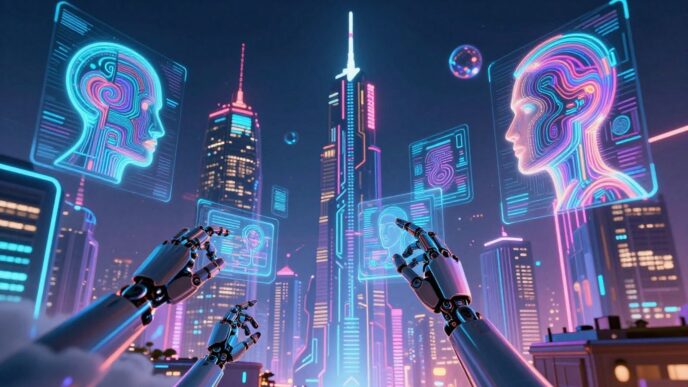
Man, 2022 was something else for the metaverse, wasn’t it? It felt like every other day there was a new announcement or a massive investment pouring into this idea of a digital world we could all hang out in. It was everywhere – news headlines, tech blogs, even casual conversations. The buzz was real, and honestly, it was pretty exciting to think about what might be next.
Technological Advancements Fueling Excitement
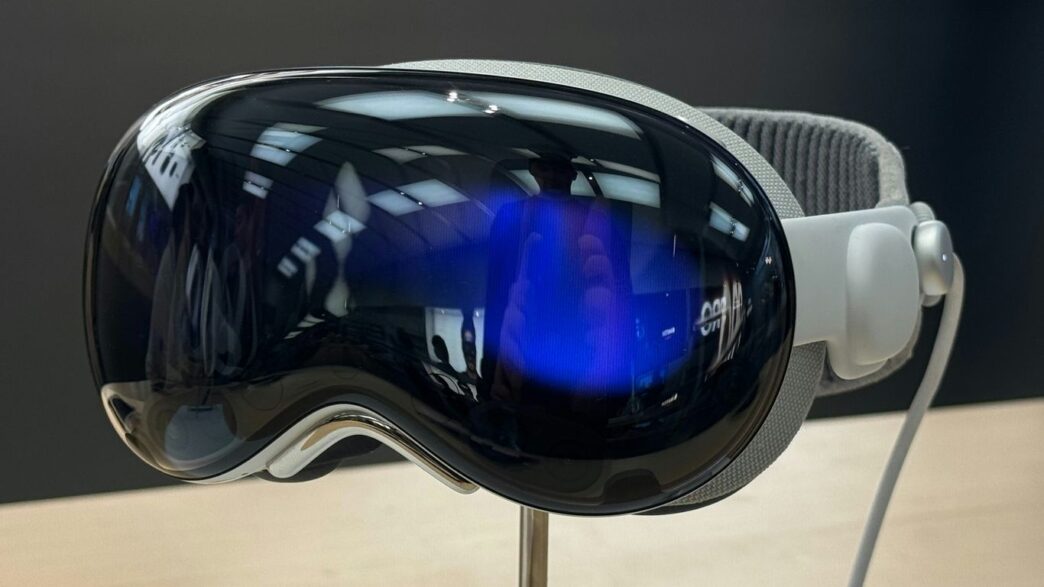
So, what was driving all this excitement? A big part of it was the tech itself getting better. VR headsets were becoming more advanced, offering sharper visuals and more responsive tracking. AR glasses were also starting to show real promise, hinting at a future where digital information could blend right into our physical surroundings. It felt like we were on the cusp of something truly new, a different way to experience the internet and interact with each other. Think about it: instead of just looking at a screen, you could actually be somewhere else, virtually speaking.
Significant Financial Investments and Ambitious Projects
And then there was the money. Billions of dollars were being thrown around. Venture capitalists were lining up to fund any startup with ‘metaverse’ in its name, and established companies were making huge bets too. We heard about these grand plans for sprawling virtual cities, digital marketplaces, and massive online events. It wasn’t just talk; these were concrete projects with big teams working on them, all aiming to build out these digital spaces. It painted a picture of a future where work, play, and socializing would all happen in these interconnected virtual environments.
Major Tech Giants’ Groundbreaking Announcements
Of course, you can’t talk about the 2022 metaverse hype without mentioning the big players. Meta, formerly Facebook, was all in, pushing its Horizon Worlds platform and talking about building the metaverse company. Microsoft wasn’t far behind, announcing plans to bring metaverse-like features to its work collaboration tools, like Teams. Even Google was making moves, focusing on its AR initiatives. These announcements from companies with such massive reach really amplified the feeling that the metaverse wasn’t just a niche idea anymore; it was going to be the next big thing.
Navigating the Challenges of AI VR 2022
Even with all the excitement around AI and VR in 2022, it wasn’t all smooth sailing. There were some pretty big roadblocks that kept things from moving as fast as everyone hoped. Think of it like trying to build a super cool treehouse, but you keep running out of wood or the ladder is too short.
Hardware Limitations and Accessibility Barriers
One of the main issues was the gear itself. High-end VR headsets, the ones that really make you feel like you’re somewhere else, were still really expensive. We’re talking hundreds, sometimes over a thousand dollars. That’s a lot for most people just to try something out. Plus, they could be clunky and heavy, not exactly something you’d wear for hours. And for AR, the glasses that could overlay digital stuff onto the real world were often bulky or just not quite there yet in terms of how well they worked. It made it tough for regular folks to get their hands on the tech.
Interoperability Issues and Fragmented Virtual Spaces
Another big headache was getting different virtual worlds to talk to each other. The dream was this big, connected metaverse where you could hop from one experience to another. But in reality, most platforms were like separate islands. If you bought something in one virtual space, you couldn’t take it to another. There weren’t many common rules or ways for these different systems to work together. This meant a lot of separate, walled-off digital places instead of one big, open world.
Infrastructure Demands and the Digital Divide
Building and running these immersive worlds takes a ton of power and fast internet. A lot of places just don’t have the internet speeds needed for smooth VR or AR experiences. This really highlights the digital divide – the gap between people who have access to good technology and those who don’t. If you can’t get online reliably or afford the latest gear, you’re basically left out of the metaverse party. It’s not just about the headsets; it’s about the whole network that supports it, and that’s still a work in progress in many areas.
Socio-Economic and Ethical Considerations
So, while everyone was buzzing about the cool tech in 2022, there were some pretty big questions lurking in the background. It wasn’t just about whether the headsets worked or if the graphics looked real. We had to think about who gets to play in these new digital sandboxes and what happens to our personal information.
Data Privacy and User Safety Concerns
This is a big one. When you’re in a virtual world, especially one that’s supposed to feel real, companies can collect a whole lot of data about you. Think about how you move, what you look at, even how you react to things. Protecting all that personal information is super important, and frankly, a bit scary. Plus, these immersive spaces can be tough to police. We’re talking about potential harassment, scams, and other bad stuff that might feel even worse when it’s happening all around you in 3D. Figuring out how to keep people safe and their data private is a massive puzzle.
The Widening Digital Divide
Remember how expensive those fancy VR headsets were? Yeah, that’s a problem. If only people with money and good internet can access these new virtual worlds, it just makes existing inequalities even worse. We could end up with a situation where some people get all the cool new opportunities, and others are left behind, completely shut out. It’s like having a whole new world open up, but only for a select few.
Managing Metaverse Risks Through Design
So, how do we actually deal with all this? It seems like the best approach is to think about these issues from the very beginning, right when these virtual spaces are being built. It’s not something you can just tack on later. Companies need to:
- Build in safety features: Think about moderation tools and ways to report bad behavior from the start.
- Be transparent about data: Clearly explain what data is collected and how it’s used, and give users control.
- Consider accessibility: Try to make these experiences available to more people, not just those with the latest gear.
- Develop new skills: Companies will need people who know how to build and manage these complex virtual environments safely and ethically. This includes things like cybersecurity experts who understand web3 and 3D artists.
Key Players and Their AI VR 2022 Contributions

Alright, so 2022 was a wild year for AI and VR, and a few big names were really pushing the envelope. It wasn’t just about making cool tech; it was about figuring out how people would actually use it.
Meta’s Horizon Worlds and Evolving Strategies
Meta, you know, the company formerly known as Facebook, was all in on the metaverse. They poured a ton of resources into Horizon Worlds, their social VR platform. The idea was to create this massive, interconnected digital space where people could hang out, play games, and even work. They really wanted to be the ones to define what the metaverse would look like.
However, it wasn’t all smooth sailing. Early versions of Horizon Worlds got a bit of a mixed reception. People found it a bit clunky, and the graphics weren’t exactly blowing anyone away. So, Meta had to pivot a bit. They started focusing more on making VR headsets, like the Quest line, more affordable and comfortable. The goal was to get more people into the metaverse before worrying too much about filling it with super-complex experiences. They also began looking at how AI could make the avatars and interactions feel more natural.
Microsoft’s Immersive Collaboration Tools
Microsoft took a slightly different path. Instead of building a whole new virtual world from scratch, they focused on integrating metaverse-like features into tools people already use, especially for work. Think Microsoft Teams, but with a 3D twist.
Their "Mesh" platform was all about letting people collaborate in shared virtual spaces, even if they were miles apart. Imagine putting on a VR headset and feeling like you’re in the same room with your colleagues, working on a 3D model or brainstorming ideas. They were particularly interested in how this could help industries like manufacturing and healthcare, where visualizing complex things is super important.
- Focus on Enterprise: Microsoft’s main play was business and productivity.
- Integration: They aimed to blend VR/AR into existing workflows.
- Digital Twins: Exploring the use of virtual replicas for training and operations.
Google’s Pragmatic AR Initiatives
Google, meanwhile, seemed to be taking a more cautious, practical approach. While others were building full-blown virtual worlds, Google was doubling down on augmented reality (AR). Their ARCore platform was all about bringing digital information and experiences into the real world through your phone or AR glasses.
Think about things like getting directions overlaid on the street in front of you, or seeing how a piece of furniture would look in your living room before you buy it. Google’s strategy felt less about escaping reality and more about improving it with digital layers. They were using their AI and cloud computing smarts to make these AR experiences scalable and useful across different industries. It was a more grounded take on the future of immersive tech.
Emerging Technologies Shaping the Future
Generative AI as a Metaverse Game-Changer
Okay, so we’ve talked a lot about the metaverse, right? And how it’s supposed to be this big, immersive digital world. Well, a lot of what’s going to make that actually work and feel real is coming from AI, specifically generative AI. Think of it like this: instead of humans having to build every single tree, every single building, every single character in these virtual worlds, AI can help create them. This means we can get much bigger, more detailed, and frankly, more interesting virtual spaces much faster. Generative AI is basically the engine that can populate these digital universes with content. It’s not just about visuals, either. AI can help create more realistic character interactions, generate dynamic storylines, and even personalize experiences for each user. Imagine walking into a virtual store, and the AI instantly knows what you might like and populates the shelves with relevant items, or a virtual assistant that feels like you’re talking to a real person. It’s a huge leap from the static environments we’ve seen so far.
Advancements in VR and AR Hardware
Let’s be real, the clunky headsets of the past weren’t exactly inviting. But things are changing. We’re seeing VR headsets get lighter, more comfortable, and with better screens. This makes them way more practical for longer use. And AR glasses? They’re getting closer to looking like regular glasses, which is key for blending the digital and physical worlds without looking like you’re wearing a sci-fi prop.
Here’s a quick look at what’s improving:
- Resolution and Field of View: Sharper images and a wider view make virtual worlds feel more natural and less like looking through binoculars.
- Comfort and Ergonomics: Lighter materials and better weight distribution mean you can wear them for hours without a headache.
- Tracking Accuracy: Better tracking of your movements means your virtual self acts more like your real self, reducing that disconnect.
- Affordability: While still pricey, the trend is towards more accessible price points, which is a big deal for getting more people involved.
Blockchain and Decentralised Digital Economies
This is where things get really interesting for ownership and how we’ll actually use these virtual spaces. Blockchain technology, the same stuff behind cryptocurrencies, is looking to be the backbone for a more user-controlled metaverse. Think about owning digital items – like a unique outfit for your avatar or a piece of virtual land – not just as a license from a company, but as something you truly own. NFTs (Non-Fungible Tokens) are the way this is happening right now. They act like digital certificates of authenticity and ownership.
Beyond just owning stuff, blockchain can also power decentralized systems. This means instead of one company controlling everything, the users themselves can have a say in how things are run. This could lead to virtual economies that are more fair and transparent, where creators and users are rewarded more directly for their contributions. It’s a shift from the traditional internet model, where a few big platforms hold most of the power.
Real-World Adoption and Current State
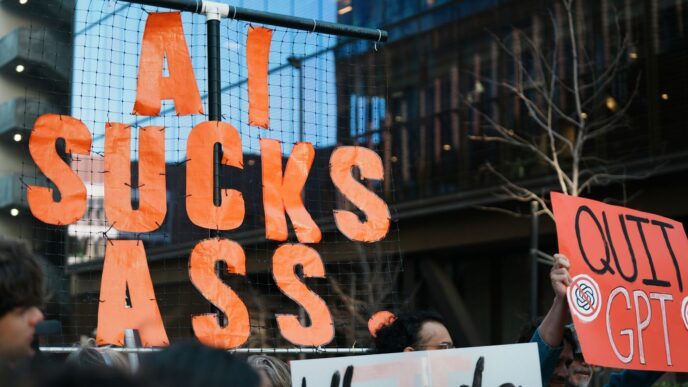
So, after all the buzz in 2022, where does the AI VR scene actually stand today? It’s a bit of a mixed bag, honestly. The initial excitement has definitely cooled down, and we’re seeing a more practical, measured approach from both companies and users. It’s less about the wild west of virtual worlds and more about figuring out what actually works and who it’s for.
Consumer and Business Adoption Rates
When it comes to everyday folks jumping into VR and AR, adoption has been slower than some expected. The biggest hurdles? Cost and accessibility. High-end VR headsets are still pretty pricey, and you need a decent computer to run them smoothly. This means it’s mostly gamers and tech enthusiasts who are really diving in. Think platforms like Roblox or Fortnite – they’re not full-blown metaverses, but they offer a taste of that shared digital experience that people are connecting with.
Businesses are looking at this stuff too, but with a lot more caution. We’re seeing companies try out virtual showrooms for products, use VR for training simulations, or even host virtual events. Fashion brands have done virtual runway shows, and real estate agents are using VR for property tours. It’s experimental, though. Most big companies are still watching from the sidelines, waiting to see how things shake out before committing big time.
Insights from Recent Industry Reports
Recent reports paint a clearer picture. For example, a study from late 2023 showed that while more people are using metaverse-like platforms, it’s still a pretty specific crowd – mostly younger, tech-savvy individuals. The key takeaway? People stick around when the content is good and offers something genuinely new and interactive. It’s not just about being in a virtual space; it’s about doing things there.
Investment trends have also shifted. Instead of throwing money at anything with ‘metaverse’ in the name, investors are now looking for more focused, practical applications. Think about technologies that solve real problems or create clear business value, rather than just chasing the hype.
Shifting Investment Trends in AI VR
Here’s a quick look at where the money is going:
- Focus on Practicality: Investments are moving towards AI VR applications that have clear use cases in areas like remote work, education, and healthcare.
- Hardware Innovation: There’s still a push for better, more affordable VR and AR hardware, making it easier for more people to get involved.
- Content Creation Tools: Companies are investing in tools that make it easier to build and manage virtual experiences, which is key for sustained user engagement.
- Enterprise Solutions: Businesses are looking for tools that can improve collaboration, training, and customer interaction in virtual environments.
Future Prospects and Broader Implications
So, what’s next for this whole AI VR thing? It’s easy to get caught up in the hype, but looking beyond 2022, the real story is about how these technologies might actually change how we live, work, and play. We’re not just talking about fancy games anymore. Think about persistent virtual worlds that feel alive, even when you’re not logged in. That’s a big deal for making virtual spaces feel more real and less like temporary hangouts.
Potential Breakthroughs and Persistent Worlds
Imagine logging into a virtual space that remembers you and continues to evolve. That’s the idea behind persistent virtual worlds. It’s like your digital home that’s always there. This could make virtual interactions feel more meaningful. Plus, the dream of true interoperability – being able to hop between different virtual worlds with your digital stuff and identity intact – is still a major goal. It’s like having a universal passport for the digital universe. Right now, things are pretty siloed, but if we can get different platforms to talk to each other, that opens up a whole new world of possibilities.
Transforming Digital Interaction and Work
Geographical distance could become a lot less of a barrier. We might see more people connecting and collaborating in virtual spaces, no matter where they are. For work, this could mean virtual offices where teams can really feel like they’re in the same room, brainstorming and working on projects together. This could make remote work feel more engaging and productive. It’s not just about video calls; it’s about shared virtual environments.
Redefining Entertainment and Education
Entertainment is an obvious one. Think about attending a concert or watching a sports game in a virtual stadium, feeling like you’re right there. But it goes beyond that. Education could get a serious boost too. Virtual classrooms could offer more hands-on learning experiences, letting students explore historical sites or conduct science experiments in ways that aren’t possible in a traditional classroom. It’s about making learning more interactive and memorable.
Here’s a quick look at what could drive these changes:
- Better Hardware: Lighter, more comfortable VR headsets and AR glasses that are also more affordable will be key for getting more people to try these technologies.
- Smarter AI: AI will make virtual characters more lifelike and environments more responsive to users, creating more engaging experiences.
- Faster Networks: 5G and future networks are needed to handle the massive data required for complex, real-time virtual interactions.
- Digital Ownership: Blockchain and NFTs could give people real ownership of digital items, making virtual economies more robust.
So, What’s the Takeaway from AI VR in 2022?
Looking back at 2022, it’s clear that the AI and VR scene was a bit of a rollercoaster. We saw some really big ideas and a lot of money thrown around, promising to change everything. But, as things often go, the reality turned out to be a bit more complicated. We ran into some real tech hurdles, and getting everyone on board wasn’t as easy as some thought it would be. Still, it wasn’t all just talk. There were definite steps forward, especially in making VR more useful and AI smarter. It wasn’t the instant revolution some predicted, but the groundwork laid in 2022 is still shaping what we’re seeing now and what’s likely to come next. It’s more of a slow build than a sudden leap, and that’s okay.