
Blue Origin Blue Ring: A New Era For GEO Space Domain Awareness
Expanding Commercial GEO Space Domain Awareness
So, Blue Origin’s Blue Ring is shaking things up when it comes to keeping an eye on things way out there in Geostationary Orbit (GEO). For a long time, this has been a pretty specialized area, mostly handled by government agencies. But Blue Ring is looking to change that, opening the door for more commercial players to get involved in watching what’s going on. This mission is all about making GEO space domain awareness more accessible and robust for everyone. It’s not just about knowing where things are; it’s about having a clearer picture of the whole orbital environment.
Simultaneous GEO Tracking and Object Characterization
What’s really neat about Blue Ring is its ability to do a couple of things at once. It’s designed to track objects in GEO and also figure out what those objects are – their characteristics. Think of it like being able to spot a car on the highway from a distance and then zoom in to see its make and model, all without losing track of it. This dual capability is a big deal for understanding the space environment better. It means we can get more information, faster, which is pretty important when you’re dealing with a busy orbital path.
High-Resolution Observation Through Maneuverability
Blue Ring isn’t just sitting still; it’s built to move around. This maneuverability is key to getting those detailed, high-resolution looks at objects. Instead of just getting a general view, Blue Ring can reposition itself to get a closer, clearer look when needed. This allows for more precise data collection, which is vital for things like identifying potential hazards or understanding the condition of other satellites. It’s like having a camera that can not only zoom but also move to get the perfect shot, every time.
Blue Ring’s Maiden Mission And Payload Integration
Incorporating Optimum Technologies’ Caracal Payload
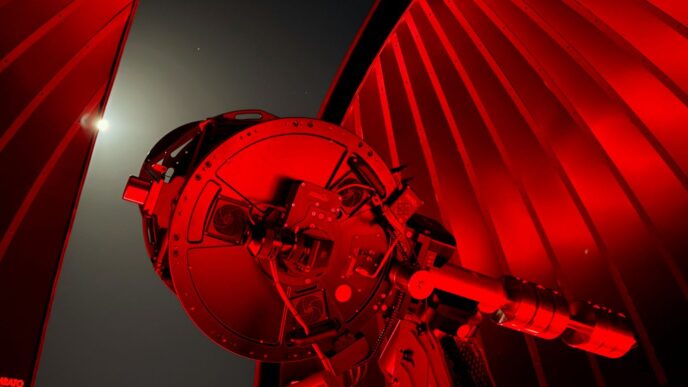
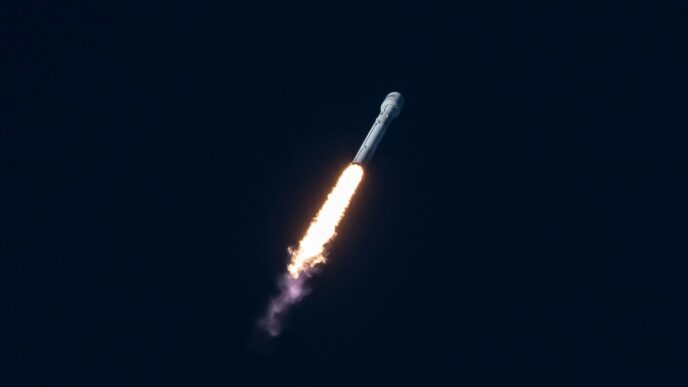
Blue Origin’s Blue Ring is gearing up for its first flight, and it’s bringing some serious tech along for the ride. The initial mission is set to launch in 2026, heading first to Geostationary Transfer Orbit (GTO) before settling into Geostationary Orbit (GEO). This first trip is a big deal because it’s going to test out some key capabilities for keeping an eye on things in space. A major part of this is the Caracal optical payload from Optimum Technologies (OpTech). This sensor is designed to give us a clearer picture of what’s going on with other objects in orbit. It’s pretty neat because it can store images right on the spacecraft and even figure out what it’s looking at without needing constant ground control. Plus, it’s built to handle different orbital paths and keep working for about a year.
Hosting Scout Space’s Owl Sensor
But Caracal isn’t the only guest on this maiden voyage. Blue Ring will also be carrying the Owl sensor from Scout Space. Having both these sensors onboard means Blue Ring can do more than just one thing at a time. It’s all about gathering more information from different perspectives. This combination is a step towards better tracking and understanding of objects in GEO. Think of it like having two different kinds of binoculars, each good at spotting different details. This mission is really a testbed for what Blue Ring can do in the future for space domain awareness.
Demonstrating Future GEO SDA Objectives
So, what’s the big picture here? This first mission is designed to show that Blue Ring can handle complex tasks in GEO. It’s not just about getting to orbit; it’s about proving the spacecraft’s ability to track objects, characterize them with high-resolution views, and do it all while moving around. Blue Origin wants to show that commercial spacecraft can take on these important jobs. The goal is to pave the way for more commercial systems that can constantly monitor GEO. This is seen as important for maintaining an advantage in space operations. It’s like a practice run to prove the concept before building bigger fleets.
Blue Ring’s Advanced Capabilities And Mission Versatility
Blue Ring isn’t just a one-trick pony; it’s built to be a real workhorse in space. Think of it as a highly adaptable platform that can do a lot of different jobs. Its design allows it to be configured for a wide range of missions, not just in Earth’s orbit but potentially much further out.
Multi-Mission Payload Delivery and Hosting
One of the coolest things about Blue Ring is its ability to carry and host multiple payloads. This means it can deliver different instruments or equipment to space and then keep some of them running as part of its own mission. It’s like a space taxi and a research station all rolled into one.
Adaptable Architecture for Diverse Destinations
Blue Ring’s structure is pretty flexible. It’s not locked into just one type of mission or location. Whether the goal is to operate in Geostationary Orbit (GEO), head towards the Moon (Cislunar space), or even venture towards Mars, the spacecraft can be adjusted. This adaptability is key for future space exploration and operations.
Combined Electric and Chemical Propulsion Systems
To get around and maneuver effectively, Blue Ring uses a mix of propulsion types. It has both electric and chemical thrusters. This combination gives it a good balance of power for quick maneuvers and efficiency for longer journeys. It can achieve a significant change in speed, with a nominal Delta-V of at least 3,000 m/s, and can push up to 4,000 m/s if needed. This capability is pretty impressive for a commercial spacecraft.
The Role Of Caracal In Enhancing Space Situational Awareness
So, let’s talk about the Caracal payload. It’s basically a fancy camera system built by Optimum Technologies, and it’s going to be a big deal for keeping tabs on what’s happening up in geostationary orbit (GEO). Think of it as a super-powered pair of binoculars that can also do some smart thinking all by itself.
Actionable Insights on Resident Space Objects
What makes Caracal special is its ability to give us real, usable information about all the stuff floating around in GEO. It’s not just taking pictures; it’s designed to spot things, figure out what they are, and tell us about their movements. This is pretty important because GEO is getting crowded, and knowing exactly where everything is and what it’s doing helps avoid collisions and keeps things safe. The goal is to move beyond just knowing that an object is there, to knowing what it is and why it’s behaving a certain way.
Onboard Image Storage and Object Detection
One of the neat tricks Caracal has up its sleeve is its onboard processing. Instead of sending every single bit of data back to Earth, it can store images and even detect objects right there on the spacecraft. This means it can filter out the noise and only send us the important stuff. It uses smart algorithms to find and identify objects, which saves a lot of time and bandwidth. This capability is key for missions that need quick information.
Flexible Operation Across Dynamic Orbits
Caracal isn’t stuck in one place or one way of doing things. It’s built to be flexible. It can operate in different kinds of orbits and adjust its mission profile over time. This adaptability means it can keep working and providing useful data for a long time, even if the situation in space changes. It’s designed for missions that might last a year or more, constantly observing and reporting.
Blue Ring’s Contribution To Maintaining American Space Leadership
Persistent Object Tracking and Characterization in GEO
Keeping tabs on what’s happening in geostationary orbit (GEO) is a big deal for national security and commercial interests. Blue Origin’s Blue Ring is stepping up to the plate here. It’s designed to constantly watch and identify objects in GEO. This isn’t just about knowing where things are; it’s about understanding their condition and behavior. This persistent monitoring capability is key to maintaining a clear picture of the space environment.
Advancing Critical Customer Missions
Blue Ring isn’t just a tech demo; it’s built to help out important missions. By providing detailed information about objects in orbit, it helps customers make better decisions. Think of it like having a really good security camera system for space. This allows for more reliable operations and planning for various government and commercial users.
Paving the Way for Future Commercial Constellations
What Blue Ring is doing now sets the stage for what comes next. It’s showing that commercial companies can handle complex space domain awareness tasks. This opens doors for more advanced satellite networks and services in the future. It’s about building a more robust and capable commercial space sector that supports American leadership.
Blue Ring’s Technical Specifications And Payload Capacity
So, what exactly makes the Blue Ring tick? It’s not just about getting payloads to space; it’s about how it gets them there and what it can do once it arrives. Blue Origin has packed this spacecraft with some serious capabilities.
Significant Delta-V Capabilities
The Blue Ring isn’t shy about changing its speed. It boasts a nominal Delta-V of at least 3,000 meters per second, with the potential to push up to 4,000 meters per second. This kind of performance is thanks to a smart combination of electric and chemical propulsion systems. Think of Delta-V as the spacecraft’s ability to change its velocity – the more you have, the more maneuvers you can perform, and the further or more precisely you can go.
Extensive Payload Accommodation
When it comes to carrying stuff, Blue Ring can handle a lot. It’s designed to support up to 4,000 kilograms of payload. This isn’t just one big chunk, either. The payload can be spread across 13 ESPA (Evolved Secondary Payload Adapter) ports. This setup is pretty neat because it allows for multiple smaller payloads or instruments to hitch a ride, making each mission more versatile.
Onboard Edge Computing for Mission Flexibility
This is where things get really interesting. Blue Ring comes equipped with powerful onboard edge computing. What does that mean? It means the spacecraft can process data and make decisions right there in space, without needing constant communication with ground control. This allows for:
- Real-time data analysis: The spacecraft can analyze sensor data as it’s collected.
- Autonomous operations: It can react to changing conditions or unexpected events on its own.
- Reduced data transmission: Only the most important information needs to be sent back to Earth, saving bandwidth.
This onboard processing power is a big deal for mission flexibility, letting Blue Ring adapt to different tasks and environments on the fly.
Looking Ahead
So, with Blue Origin’s Blue Ring set to launch in 2026, it really feels like things are changing in space. It’s not just about getting stuff up there anymore; it’s about having a smart, adaptable platform that can do different jobs, like keeping an eye on things in orbit. Partnering with companies like OpTech to bring their Caracal sensor along shows they’re serious about building out these capabilities. This kind of mission could really help us understand and manage the space around Earth better, which is pretty important as more satellites and missions get planned. It’s a big step for commercial space, and we’ll be watching to see what Blue Ring does next.