
Blue Origin’s New Glenn Ascends: A New Era of Spaceflight
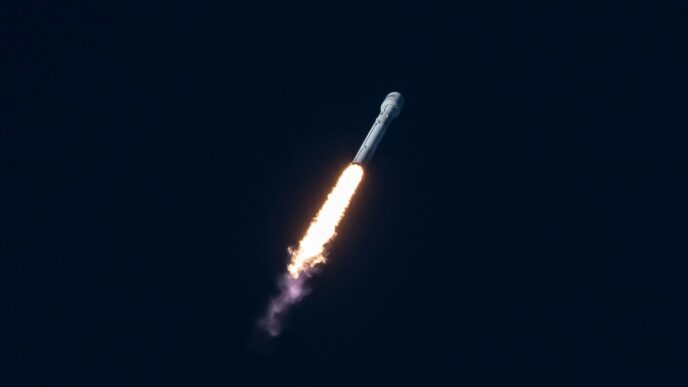
Well, folks, it finally happened. Blue Origin’s big rocket, New Glenn, took to the skies for its second-ever flight, and it was a pretty big deal. This wasn’t just any launch; it was a mission carrying NASA’s ESCAPADE probes all the way to Mars. Imagine that! The rocket lifted off from Cape Canaveral Space Force Station on November 13, 2025, right on schedule in the afternoon. It’s a massive machine, standing 321 feet tall, and it’s designed to carry a whole lot of stuff into orbit – up to 45 metric tons, to be exact. That puts it in the heavy-lift category, ready to compete with the big players.
The Second Flight of New Glenn
This second flight was more than just a repeat performance. It was about proving New Glenn is ready for serious business. The primary goal was to send the ESCAPADE mission on its way to Mars, but there was another huge objective: recovering the rocket’s first stage booster. And guess what? They nailed it. About seven minutes after liftoff, the booster relit its engines and made a perfect vertical landing on the recovery ship, ‘Jacklyn,’ out in the Atlantic Ocean. This is a massive step for Blue Origin, showing they can actually reuse these expensive parts, which is key to making spaceflight more affordable.
Liftoff from Cape Canaveral
The launch itself was a spectacle. You could feel the power as New Glenn rose from Launch Complex 36. It’s a sight that never gets old, seeing these giants push against gravity. The weather was good, the countdown was smooth, and then, boom – liftoff. It’s a testament to all the hard work that goes into these missions, from the engineers to the ground crew. Cape Canaveral has seen a lot of history, and this launch adds another chapter.
A Trailblazer for Space Science Missions
Sending the ESCAPADE mission to Mars is pretty exciting on its own. This is the first Mars mission in over five years, and it’s using a novel approach. The two spacecraft, nicknamed Blue and Gold, will study Mars’ magnetosphere and how solar winds interact with it. Scientists hope this will help us understand why Mars lost its atmosphere and became the cold, dry planet it is today. It’s a relatively low-cost mission, too, which shows that sending science probes to other planets doesn’t always have to break the bank. This kind of mission is exactly what New Glenn is built for – opening up new possibilities for space science.
New Glenn’s Capabilities and Market Position
So, what makes New Glenn such a big deal? It’s all about what this rocket can carry and how it fits into the whole space launch picture. Think of it as a heavy-duty truck for space. It’s designed to haul a serious amount of stuff into orbit, up to about 45 metric tons to low Earth orbit, to be exact. That puts it in a pretty competitive spot.
Payload Capacity Compared to Competitors
When you stack New Glenn up against other big rockets out there, it’s got some serious muscle. It’s not quite as powerful as SpaceX’s Falcon Heavy, but it’s definitely in the same league. What’s really interesting is that it can carry almost double what ULA’s new Vulcan Centaur rocket can lift. This means Blue Origin is aiming to grab a good chunk of the market, especially for those big, heavy payloads that need a reliable ride.
| Rocket | Payload to LEO (metric tons) |
|---|---|
| New Glenn | 45 |
| Falcon Heavy | 63.8 |
| Vulcan Centaur | 27.2 |
Designed for Reusability and Frequent Flights
One of the biggest things Blue Origin is pushing with New Glenn is reusability. They’ve built the first-stage boosters so they can be used over and over again, aiming for at least 25 flights per booster. This isn’t just a nice-to-have; it’s a game-changer for making space launches more affordable. The idea is to have frequent flights, which is exactly what you need if you’re going to build big things in space, like those massive satellite internet constellations.
Supporting Future Satellite Constellations
Speaking of constellations, New Glenn is set to play a big role in launching Amazon’s Project Kuiper. This is a huge project aiming to put thousands of satellites into orbit to provide internet access. Blue Origin has a contract to launch a good number of these satellites, and it’s a perfect fit for New Glenn’s capabilities. It’s not just Kuiper, though; expect New Glenn to be a workhorse for other companies building their own satellite networks too. It’s all about getting lots of satellites up there efficiently.
Successful Booster Recovery: A Key Milestone
Vertical Landing on the Recovery Ship
So, New Glenn’s second flight was a pretty big deal, not just because it was carrying NASA’s ESCAPADE mission to Mars, but because Blue Origin actually managed to land the rocket’s first stage booster. This thing is huge, standing 321 feet tall, and getting it to touch down gently on the recovery ship, named ‘Jacklyn’, out in the Atlantic Ocean is no small feat. It happened about seven minutes after liftoff, when the booster relit three of its seven BE-4 engines to slow itself down for a propulsive landing. This successful vertical landing marks a significant step forward for Blue Origin’s reusable rocket program.
Significance of Reusability for Cost Reduction
Why all the fuss about landing the booster? Well, it’s all about making spaceflight cheaper and more frequent. Think about it: if you can reuse a massive piece of hardware like the New Glenn booster, you don’t have to build a brand new one for every single launch. This dramatically cuts down on manufacturing costs. Blue Origin is aiming for each booster to be capable of at least 25 flights. This reusability is what allows companies to offer more competitive pricing for launching satellites, scientific missions, and eventually, maybe even people.
Second Company to Achieve Operational Booster Recovery
It’s worth noting that Blue Origin isn’t the first company to pull this off, but they are now the second to achieve operational booster recovery. SpaceX has been doing this for a while now with their Falcon 9 rockets, to the point where it’s almost expected. But for New Glenn, especially after its first flight didn’t quite nail the landing, this success is a huge validation. It shows their strategy of gathering data and refining the process is paying off. This capability is pretty important for securing future contracts, especially for things like national security payloads and large satellite constellations.
The ESCAPADE Mission to Mars
Objectives of the Mars Orbiters
So, New Glenn’s second flight wasn’t just about showing off the rocket; it was carrying a really interesting science mission called ESCAPADE. This is a pretty neat project from NASA and UC Berkeley, aiming to figure out what happened to Mars’ atmosphere. You know, the planet used to have water, which means it likely had a thicker atmosphere back then. Now it’s super thin. ESCAPADE is sending two probes, nicknamed Blue and Gold, to orbit Mars and study this atmospheric loss. They’ll be looking closely at how the solar wind, that stream of charged particles from the sun, interacts with Mars’ magnetic field and atmosphere. It’s like trying to piece together a planetary mystery.
Understanding Mars’ Atmospheric Loss
Scientists have a good idea that Mars lost most of its atmosphere over billions of years. There are a couple of main ways a planet can lose its air: it can seep into the ground, or it can escape into space. The ESCAPADE mission is really focused on that second part – how the atmosphere escapes. By studying the solar wind and Mars’ magnetic environment up close, the probes will help us build a better picture of this process. This is important not just for understanding Mars’ past, but also for figuring out how planets in general can hold onto their atmospheres, which is pretty key if we ever think about living on other worlds.
The Novel Trajectory to the Red Planet
What’s also cool about ESCAPADE is how it’s getting to Mars. Instead of a direct shot, which has to wait for specific launch windows that only open every couple of years, New Glenn sent the probes to a spot about a million miles away from Earth called a Lagrange point. They’ll hang out there for a bit. Then, in November 2026, they’ll use Earth’s gravity to slingshot themselves towards Mars. This kind of roundabout path allowed them to launch when they did, outside of the usual transfer window. It’s a clever way to get missions off the ground without being tied to those very specific, infrequent launch opportunities.
New Glenn’s Role in National Security and Commercial Ventures
Beyond its scientific missions, New Glenn is shaping up to be a big player for government and commercial needs. The rocket’s hefty payload capacity means it can carry a lot of stuff into orbit, which is exactly what the U.S. military and intelligence agencies are looking for. Getting the green light for national security payloads is a major goal, and this successful flight is a big step in that direction. Think about it: launching sensitive equipment or large satellite constellations for defense purposes requires a reliable and powerful rocket, and New Glenn is aiming to fill that role.
Path to National Security Payload Contracts
Landing national security contracts isn’t just about having a big rocket; it’s about proving reliability and capability. This recent flight, especially with the successful booster recovery, shows Blue Origin is serious about operational flights. The Space Force and the National Reconnaissance Office need to know their missions will get to space safely and on time. New Glenn’s design, with its reusable booster aiming for frequent flights, is attractive for these long-term, high-value contracts. It’s a competitive market, and demonstrating success like this is key to getting a foot in the door.
Testing Advanced Telemetry Services
This launch wasn’t just about sending the ESCAPADE mission on its way. It also served as a testbed for new technologies. ViaSat, a company working on communication systems, used this flight to test its InRange launch telemetry relay service. This is pretty neat because it’s about improving how we get data from rockets during their ascent. NASA is interested in this kind of tech, especially for future missions that might need more advanced ways to communicate back to Earth. It’s like upgrading the communication lines for space missions, making them faster and more dependable.
Supporting NASA’s Communications Projects
Speaking of NASA, this flight also ties into their broader Communications Services Project. The goal here is to explore commercial options for relaying data, potentially as a replacement for older systems like the Tracking and Data Relay Satellite (TDRS). By partnering with companies like ViaSat and using rockets like New Glenn, NASA can test out these new commercial capabilities. It’s a smart way for them to see what the private sector can do and how it can support future space exploration and science missions without having to build everything themselves. This collaboration shows how New Glenn can be a workhorse for both scientific endeavors and the infrastructure that supports them.
Future Prospects for New Glenn
So, what’s next for Blue Origin’s big rocket, New Glenn? It’s not just about getting science missions to Mars, though that’s pretty cool. This rocket is really being set up for a lot more.
Upcoming Lunar Lander Demonstrations
Blue Origin has plans to use New Glenn for some pretty important test runs. They’re looking at launching a prototype of their Blue Moon lunar lander. This isn’t just a small hop; it’s a demonstration of technology that could be used for future moon missions. Think about it, getting a big lander ready to go takes a powerful rocket, and New Glenn fits the bill. They’ve got this planned for the coming months, so it’s happening pretty soon.
Potential Role in Artemis Program
Speaking of the moon, New Glenn could play a part in NASA’s Artemis program. Blue Origin already has a contract for a later Artemis mission, specifically for a crewed landing. While SpaceX got the first two, NASA recently opened up the contract for the first crewed landing again, and Blue Origin is definitely throwing its hat in the ring with plans to speed things up. Having a heavy-lift rocket like New Glenn is pretty much a requirement for these kinds of big lunar endeavors. It’s all about getting astronauts and supplies back to the moon.
Competition with Other Heavy-Lift Launchers
New Glenn isn’t the only giant rocket out there, of course. SpaceX has its Starship, which is even bigger, and ULA has its Vulcan Centaur. Then there’s NASA’s own Space Launch System (SLS). It’s a crowded field, and everyone’s trying to grab a piece of the pie, whether it’s for government contracts, commercial satellites, or even future space tourism. New Glenn’s ability to carry a lot of weight and its focus on reusability are its main selling points. It’s going to be interesting to see how it stacks up against the competition in the coming years.
Here’s a quick look at how New Glenn compares:
| Rocket | Payload to LEO (approx.) | Reusability Focus |
|---|---|---|
| New Glenn | 45 metric tons | Yes (first stage) |
| Starship | 100+ metric tons | Yes (full rocket) |
| Vulcan Centaur | 27 metric tons | No (planned SRB recovery) |
| SLS | 95 metric tons | No |
A Big Step Forward
So, Blue Origin’s New Glenn rocket just did something pretty cool. It launched a mission heading to Mars, and get this, it even landed its booster back on a ship at sea. This is a huge deal for the company, showing their big rocket can actually work reliably. Sending those two NASA spacecraft, ESCAPADE, on their way is just the start. It means New Glenn is getting ready for even bigger jobs, like maybe sending stuff to the Moon or even further out. It’s not quite Mars yet for people, but this launch feels like we’re getting a lot closer to that dream. It’s exciting to see what comes next for New Glenn and what other missions it will help us explore.