Blue Origin’s New Glenn Ascends: A New Era of Spaceflight
New Glenn’s Powerful Ascent and Payload Delivery
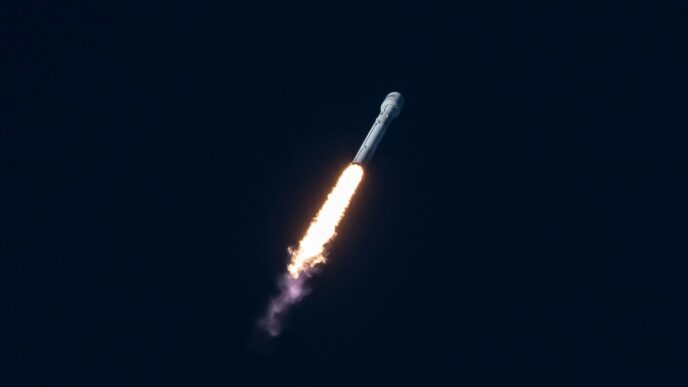
Blue Origin’s New Glenn rocket just had its second flight, and it was a pretty big deal. This wasn’t just another test run; it actually carried a real payload into orbit. The mission launched NASA’s ESCAPADE spacecraft, which are heading out to study Mars. It’s kind of like sending tiny explorers to check out another planet’s magnetic field and atmosphere. The rocket itself is a beast, standing over 320 feet tall. It’s designed to carry a lot of stuff into space, more than many other rockets out there right now. The first stage, powered by seven massive BE-4 engines, generated over 3.8 million pounds of thrust just to get off the ground. That’s a whole lot of power!
The Significance of Blue Origin’s Launch
This launch is important for a few reasons. First, it shows that Blue Origin is serious about competing in the heavy-lift rocket market. They successfully put the ESCAPADE satellites on their way to Mars, which is no small feat. This mission marks a significant step in Blue Origin’s journey to become a major player in space exploration and commercial launch services. It also means more options for NASA and other customers who need to send things to space. Having more companies capable of these kinds of launches is good for everyone, really. It means more innovation and potentially lower costs down the line.
Reusable Rocket Technology Takes Flight
One of the most exciting parts of this launch is what happened after the rocket reached space. Blue Origin managed to bring the first stage booster back down and land it on a ship at sea. This is a huge deal for making spaceflight more affordable. Instead of throwing away a giant, expensive rocket part after each flight, they can fix it up and use it again. This is called reusability, and it’s a game-changer. While SpaceX has been doing this for a while, Blue Origin successfully landing their booster on their second try is pretty impressive. It shows they’re getting the hang of it quickly. This reusable technology is key to making more frequent and less expensive trips to space a reality.
The ESCAPADE Mission: Charting Mars’s Mysteries
Understanding Mars’s Magnetosphere
So, NASA’s ESCAPADE mission is pretty neat. It’s sending up two identical spacecraft, kind of like twins, to get a really close look at Mars’s magnetosphere. Think of a magnetosphere as a planet’s invisible shield, protecting it from the solar wind – that constant stream of charged particles coming from the Sun. Mars used to have a much stronger magnetic field, but it’s weakened over billions of years. This mission wants to figure out exactly how that happened and what the solar wind is doing to Mars’s atmosphere right now. Understanding this process is key to figuring out how Mars lost its water and became the dry, cold place it is today. It also helps us think about how to keep future astronauts safe from radiation when they eventually visit.
The Journey to the Red Planet
Getting to Mars isn’t as simple as pointing and shooting, especially with these twin ESCAPADE explorers. They aren’t going straight there. First, they’ll hang out near Earth for a bit, specifically at a spot called Lagrange Point 2 (L2), which is about a million miles away. This is because Earth and Mars aren’t in the right positions for a direct trip right now. They’ll wait there until November 2026. That’s when the planets line up just right. Then, ESCAPADE will use Earth’s gravity to get a big boost, like a cosmic slingshot, to send it on its way to Mars. The whole trip takes about 10 months, with arrival expected in the fall of 2027.
Investigating Solar Wind’s Impact
Once ESCAPADE gets to Mars, these two spacecraft will start their real work. They’ll be flying around Mars, collecting data on its magnetic field and the plasma environment. This isn’t just about Mars’s past; it’s also about understanding space weather. Space weather can mess with satellites, communication systems, and even pose risks to astronauts. By studying how the solar wind interacts with Mars’s atmosphere and magnetic field, scientists hope to get a better handle on these effects. This information is super important for planning future missions, not just to Mars, but anywhere in the solar system. It’s all part of NASA’s plan to explore Mars and eventually send humans there safely.
New Glenn’s Reusable Booster: A Cost-Effective Leap

So, Blue Origin’s New Glenn rocket just had its second flight, and guess what? They actually managed to land the first stage booster back on a ship at sea. This is a pretty big deal, not just for Blue Origin, but for the whole idea of making space travel cheaper. Think about it, rockets are incredibly expensive to build and launch. If you can use the main part of the rocket more than once, you cut down on those costs a whole lot.
Successful Booster Recovery at Sea
This recent launch on November 13, 2025, was the first time Blue Origin attempted to land New Glenn’s first stage, nicknamed ‘Jaclyn’, on their offshore platform. It’s not an easy feat. The booster has to separate cleanly from the rest of the rocket, then orient itself, descend through the atmosphere, and hit a moving target in the ocean. Blue Origin nailed it on their second try with New Glenn, which is actually pretty quick compared to how long it took others to figure this out. They’ve been practicing with their smaller New Shepard rocket for years, so they’ve got some experience, but New Glenn is a whole different beast.
Reducing Launch Costs Through Reuse
Why does landing and reusing the booster matter so much? Well, it’s all about the money. Building a massive rocket like New Glenn takes a ton of resources. If that first stage, which does most of the heavy lifting to get off the ground, can be refurbished and flown again, it means fewer new rockets need to be built. This can bring down the price tag for sending satellites, cargo, and eventually people into space. It’s like reusing parts of a car instead of buying a whole new one every time you need to drive somewhere.
Here’s a simplified look at how it works:
- Launch: The first stage fires up its powerful BE-4 engines, pushing the rocket and its payload towards space.
- Separation: Once its fuel is spent, the first stage detaches from the upper stage.
- Descent & Landing: The booster uses its engines and control surfaces to guide itself back to Earth, aiming for a specific landing zone.
- Recovery: A specialized ship or platform waits to catch or land the booster, allowing it to be brought back for inspection and refurbishment.
- Reuse: After checks and any necessary repairs, the booster is ready for its next mission.
Competition and Innovation in Reusability
Blue Origin isn’t the only player in this game, of course. SpaceX has been doing this for a while with their Falcon rockets, and they’ve gotten really good at it. But having another major company like Blue Origin succeed with reusable heavy-lift rockets is good for everyone. It means more options for customers like NASA and other commercial outfits. Plus, competition usually drives innovation. When companies are trying to outdo each other, we often see faster progress and better technology. This push for reusability is a key part of making space exploration more sustainable and accessible in the long run.
New Glenn’s Role in Lunar and Deep Space Exploration

New Glenn isn’t just about getting satellites into Earth orbit; it’s also a big player in where we’re headed next, especially with the Moon and beyond. Think of it as a workhorse for future journeys.
Supporting NASA’s Artemis Program
NASA’s Artemis program aims to get humans back to the Moon, and New Glenn is slated to help make that happen. There’s been some worry that Artemis is moving a bit too slowly, and frankly, nobody wants to see another country beat us back to the lunar surface. With challenges in developing other rockets like NASA’s own Space Launch System and SpaceX’s Starship, New Glenn offers a powerful alternative. Blue Origin is actively discussing with NASA how New Glenn can speed things up.
Future Lunar Missions with Blue Moon
Blue Origin has its own lunar ambitions, too. They’re planning to send their uncrewed Blue Moon lunar lander on a test flight soon. After that, they’re working on a version that can carry astronauts, which is planned for the Artemis V mission. This means New Glenn will be launching these important lunar vehicles.
Expanding Access to Deep Space
Beyond the Moon, New Glenn’s size and power mean it can carry larger payloads further into space. This opens doors for more ambitious scientific missions, like the ESCAPADE mission to Mars. The twin ESCAPADE spacecraft, launched on New Glenn’s second flight, are heading to Mars to study its magnetosphere. This kind of mission, which requires getting significant hardware to another planet, is exactly what New Glenn is built for. It’s not just about getting there; it’s about carrying the equipment needed to do meaningful science once you arrive.
The Technical Prowess of New Glenn
Let’s talk about what makes New Glenn tick. This rocket isn’t just big; it’s packed with some serious engineering.
BE-4 Engines: Powering the Ascent
At the heart of New Glenn’s first stage are seven BE-4 engines. These are pretty special because they run on liquefied natural gas and liquid oxygen. They’re designed to produce a massive amount of thrust – over 3.8 million pounds when they all fire up. That’s what gets this giant off the ground. They’re also built to be reusable, which is a big deal for cutting down on costs.
A Taller Rocket with Greater Payload Capacity
New Glenn stands over 320 feet tall, making it one of the tallest rockets out there. It also has a seven-meter wide fairing. Think of the fairing as the nose cone; a wider one means it can carry more stuff. This larger capacity is key for sending bigger payloads, like multiple satellites or components for space stations, further into space.
Second Stage Propulsion for Orbit
Once the first stage does its job and separates, the second stage takes over. This part of the rocket uses two BE-3U engines. These engines are designed to work efficiently in the vacuum of space, providing the final push needed to get payloads into orbit. They generate over 350,000 pounds of thrust, which is plenty to place satellites or spacecraft on their intended paths.
Looking Ahead
So, New Glenn’s second flight, carrying the ESCAPADE mission to Mars, really shows Blue Origin is getting serious. Successfully landing that big first stage on the barge? That’s a huge deal for making space travel cheaper. It means more chances for missions like ESCAPADE, which are helping us figure out Mars. While it’s still early days, and they’ve got a ways to go to match some of the other big players, this launch feels like a solid step. It’s not just about getting to orbit; it’s about building a reliable way to get there, again and again. This kind of progress is exactly what we need if we’re going to keep exploring, whether it’s heading back to the Moon or eventually making that big jump to Mars.