Understanding the Boston Dynamics Robot Dog Price
So, you’ve seen the videos, right? The "robot dog" from Boston Dynamics, Spot, is pretty amazing. It can climb stairs, walk over rough ground, and generally go places that would make a human think twice. But let’s get down to brass tacks: what does this thing actually cost? It’s not exactly something you pick up at the local electronics store.
The Base Cost of Spot
When you’re looking at the entry-level version, often called the Explorer Kit, you’re starting in the ballpark of $74,500. Think of this as the foundation. It gets you the robot itself, a battery or two, a charger, and the basic controller you’ll use to tell it what to do. It’s enough to get you started, especially if you’re in a research lab or just want to test the waters. This initial price tag is significant, making it a serious investment from the get-go.
Factors Influencing the Final Price
Now, $74,500 is a lot, but that’s just the beginning. The real cost can climb quite a bit depending on what you need Spot to do. Think of it like buying a car – the base model is one thing, but adding all the bells and whistles adds up. Here’s what can push the price higher:
- Payloads: Need Spot to see in the dark or map out a huge area? You’ll likely need extra sensors. Things like thermal cameras or LiDAR systems can add anywhere from $18,000 to $50,000 or more. It really depends on the specific tech you’re adding.
- Add-ons: Want Spot to interact with its environment, maybe pick something up? The Spot Arm, for example, is a whole separate component that adds a significant chunk to the total cost.
- Software and Licenses: While the base model comes with some software, advanced features like enhanced autonomy, fleet management for multiple robots, or specific data analysis tools might require additional licenses or subscriptions.
Comparing Spot’s Price to Other Robot Dogs
It’s tough to do a direct apples-to-apples comparison because Spot is really in a class of its own when it comes to industrial applications and advanced capabilities. However, if you look at other quadruped robots out there, some are aimed at hobbyists or researchers with much lower price points, maybe starting in the low thousands. Then you have other industrial-grade robots, like those from ANYbotics or Ghost Robotics, which might compete in certain niches but often have their own specialized pricing structures. Spot sits at the higher end, reflecting its advanced engineering and proven reliability in tough jobs.
What’s Included in the Boston Dynamics Robot Dog Package
So, you’re thinking about getting a Boston Dynamics robot dog, huh? It’s a big step, and it’s good to know exactly what you’re signing up for. When you get Spot, it’s not just the robot itself. Think of it more like getting a whole system designed to get to work right away, or at least, with a little setup.
The Explorer Kit Essentials
For most people starting out, the "Explorer Kit" is the way to go. It’s like the starter pack. This kit gives you the core components needed to get Spot moving and controlled. What’s in the box? You’ll find the Spot robot itself, of course. It also comes with a couple of batteries so you can swap them out when one runs low, and a charger to get them juiced up again. You also get a tablet controller – it looks pretty slick, kind of like a high-end gaming device but built for tough jobs. This is how you’ll tell Spot what to do. Plus, there are some basic software tools included, like the Python client for the API, which is handy if you’re looking to do some custom programming.
Beyond the Base Model: Essential Add-ons
Now, the Explorer Kit is great, but Spot is really built to be customized. You can’t just get the base model and expect it to do everything. Depending on what you need Spot for, you’ll likely want some extra bits. For instance, if you need Spot to grab things or interact with its environment, you’ll want the Spot Arm. That’s a whole separate piece of equipment that attaches to the robot. If you’re doing mapping or need a really clear picture of the surroundings, you might add on LiDAR sensors. These give Spot a 360-degree view and help it build detailed maps. There are also specialized cameras, like thermal imaging ones, that can spot heat differences, which is useful for inspections. Basically, these add-ons turn Spot from a mobile platform into a specialized tool for specific jobs.
Software and API Access
Beyond the physical parts, the software is a big deal. Boston Dynamics provides software that lets you program Spot’s routes, manage its movements, and even control multiple robots if you have a fleet. The Application Programming Interface (API) is super important here. It’s like a set of instructions that lets developers write their own code to make Spot do unique things. This means you’re not just stuck with what Boston Dynamics offers out of the box. If you have a specific task, like inspecting a particular piece of equipment in a certain way, you can use the API to program Spot to do just that. It opens up a lot of possibilities for automation and custom solutions, which is a big part of why people invest in Spot in the first place.
Beyond the Initial Investment: Ongoing Costs
So, you’ve got your shiny new Boston Dynamics robot dog, maybe Spot. That initial price tag, which we’ve talked about, is just the beginning, you know? Owning one of these advanced machines means thinking about what comes next. It’s not like buying a toaster that you just plug in and forget about.
Maintenance and Training Requirements
First off, these things aren’t exactly maintenance-free. While Boston Dynamics builds them tough, like a real workhorse, they still need care. Think about regular check-ups, keeping the joints clean, and making sure all the sensors are calibrated. This isn’t something you can just wing; it requires a bit of know-how. You might need to send your robot back for servicing, or perhaps train someone on your team to handle basic upkeep. It’s a bit like owning a high-performance car – you wouldn’t skip the oil changes, right?
- Regular Inspections: Checking for wear and tear on mobility components.
- Software Updates: Keeping the robot’s brain up-to-date with the latest patches and features.
- Sensor Calibration: Making sure its eyes and ears are seeing and hearing accurately.
Then there’s the training. Spot isn’t a pet you just point and say "fetch." You’ll need people who know how to operate it safely, program its tasks, and interpret the data it collects. This might mean sending employees to specialized training sessions, which adds to the overall cost. It’s an investment in making sure you get the most out of your robot without any accidents.
Potential for Future Upgrades
Technology moves fast, and Spot is no exception. Boston Dynamics is always working on new features and accessories. You might start with a basic setup, but down the line, you might find yourself wanting to add a new camera system for better inspections, or maybe a specialized gripper if your needs change. These add-ons can significantly increase the robot’s capabilities, but they also add to the bill. It’s a bit of a "pay-as-you-grow" model, which can be good, but it means keeping an eye on your budget for potential future additions.
The Value Proposition for Industries
Okay, so why bother with all these extra costs? Well, for many industries, the value Spot brings can outweigh the ongoing expenses. Think about sending Spot into a dangerous environment, like a chemical plant or a collapsed building. It can gather information without putting a human life at risk. That alone can be priceless. Plus, it can perform repetitive tasks, like site inspections, much faster and more consistently than a person could. This efficiency boost can save companies a lot of money in the long run, making the initial investment and the ongoing costs seem much more reasonable when you look at the bigger picture of safety and productivity gains.
The Boston Dynamics Robot Dog in 2026: Future Pricing Trends
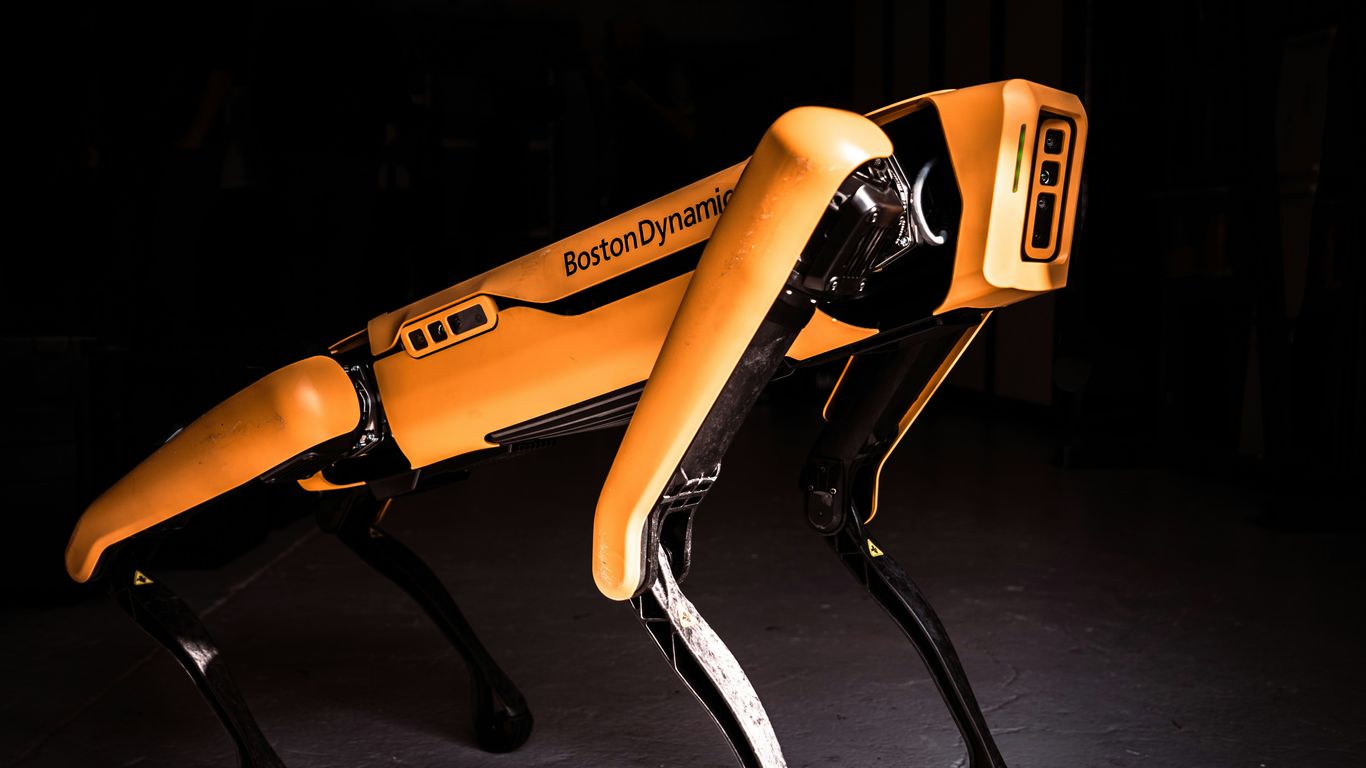
So, what’s the deal with the price of Boston Dynamics’ robot dog, Spot, as we head into 2026? It’s a question on a lot of minds, especially for businesses looking at what this tech can do. While the exact numbers are always a bit fluid, we can see some clear directions things are heading.
Anticipated Evolution of Spot’s Capabilities
Spot isn’t just sitting still. By 2026, expect it to be even more capable. We’re talking about longer battery life, meaning it can handle bigger jobs without needing a recharge as often. The AI is also getting smarter, allowing for more autonomous missions where it needs less direct human control. Think of it doing complex inspections all on its own, reporting back with detailed data. Plus, Boston Dynamics is always working on new attachments and payloads. This means Spot can be tailored for even more specific jobs, from advanced surveying to more intricate industrial tasks.
Market Adoption and Price Adjustments
As more companies see the value Spot brings – think improved safety in dangerous zones, better data collection on construction sites, or more efficient factory checks – demand is likely to grow. When demand goes up, sometimes prices can stabilize or even see slight reductions, especially for the base models. However, with the added capabilities and specialized add-ons, the overall cost for a fully kitted-out Spot could still climb. It’s a bit of a balancing act. We might see more bundled packages aimed at specific industries, making it easier to get the right setup without overspending on features you don’t need.
The Long-Term Return on Investment
When you look at the price tag, it’s easy to get sticker shock. Spot isn’t cheap, with initial costs often starting in the tens of thousands and going up from there depending on what you add. But the real story is the return on investment. For industries where human safety is a concern, or where tasks are repetitive and data-intensive, Spot can save a lot of money in the long run. Reduced risk of accidents, faster inspection times, and more accurate data all add up. By 2026, the argument for Spot’s value will be even stronger as more case studies prove its worth in real-world applications. It’s less about the upfront cost and more about what it enables businesses to do more safely and efficiently.
Key Features Driving the Boston Dynamics Robot Dog Price

So, why does Spot, the Boston Dynamics robot dog, come with such a hefty price tag? It really boils down to the sheer amount of advanced tech packed into this four-legged machine. It’s not just about looking cool; it’s about what it can actually do.
Advanced Mobility and Agility
Spot’s ability to move is pretty wild. It can walk, trot, and even climb stairs. Think about navigating a construction site with uneven ground, mud, or debris. Spot handles that kind of terrain without breaking a sweat, something a wheeled robot would struggle with. This level of agility means it can get to places humans might find difficult or dangerous to reach.
- Rough Terrain Traversal: Handles mud, gravel, and uneven surfaces.
- Vertical Mobility: Capable of climbing stairs.
- Obstacle Negotiation: Can step over small objects and maintain balance.
Sophisticated Sensor and Perception Systems
Spot is equipped with a suite of sensors that let it ‘see’ and understand its surroundings. It uses stereo cameras for depth perception and can be fitted with additional sensors like LiDAR for detailed 3D mapping. This allows for autonomous navigation, meaning Spot can follow pre-programmed routes or even figure out how to get around new obstacles on its own. This smart perception is a big part of what makes it so useful for inspections and data collection.
Industrial-Grade Durability and Reliability
This isn’t a toy. Spot is built to withstand tough environments. We’re talking about dust, water, and the general wear and tear that comes with industrial settings. Its robust construction means it can operate reliably in places where you wouldn’t want to send a human or a less rugged piece of equipment. This focus on industrial-grade reliability is a major factor in its cost, as it ensures the robot can perform its tasks consistently and safely over time.
So, Is Spot Worth It in 2026?
Alright, let’s wrap this up. When we look at the Boston Dynamics robot dog, Spot, it’s clear this isn’t your average gadget. Starting at around $74,500, it’s a serious investment, not something you’d pick up on a whim. It’s built for tough jobs, the kind of work where sending a person might be risky or just not practical. Think inspecting dangerous sites or mapping out tricky areas. For businesses that need that kind of capability, the price might actually make sense when you consider the safety and efficiency gains. But if you’re just a hobbyist or a small research lab looking for a cool robot, there are definitely more budget-friendly options out there. Spot is a professional tool, and its price tag reflects that. By 2026, it’ll likely still be the go-to for demanding industrial tasks, but for most of us, it’ll remain a fascinating piece of advanced tech we see in action, rather than in our own backyards.