

Quantum Materials: A Frontier of Physics and Material Science
Exploring New Phases of Matter
We’re living in a pretty exciting time for understanding materials. It turns out that matter can exist in states we didn’t even imagine a few decades ago. Think beyond just solid, liquid, or gas. We’re talking about ‘new phases’ that pop up when electrons in a material start interacting in really complex ways. These aren’t your everyday metals or insulators; they’re more like the weird cousins. Some materials show ‘Planckian’ behavior, meaning their electrical resistance changes in a way that seems tied to fundamental constants of nature, like a universal speed limit for how electrons can move. Others are ‘anomalous insulators’ that still manage to conduct electricity in unexpected ways, showing quantum wiggles that don’t fit the usual rules. And then there are superconductors that seem to give up and then come back to life again when you hit them with really strong magnetic fields. It’s like nature is showing off its creativity.
- Unconventional Superconductivity: Materials that superconduct at higher temperatures or in ways that current theories struggle to explain.
- Correlated Insulators: States where electron-electron repulsion is so strong it prevents them from moving, creating an insulating state with unique properties.
- Topological States: Phases of matter protected by their underlying mathematical structure, making them robust against certain types of defects.
These new phases often appear in materials that are already pretty interesting, like thin sheets of atoms or complex compounds. The real magic happens when you combine the ideas from physics – like how particles behave at the smallest scales – with the practical side of making and studying new materials. It’s a two-way street; physics gives us the theories, and material science gives us the stuff to test them on, and sometimes, the stuff itself leads to entirely new physics.
The Convergence of Topology and Strong Correlations
This is where things get really interesting, and honestly, a bit mind-bending. We’re seeing how two big ideas in physics, topology and strong electron correlations, are showing up together in materials, and it’s leading to some truly bizarre and wonderful properties. Topology, in simple terms, is about properties that don’t change even if you stretch or bend something – think of a donut always having one hole, no matter how you squish it. In materials, this translates to electronic states that are incredibly stable, protected from imperfections. Now, add ‘strong correlations’ into the mix. This means electrons in the material aren’t just acting as individuals; they’re strongly influencing each other, like a crowded dance floor where everyone’s movement affects everyone else. When these two concepts meet, you get materials with electronic behaviors that defy our usual categories. We’re finding materials that are insulators on the inside but conduct electricity perfectly on their edges, thanks to their topological nature. And when strong interactions are also present, these topological states can become even stranger, leading to things like fractional charges or exotic magnetic behaviors. It’s a frontier where abstract mathematical ideas from physics are directly dictating the physical properties we can observe and engineer in real materials.
Quantum Interactive Matter: Measurement and Feedback
Okay, so usually in physics, we try to isolate a system to study it, right? We want to keep the outside world from messing things up. But what if we could use that ‘outside world’ – specifically, measurement and feedback – as a tool? That’s the core idea behind ‘quantum interactive matter.’ It’s a new way of thinking where actively measuring a quantum system and then using that information to ‘feed back’ into it can actually create and control new quantum states. Imagine you have a bunch of quantum bits, and you’re constantly checking on them. Based on what you find, you adjust something in real-time. This isn’t just about observing; it’s about actively shaping the quantum system. Recent advances in technologies like quantum gas microscopes and superconducting circuits are making this possible. We can now perform sophisticated measurements and apply feedback loops that were science fiction just a few years ago. This opens up possibilities for creating quantum matter that wouldn’t exist otherwise, states that are stabilized by this constant interaction with the measurement process. It’s a whole new playground for physicists and material scientists, blurring the lines between the observer and the observed, and potentially leading to new ways to build quantum computers or sensors.
- Measurement-Induced Phase Transitions: Entirely new phases of matter that only appear when you start measuring the system.
- Feedback-Stabilized Entanglement: Using feedback to create and maintain delicate quantum connections between particles.
- Quantum State Engineering: Precisely crafting desired quantum states by carefully controlling measurement and feedback protocols.
This field is still quite young, but the potential is huge. It’s about moving from passively studying quantum systems to actively playing with them, using measurement itself as a constructive force.
2D Materials: Tailoring Properties Through Physics Principles
Van der Waals Heterostructures and Organic Molecules
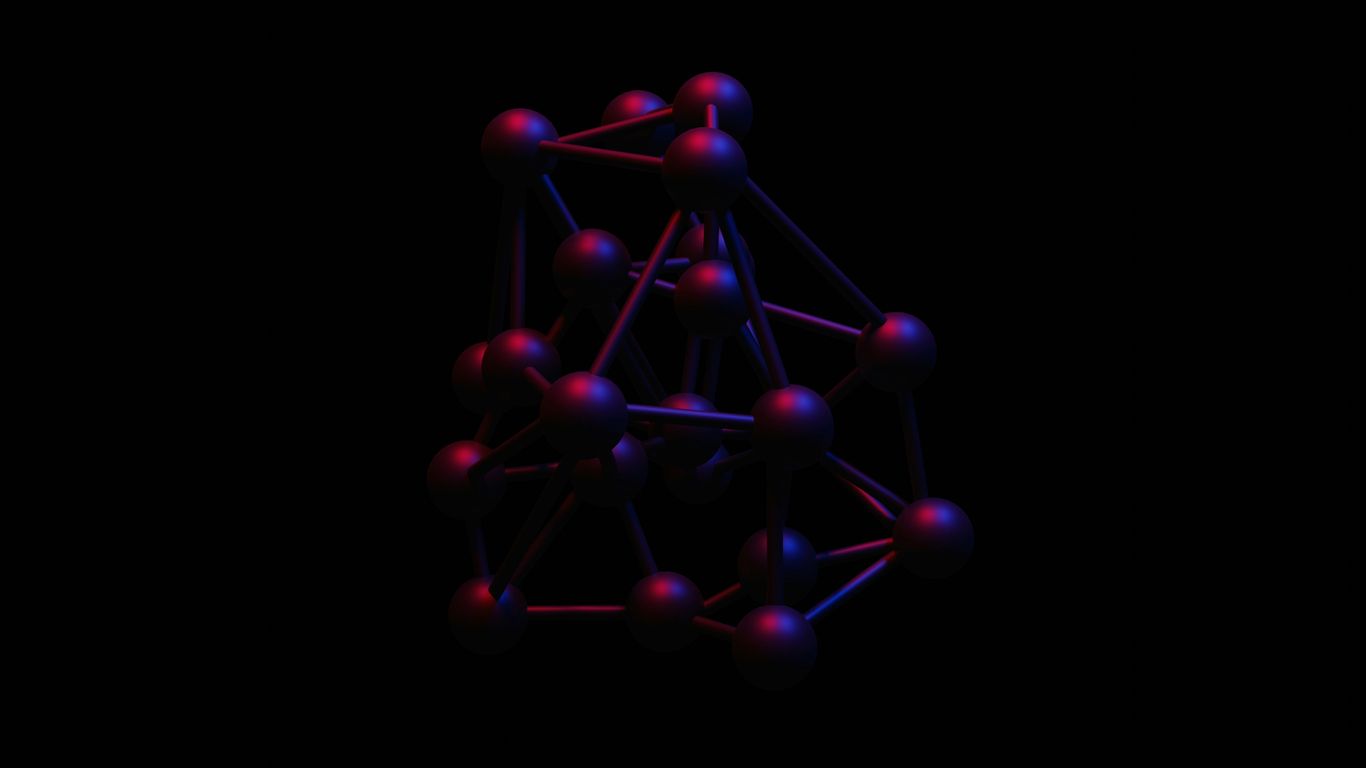
Think about stacking different 2D materials, like LEGO bricks, to create something new. That’s kind of what van der Waals heterostructures are all about. We can layer materials like graphene or transition metal dichalcogenides (TMDs) on top of each other. The magic happens because of weak forces, called van der Waals forces, that hold these layers together. This allows each layer to keep most of its original properties, but when you put them together, you get entirely new behaviors.
Now, imagine adding organic molecules into this mix. It’s like adding a special ingredient to your LEGO creation. These molecules can attach to the 2D materials, changing their electronic or chemical properties in really interesting ways. This combination opens up a whole new playground for designing materials with specific functions, from better sensors to new types of electronic components. Researchers are using data-driven approaches, even machine learning, to sift through the vast possibilities and find the most promising pairings. It’s a bit like having a super-smart assistant helping you discover new material recipes.
Epitaxial Graphene for Advanced Devices
Epitaxial graphene is a bit different. Instead of peeling layers off a bulk material, we grow graphene directly onto a substrate, usually silicon carbide. This process, called epitaxy, gives us a lot of control. The graphene grows in a very ordered way, almost like a perfect sheet. This ‘quasi-freestanding’ nature means it’s not too strongly attached to the substrate, which is good because it lets the graphene behave more like its ideal self.
Why is this important? Well, this highly controlled graphene can be the foundation for next-generation electronics. Think about building complex circuits or sensors where every atom needs to be in the right place. Epitaxial graphene provides that stable, well-defined base. It’s like building a house on a perfectly flat and solid foundation – everything else can be built more reliably on top of it. This controlled growth is key for making advanced devices that need precise material properties.
Spin-Orbit Coupling in Nanosheets
When we talk about nanosheets, especially those made from heavier elements like platinum or iridium, something called spin-orbit coupling becomes really important. It’s a bit of a mouthful, but it basically means that an electron’s spin (think of it like a tiny magnet) interacts with its own motion around the atom’s nucleus. This interaction can have big effects on how the material conducts electricity and other properties.
For some of these nanosheets, like those made of iridium, this spin-orbit coupling is so strong that it can even change whether the material is a conductor or an insulator. It can also lead to some really exotic electronic states. What’s fascinating is that these nanosheets aren’t perfectly flat; they often have a slight, wavy structure. This ‘buckling’ can further influence the electronic properties, sometimes in ways that are hard to predict.
Here’s a simplified look at how structure can matter:
- Flat Layer: Idealized, often predicted to be metallic.
- Wavy Layer (Buckled): Real-world structure, can lead to semiconducting behavior due to altered electron interactions.
- Interlayer Interactions: How layers stack can also influence properties.
Understanding these subtle structural details and how they interact with spin-orbit coupling is key to designing new materials for things like quantum computing or advanced electronics.
Computational Approaches in Physics Material Science
Figuring out new materials used to take ages, a lot of trial and error. But now, computers are changing the game. We’re not just guessing anymore; we’re using smart calculations to predict what might work and why. It’s like having a super-powered crystal ball for scientists.
Data-Driven Materials Design
Think of it like this: we’re collecting tons of information about materials – their properties, how they’re made, what they do. Then, we use computers to sift through all that data. This approach helps us spot patterns and predict which combinations of elements or structures might have the properties we’re looking for, without having to physically make every single possibility. It’s a much faster way to find promising candidates for things like better batteries or stronger alloys.
Ab Initio Density Functional Theory
This is a more in-depth computational method. ‘Ab initio’ basically means ‘from the beginning,’ so we’re not relying on pre-existing data for specific materials. Instead, we use the fundamental laws of quantum mechanics to figure out the behavior of electrons in a material. Density Functional Theory (DFT) is a specific way to do this that’s really good at calculating the electronic structure and properties of materials. It’s powerful for understanding things like how a material will conduct electricity or how it will react chemically. It’s a bit more complex than data-driven methods but gives us a really solid, physics-based understanding.
Machine Learning for Material Discovery
This is where things get really interesting. Machine learning (ML) algorithms can learn from data, just like humans do, but much faster and on a much larger scale. We feed these algorithms information about materials, and they can start to predict properties of new, unstudied materials. They can also help us figure out the best way to synthesize a material or identify which experiments are most likely to yield useful results. It’s like having a tireless research assistant that can process information and make educated guesses about what to explore next, speeding up the whole discovery process considerably.
Symmetry Breaking and Emergent Phenomena

Sometimes, the most interesting things happen when a system decides to ditch its usual rules. That’s basically what symmetry breaking is all about in physics and material science. Think of it like a perfectly balanced pencil standing on its tip – it’s symmetrical, but super unstable. The slightest nudge, and it falls over, picking a direction. That fall is the symmetry breaking, and the direction it falls is an emergent property. In materials, this can lead to all sorts of cool, unexpected behaviors.
Rotational and Time-Reversal Symmetry in Graphene
Multi-layer graphene is a really neat place to watch this happen. In its pristine state, it has certain symmetries, like being the same no matter how you rotate it (rotational symmetry) or behaving the same forwards and backward in time (time-reversal symmetry). But when you mess with it, especially with things like electron interactions, these symmetries can break. For example, in certain configurations of multi-layer graphene, the electrons can spontaneously decide to favor certain directions, breaking the rotational symmetry. This can happen at the same time as breaking time-reversal symmetry, leading to things like magnetism. It’s like the electrons themselves are organizing into a pattern that wasn’t there before, just because of how they interact.
Coulomb Interactions and Band Topology
These symmetry-breaking events aren’t random. They’re often driven by the fundamental forces between electrons, known as Coulomb interactions. These interactions can get pretty complicated, especially in materials where electrons are packed closely together. When these strong interactions are present, they can change the electronic structure of the material, which is described by its band topology. Imagine the band structure as a map of electron energy levels. Coulomb interactions can warp this map, creating new features or instabilities that weren’t predicted by simpler models. This warping can lead to the spontaneous breaking of symmetries we talked about, creating new electronic states with unique properties.
Correlated Electron Physics
This whole area of strong interactions and symmetry breaking falls under the umbrella of correlated electron physics. It’s where things get really interesting because the behavior of individual electrons can’t be understood in isolation; they strongly influence each other. This collective behavior can lead to emergent phenomena that are hard to predict from first principles. Think about:
- Unconventional Superconductivity: Some superconductors don’t behave like the standard ones, and this is often linked to strong electron correlations and broken symmetries.
- Strange Metals: These are materials that don’t follow typical metallic behavior, especially in their resistivity, and are often found in systems with strong correlations.
- Topological Phases: Beyond simple insulators or metals, materials can have topological properties that are robust against defects. Symmetry breaking can be the key to accessing these exotic topological states.
Ultimately, studying symmetry breaking in materials gives us a window into how complex behaviors can arise from simple underlying rules when particles interact. It’s a bit like watching a flock of birds suddenly change direction in unison – a simple interaction leading to a complex, emergent pattern.
Superconductivity and Quantum Devices
Superconductor-Semiconductor Hybrid Systems
This is where things get really interesting. We’re talking about combining superconductors with semiconductors, which are the building blocks of most modern electronics. The goal here is to get these two very different materials to play nicely together, creating interfaces and junctions that are as clean as possible. Why? Because even tiny imperfections can mess up the delicate quantum effects we’re trying to achieve. Think of it like trying to build a perfect house of cards – one wobbly card and the whole thing can come down. Researchers are getting better at this, using techniques like molecular beam epitaxy to grow these layers and in-situ shadowing to make clean connections. This work is paving the way for new quantum devices, and it’s not just limited to one type of superconductor or semiconductor. They’re even looking at using tin (Sn) in these systems, and figuring out how to control its structure when it’s grown on semiconductors. It’s a bit like trying to get two different puzzle pieces to fit perfectly, and when they do, you get some pretty neat quantum behavior.
Proximity Effects in Quantum Materials
So, what happens when you bring a superconductor close to a non-superconducting material, like a semiconductor? You get something called the proximity effect. Basically, the superconductivity ‘leaks’ a little bit into the other material. This is super useful because it can induce superconductivity in materials that wouldn’t normally be superconducting on their own. It’s like borrowing some of the ‘super’ qualities. This effect is particularly important in one-dimensional wires and two-dimensional electron gases. Scientists are studying how to make this effect stronger and more controllable. They’re looking at different materials and how they interact at the interface. It’s a bit like tuning a radio to get the clearest signal – you want to optimize the conditions for the superconductivity to transfer effectively. This is key for building more complex quantum circuits.
Sn Integration in Quantum Technologies
Tin, or Sn, is showing up more and more in the world of quantum technologies, especially when we’re talking about those superconductor-semiconductor hybrid systems. It’s not just any tin, though; it’s about how it’s grown and what its structure looks like. When you deposit tin onto a semiconductor, it can form different crystal structures, and this really matters for how well it works with the superconductor. Researchers are figuring out how to control these structures, almost like a sculptor shaping clay. They want to get the tin into a phase that maximizes its superconducting properties when paired with a semiconductor. This fine-tuning is important for making devices that are more robust and perform better. It’s a bit like choosing the right type of screw for a specific job – the details make a big difference in the final outcome.
Active Matter and Biological Systems
Nonequilibrium Physics in Living Matter
Think about a flock of birds or a school of fish. They move together, right? It’s not just random. This coordinated movement, and lots of other stuff happening in living things, happens because they’re not in a state of balance. They’re constantly using energy to do things, which is what we mean by ‘nonequilibrium physics’. This constant activity is what allows biological systems to do complex jobs, like sensing their surroundings or processing information. We’re seeing this in everything from swarms of fireflies blinking in unison to plants growing in specific directions. Physicists, engineers, and biologists are teaming up to figure out how this energy use leads to these organized behaviors. It’s a really interesting area where the rules of physics we usually think about don’t quite apply because life is always busy doing something.
Collective Behaviors and Information Flow
When you have a bunch of living things acting together, like those bird flocks, they can do things that a single bird can’t. They can find food better, avoid predators more effectively, and even communicate. This collective action is all about how information moves between individuals. Imagine a single bird spots danger; it signals others, and the whole flock reacts. This flow of information, combined with the energy they use to move, creates these amazing group patterns. Researchers are using data from real-life observations and building computer models to understand these interactions. They’re looking at how feedback loops – where the action of one individual affects others, who then affect the first one back – play a role. It’s like a constant conversation happening through movement and signals, leading to smart group decisions.
Interdisciplinary Approaches to Biological Function
Figuring out how living systems work is a huge puzzle, and it needs a lot of different brains. That’s where interdisciplinary approaches come in. Physicists bring their understanding of forces and motion, biologists know about the living parts, and computer scientists can help analyze all the data and build models. For example, studying how bacteria move together or how cells organize themselves requires input from all these fields. We’re seeing new ways to design experiments and analyze results by combining these different viewpoints. This teamwork helps us find common principles that might apply across very different living systems, from tiny microbes to large animal groups. It’s about finding the underlying physics that makes life’s functions possible.
Wrapping It Up
So, we’ve seen how physics and material science aren’t really separate fields at all. They’re more like two sides of the same coin, each one helping the other move forward. Think about it: understanding the basic rules of how things work at the smallest levels, that’s physics. Then, using that knowledge to actually build new stuff with specific properties, that’s material science. It’s pretty cool how discoveries in one area can lead to totally new possibilities in the other. Whether it’s making better electronics, stronger materials for buildings, or even new ways to store energy, this connection is key. It’s not just about theory; it’s about making real-world things happen. And honestly, it feels like we’re just scratching the surface of what’s possible when these two fields work together.