China’s Expanding Space Ambitions
China’s space program is really picking up steam, and it’s not just about putting satellites up anymore. They’ve got some pretty big ideas brewing, aiming to push the boundaries of what’s possible.
Pioneering Space Tourism Ventures
So, space tourism is on the table. We’re talking about trips that could take people to the edge of space and maybe even beyond. The next five years are supposed to see some real movement here, with plans for both suborbital joyrides and longer orbital stays. It sounds wild, right? Imagine seeing Earth from up there. While it might cost a pretty penny to start, it’s definitely something to watch if you’re into adventure travel.
Developing a ‘Space Cloud’ for Solar Energy
This one’s a bit more out there, but China is looking into building a ‘Space Cloud’ – basically, a massive solar power station in orbit. The goal is to have it up and running by 2030, which is part of their big 15th Five-Year Plan. The idea is to beam clean energy down to Earth. It’s a huge undertaking, but if they pull it off, it could change how we think about energy.
Focus on Interstellar Navigation Training
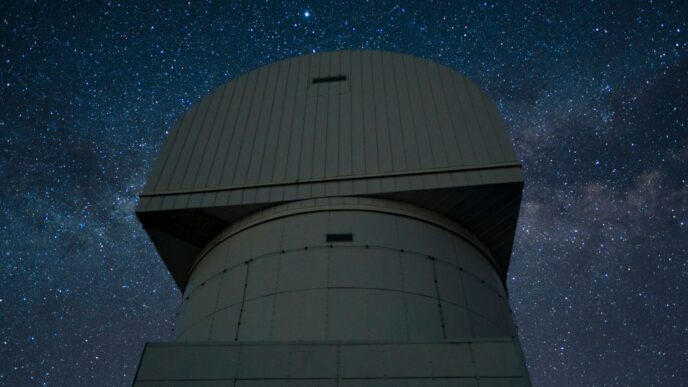
Beyond just getting to orbit, China is thinking much, much further. They’ve opened up the country’s first School of Interstellar Navigation, linked to the Chinese Academy of Sciences. This place is all about training the next generation of space explorers. They’ll be studying things like how to get around in deep space and how to navigate between stars. It shows they’re serious about long-term missions, maybe even setting up a base on the Moon and looking at other planets.
The Intensifying U.S.-China Space Race
Challenging U.S. Dominance in Lunar Exploration
It feels like the U.S. and China are really going head-to-head in space these days, and it’s not just about planting flags. China’s got its sights set on the Moon, aiming to really shake up what we’ve thought of as American territory up there. While the U.S. is getting ready for its Artemis missions, China isn’t just watching; they’re actively planning their own lunar expeditions. This isn’t just about science anymore; it’s about who gets to call the shots and set the pace for future space activities. China’s long-term goal is to seriously challenge the U.S.’s historical lead in space exploration.
Competition in Low Earth Orbit Satellite Networks
Low Earth Orbit, or LEO, is becoming a really crowded place, and both countries are fighting for a piece of the pie. SpaceX has been pretty dominant with its Starlink satellites, making internet access from space a reality for many. But China isn’t sitting back. They’ve announced plans to launch a massive satellite constellation, potentially up to 200,000 satellites over the next decade. This is a huge undertaking, and it’s all about controlling communication and data flow from orbit. It’s a bit like a digital land grab, but in space.
Here’s a look at the scale of these satellite network ambitions:
| Country | Announced Satellite Network Size | Primary Goal |
|---|---|---|
| China | Up to 200,000 satellites | Establish communication and data dominance |
| U.S. (SpaceX) | ~12,000 planned (Starlink) | Global internet access, military applications |
Strategic Positioning in Commercial and Military Space
Beyond the Moon and LEO, the competition extends into the commercial and military arenas. China is building up its space industry at a rapid pace, with a record 93 launches in 2025 alone, thanks in part to a growing number of private space companies. They’re not just looking at scientific missions; they’re thinking about infrastructure, resource extraction, and even military applications. This push is about more than just national pride; it’s about economic benefits and strategic advantage on a global scale. It’s a complex game of chess, played out across the stars, with both nations making bold moves.
Advancements in China’s Space Industry
China’s space sector has been really picking up steam lately. It feels like every other week there’s a new announcement or a successful mission. In 2025, they managed a record-breaking 93 space launches, which is pretty wild when you think about it. A big part of this surge comes from the growing number of commercial spaceflight startups popping up all over the place.
Record Number of Space Launches
That 93-launch figure for 2025 is a big deal. It shows a serious ramp-up in activity. While state-run agencies are still a major force, the commercial side is really starting to flex its muscles. This increased launch cadence is vital for deploying new satellite networks and supporting future space missions.
Growth of Commercial Spaceflight Startups
It’s not just the big government programs anymore. A whole ecosystem of private companies is emerging, working on everything from small satellite deployment to developing new launch capabilities. This competition and innovation are pushing the whole industry forward. We’re seeing more specialized companies focusing on specific niches, which is a healthy sign for any growing sector.
Development of Satellite ‘Super Factories’
To keep up with the demand for satellites, especially for large constellations, China is investing in what you could call "satellite super factories." These are highly automated facilities designed to churn out satellites at an unprecedented rate. Think of an assembly line, but for spacecraft. This kind of mass production is key to building out vast networks in orbit, whether for communication, Earth observation, or other purposes. It’s a smart move to gain an edge in orbital infrastructure.
Key Technological Hurdles and Progress
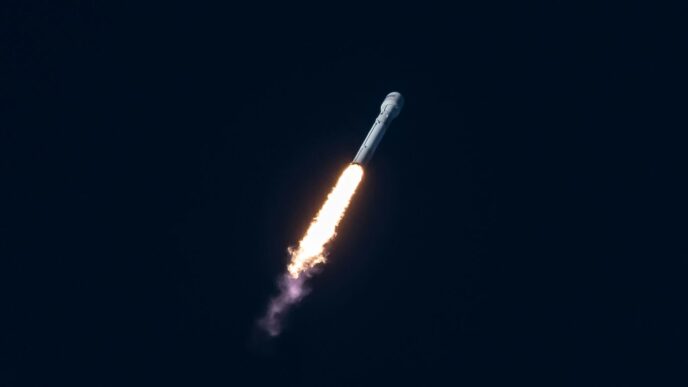
China’s space program is moving fast, but it’s not without its bumps in the road. One of the biggest challenges they’re facing right now is with reusable rocket technology. You know, like what SpaceX has with their Falcon 9? It’s a game-changer for making launches cheaper and more frequent. China hasn’t quite cracked that code yet, and it’s a pretty big deal for their plans to launch lots of satellites and do more complex missions.
The Challenge of Reusable Rocket Technology
Developing rockets that can land themselves and be used again is tough. It saves a ton of money and makes space more accessible. While China has made strides in rocket design, getting a system that reliably works for reuse is still a work in progress. This is a key area where they’re trying to catch up.
Progress in Deep Space Exploration
Despite the rocket hurdles, China is pushing further out. They’re setting up a new school, the School of Interstellar Navigation, to train people for these far-out missions. Think interstellar propulsion and figuring out how to get around in deep space. It shows they’re serious about going beyond just Earth orbit. They’re also looking at things like intelligent mining in space, which sounds like something out of a sci-fi movie, but it could be important for getting resources.
Intelligent Mining and Resource Extraction
This is a really interesting area. The idea is to figure out how to mine resources, maybe on the Moon or asteroids, using smart technology. It’s still early days, but it’s part of their long-term vision for space. Imagine robots and AI doing the heavy lifting, bringing back materials that could be used in space or even back on Earth. It’s a big step towards making space more self-sufficient.
Future of Space Exploration and Tourism
So, what’s next for China in the big black yonder? It’s not just about planting flags on the Moon anymore, though that’s still a thing. We’re talking about actually taking people up there, and not just the super-rich astronauts.
Suborbital and Orbital Tourism Opportunities
China’s aiming to get regular folks into space, and soon. Think of it like this: first, they want to offer quick trips to the edge of space, just a little hop up and back down. This is the suborbital stuff. Companies are looking at making this happen within the next five years. After that, the big goal is to let people stay up there for a bit, orbiting the Earth. It’s a bit like what some American companies are already doing, but China wants its own slice of the pie. They’re hoping to make space travel more common, maybe even something people can save up for.
Long-Term Deep Space Mission Goals
Beyond just joyrides, China has some serious long-term plans. They’re not just thinking about the Moon; they’re looking further out. This includes setting up a research base on the Moon, which is a pretty big deal. They’re also training people specifically for missions that go way beyond our solar system. Imagine navigating through the stars – that’s the kind of training happening now. It shows they’re thinking decades ahead, not just for the next few years.
Potential for Space Mining and Interplanetary Missions
This is where things get really sci-fi. China is looking into how to mine resources in space. Think asteroids or the Moon – there are valuable materials out there. Developing the tech for this is key. It’s not just about bringing stuff back to Earth, either. These resources could be used to build things in space, like fuel depots or even parts for future spacecraft. This could make longer trips, like going to Mars or other planets, much more doable. It’s all about making space more self-sufficient and opening up possibilities for humanity beyond our home planet.
Strategic and Economic Implications of Space
China’s push into space isn’t just about scientific curiosity or national pride; it’s a calculated move with big strategic and economic goals. Think of it as building a new frontier, and whoever controls the infrastructure there could have a serious advantage down the line.
Establishing Space Infrastructure Dominance
Right now, China is really focused on building up its presence in orbit. They’re talking about massive satellite constellations, potentially hundreds of thousands of them, to handle communications and data. This isn’t just about having their own internet service; it’s about controlling the flow of information and reducing reliance on other countries’ tech. It’s like building the highways and power lines of the future, but in space. They’re also looking at things like a "Space Cloud" for solar energy, which sounds like science fiction, but could be a game-changer for power generation if they pull it off by 2030.
Influencing Global Space Policies
As China becomes a bigger player, they’re naturally going to want a say in how space is used. They’re already challenging the U.S. in areas like lunar exploration, and this competition means they’ll push for their own rules and standards. It’s not just about planting a flag; it’s about setting the agenda for future space activities, from resource extraction to traffic management in orbit.
Economic Benefits of the ‘NewSpace’ Economy
The commercial side of space is booming, and China wants a big piece of that pie. We’re seeing more Chinese startups getting into the space game, and they’re aiming for record numbers of launches. This growth isn’t just about rockets; it’s about creating jobs, developing new technologies, and opening up new markets. Think about space tourism, satellite services, and eventually, mining resources from asteroids or the Moon. These are all potential industries that could bring in serious money.
Here’s a look at some of the key areas driving this economic push:
- Satellite Constellations: Building vast networks for global communication and data services.
- Space Tourism: Developing suborbital and orbital flights for paying customers.
- Resource Extraction: Planning for future missions to mine materials from space.
- In-Orbit Manufacturing: Exploring ways to build and repair things in space.
The race to establish dominance in these areas is on, and it’s shaping up to be a defining feature of the 21st century.
What’s Next for China in Space?
So, China’s really pushing ahead with its space plans, aiming for everything from space tourism to deep space missions. They’ve got big ideas, like that orbital solar power station and training new talent for interstellar travel. It’s clear they’re serious about competing with the US, especially in areas like satellite internet and lunar exploration. While they still have some catching up to do, particularly with reusable rockets, their progress is undeniable. The next few years will be interesting to watch as they try to make space travel more accessible and expand their reach beyond Earth. It’s definitely a space race worth keeping an eye on.