China’s Ascendancy in Space Exploration
It feels like China’s space program has really been stepping things up lately, doesn’t it? They’ve been busy, that’s for sure. The nation has rapidly become a major player in space activities, marked by a series of impressive achievements.
Record-Breaking Launch Activity
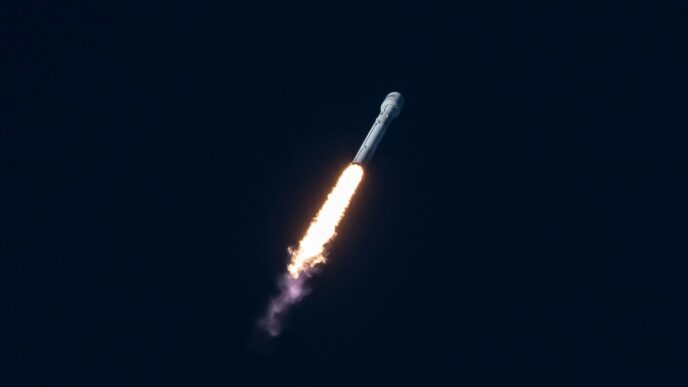
China has been launching rockets left and right. In 2008 alone, they managed a record 11 successful launches, which was a pretty big deal for them at the time. This wasn’t just about putting up a few satellites; it showed a consistent capability to get things into orbit. They’ve been launching weather satellites, data relay spacecraft, and even satellites for other countries. It’s clear they’re building up their launch infrastructure and getting really good at it.
Historic First Spacewalk
One of the big moments for China’s human spaceflight program was their first spacewalk. This happened during their third crewed mission. Sending astronauts out of the spacecraft to work in space is a really complex operation, and successfully doing it shows a significant step in their technical abilities and astronaut training. It’s not just about getting to space anymore; it’s about what you can do once you’re out there.
Data Relay for Future Missions
To support all these ambitious plans, China has also been putting up specialized satellites. They launched a data relay satellite specifically to help with communication between ground control and their upcoming human space missions. Think of it like a cell tower in space, making sure everything runs smoothly and safely. This kind of infrastructure is super important for more complex missions down the line, like those going further out into the solar system.
Lunar Ambitions and Exploration
China’s looking at the Moon with some pretty big plans. It’s not just about planting a flag; they’re thinking about what resources might be there and how to use them for future missions.
Crashing into the Moon for Water
One of the more interesting ideas China has explored involves a controlled impact on the lunar surface. The goal? To stir up the regolith and look for signs of water ice, especially in those permanently shadowed craters near the poles. It’s a bit of a smash-and-grab, but if it works, it could tell us a lot about what’s hidden just beneath the surface. This approach uses technology that’s been around for a while, making it a cost-effective way to get some answers.
Lunar Mapper for Return Expeditions
To pave the way for future human visits, China is developing sophisticated mapping tools. These aren’t just pretty pictures; they’re detailed surveys designed to identify safe landing sites and potential resource locations. Think of it as a high-tech GPS for the Moon, helping future astronauts know exactly where they’re going and what to expect. This kind of preparation is key to making sure any return trips are successful and safe.
India’s First Moon Craft
While China has its own lunar goals, it’s worth noting the broader international interest in the Moon. India, for instance, has successfully launched its own probe to orbit the Moon. This mission carries scientific instruments from various countries, showing how the Moon is becoming a focus for global space exploration efforts. It’s a sign that many nations are recognizing the Moon’s potential, not just as a destination, but as a stepping stone for further space ventures.
Deep Space Discoveries
China’s space program isn’t just looking at our cosmic neighbors; they’re aiming much, much further out. It’s pretty wild to think about what’s out there, right? We’re talking about things like black holes, which are these super dense objects with gravity so strong, not even light can escape. Scientists are trying to figure out exactly how these things work, and China’s contributing to that effort.
Unlocking Black Hole Secrets
Understanding black holes is a big deal for figuring out how the universe works. It’s like trying to solve a giant puzzle. China’s involvement in projects that observe these phenomena helps piece together the bigger picture. These observations are key to testing our current theories about gravity and the very fabric of spacetime. It’s a complex area, and new data is always needed to refine our ideas.
Studying Distant Galaxies
Beyond our own Milky Way, there are billions of other galaxies, each with its own story. China is participating in missions that look at these far-off collections of stars. They’re trying to map them, understand how they form, and how they evolve over cosmic timescales. It’s a bit like looking at old family photos to see how your relatives changed over the years, but on a much grander scale.
Searching for Primordial Antimatter
Antimatter is this really strange counterpart to regular matter. When they meet, they annihilate each other. Scientists think that right after the Big Bang, there should have been equal amounts of matter and antimatter. But if that were true, everything would have just vanished. So, where did all the antimatter go? China’s space science efforts are also looking into this mystery, trying to find clues about the universe’s earliest moments and why we have a universe made of matter at all.
Mars Exploration Initiatives
China’s journey to the Red Planet is picking up speed, with a focus on understanding its past and paving the way for future visits. It’s not just about planting a flag; it’s about serious science.
Phoenix Lander’s Soil Analysis
The Phoenix lander, a robotic explorer, has been busy digging into the Martian surface. Its main job was to get a closer look at the soil, especially any ice that might be hiding just below the surface. It successfully scraped away frozen dirt and collected samples, which were then analyzed in its onboard labs. This work helps us figure out if Mars ever had conditions suitable for life, or if it still does in some hidden spots.
Evidence of Past Liquid Water
We’re learning more and more that Mars wasn’t always the dry, cold place it is today. Data from orbiters, like the Mars Reconnaissance Orbiter, shows clear signs that water used to flow freely on the surface. Think ancient lakes and rivers! These findings are super important because water is key to life as we know it. It makes you wonder what else might be buried under the dust.
Imaging Mars’ Moon Phobos
Phobos, one of Mars’ two small moons, is also a target of interest. Spacecraft have been sent to get detailed images and data about this lumpy, potato-shaped moon. Scientists are trying to figure out what it’s made of and how it got there. Some observations suggest it might not be a solid rock but more like a pile of debris. Getting a good look at Phobos could tell us a lot about the early days of the Martian system.
Technological Advancements in China Space Exploration
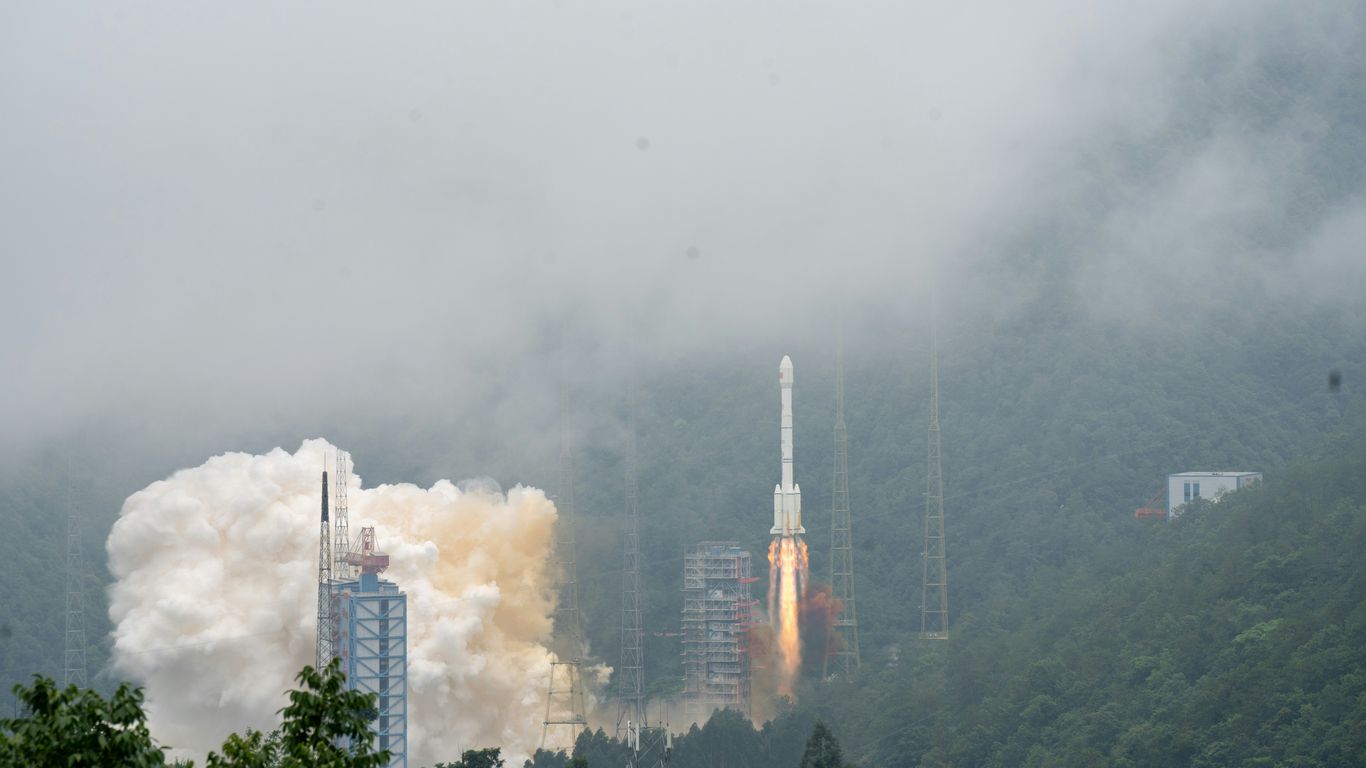
China’s space program has been making some serious strides, and a lot of that comes down to the tech they’re developing. It’s not just about getting stuff into orbit; it’s about doing it reliably and pushing the boundaries of what’s possible.
Long March Rocket Deployments
The Long March rocket family is the backbone of China’s space launches. These rockets have been around for a while, but they’re constantly being updated. Think of them like a trusty old truck that keeps getting a better engine and more modern features. They’ve got a whole range of them, from smaller ones for lighter payloads to the really big ones that can haul serious weight.
- Reliability: They’ve gotten really good at making sure these rockets work every time. This is super important when you’re sending up expensive satellites or, you know, people.
- Payload Capacity: The bigger Long March rockets can carry a lot more mass into orbit, which means China can launch bigger, more complex satellites or even components for larger space stations.
- Launch Frequency: They’re launching these things more often, which shows a growing capability and confidence in the hardware.
Shenzhou Spacecraft Missions
When it comes to sending astronauts into space, the Shenzhou spacecraft is the vehicle of choice. It’s China’s human-rated spacecraft, and it’s been on a steady path of improvement. The Shenzhou program is a testament to China’s commitment to human spaceflight. Each mission builds on the last, refining the systems that keep astronauts safe and productive.
- Crewed Missions: They’ve successfully sent multiple three-person crews into orbit.
- Spacewalks: The Shenzhou missions have included the astronauts performing spacewalks, which is a pretty big deal and requires a lot of precise engineering.
- Docking Capabilities: The spacecraft has demonstrated its ability to dock with space stations, a key step for building larger orbital outposts.
Satellite Launch Capabilities
Beyond just rockets and crewed capsules, China has become a major player in launching all sorts of satellites. This includes everything from weather satellites and communication birds to scientific research platforms. They’ve gotten really good at putting multiple satellites into orbit on a single launch, which is a cost-effective way to get a lot done. They’ve also launched specialized satellites, like data relay satellites, which are crucial for maintaining communication links during complex missions. It’s this steady, consistent ability to launch satellites that underpins many of their other space ambitions.
Future of China Space Exploration
Human Spaceflight Programs
China’s commitment to human spaceflight is really picking up steam. They’ve already got a solid track record with the Shenzhou missions, including that first spacewalk, which was a pretty big deal. Now, they’re looking at longer-duration stays in orbit and more complex missions. Think about building out their own space station, which they’ve already started. It’s not just about getting people up there anymore; it’s about keeping them there for extended periods, doing science and research. They’re also eyeing future crewed missions beyond Earth orbit, which is a huge step.
Interplanetary Mapping
Beyond just sending probes to Mars and the Moon, China is getting serious about mapping the solar system and beyond. They’ve already got missions looking at asteroids and planning for future trips to the outer planets. This kind of detailed mapping is key for figuring out where we can go and what resources might be available. It’s like drawing a map before you go on a long road trip, but for space. They’re not just looking at what’s close by; they’re thinking about the long game, understanding the bigger picture of our cosmic neighborhood.
Orbital Infrastructure Development
This is where things get really interesting for the future. China is investing heavily in building up its infrastructure in orbit. This includes not just their space station but also a network of communication and navigation satellites. They’re also looking at developing reusable launch systems, which would make getting things into space a lot cheaper and more frequent. It’s all about creating a robust system that can support all their ambitious plans, from scientific research to future exploration. Think of it as building the highways and rest stops of space, making it easier for everyone to travel and work up there.
Looking Ahead
So, China’s space program is really something else, isn’t it? They’ve been busy, launching rockets and sending probes out there. It’s not just about planting flags; they’re doing real science, looking at black holes and mapping the moon. It feels like they’re building something big, step by step. We’ve seen them launch satellites, do spacewalks, and even send missions to other planets. It’s clear they have big plans for the future, and it’s going to be interesting to see what they do next in the vastness of space.