Foundational Milestones In China Space Programs
China’s journey into space didn’t just happen overnight. It’s a story that stretches back, fueled by ancient dreams and modern ambition. You know, there’s this old legend about a guy named Wan Hu, who supposedly tried to fly to the moon using rockets strapped to a chair centuries ago. Whether it’s true or not, it really shows how long people in China have been looking up.
Early Aspirations and Rocketry
Things got serious in the 1950s, right in the middle of the Cold War. China set up its first place to research rockets and missiles back in 1956. This was the real start of their aerospace industry, laying the groundwork for everything that came after. It wasn’t just about reaching for the stars; it was also about developing serious technological capabilities.
First Satellite Launch
Then came a big moment in 1970. China successfully sent its very own satellite into orbit using a rocket called the Long March-1. This put them in a pretty exclusive club – they were the fifth country in the world to achieve this. It was a huge display of their growing technical skill and a major step forward.
First Taikonaut in Orbit
Fast forward to 2003, and another massive milestone was hit. Yang Liwei became the first Chinese astronaut, or ‘taikonaut’ as they’re called, to travel into space. This wasn’t just a personal achievement; it really cemented China’s place as a major player in human spaceflight. It showed they could not only send things up but also send people up safely and bring them back.
Advancements In Satellite Technology
China’s satellite technology has really taken off, moving beyond just basic observation. They’ve put a lot of effort into making these satellites smarter and more capable. Think about the Gaofen series, for example. These satellites are giving us super clear pictures of Earth, which is pretty handy for keeping an eye on the environment and planning out our cities better. It’s like having a really detailed map that updates itself.
Then there’s the Beidou Navigation Satellite System. This isn’t just a copycat; it’s a fully functional system that provides accurate positioning, kind of like GPS but with its own unique strengths. It’s been up and running for a while now, and it’s a big deal for everything from everyday navigation to more complex industrial uses.
What’s really interesting is how they’re starting to put artificial intelligence into these satellites. This means they can actually process information right there in space, instead of sending everything back to Earth first. This makes things much faster, especially when you need to react quickly to events happening on the ground or even in space itself. It’s a big step towards more autonomous space systems.
Here’s a quick look at some key areas:
- Earth Observation: High-resolution imaging for environmental and urban monitoring.
- Navigation: The Beidou system offers global positioning services.
- AI Integration: Satellites are gaining the ability to analyze data in real-time.
These advancements show a clear move towards satellites that are not just tools for data collection, but intelligent systems that can contribute more actively to various applications.
Evolving Spacecraft Capabilities
China’s journey into space isn’t just about getting there; it’s about the vehicles they’re building to do it. They’ve really stepped up their game with spacecraft designed for all sorts of jobs, from ferrying people to the stars to bringing back bits of other worlds. It’s pretty impressive how quickly they’ve developed these complex machines.
Crewed Mission Vehicles
When it comes to sending people into orbit, the Shenzhou spacecraft has been the workhorse. It’s the vehicle that takes China’s taikonauts to the Tiangong space station. Think of it as their reliable shuttle. But they’re not stopping there. For future missions, especially those heading to the Moon, they’re developing new craft like the Mengzhou. This next-generation vehicle is designed to carry more astronauts, up to six, and is built for longer trips, including deep space. It’s a big step up from what they’ve used before, showing they’re planning for more ambitious human spaceflight.
Cargo and Resupply Craft
Keeping a space station stocked is no small feat, and China has the Tianzhou cargo craft for this. These unmanned vehicles are like delivery trucks for Tiangong, bringing up supplies, equipment, and even experiments. They dock with the station, unload their goods, and then are typically disposed of. The Tianzhou program has been running smoothly, showing a solid capability in automated docking and cargo delivery, which is pretty important for keeping astronauts supplied and safe.
Lunar Lander Technology
Landing on the Moon is a whole different ballgame, and China has been making serious headway here with their Chang’e program landers. These aren’t just simple probes; they’re designed to touch down gently on the lunar surface, often in challenging terrain. The Chang’e missions have shown they can deploy rovers and collect samples, demonstrating a growing mastery of lunar landing systems. Future plans involve landers specifically designed for crewed missions, like the Lanyue, which will need to be much more robust and capable of supporting human explorers. It’s clear they’re building on their robotic successes to pave the way for humans on the Moon.
Lunar And Planetary Exploration Goals
China’s space program isn’t just about Earth orbit anymore; they’ve got their sights set much further out. When it comes to the Moon, they’ve already made some serious moves. Remember the Chang’e-5 mission? That one brought back about 1.7 kilograms of lunar rocks and soil back in 2020. Scientists are still digging into that data, learning all sorts of things about how the Moon formed and changed over time.
Now, they’re planning even more ambitious lunar missions. The Chang’e-6 mission is set to grab samples from the far side of the Moon, a part we never see from Earth. Think about that – collecting rocks from a completely unexplored area! And Chang’e-7 is looking into resources like water ice, which could be a game-changer for future moon bases. These missions are laying the groundwork for potentially sending Chinese astronauts to the lunar surface by 2030.
But it’s not just the Moon. Mars is also a big target. The Tianwen-1 mission successfully landed the Zhurong rover on the Red Planet. It’s been rolling around, taking readings, and sending back info about the Martian surface and its weather. They’re extending its mission, so we’ll get even more data about Mars’s landscape and climate.
Looking even further out, China has plans for missions to the outer planets, like Jupiter. These will help us understand those giant gas planets and their moons better. They’re also thinking about asteroid sample return missions, which sounds pretty wild. Imagine bringing a piece of an asteroid back to Earth for study!
Here’s a quick look at some of the key goals:
- Lunar Sample Return: Bringing back more diverse samples from different parts of the Moon, including the far side.
- Mars Surface and Subsurface Study: Continuing to explore the Red Planet with rovers and orbiters to understand its geology and past climate.
- Outer Planet Investigations: Planning missions to study gas giants like Jupiter and their fascinating moons.
- Asteroid Sample Return: Developing the technology to visit asteroids, collect samples, and bring them back to Earth for analysis.
The Tiangong Space Station
Operational Status and Crewed Missions
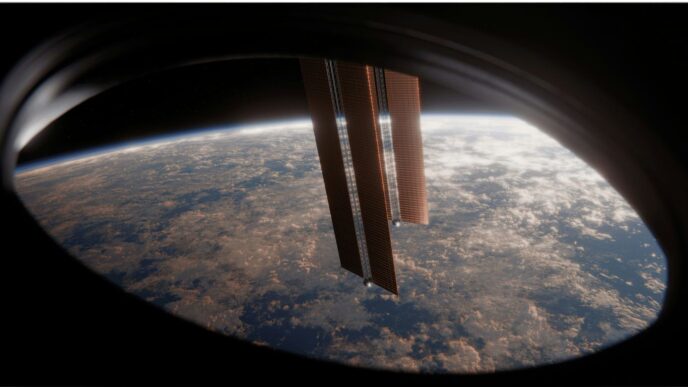
China’s Tiangong space station is up and running, and it’s pretty busy up there. Crews of taikonauts are regularly cycling through, living and working in orbit. The Shenzhou missions keep bringing new teams, like Shenzhou-19 and Shenzhou-21, who have been busy with all sorts of tasks. They’ve done spacewalks, checked out the outside of their spacecraft, and even put on extra protection against space junk. It’s a pretty complex operation, making sure everything stays in good shape.
Scientific Research Hub
Tiangong isn’t just a place to live; it’s a working laboratory. The taikonauts are conducting a bunch of scientific experiments. These range from studying how things behave in microgravity to testing new technologies that could be useful for future missions. They’re also using the station’s robotic arm to help with some of these experiments, working closely with teams back on Earth. It’s all about pushing the boundaries of what we know.
Future Station Expansion
China isn’t done with Tiangong yet. There are plans to expand the station, adding more modules to make it even bigger and more capable. This expansion will likely allow for more complex research and potentially host more international visitors down the line. They’re also thinking about how to make the station more resilient, especially against things like space debris. It’s a long-term project, showing China’s commitment to having a permanent presence in orbit.
Future Ambitions And Long-Term Vision
China’s space program isn’t just about what’s happening now; it’s got some pretty big plans for the future, aiming to push boundaries further out into the solar system and even beyond. They’re not just looking at the next few years, but thinking decades ahead, building on the successes they’ve already had.
Crewed Lunar Landing By 2030
One of the most talked-about goals is landing astronauts on the Moon. This ambitious mission is targeted for completion by 2030. It’s a huge undertaking, requiring new rockets like the Long March-10, which has already passed some key tests, and a new spacecraft called Mengzhou, designed specifically for these lunar trips. They’ve also been testing the Lanyue lander, making sure it can actually touch down and take off from the lunar surface. This isn’t just about planting a flag; it’s about doing serious scientific research on the Moon, maybe even looking for resources that could help future missions.
Asteroid Sample Return Missions
Beyond the Moon, China is setting its sights on asteroids. The idea is to send a spacecraft to collect samples from an asteroid, possibly one of the near-Earth objects, and bring them back to Earth for study. This is still in the early stages of planning, but it’s a big step in understanding these space rocks better. It could tell us a lot about the early solar system and even potential threats from space.
Deep Space Exploration Initiatives
Looking even further out, China has its eyes on the outer planets. There are plans for missions to study Jupiter, its atmosphere, and its many moons. This kind of exploration helps us understand gas giants and the complex environments around them. These long-term projects show a commitment to broadening our knowledge of the entire solar system, not just our immediate neighborhood.
International Cooperation And Commercial Sector
Global Partnerships and Alliances
China isn’t just building its own space capabilities; it’s also looking to work with others. While the US has its Artemis Accords, China is forging its own path, notably with Russia on the International Lunar Research Station (ILRS). It’s not just about big players, though. Reports suggest that over 30 countries have shown interest in teaming up with China on various space projects. This opens doors for sharing technology and scientific know-how, which can really speed things up for everyone involved. Think of it like a big group project where everyone brings something different to the table. They’re also extending this cooperation to places like Africa, helping countries there get their own satellite tech off the ground. It’s a way to build connections and influence, offering different options for space collaboration.
Growth of Private Space Enterprises
It’s not all government-run programs anymore. Since around 2014, China has opened the door for private companies to jump into the space game. This has led to a bunch of new startups popping up, working on things like reusable rockets and new satellite designs. Companies like GalaxySpace and LandSpace are getting government backing and are really pushing the envelope. They’re getting pretty good, pretty fast, and are starting to look like serious competitors to the established players, especially those in the US. It’s a sign that the space industry is really diversifying.
Space Diplomacy and Influence
China’s space activities are definitely part of its bigger picture for global standing. By collaborating with other nations and developing advanced technologies like the Beidou navigation system, China is showing its technical strength. This also helps build relationships. For instance, working with countries on lunar sample analysis or offering satellite services can create goodwill and open up new avenues for trade and scientific exchange. It’s a smart way to use space exploration to boost its international presence and show what it can do on the world stage.
Looking Ahead
So, China’s space program has really come a long way, right? From those early dreams to having their own space station and sending probes to Mars and the Moon, it’s pretty impressive. They’re not just doing their own thing either; they’re working with other countries too, which is cool. It looks like they’ve got some big plans for the future, like landing people on the Moon and exploring asteroids. It’s clear they’re serious about being a major player in space for a long time to come.