China’s Advancing Reusable Spacecraft Program
Key Technologies Verified in Latest China Satellite Launch
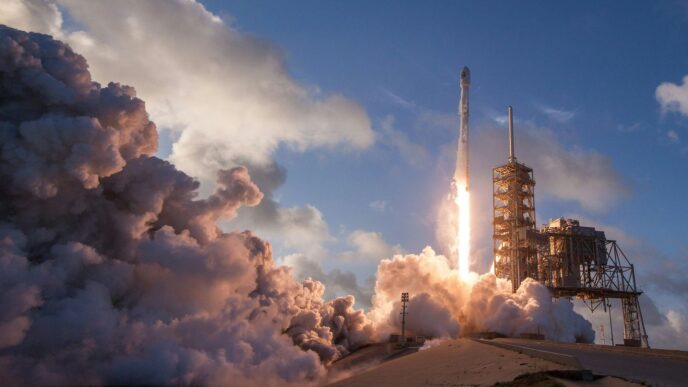
China sent its fourth publicly known reusable experimental spacecraft into orbit on February 7, 2026. This mission, launched from the Jiuquan Satellite Launch Center using a Long March-2F rocket, is all about testing out important technologies for spacecraft that can be used more than once. It’s a big deal because making rockets and spacecraft reusable can cut down costs a lot, making space travel more accessible. This latest flight is a clear sign that China is serious about developing this game-changing technology. While details are scarce, as is often the case with these missions, the pace of development is noticeable. China’s first reusable test flight was back in September 2020 and only lasted a couple of days. Since then, they’ve been extending the duration and complexity of these missions.
Evolution of Reusable Rocket Technology
The journey towards reusable spacecraft in China has been steadily progressing. Here’s a look at how their missions have evolved:
- September 2020: First reusable test flight, lasting less than two days.
- August 2022 – May 2023: Second mission, a significant jump, staying in orbit for 276 days.
- December 2023 – September 2024: Third flight, continuing the trend with a 268-day orbital period.
- February 2026: The latest mission, focused on verifying new technologies for future reusable vehicles.
These flights aren’t just about staying in space longer; they often involve complex maneuvers. Observers have noted that these spacecraft perform intricate orbital adjustments, sometimes interacting with small objects released in orbit. These kinds of actions can be used for things like inspecting other satellites, fixing them in space, or even studying space debris. It shows a growing capability beyond just launching and landing.
Strategic Implications of Reusable Spacecraft
Developing reusable spacecraft isn’t just a technical achievement; it has major strategic implications. The ability to recover and reuse components dramatically lowers the cost of getting to space. This makes space operations more flexible and opens up new possibilities for both commercial ventures and national security. In a world where space is becoming increasingly important for communication, navigation, and even defense, having a cost-effective and adaptable way to access orbit is a significant advantage. It’s part of a global trend, with many countries and private companies investing heavily in this area. This push for reusability is reshaping the entire space industry, turning low Earth orbit into a busy marketplace and a new frontier for competition.
China’s Expanding Space Capabilities and Ambitions
Record-Breaking Launch Missions in 2025
China’s space program really hit its stride in 2025. The China Aerospace Science and Technology Corporation (CASC) managed to pull off a whopping 73 space launches throughout the year. That’s a new record for them, showing just how busy they’ve been getting things into orbit. This wasn’t just about quantity, though. They sent up missions like Tianwen-2, which is all about exploring asteroids, and the Shenzhou-20 and Shenzhou-21 spacecraft, carrying people into space. The Tiangong space station also became a more significant spot for science collaborations with other countries.
Lunar and Mars Exploration Milestones
Looking back, China has some pretty impressive achievements under its belt. They were the first country to bring back moon rocks from the far side of the Moon. And before that, in 2021, they landed a rover named Zhurong on Mars to study its surface. It’s clear they’re not just looking up; they’re actively exploring our celestial neighbors. These missions demonstrate a serious commitment to understanding our solar system.
Long-Term Vision for Space Science Development
It’s not just about the next few years. China has a long-term plan, a roadmap for space science that stretches all the way to 2050. This plan was laid out in October 2024 and covers a lot of ground. It includes things like operating the space station, sending astronauts to the Moon before 2030, and continuing planetary exploration. Later phases involve building an international lunar research station and launching over 30 more science missions by 2050. This kind of sustained planning, with steady investment and a focus on developing talent and technology, seems to be the key to their success. They’re also open to working with other nations on certain projects, which is an interesting approach.
Technological Innovations in China’s Space Sector
The Xuntian Space Telescope’s Capabilities
China’s space ambitions are really taking off, and a big part of that is the Xuntian Space Telescope. Think of it as a super-powered eye in the sky, designed to give us a much clearer view of the universe than we’ve ever had before. It’s not just about looking further; it’s about seeing more detail and covering a much wider area. This telescope is set to work alongside the Tiangong space station, which is pretty neat because it means they can share resources and data. It’s a huge step for astronomy, allowing scientists to study things like dark matter and dark energy, and to map out galaxies in ways that were just not possible before. The technology packed into Xuntian is pretty advanced, with a massive mirror and sophisticated instruments.
Advancements in Satellite Technology
It’s not just telescopes, either. China has been busy upgrading its whole satellite game. We’re talking about satellites that are more precise, more reliable, and can do more things. This includes everything from better Earth observation satellites that help us monitor our planet’s climate and resources, to advanced communication satellites that are faster and more secure. They’ve also been developing navigation systems, like the BeiDou network, which is now a fully operational global system. This kind of progress means China can support more complex missions, both for its own needs and for other countries that use their launch services. It’s a whole ecosystem of connected technology.
New Rocket Development and Debut Flights
And how do you get all this stuff into space? With better rockets, of course! China has been putting a lot of effort into developing new rocket designs. The focus is often on making them reusable, which is a big deal for cutting down costs and making space access more frequent. They’ve been testing out new Long March rockets, and some of these have had their first flights recently. These new rockets are designed to be more powerful and more efficient. It’s like upgrading from an old pickup truck to a modern, fuel-efficient sports car – it just gets the job done better and faster. This continuous development in launch vehicles is key to supporting all the ambitious missions they have planned.
Global Space Competition and China’s Role
Shifting Dynamics of the Space Race
The space race isn’t quite like it was back in the day with the US and the Soviet Union. It’s gotten way more complicated now. It’s not just about planting a flag anymore; it’s about who can build the best tech, control valuable orbits, and get the most science done. China’s been making some serious moves, and it’s definitely changing the game. They’ve gone from launching their first satellite in the 70s to being a major player with their own space station and ambitious moon and Mars missions. It’s pretty wild how fast they’ve caught up.
Commercialization and Competition in Low Earth Orbit
Low Earth Orbit (LEO) is basically the new frontier for business. Thanks to cheaper rockets, especially with reusable ones becoming a thing, a lot more companies and countries can get stuff up there. This means more satellites for communication, weather tracking, and all sorts of other things. It’s becoming a busy place, and everyone’s trying to get a piece of the action. China’s own advancements, like their reusable spacecraft program, are a big part of this shift. They’re not just launching for science; they’re building capabilities that could be used commercially too.
International Collaboration and National Security
While there’s definitely a competitive edge to space exploration now, it’s not all about going it alone. Sometimes, working with other countries makes sense, especially for big, expensive projects. However, space is also becoming a big deal for national security. Satellites help with everything from navigation to monitoring potential threats. So, while countries might collaborate on some science missions, they’re also very protective of their own space capabilities. China’s approach seems to be a mix of developing its own strong tech base while also being open to certain kinds of international partnerships, especially when it aligns with their goals.
Future Outlook for China’s Space Program
Upcoming Lunar South Pole Exploration
China’s sights are firmly set on the Moon, with plans to land astronauts on the lunar south pole before the end of this decade. This region is particularly interesting because it’s thought to hold water ice, which could be a game-changer for future long-term human bases. It’s a race, of course, with other nations also eyeing the same prize. The country’s space science roadmap, updated in late 2024, lays out a clear path for these ambitious lunar goals.
Continued Development of Reusable Launch Vehicles
Reusable rockets are a big deal, and China is pushing hard in this area. The idea is simple: if you can reuse a rocket, it costs a lot less to get things into space. This makes more missions possible and operations more flexible. We’ve seen several experimental reusable spacecraft launched, with each flight testing new technologies. The goal is to make space access cheaper and more frequent. It’s a global trend, and China is definitely a major player.
Ambitious Missions Planned Through 2050
Looking way ahead, China has a detailed plan for its space activities all the way up to 2050. This isn’t just about the Moon; it covers a wide range of scientific exploration and technological development. The plan includes:
- Phase 1 (Up to 2027): Focus on operating the Tiangong space station, moving forward with the crewed lunar mission, and continuing planetary exploration.
- Phase 2 (2028-2035): Development of an international lunar research station.
- Phase 3 (2036-2050): Launching over 30 new space science missions, pushing the boundaries of what’s possible.
This long-term vision, backed by steady investment and a focus on homegrown talent and technology, shows a clear commitment to becoming a leading space power.
What’s Next?
So, China’s latest satellite launch is a pretty big deal. It shows they’re really stepping up their game in space, especially with these reusable craft. It’s not just about getting stuff into orbit anymore; it’s about doing it more often and maybe cheaper. This whole space thing is getting more crowded, and China is definitely making sure they’re a major player. We’ll have to keep an eye on what they do next, because it feels like things are changing fast up there.