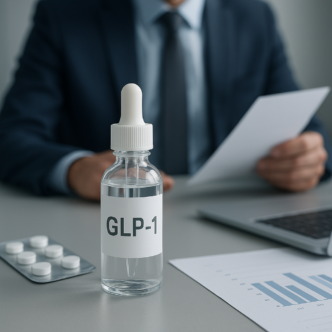
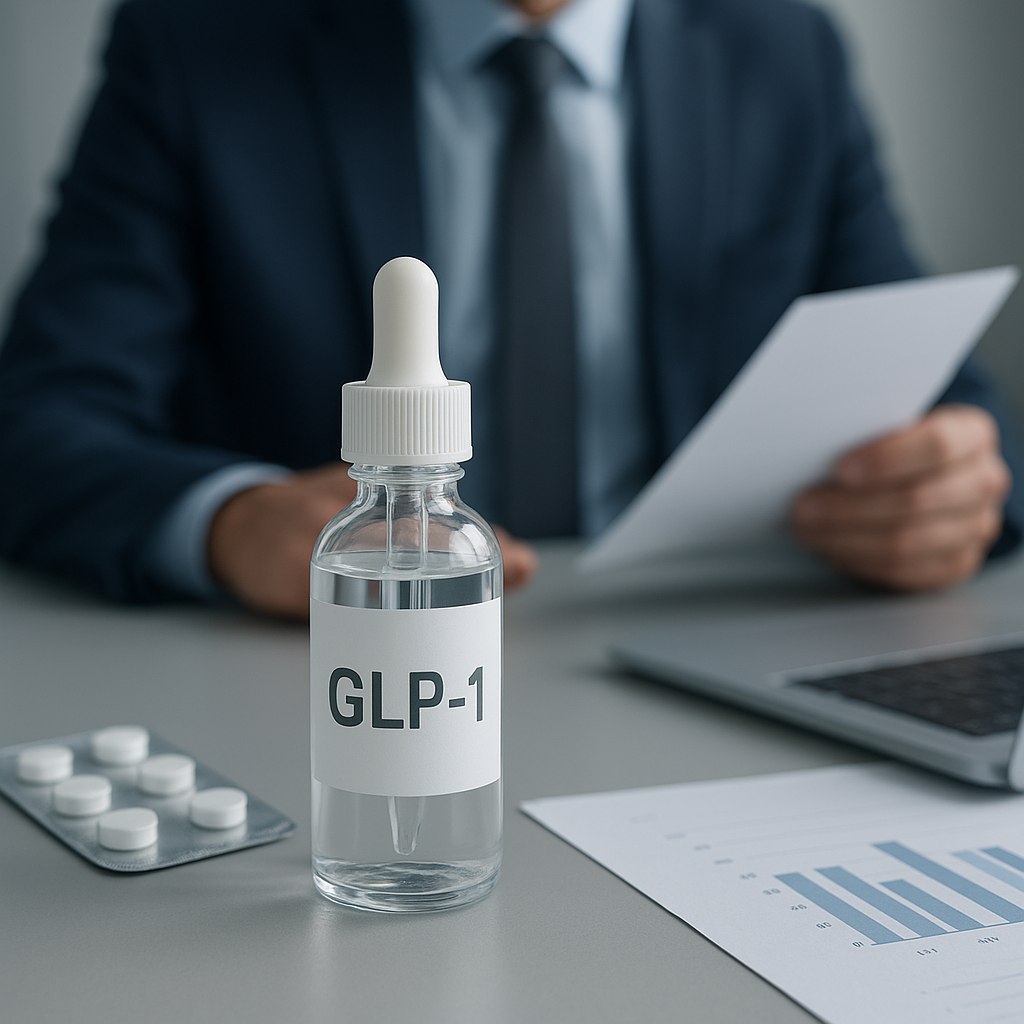
Choosing a GLP-1 Product: Formulation, Oversight, Cost, and support requires more than comparing advertised prices. Employers, benefits teams, and readers reviewing treatment options should first identify what “GLP-1 drops” contains, who oversees treatment, how it is dispensed, and what costs follow. This guide explains the questions that make a review more practical and less dependent on vendor claims.
What Are GLP-1 Drops, Exactly?
“GLP-1 drops” is a marketing description, not a standardized FDA dosage-form category. Before evaluating clinical value, price, or access, identify the specific product behind the label.
The term could describe a compounded liquid, a sublingual preparation, a dietary supplement, or another oral product. It should not automatically be treated as an FDA-approved medicine. For example, FDA-approved oral semaglutide is available as Rybelsus, a tablet indicated for type 2 diabetes. That fact does not establish an FDA-approved “GLP-1 drops” product for weight management.
A vendor should disclose the active ingredient, concentration, dosage form, route of administration, prescribing indication, dispensing pharmacy, and National Drug Code, if applicable. Confirm whether the product is FDA-approved or compounded. As the FDA explains, compounded drugs do not undergo the agency’s premarket review for safety, effectiveness, and quality.
These distinctions affect clinical expectations, oversight, supply continuity, procurement risk, and coverage decisions. They also determine what a benefits team can measure, including utilization, adherence, adverse-event monitoring, pharmacy spending, and employee cost sharing. A product cannot be evaluated responsibly until its identity and sourcing are clear.
Choosing a GLP-1 Product: Formulation, Oversight, Cost, and What to Check
Choosing a GLP-1 Product: Formulation, Oversight, Cost, and support should begin with documented answers from the vendor. Four questions matter most: Who provides clinical oversight? Where does the product come from? How will supply disruptions be handled? How will employee data be protected?
Ask who evaluates eligibility, writes prescriptions, reviews contraindications, approves dose increases, and responds to adverse events. Confirm whether clinicians monitor patients after dispensing and how urgent concerns are escalated. A vendor should explain the medical team’s role and availability, rather than simply describe an online intake process.
Request documentation for the sourcing and dispensing model. This may include pharmacy licenses, compounding status where applicable, product specifications, lot tracking, storage requirements, expiration controls, and the policy for replacing damaged or improperly stored medication. Procurement teams should also ask whether the product has a National Drug Code and what happens when that information does not apply.
Supply planning deserves specific attention. Ask how the vendor handles medication shortages, product discontinuation, changes in FDA availability, or restrictions affecting compounded products. Require a transition process for moving eligible patients to an approved alternative when necessary.
How Might the Product Affect Employees Day to Day?
A daily oral liquid may fit more easily into some routines than an injectable product, but it still requires clear instructions, consistent timing, and clinical oversight. The practical experience depends on the formulation, storage requirements, prescribing workflow, and pharmacy supporting the program.
For some employees, a liquid may avoid needles and injection-site concerns. However, they may need to measure each dose, follow specific administration directions, store the product correctly, and remember it every day. Injectable options may involve less frequent administration but can require refrigeration, supplies, and comfort with self-injection. Either approach can create missed doses when people travel, change schedules, or cannot obtain a refill.
GLP-1 drops may also prompt questions about the active ingredient, concentration, expected effects, and whether the product is approved or compounded. Patients may need screening before treatment, dose adjustments, follow-up visits, and guidance for gastrointestinal or other side effects. They should know whom to contact about symptoms, refill delays, or interactions with existing care.
Employers should ask vendors how employees coordinate treatment with primary care clinicians, report adverse events, access urgent help, and receive continuity support if the pharmacy or product changes.
What Should Finance Leaders Review Before Approval?
Finance leaders should approve a GLP-1 program only after modeling its full cost per eligible employee. A quoted medication price is one input, not the program’s total financial exposure.
Build the budget in separate lines for pharmacy claims, medical claims, vendor fees, clinical visits, laboratory monitoring, employee cost sharing, and administrative work. Ask what the quoted price includes: medication, prescribing, follow-up care, shipping, measuring supplies, replacement shipments, and failed or returned orders. Clarify which costs remain with the health plan, employer, or employee.
Test more than one enrollment scenario. Model participation, discontinuation, dose changes, coverage transitions, refill delays, and employees who use another GLP-1 therapy at the same time. Include eligibility changes and coordination with existing benefits so the estimate does not treat the vendor program as an isolated expense.
Before launch, define the reporting baseline and review schedule. Useful measures can include enrollment, utilization, treatment persistence, employee experience, completed clinical follow-up, and avoidable spending. Set rules for data quality, privacy, and interpretation. Avoid promising productivity gains or savings that the program has not demonstrated.
When Should a Company Revisit GLP-1 Drops?
A company should review its GLP-1 drops program on a fixed schedule and whenever a material change occurs. Set quarterly operational reviews and an annual procurement and clinical-governance review.
Track product availability, regulatory developments, safety communications, pharmacy performance, member complaints, refill delays, and clinical escalation patterns. Review utilization alongside discontinuations, dose changes, adverse-event reports, and requests for medical follow-up. Treatment should be managed as an ongoing clinical service, not a one-time purchasing decision.
Trigger an earlier review if the active ingredient, dosage form, concentration, compounding status, dispensing pharmacy, prescribing workflow, or clinical protocol changes. FDA materials also describe restrictions affecting compounded products that are essentially copies of commercially available drugs. Those changes can disrupt continuity and require a rapid sourcing decision.
The contract should require prompt notice of recalls, shortages, adverse-event signals, data incidents, pricing or term changes, and changes to prescribing or monitoring protocols. Assign an internal owner for each notice, define escalation deadlines, and document whether the program should continue, pause enrollment, switch products, or end.
Key Takeaways
- Identify the active ingredient, dosage form, source, and regulatory status before comparing products.
- Require clear answers about prescribing, follow-up care, adverse-event response, privacy, and supply continuity.
- Compare daily-use demands, storage, measuring instructions, refill access, and patient support.
- Model pharmacy, medical, vendor, administrative, and employee costs together.
- Revisit the program when the product, pharmacy, clinical process, supply status, or regulatory environment changes.