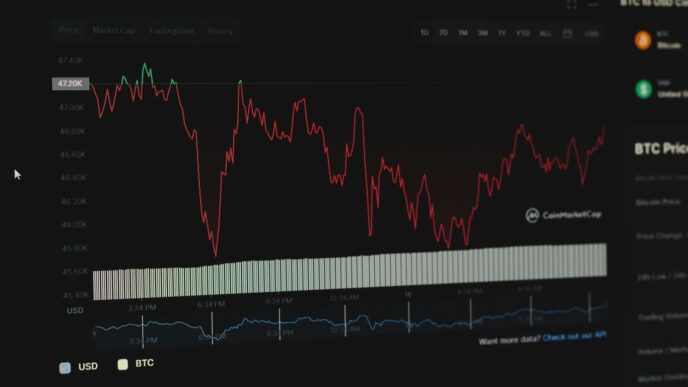
A cryptocurrency trading platform processes thousands of orders per second. Each order has a timing window measured in milliseconds — execute within the window and the trade fills at the expected price; miss it and the opportunity vanishes, replaced by a worse price or no fill at all. The entire architecture of a high-frequency trading system exists to make that window as reliable as possible: deterministic execution paths, pre-allocated memory, zero-copy message passing, microsecond-precision clocks synchronized across distributed nodes.
An arcade game renders sixty frames per second. Each frame has a timing window of 16.67 milliseconds. Press the jump button during the right window and the character clears the gap. Press it one frame late and the character falls into the pit. The player doesn’t know about frame budgets or input polling rates — they just know the game “feels wrong.” The entire architecture of a responsive game exists to make that window invisible, so the player’s intent translates into on-screen action without perceptible delay.
Ivan Akimov has spent over four years building both kinds of systems. As a software engineer specializing in distributed systems, he built a major cryptocurrency trading platform serving the United Kingdom and European markets, and previously developed the leading Buy Now, Pay Later system in Russia. When he evaluated eight Christmas-themed arcade games at Neuro Nostalgia 2026 — a 72-hour competition where 25 teams built retro 2D games using Turbo, a Rust-based engine compiling to WebAssembly — his reviews consistently surfaced the same engineering concerns that govern latency-critical financial platforms: timing precision, feedback clarity, reward loop design, and difficulty calibration.
Frame Budgets and Order Books: Why 16 Milliseconds Matters
In high-frequency trading, an order matching engine operates within strict timing tolerances. An order submitted to a limit order book must be validated, matched against existing orders, and either filled or queued — all within a window tight enough that the market price hasn’t moved by the time execution completes. If the matching engine is too slow, the trader experiences slippage: the price they see isn’t the price they get. Enough slippage and traders abandon the platform entirely, not because the system is broken, but because it doesn’t feel trustworthy.
The equivalent failure mode in games is input lag. A platformer that registers a jump input three frames late creates a disconnect between the player’s intention and the character’s response. The game isn’t broken — the jump mechanic works — but the timing tolerance is too tight for human reaction times.
Akimov identified this exact problem across multiple submissions. Reviewing Santa Rail Rush by FrostByte Coder, which scored 3.20, he noted that “the jump timing window feels a bit too short, making it slightly more forgiving could improve the experience.” In Santa Islands by TM-AzhanAarif — scoring 4.70 — the issue manifested differently but from the same root cause: “the hitboxes feel too strict, making it hard to time hits consistently.”
Both problems are timing tolerance failures. In trading systems, the solution is well understood: grace periods. An order matching engine doesn’t reject an order the instant it falls outside the optimal window — it provides a configurable tolerance band. Market orders get a slippage tolerance. Limit orders get a time-in-force parameter. The system acknowledges that perfect timing is impossible in a distributed environment and builds tolerance into the protocol.
Game developers have independently discovered the same solution. “Coyote time” gives players a few extra frames to jump after walking off a platform edge. Input buffering registers a jump press slightly before the character lands. These aren’t hacks — they’re the same engineering principle that makes order matching engines reliable: acknowledge that the input source operates with inherent latency, and design the receiving system to absorb it gracefully.
Feedback Loops: From Trading Dashboards to Player HUDs
Every financial platform learns the same lesson eventually: a trade that executes silently is a trade the user doesn’t trust. When a trader submits an order, they need immediate confirmation — a filled indicator, a partial fill notification, or a rejection with a reason code. Trading dashboards solve this with redundant channels: the order appears in the open orders panel, a fill notification appears in the activity feed, the portfolio balance updates, and an audio cue plays. Each signal reinforces the same message through a different sensory channel.
Games face an identical challenge. Every player action — attacking an enemy, collecting an item, taking damage — needs immediate, unambiguous feedback through multiple channels. When any channel is missing, the game feels unresponsive even if the underlying mechanics are functioning correctly.
Akimov’s evaluation of Sleigh Wars by NEXUS, which scored 2.35 in his batch, identified a feedback clarity failure that maps directly to the trading dashboard problem. “It’s not very intuitive how many hits the goblin or snowman need to take before going down, so that could be clearer,” he wrote. The game had a health system for enemies — multiple hits required to defeat them — but no visual indication of how much damage had been dealt or how much remained. The player was hitting enemies without knowing whether the hits were registering, accumulating, or approaching a kill threshold.
In trading terms, this is equivalent to submitting orders with no fill confirmation. The rational response is to stop trading on that platform. The game equivalent: the player stops engaging with the combat system because the feedback loop is broken.
Evil Santa by Zero scored 2.40, and Akimov’s feedback pointed to a related but distinct gap: “I would add background music to improve the atmosphere, and introduce more challenges for the elf.” Audio provides ambient state awareness without requiring visual focus — the same reason trading platforms evolved from silent web terminals to platforms with configurable audio alerts for price movements, fills, and margin warnings. A game without atmospheric audio forces the player to extract all information visually, which is as cognitively expensive as a trading terminal with no audio alerts during high-volatility periods.
The scoring differential across Akimov’s batch confirms the pattern. The two highest-scoring projects — Santa Delivery at 4.75 and Santa in Space at 4.65 — both had rich feedback systems. He noted Santa Delivery’s “music is well done” and Santa in Space’s “progression and soundtracks are very good.” Every project scoring below 3.0 lacked one or more feedback channels.
Reward Systems: Score Chasing as Market Making
Market makers earn profits through volume and tight spreads — fractions of a cent per trade, thousands of trades per day. The psychology that sustains this through drawdown periods is identical to what sustains any high-frequency reward activity: frequent small positive signals that maintain engagement through inevitable stretches of stagnation.
Game designers call this a reward loop. The more frequently a game delivers positive feedback — points, power-ups, level completions — the longer the player stays engaged. Space out the rewards too far and the player disengages. This is why mobile games shower players with micro-rewards every few seconds, and why trading platforms display real-time P&L rather than end-of-day summaries.
Akimov’s evaluation of Christmas_Overclock by Zen_Forces, which scored 2.85, diagnosed a reward frequency problem: “I’d add more rewards or perks for Santa to make chasing a higher score more engaging.” The game had a scoring system, but the rewards were too infrequent to sustain the engagement loop. The player could play for extended periods without receiving any positive reinforcement beyond an incrementing number.
The fix is identical in both domains: increase the frequency of positive signals. Intermediate milestones, incremental power-ups, score multipliers that reward streaks — each small reward resets the engagement timer and sustains attention through the longer intervals between major achievements.
SantaShooter by PixelGirls, scoring 2.60, demonstrated the compounding problem that emerges when thin reward frequency meets steep difficulty. Akimov noted the game “could benefit from having levels, as it’s quite hard to last even one minute.” When the player can’t survive long enough to reach the first reward, the engagement loop never starts. In market-making terms, this is a strategy with a negative expected value at small sample sizes — even if the long-run math works, the short-run variance drives the participant away before they can realize the expected return. The solution in both domains: reduce initial barrier to entry, then increase difficulty gradually as the participant accumulates wins and confidence.
System Complexity vs. System Clarity
Distributed trading platforms face a fundamental tension between feature richness and usability. A platform supporting limit orders, market orders, stop-losses, trailing stops, iceberg orders, and algorithmic execution modes offers maximal flexibility — but a new user confronting all options simultaneously is paralyzed. The most successful platforms resolve this through progressive disclosure: a clean default interface with advanced features accessible but not prominent.
Akimov’s reviews reveal the same tension in game design. Santa Islands by TM-AzhanAarif bundled multiple distinct games into one package — a collection of minigames with different mechanics, plus a multiplayer mode. The ambition was impressive, and TM-AzhanAarif earned the second-highest score in the batch at 4.70. But Akimov’s evaluation surfaced the complexity cost: “some modes aren’t very intuitive or easy to understand at first.”
The project scored as high as it did because the technical execution underneath the complexity was sound. “The multiplayer mode is very fun, and it’s great that you included multiple levels. The technical execution is also solid,” Akimov observed. In distributed systems, this maps to a well-known pattern: complexity is manageable when each component has clean interfaces. A microservice architecture with thirty services can operate reliably if each service has a well-defined API contract. The complexity lives in the orchestration layer, not in each individual component. Santa Islands worked because each minigame was individually coherent — the confusion arose from the selection and mode-switching layer, not from the games themselves.
Contrast this with Santa in Space by Berlin, which earned 4.65 with a single clear mode and consistent mechanics. “The progression and soundtracks are very good, along with the technical implementation,” Akimov noted. Where Santa Islands offered breadth, Santa in Space offered depth — one game mode refined to a high polish. In systems architecture, this is the monolith-versus-microservice tradeoff. A well-built monolith outperforms a poorly orchestrated microservice architecture every time. The choice isn’t about which pattern is superior — it’s about matching the architecture to the team’s ability to manage the coordination overhead.
The scoring gap between the two projects was negligible (4.70 vs 4.65), confirming that both approaches work at a high level when execution quality is sufficient. The lesson isn’t “simplicity always wins” but rather “complexity must be earned through execution quality” — whether that complexity lives in order types or minigame modes.
Difficulty as a Reliability Problem
High-frequency trading systems must handle load spikes without degrading. A market event that doubles order volume shouldn’t crash the matching engine or double the execution latency. The system is designed for graceful degradation under stress: throttling less critical operations, shedding load from non-essential components, maintaining core execution quality even as demand spikes.
Games face an analogous reliability problem with difficulty curves. A difficulty spike is the gameplay equivalent of a traffic spike: a sudden increase in demand on the player’s cognitive and motor resources. If the spike is too steep, the player’s performance degrades catastrophically — they die, restart, die again, and eventually quit. The system (the game) has lost the user, not because it lacks capability, but because it demanded more than the user could supply without a ramp-up period.
SantaShooter demonstrated this failure mode. Akimov’s observation that “it’s quite hard to last even one minute” describes a system with no graceful degradation path. The difficulty started high and stayed high, giving new players no opportunity to build skill before the system overwhelmed them. In trading infrastructure terms, this is a matching engine that runs at peak capacity from the first millisecond with no warm-up period — technically impressive, but functionally inaccessible.
Santa Delivery by Abhinav Shukla, the highest-scoring project in the batch at 4.75, solved this problem. Akimov praised both the concept and execution: “The game idea is interesting and quite unique, and the music is well done. From a technical standpoint, the technical execution is solid given the time constraints.” The game had progressive difficulty that matched player skill growth — an auto-scaling system that adjusted demands based on player advancement. Like a trading platform that gradually increases order complexity as the user demonstrates proficiency, Santa Delivery met the player at their current level and expanded from there.
The pattern extends to Evil Santa, where Akimov recommended introducing “more challenges for the elf.” The game’s difficulty wasn’t too hard — it was too flat. Without escalation, the player mastered the available challenge set quickly and had nothing left to engage with. In distributed systems, this parallels a service that handles baseline load perfectly but has no mechanism for scaling up. The initial experience is satisfying, but the system can’t grow with demand.
From BNPL to Boss Fights: Real-Time Systems Across Domains
Akimov’s career trajectory — from Russia’s leading BNPL system to a UK cryptocurrency trading platform to evaluating arcade games — traces a common thread that runs through all three domains: real-time systems where latency determines trust.
A BNPL transaction must complete before the customer abandons the checkout page — credit check, merchant approval, payment scheduling, confirmation, all under seconds of time pressure. A cryptocurrency exchange operates under tighter constraints: every submitted order is a promise to execute at a specified price, and a platform that occasionally loses orders or fills at stale prices won’t survive against competitors offering sub-millisecond execution.
Arcade games operate under the tightest timing constraints of all — 16.67 milliseconds per frame — but the reliability requirement is identical. Every button press is a promise. Every frame is a deadline. Miss it and the game stutters; stutter during a critical moment and the player dies through no fault of their own.
The Turbo game engine adds another layer of constraint that an AWS and Databricks certified engineer would recognize. Turbo compiles Rust to WebAssembly, running in the browser’s sandboxed environment with no direct hardware access, no GPU compute shaders, no raw memory allocation. This is the embedded systems constraint applied to game development — build a real-time system within a resource-constrained runtime you don’t control. Financial systems engineers building for containerized cloud environments work under precisely this kind of constraint daily.
Rust bridges the two domains at the language level. Its ownership model eliminates garbage collection pauses — the unpredictable latency spikes that occur when a runtime’s garbage collector halts execution. In a trading system, a GC pause during order matching causes missed fills. In a game, a GC pause during rendering causes a frame drop. Rust eliminates this entire class of reliability problem, which is why it appears in both high-frequency trading infrastructure and game engines designed for consistent frame timing.
Why Performance Engineers Should Judge Game Jams
Cross-domain evaluation produces insights that specialists within a single domain routinely miss. A game designer evaluating arcade games focuses on game feel, level design, narrative coherence — the vocabulary of game development. A distributed systems engineer evaluating the same games focuses on timing tolerances, feedback completeness, state communication clarity, and system reliability under variable load. Both perspectives are valid. But the engineering perspective surfaces problems that have well-established solutions in adjacent fields.
Every issue Akimov identified in his eight reviews maps to a known, solved problem in financial systems engineering. Tight timing windows? Add tolerance bands. Missing feedback? Add redundant confirmation channels. Sparse rewards? Increase signal frequency. Excessive complexity? Implement progressive disclosure. Difficulty spikes? Build graceful degradation. These aren’t novel insights within their respective domains — they’re foundational patterns. The value lies in recognizing that the patterns transfer.
Akimov’s scoring distribution illustrates this consistency. The three projects he scored highest — Santa Delivery at 4.75, Santa Islands at 4.70, and Santa in Space at 4.65 — all demonstrated what a systems engineer would call production readiness: reliable timing, clear state communication, appropriate complexity management, and progressive difficulty. The projects he scored lowest all failed on at least two of these dimensions.
The game development industry and the financial systems industry rarely exchange engineering practices. But the best arcade games are, at their core, latency-critical systems with sprites. They process user input under tight timing constraints, communicate state through multiple feedback channels, and manage variable load through scaling mechanisms. The engineering discipline that makes a cryptocurrency exchange trustworthy is the same discipline that makes an arcade game feel right.
Neuro Nostalgia 2026 was organized by Hackathon Raptors, a Community Interest Company supporting innovation in software development. The event challenged 25 teams to build Christmas-themed retro arcade games using the Turbo game engine across 72 hours. Ivan Akimov served as a judge evaluating projects for gameplay quality, arcade authenticity, and technical execution.