So, you’ve probably heard whispers about ‘Agenda 2030’ and the World Economic Forum (WEF), maybe even seen some wild stuff online. It can sound pretty complicated, or even a little scary, with all the talk about global goals and big plans. But what’s really going on? This post is just a quick look at what Agenda 2030 is, where it came from, and why people are talking about it, especially in relation to the WEF. We’ll try to clear up some of the confusion and look at what these global goals actually mean.
Key Takeaways
- The 2030 Agenda, adopted by the UN in 2015, set global goals for sustainable development but has faced challenges in meeting expectations due to funding issues, global crises, and economic problems.
- Several conspiracy theories have emerged, often linking the 2030 Agenda and the WEF to a ‘New World Order,’ a ‘Great Reset’ for economic control, or ‘trickle-down communism,’ suggesting these initiatives aim to benefit a select few.
- Misinformation about Agenda 2030, spread widely on social media, includes false claims about forced insect diets, restricted ’15-minute cities,’ and gender manipulation, which distort the agenda’s actual purpose.
- Political figures, particularly in Latin America, have voiced opposition to Agenda 2030, with some presidential candidates and members of congress campaigning against it, viewing it as an imposition on national sovereignty and values.
- Despite challenges and opposition, the future of sustainable development hinges on international cooperation, with a critical decision point between ‘breakdown or breakthrough’ requiring stronger support and clearer policies for the Sustainable Development Goals (SDGs).
Understanding the Agenda 2030 WEF Framework

The Genesis of the 2030 Agenda
Back in September 2015, leaders from 193 countries gathered at the United Nations for a summit. It was a big deal, marking the official adoption of the 2030 Agenda for Sustainable Development. This whole process was pretty unique, involving a lot of different voices in its creation. There was a real sense of optimism, like everyone was pulling in the same direction to tackle global issues. The core idea was to set a roadmap for a better future for everyone.
Global Goals Amidst Unmet Expectations
Fast forward to today, and things haven’t quite gone as planned. Progress on the 2030 Agenda has been slower than hoped. We’ve seen a lot of challenges pop up – funding issues, the global pandemic, and recent conflicts have all thrown wrenches into the works. The global economy has also been a rollercoaster, first dipping and then seeing prices shoot up. All these things have made it harder to feel that same momentum towards finding shared solutions for the world’s problems.
The Role of the World Economic Forum
The World Economic Forum (WEF), often associated with discussions about global challenges and economic trends, plays a role in these conversations. While the 2030 Agenda itself is a UN initiative, the WEF often hosts discussions and brings together leaders from business, government, and civil society to talk about how to achieve these goals. Think of it as a platform where ideas are shared and collaborations are explored, often touching on themes like economic stability and sustainable practices that align with the broader objectives of the 2030 Agenda. It’s a place where the ‘how’ of achieving these ambitious goals is often debated and strategized.
Debunking Conspiracy Theories Around Agenda 2030
It’s easy for strange ideas to pop up when things feel uncertain, and the 2030 Agenda has unfortunately become a target for some wild theories. These aren’t based on facts, but they spread fast, especially online. Let’s look at a few of the common ones.
The ‘New World Order’ Narrative
This is an old idea that keeps popping up. The basic story is that a secret group of super-rich and powerful people are pulling the strings behind the scenes, controlling everything to benefit themselves. When you hear about global plans like Agenda 2030, it’s easy for some folks to connect it to this ‘New World Order’ idea, claiming it’s all part of a master plan for global control.
Examining the ‘Great Reboot’ Theory
This theory gained steam around the time of the COVID-19 pandemic. The idea is that powerful countries and elites intentionally caused the pandemic to then push through a plan to take over the world’s wealth. It often gets linked to phrases like ‘Build Back Better’ or the World Economic Forum’s ‘Great Reset,’ suggesting these are code words for a grand economic takeover. The claim is that the pandemic was just an excuse to start this economic overhaul.
Addressing ‘Trickle-Down Communism’
This one is a bit more out there. The theory suggests that after communism didn’t win outright in the West, certain groups started a long-term plan to slowly introduce communist ideas. The idea is that over time, Western societies would adopt these ideas without even realizing it, leading to a communist outcome. When people talk about Agenda 2030 in this context, they sometimes claim it’s the final stage of this slow-moving communist takeover, designed to change societies from within.
Misinformation and Agenda 2030 WEF
It’s wild how quickly things can get twisted online, right? The whole Agenda 2030 thing, which is basically a plan for countries to work together on stuff like poverty and climate change, has become a magnet for some pretty out-there ideas. Social media plays a huge part in this, letting these stories spread like wildfire.
Social Media’s Role in Spreading Falsehoods
Honestly, platforms like Facebook, X (formerly Twitter), and even TikTok can be echo chambers. If you start looking into one conspiracy theory, the algorithms tend to feed you more of the same. It’s easy to get caught in a loop where you’re only seeing one side of the story, and that side is often pretty dramatic and, well, not true. This makes it tough for people to get a clear picture of what Agenda 2030 is actually about. It’s not some secret plot; it’s a public document with goals that countries agreed to try and meet.
Commonly Circulated False Claims
Some of the stories you see floating around are pretty wild. People claim that Agenda 2030 is going to force everyone to eat bugs, or that it’s behind the idea of "15-minute cities" where you’ll be locked into your neighborhood. There are also claims about it trying to "feminize men" to lower the population. These are just not what the Agenda is about. It’s more about sustainable farming, urban planning that makes cities more livable, and gender equality as a human right, not population control.
Here’s a quick look at some common false claims versus reality:
| False Claim | Reality |
|---|---|
| Agenda 2030 forces people to eat insects. | The Agenda promotes sustainable food systems, which might include exploring alternative proteins, but doesn’t mandate insect consumption. |
| "15-minute cities" are for population control. | These are urban planning concepts to make services accessible within a short walk or bike ride, improving quality of life. |
| Agenda 2030 aims to "feminize men." | The Agenda supports gender equality and empowering women, not altering gender identities or forcing societal changes on men. |
The Impact on Public Discourse
When these false narratives take hold, it makes it really hard to have a sensible conversation about global issues. Instead of talking about how to actually achieve things like reducing poverty or protecting the environment, people get sidetracked by these made-up fears. It can lead to distrust in governments and international organizations, and it makes it harder for countries to work together on real problems. It’s a shame because the goals themselves are pretty important for the future of our planet.
Political Reactions to the Global Goals
It’s interesting to see how different political figures and groups are reacting to the whole Agenda 2030 and the Global Goals. You’d think everyone would be on the same page, right? But nope, not quite. Some leaders are really pushing back, seeing it as an outside force trying to dictate things.
Voices Against Agenda 2030 in Latin America
In Latin America, there’s a noticeable wave of opposition from some political corners. For instance, Javier Milei, the current president of Argentina, has been quite vocal. He’s stated he won’t adhere to Agenda 2030, calling it "cultural Marxism" and "decadence." He even went to the Davos Forum aiming to "plant the ideas of freedom in a forum that is contaminated with the socialist agenda 2030 that will only bring misery to the world." It seems like a big deal because it’s shaking up a consensus that had been building in the region. Leaders there are being urged to speak up more clearly and actively support the Sustainable Development Goals (SDGs) to counter this trend.
We’re also seeing this sentiment elsewhere. José Luis Chilavert, a former Paraguayan soccer goalkeeper, ran for president partly to "fight against Agenda 2030," saying "They want to destroy us." In Guatemala, presidential candidate Sandra Torres declared, "I will never let them impose an international agenda on us. We Guatemalans will set Guatemala’s agenda. I believe in life, family, and religious freedom. No to Agenda 2030." It really shows how these global goals can become a hot-button issue in national politics.
Presidential Candidates and Their Stances
Beyond those already in office, presidential hopefuls are also weighing in. Eduardo Bolsonaro, son of former Brazilian President Jair Bolsonaro, has positioned himself as a leader against Agenda 2030, suggesting that "The more we fight against Agenda 2030, the greater our electoral success will be." This indicates that for some, opposing the global agenda is seen as a winning political strategy.
Congressional and Parliamentary Opposition
It’s not just at the presidential level. In Chile, Congressman Cristóbal Urruticoechea Ríos has spoken out in congress, linking Agenda 2030 to a host of negative outcomes like "the dehumanization of human beings and the humanization of animals, the destruction of language, the destruction of the middle classes, the liquidation of the sovereignty of nations, the attack on families, life and roots." Similarly, in Costa Rica, Deputy David Segura has voiced concerns that the agenda is used to "confuse people and, of course, to impose little by little the great modern enemy of all families, which is the nefarious gender ideology," also linking it to promoting abortion. These statements highlight a deep distrust of international agreements and their perceived impact on national values and sovereignty. This kind of opposition, often fueled by specific interpretations of the agenda’s aims, can create significant hurdles for international cooperation. Meanwhile, leaders like Nayib Bukele, the recently re-elected president of El Salvador, express caution, stating he is "very suspicious of this type of international agendas of the UN, the World Economic Forum, or wherever they come from and their intentions." It’s clear that while the goals are meant to be universal, their reception is anything but. The current geopolitical climate, marked by challenges like war and economic instability, makes achieving these global goals even more complex.
The Future of Sustainable Development
So, where do we go from here with all these Global Goals? It’s a big question, and honestly, the path forward isn’t exactly clear. We started with a lot of hope back in 2015, with nearly every country on board. But let’s be real, things haven’t gone exactly as planned. The world’s thrown a lot at us since then – pandemics, economic ups and downs, and conflicts. It’s made working together on big global issues feel a lot harder.
Challenges to International Cooperation
Getting countries to agree and act together is tough. Think about it: different nations have different priorities, different resources, and different political situations. It’s like trying to get a group of people to agree on a single movie when everyone wants to watch something different. Plus, there’s the whole issue of money. A lot of these goals need serious investment, and finding that funding, especially for developing countries, is a constant struggle. We’ve seen some countries pull back from international agreements, which doesn’t help anyone.
The ‘Breakdown or Breakthrough’ Dilemma
Some people are talking about us being at a crossroads, a real "breakdown or breakthrough" moment. It feels like we’re either going to really double down and make progress, or things could get a lot more difficult. It’s not just a figure of speech anymore, especially for regions like Latin America, where the debate around these goals is getting pretty heated. Leaders there are facing pressure to either fully support the goals or reject them, and the middle ground seems to be shrinking.
Strengthening Support for the SDGs
What does this mean for the Sustainable Development Goals (SDGs)? Well, it means we can’t just assume they’ll happen. We need more than just talk; we need action. This could look like:
- Clearer Policies: Governments need to put concrete plans in place to actually achieve the goals, not just sign documents.
- More Funding: Finding new and creative ways to finance sustainable development is a must.
- Public Engagement: Getting everyday people involved and understanding why these goals matter is key to building momentum.
Ultimately, the success of Agenda 2030 hinges on renewed commitment and practical steps, not just lofty ideals. It’s going to take a lot of effort from everyone involved to turn these ambitious goals into reality.
So, What’s the Takeaway?
Look, the whole Agenda 2030 thing can get pretty confusing, and honestly, a lot of what you hear out there is just plain wrong. It started with good intentions, a global agreement to try and make things better for everyone. But somewhere along the line, maybe because progress has been slow or because times are tough with everything going on in the world, it’s become a target for some wild theories. People are talking about secret elites, economic takeovers, and even cultural shifts. It’s easy to get caught up in the noise, especially when these ideas spread fast online. The reality is, the goals are about development and cooperation, even if they’re hard to achieve. It’s important to look past the scary stories and see what’s actually being proposed, and whether it makes sense for our communities. The conversation needs to be clearer, and actions need to follow through, so we can actually work towards those goals without getting sidetracked by misinformation.
Frequently Asked Questions
What exactly is Agenda 2030?
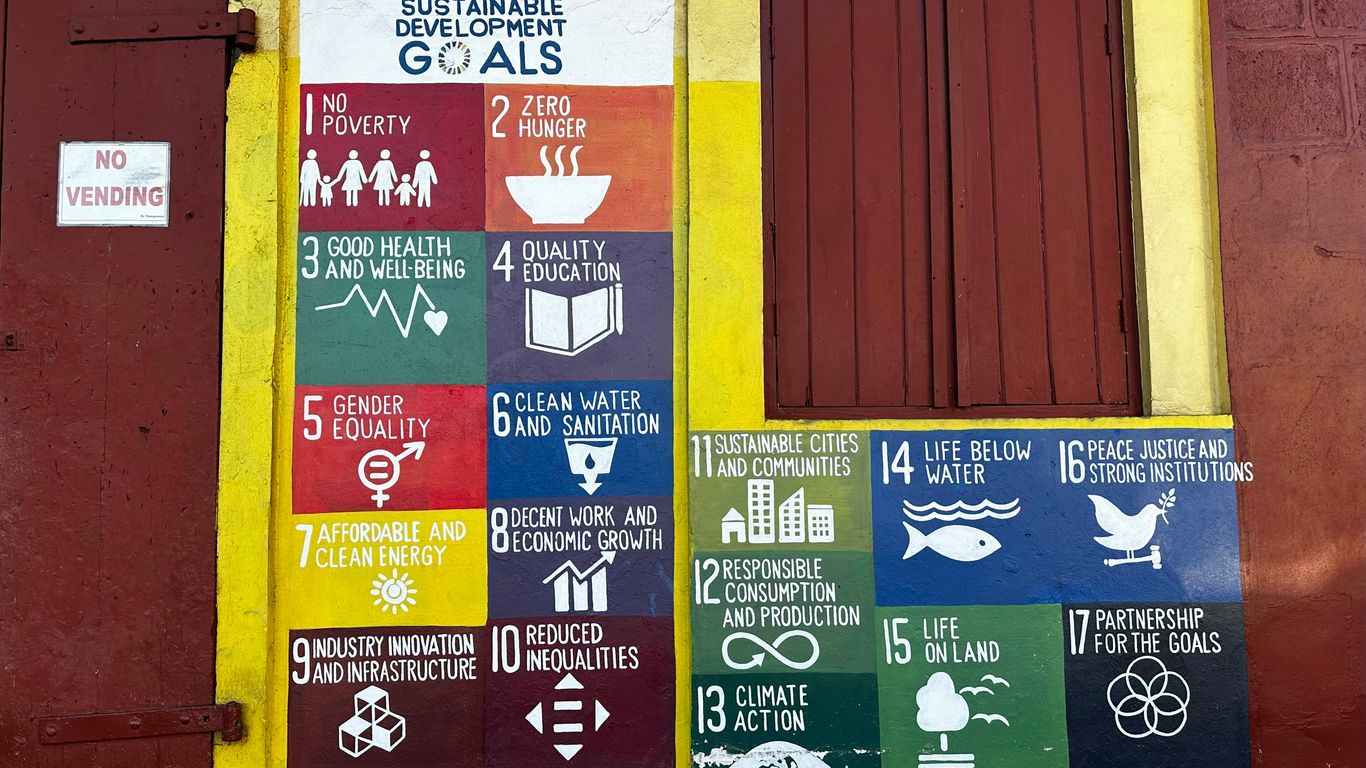
Agenda 2030 is a plan created by countries around the world to make life better for everyone. It’s made up of 17 goals, called the Sustainable Development Goals (SDGs), that aim to end poverty, protect the planet, and ensure peace and fairness for all people by the year 2030. Think of it as a global to-do list for a healthier, happier world.
What is the World Economic Forum’s (WEF) connection to Agenda 2030?
The World Economic Forum is a group that brings together leaders from business, government, and other areas to discuss important global issues. They often talk about Agenda 2030 and the Sustainable Development Goals, encouraging businesses and leaders to help achieve them. However, the WEF didn’t create Agenda 2030; that was a plan made by United Nations member countries.
Are there any false ideas or conspiracy theories about Agenda 2030?
Yes, unfortunately, there are some false stories spreading about Agenda 2030. Some people believe it’s a secret plan by a few powerful individuals to control the world, take over wealth, or force people into certain lifestyles, like eating bugs or living in small, restricted areas. These ideas are not true and misrepresent the actual goals of Agenda 2030, which are about improving life for everyone.
How does social media play a role in spreading wrong information about Agenda 2030?
Social media can be like a fast-spreading wildfire for information, both true and false. Many untrue stories about Agenda 2030 gain attention online because they sound dramatic or shocking. This makes it hard for people to know what’s real and what’s not, and it can create confusion and distrust about the actual goals of working towards a better world.
Why are some politicians against Agenda 2030?
Some politicians oppose Agenda 2030 because they believe it takes away their country’s independence or that it’s being used to push certain social or economic ideas they disagree with. They might feel that international plans like this don’t respect their nation’s unique needs or that it’s being influenced by groups with hidden agendas. This opposition can make it harder to work together globally.
What’s the main challenge facing the goals of Agenda 2030 right now?
The biggest challenge is getting everyone to work together effectively. Things like money problems, global health crises (like COVID-19), and conflicts make it tough to focus on long-term goals. Also, the spread of false information makes people doubt the importance of these goals. We need more cooperation and clearer actions to make sure we can achieve these important goals for a better future.