
Deep Blue Aerospace: Pioneering Reusable Launch Systems
Deep Blue Aerospace is really trying to shake things up in the space launch world. Their main goal? To make getting stuff into orbit way cheaper and way more frequent. How? By focusing hard on reusable rockets. It’s not just a nice idea for them; it’s the whole point of the company. They want to build rockets that can fly, land, and then fly again, pretty much like an airplane, but for space.
Founding and Early Vision
Back in November 2016, Huo Liang, who used to work for a big aerospace company, started Deep Blue. He saw that the future of space access wasn’t just about building bigger rockets, but about making them usable over and over. This was pretty early days for private space companies in China, and Deep Blue was one of the first to really put reusable liquid-fueled rockets at the center of its mission. They weren’t just dreaming about it; they were setting up shop, building prototypes, and doing the math to figure out how to make it work. The idea was to create a company that could support everything from launching satellites to helping build space stations, all while keeping costs down.
Focus on Liquid-Propellant Rockets
When it comes to what makes their rockets go, Deep Blue is all about liquid propellants, specifically kerosene and liquid oxygen. This combo, often called ‘kerolox,’ is a pretty standard choice. It’s not the flashiest, but it’s reliable, dense, and easier to handle than some other options. This means they can design their rockets to be a bit more compact. Their strategy is to recover and reuse the first stage of the rocket, which is the most expensive part. By using kerolox, they believe they can achieve this reusability without sacrificing too much payload capacity, which is a big deal when you’re trying to compete in the launch market.
Commitment to Vertical Takeoff and Landing
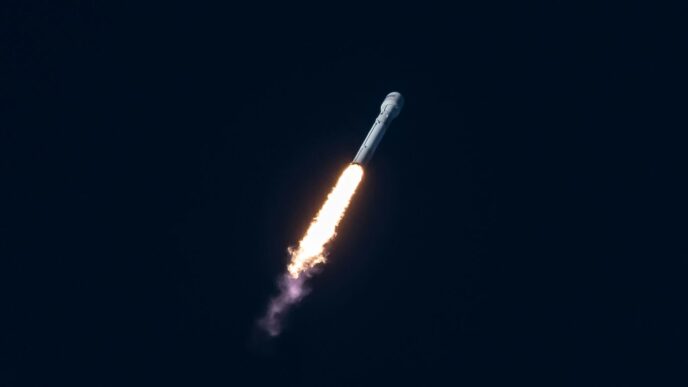
This is where things get really interesting. Deep Blue is betting big on vertical takeoff and landing (VTVL) for their rocket recovery. Think of it like a helicopter landing, but for a giant rocket booster. This method is key to their plan for rapid turnaround. Instead of needing a massive recovery operation or a runway, the rocket booster is designed to land itself upright, usually back near where it took off. This is a complex engineering challenge, for sure, but if they can nail it, it means rockets can be prepped for their next flight much faster and cheaper. They’re developing their ‘Thunder’ series of engines specifically for this kind of propulsive landing, aiming to make space access more like a routine service rather than a one-off event.
Technological Innovations Driving Deep Blue Aerospace
Deep Blue Aerospace isn’t just building rockets; they’re rethinking how we get to space. A big part of their strategy involves some pretty smart tech choices that aim to make launches cheaper and more frequent. Their focus on kerosene-liquid oxygen engines is a key differentiator.
Kerosene-Liquid Oxygen Engine Development
Most companies are looking at fancy new fuels, but Deep Blue is sticking with what works: kerosene and liquid oxygen, often called ‘kerolox’. Why? Well, it’s a tried-and-true combination. It’s less complicated to handle than some of the super-cold fuels others are using, and honestly, it’s cheaper to develop. This means they can build and test engines faster. Think of it like using a reliable old engine in your car instead of a brand-new, experimental one – it gets you where you need to go with fewer headaches.
- Cost-Effectiveness: Kerolox systems generally have lower development and operational costs.
- Handling Simplicity: Less complex infrastructure is needed compared to cryogenic fuels.
- Faster Prototyping: The simpler nature allows for quicker design-build-test cycles.
Their ‘Thunder’ series of engines is built around this kerolox approach, aiming for robust performance that can be reused.
Advancements in Vertical Landing Technology
Getting a rocket back to Earth in one piece is the holy grail of reusability. Deep Blue is putting a lot of effort into making their rockets land themselves, vertically. This isn’t easy. It involves a lot of complex calculations and precise control systems to guide a massive rocket back down to a landing pad, or even a ship at sea.
They’ve been doing a lot of test hops with their prototypes, like the Nebula-M. These tests, some reaching over a kilometer in height, are crucial for gathering data. They learn what works, what doesn’t, and how to make the landing smoother and more reliable each time. It’s a step-by-step process, and while they’ve had some setbacks, each test provides valuable lessons.
Integration of 3D Printing for Components
To speed things up even more, Deep Blue is using 3D printing for some of their rocket parts. This is a game-changer for manufacturing. Instead of traditional methods that can take weeks or months to create complex parts, 3D printing can do it in days or even hours.
- Reduced Lead Times: Parts can be printed on demand.
- Complex Geometries: Allows for designs that are difficult or impossible with traditional manufacturing.
- Material Efficiency: Often uses less material, reducing waste and cost.
This modern manufacturing technique helps them iterate on designs quickly and build components more efficiently, especially for things like engine parts where intricate designs are common. It’s all about building smarter and faster to get their rockets flying.
Deep Blue Aerospace’s Vehicle Portfolio
Deep Blue Aerospace is building a lineup of rockets designed to make getting to space more affordable and frequent. They’re really focusing on rockets that can be used again and again, which is a big deal for cutting costs.
The Nebula Series Orbital Launchers
The Nebula series is Deep Blue’s main effort for sending payloads into orbit. Think of these as the workhorses for putting satellites into space or sending supplies to space stations. The goal is to have a reliable way to launch, with the first stage of the rocket coming back down for reuse. This is key to their whole business model. They’re working on different versions, like the Nebula-1, which is aimed at smaller satellite launches.
Thunder Series Propulsion Systems
Underpinning the Nebula rockets are the Thunder series engines. Deep Blue is putting a lot of effort into these, especially using a common fuel mix: kerosene and liquid oxygen. This combination is known for being pretty reliable and easier to handle than some other types. They’re also using advanced manufacturing, like 3D printing, to make these engine parts faster and cheaper. This helps them test and improve their engines more quickly.
Suborbital Tourism Vehicle Plans
Beyond just satellites, Deep Blue has its sights set on the growing space tourism market. They’ve announced plans for a vehicle that can take people on short trips to the edge of space – think a quick hop up and back down. This suborbital service is intended to be a more accessible way for people to experience space, with ticket prices aiming to be competitive within China’s commercial space sector. It’s a different kind of mission, but it uses the same core ideas of reusability and efficient operations.
Operational Strategy and Infrastructure
End-to-End Launch Service Capabilities
Deep Blue Aerospace isn’t just building rockets; they’re aiming to offer a complete package for getting things into space. Think of it like this: they handle everything from the initial design and building of the rockets right here on the ground, all the way through to the actual launch and, importantly, bringing the rocket back down safely. This means they’re not relying on others for key parts of the process. They want to be the go-to company for anyone needing a launch, whether it’s for satellites, research missions, or even future space tourism. Their goal is to make launching stuff into orbit as straightforward as possible for their customers.
Key Research and Testing Facilities
To make all this happen, Deep Blue has set up some pretty important places. They’ve got their main assembly and production happening in Jiangsu Province. That’s where the rockets get put together. Then, for the brains of the operation – the rocket engines and the research side of things – they have hubs in Beijing’s Yizhuang district. And when it comes to actually firing up those engines and seeing if they work, especially for testing those tricky landing systems, they head over to a dedicated testing site in Tongchuan, Shaanxi Province. This setup allows them to test and refine their technology in stages.
Agile Decision-Making Framework
One thing that sets Deep Blue apart is how they make decisions. Unlike some bigger, older organizations, they’ve structured themselves to be pretty nimble. This means they can adapt quickly when things don’t go as planned, which, let’s be honest, happens a lot in rocket science. They’re not bogged down by a lot of bureaucracy. This allows them to iterate on designs and processes faster, which is a big deal when you’re trying to pioneer new technologies like reusable rockets. It’s all about being able to pivot and keep moving forward without getting stuck.
Financial Backing and Strategic Partnerships
Getting a rocket company off the ground, especially one focused on reusable tech, takes a serious amount of cash. Deep Blue Aerospace has been pretty successful at bringing in the funds needed to make their ambitious plans a reality. They’ve managed to raise over $250 million since they started back in 2016, which is no small feat in the private space industry.
Securing Investment for Reusable Rocket Development
It’s not just one big check; it’s been a series of funding rounds. Think of it like building a rocket piece by piece – each investment adds another critical component. They’ve brought in money from a mix of sources, which is smart. This diversification helps spread the risk and brings different kinds of expertise to the table.
Key Private and State-Linked Investors
Deep Blue has attracted a range of investors. Some are private capital firms like Detong Capital and Shunwei Capital, who are looking for growth in new industries. Then there are the state-linked funds, such as the Taian Yuanwang New Energy Industry Investment Fund, which is part of a larger state-owned group. These partnerships are important because they often come with a deeper understanding of national industrial goals and can provide a more stable, long-term outlook. For instance, a Series B3 round in August 2024, led by Zhengyue Investment and the Zhenghe Yunfan Fund, with support from local government bodies in Xiamen, was specifically aimed at speeding up the commercial use of their Nebula rockets. Later, in March 2025, another significant round brought in nearly 500 million yuan, with the state-backed Taian Yuanwang fund taking the lead. This money is earmarked for research and development, pushing the Nebula launch vehicles forward.
Collaborations for Enhanced Capabilities
Beyond just the money, Deep Blue has been building relationships that help them operate better. They’ve worked closely with the Xiamen City Jimei District government, for example, which has helped them expand their facilities. These collaborations aren’t just about getting cash; they’re about building the infrastructure and support system needed for complex aerospace projects. It’s about having the right testing sites and manufacturing capabilities. They’ve also partnered with groups like the Taian Aerospace Industry Cluster, which helps integrate their work into a broader industrial network, aiming to boost commercialization and local economic growth. This kind of teamwork is what allows them to move from testing engines to preparing for actual orbital launches.
Navigating the Competitive Space Landscape
Domestic Rivalries in Reusable Rocketry
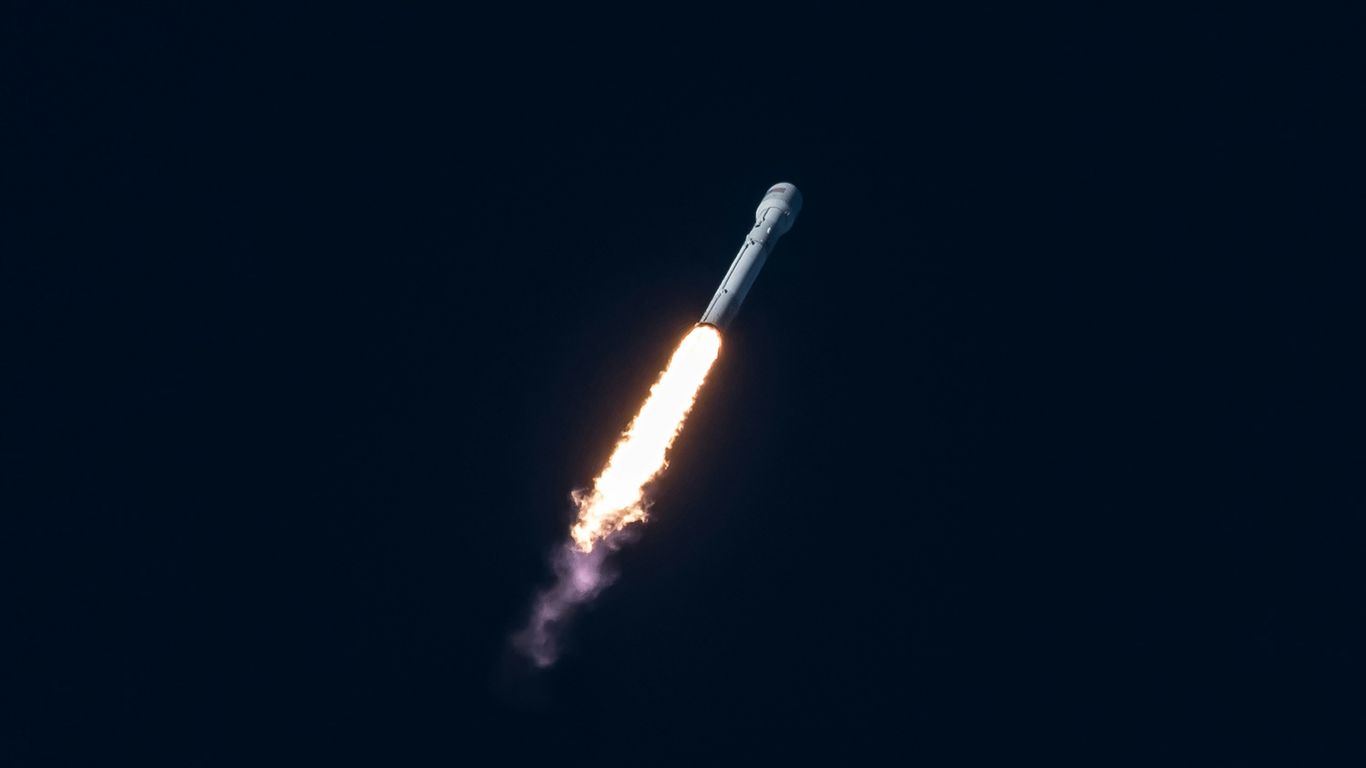
So, Deep Blue Aerospace isn’t exactly out there on its own. China’s private space scene is getting pretty crowded, especially when it comes to reusable rockets. You’ve got companies like i-Space, LandSpace, and Galactic Energy all trying to be the first to really nail this reusable tech. It’s a race to see who can make getting stuff into orbit cheaper and faster. i-Space is working on their Hyperbola-3, which uses those kerosene-liquid oxygen engines we’ve talked about, and they’re hoping to launch it sometime in 2026. LandSpace already got their methane-powered Zhuque-3 into orbit late last year, even though they had a hiccup with landing tests. They seem to be ahead on the whole vertical landing thing. Galactic Energy is developing the Pallas-1, and they’re really focused on making quick changes to their designs, which is good for small satellite launches, but they’re not quite at the same level of full reusability as Deep Blue’s Nebula rockets yet.
Global Benchmarks in Reusability
When you look at the big picture, everyone’s kind of looking at SpaceX. Their Falcon 9 is the gold standard for reusable rockets. They figured out how to land their boosters reliably back in 2015, and that’s really what brought down launch costs. As of early 2026, they’ve landed over 550 boosters, which is pretty wild. Deep Blue and the other Chinese companies have a tougher road ahead to match that kind of success rate. But the Falcon 9’s use of kerosene and liquid oxygen is definitely a model for how to make reusable rockets more affordable, especially for medium-sized payloads.
Market Challenges and Regulatory Environment
It’s not all smooth sailing, though. This whole sector is super competitive, and there are some big hurdles. Getting all the necessary permits to launch can take ages, and sometimes the technical reviews are really intense. Plus, the few launch sites China has, like Wenchang and Jiuquan, are already super busy with government missions and other commercial launches. This means private companies like Deep Blue have to fight for launch windows, which can really mess with their schedules. It’s a bit of a bottleneck. Even Deep Blue’s planned orbital launch for their Nebula-1, which was supposed to happen mid-2025, got pushed back. They’re now aiming for some demonstrations in 2026. It’s a tough market, and getting those launch slots is a big deal.
Future Trajectory of Deep Blue Aerospace
Upcoming Orbital Launch Milestones
Deep Blue Aerospace is really pushing to get its Nebula-1 rocket into orbit. The plan was for mid-2025, but things got a bit delayed, so now they’re aiming for some big demonstrations in 2026. This isn’t just about getting a rocket to space; it’s about proving they can bring the first stage back down safely and reuse it. They’re planning a bunch of these recovery and reuse tests throughout 2026 to show everyone that this technology is ready for commercial satellite launches. It’s a huge step, and honestly, seeing a rocket land itself is still pretty wild.
Enhancements for Nebula Variants
After the initial Nebula-1 flights, the company isn’t just sitting around. They’re already working on the Nebula-1B. This upgraded version is supposed to have better systems for bringing the rocket back, which should mean they can launch more often and more reliably. Then, there’s the bigger Nebula-2 rocket. That one’s slated to fly for the first time and start commercial missions in 2027. It’ll be able to carry more stuff, opening up more possibilities, maybe even linking up with those suborbital tourism plans.
Scaling Commercial Launch Services
Beyond just launching rockets, Deep Blue wants to make space access cheaper. They’re looking at starting suborbital passenger flights in 2027, with tickets around $210,000. That’s a lot of money, sure, but it’s part of making space more accessible. They’re also thinking about how to get more launches done each year. It’s not just about building rockets; it’s about building a whole service that companies can rely on. They’re still figuring out the exact numbers for how many launches they want to do annually, but the goal is to become a major player in launching satellites and maybe even people into space.
Looking Ahead
So, Deep Blue Aerospace is really trying to make space trips cheaper and happen more often. They’re working on rockets that can be used again and again, which is a big deal for cutting costs. It’s not always smooth sailing, they’ve had some setbacks with tests, but they keep pushing forward. They’ve got plans for launching satellites and even space tourism down the road. It’s a tough business, and they’ve got competition, but Deep Blue seems determined to be a major player in getting us all into space more easily.