A consumer product that glitches gets a bad review. An industrial product that glitches means a burst pipe, a missed outage warning, a stalled factory line, or bad data feeding a city’s transportation decisions.
For a product and hardware design studio turning brilliant and wild ideas into reality, and is often behind category-defining consumer products, the development of industrial and commercial hardware is just as innovative, important, but often with higher stakes and different priorities.
Tomorrow Lab® has spent years applying its Holistic Innovation process — the unique approach behind those trailblazing products — for utilities, facilities operators, DOTs, and industrial manufacturers who need hardware built for the field instead of the shelf (though Tomorrow Lab designs plenty of that too).
Although the technology underneath varies — wireless sensors, edge computing, battery-powered autonomy, GPS, LTE connectivity — the studio is steadfast in urgency, precision, and innovation. Five of Tomorrow Lab’s recent projects show what it actually takes to build hardware that has to work safely, precisely, and autonomously in industrial and commercial environments.
Lotik: Catching Damage Before It Happens
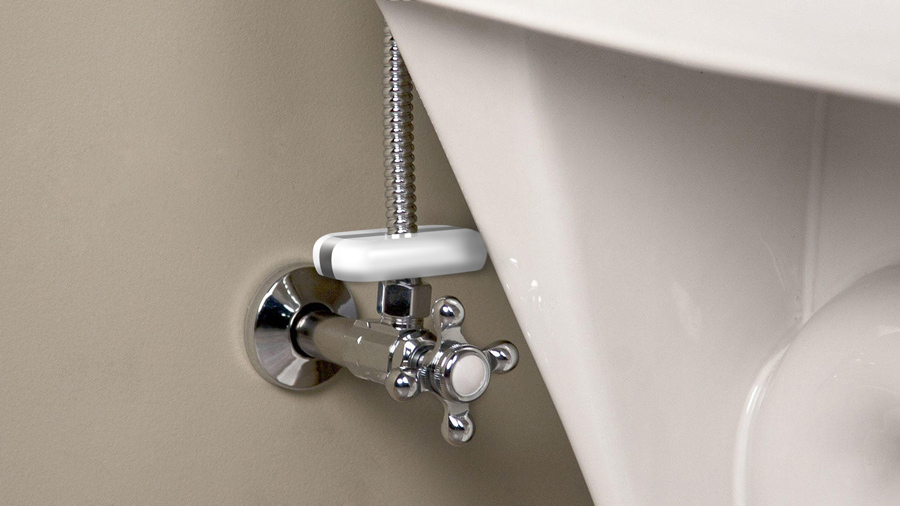
Water damage is one of the most common and potentially costly problems a building can face, and one of the most preventable, if it’s caught early. Lotik Labs wanted point-of-use water monitoring cheap enough to deploy room by room, in a single home or an entire apartment building, with a companion app that lets users track water usage anywhere, at the touch of a button. The margin for error was small. The device needed to be simple enough for anyone to install, but precise enough to catch a real plumbing risk before it became an actual repair bill.
Tomorrow Lab® carried the product from concept through mechanical architecture, electronics, and firmware, into a 200-unit pilot build for field testing. A device that clamps onto different pipe diameters and materials, reads flow non-invasively, and comes back off just as easily took real iteration on the mechanical adapter geometry. Field testing showed release mechanics that clamped down fine on the bench but needed rework the moment real people tried to unlatch real devices from real pipes under real water pressure. The studio’s willingness to test, fail, and refine in the field, outside of the studio, combined with their commitment to the process: sketches, prototypes and field-driven revision, is why Lotik now works reliably in real homes.
WayCount: Precision at the Curb
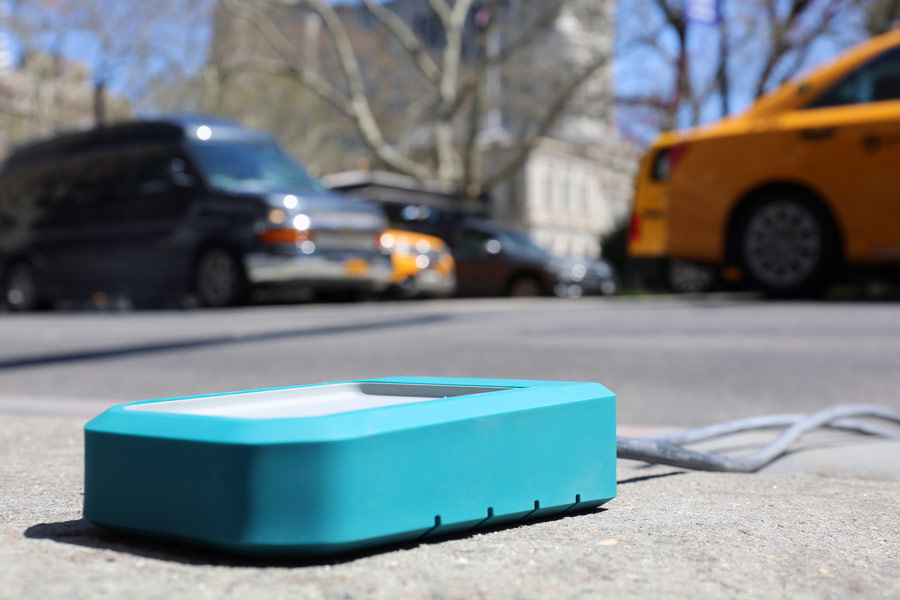
Departments of Transportation (DOT) have relied on the same bulky, expensive traffic-counting hardware for decades. WayCount set out to match industry-standard timing accuracy with piezo sensors (which are in the same class of sensor that turns physical strain into a voltage spike) at a fraction of the cost, in a bluetooth-enabled, compact device that would live in the road itself, under real traffic, in real weather.
The enclosure engineering was the greatest challenge by perfecting a lockable, crush-proof, waterproof shell protecting a circuit board that gets driven over, axle after axle, without budging. Tomorrow Lab ran extensive submersion testing before the device ever touched asphalt, then built in a Bluetooth radio so field crews could access studies from a custom mobile app, while data logged locally to onboard memory until retrieval, because a rural roadside isn’t a place anyone can count on LTE bars. Across industries, engineering logic stays consistent. In this case, they used tread-inspired grip patterns borrowed from tires and tool hardware, tough enough to survive traffic and understated enough not to invite curious hands or sticky fingers.
Armstrong: Reading the Grid From the Road
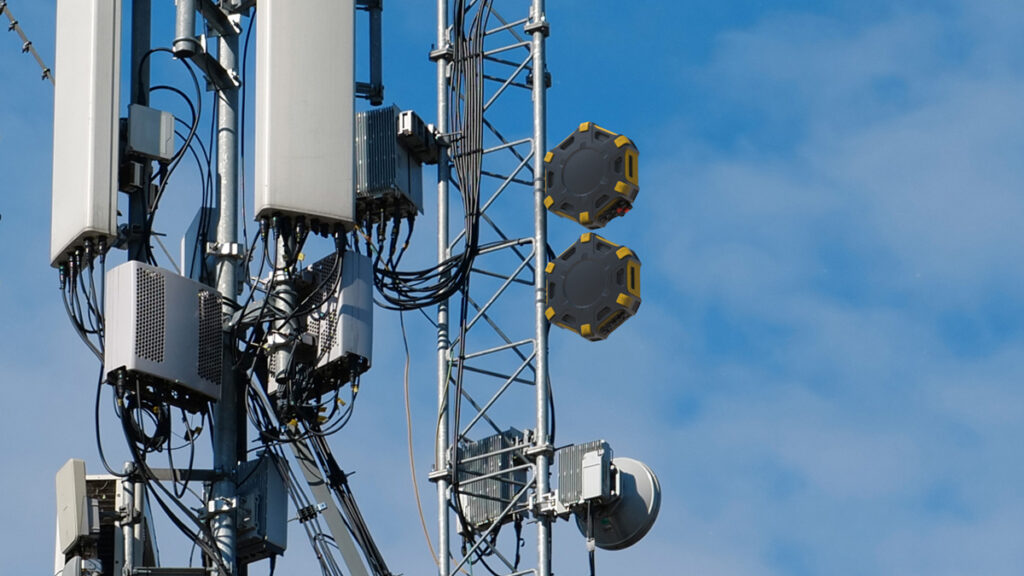
Degrading power lines emit a detectable frequency before they fail, which is a signature in the RF noise floor that most people would never notice. But a sensor tuned for it can catch the frequency from only a limited distance away. Exacter‘s idea was to mount a device to a garbage truck, or any vehicle already driving city streets, and catch that signature before the line let go. This concept would only work if every subsystem held up: miss the signal, misplace the location, or lose the uplink, and the early warning never occurs.
Tomorrow Lab built Armstrong, a unit that layers narrowband wireless signal detection with GPS for geolocation, environmental sensors for context, and an LTE-M module to push findings to the Cloud throughout the day. All of it runs on a battery-powered design smart enough to sleep and wake with the vehicle’s own motion, sensed by an onboard accelerometer, so the unit isn’t burning cycles and battery life idling at a stoplight. The result is a mobile sensor network riding on infrastructure that already exists, but improving it by quietly mapping grid problems before they become outages or fires.
Hivecell Rugged: Built for Where Computers Shouldn’t Survive
Edge computing is only as useful as its environment allows — and factory floors, deserts, and ships at sea don’t forgive silicon. Building on earlier work on the original Hivecell for Ricker Lyman Robotic Company, Hivecell Rugged asked what scalable edge computing looks like when it has to survive conditions that would fry the original.
Tomorrow Lab’s answer was a “box in a box”: a water- and shock-resistant enclosure wrapped around the existing Hivecell electronics, sized to fit in a backpack and built to hold up to six identical computing bays that scale compute power with demand. Fan-assisted interior air guides route airflow directly over the CPUs to keep them cool without ever breaking the environmental seal, while waterproof daisy-chain cabling lets units share A/C power and ethernet data across a deployment, one unit to the next. It’s recognizable Hivecell design language, translated for the harshest thermal and mechanical conditions a customer can throw at it — proof that ruggedizing a product means re-engineering it from the enclosure in, not just bolting on armor.
Pristeem: Commercial-Grade Means Constant Use
Not every high-stakes challenge is about sensors and connectivity. Sometimes it’s about a different kind of stress, like a duty cycle. This is the percentage of time that a system, device, or signal is active or turned “on” during one complete operating period. Pristeem‘s original 10-minute self-service dry cleaner, a blend of steam, hot and cold air, and a specially formulated chemical, was built for the home, running occasionally, for one household. Bringing it into offices meant re-engineering for a device that runs all day, for anyone, unsupervised, with no owner checking in on it between uses.
Tomorrow Lab® prioritized features like collapsibility for structural permanence, a tensioning unit to keep garments taut through the cycle in the steam condensation chamber, and layered in sensors behind a tablet control interface to manage fabric type, garment type, and cycle safety without a technician standing by. “Commercial-grade” set parameters for a specific design brief. The team had to consider furniture-quality aesthetics while simultaneously preserving performance and survivability of industrial-quality duty cycles.
The Same Process, Wherever the Stakes Are
What do a water sensor, a power-line sensor, a rugged server enclosure, a traffic counter, and an office dry cleaning appliance have in common? Each one moved through Tomorrow Lab’s Holistic Innovation process using strategy, mechanical and electrical engineering, firmware, and field validation, refined until the product could be trusted to work at scale, without constant supervision.
The same studio and the same process behind a breakout consumer product also holds up when the environment turns hostile, the tolerances tighten, and there’s no room to patch a fix later. Sensors, edge computing, autonomous power, geolocation, and cellular connectivity aren’t specialties Tomorrow Lab® included as an afterthought to their process. Their design practice is built to go wherever a product needs to go, home, office, factory floor, or roadside. Few studios can move fluently between a consumer device meant to delight and an industrial system meant to endure. Tomorrow Lab® is built to do both.