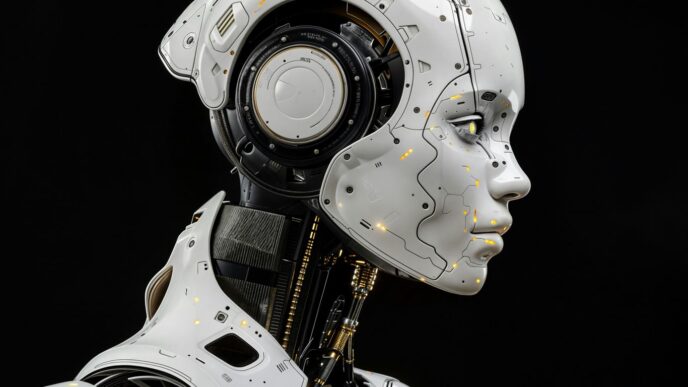
Dexterity Robotics: Pioneering Physical AI
It feels like just yesterday we were talking about AI that could write poems or beat us at chess. Now, we’re seeing AI that can actually do things in the physical world. Dexterity Robotics is right at the forefront of this, and they’re calling it ‘Physical AI’. It’s a big deal because it means robots aren’t just stuck in labs or doing the same repetitive task over and over. They can actually interact with the messy, unpredictable reality of places like warehouses and factories.
Introducing Mech: The Super-Humanoid Industrial Robot
So, what does this Physical AI look like in action? Meet Mech. This isn’t your typical factory robot. Mech is what Dexterity calls a ‘super-humanoid’ robot. Think of it as having the reach of a basketball player and the strength to lift heavy stuff, but without ever needing a coffee break. It’s got two arms, a wide span, and can lift a good amount of weight. What’s really neat is how it moves – it’s on a rover base, so it can get around, climb ramps, and turn in tight spots. This robot is designed to handle tough jobs, like loading trucks or stacking boxes, and it does it with AI guiding every move.
Dexterity’s Foresight: A World Model for Physical Manipulation
How does Mech know what to do? That’s where something called ‘Foresight’ comes in. It’s basically a super-smart way for the robot to understand its surroundings. Foresight creates a real-time picture of the physical world that the robot can actually use to figure out what to do next. It’s not just about seeing; it’s about understanding how objects interact, how things will stack, and how to move efficiently. For tasks like loading a truck, Foresight helps the robot decide where each box should go, considering things like making sure the load is stable and that the robot can reach everything. It’s a complex puzzle, way more complicated than a game like Go, with tons of different boxes and ways to pack them. Foresight figures it out really fast, optimizing for a bunch of factors all at once.
The Power of Physical AI in Real-World Applications
This isn’t just theory; Dexterity’s Physical AI is already being used. They’ve proven it works in production across different jobs and with different types of robots and grippers. It’s designed to be flexible, meaning it can be used for various tasks without needing a complete overhaul. The system is built to be understood by humans, too, so operators can see why the robot is making certain decisions, which is important for safety and trust. They’ve even trained this system using experience from over 100 million autonomous actions. That’s a lot of real-world practice.
Advancements in Dexterity Robotics Technology
Dexterity Robotics isn’t just building robots; they’re building a whole new way for robots to understand and interact with the physical world. It’s a big step beyond just programming a robot to do one specific thing. They’ve developed something called ‘Foresight,’ which is basically a world model designed for physical tasks. Think of it like a robot’s brain that can actually ‘see’ and ‘understand’ what’s around it in 3D, and even predict how things will change over time. This is key for jobs like loading trucks, which are super complicated and have always been tough to automate.
Foresight API Challenge: Driving Innovation in AI
To really push the boundaries, Dexterity put out a call to action with the Foresight API Challenge. They invited student teams to compete, offering prizes for those who could come up with the most innovative uses for their Foresight technology. It’s a smart move to get bright minds working on problems that might not have even occurred to the company itself. This kind of open innovation can really speed things up.
Dexterity’s Agentic Framework for Automation
Building on top of Foresight, Dexterity has created an ‘agentic framework.’ This is how the robot’s brain (Foresight) talks to its different parts – the sensors that see, the AI that decides, and the motors that move. These agents work together, but not necessarily all at the same exact second, which makes the whole system more flexible and responsive. It’s designed to be easy to understand, too, so people can see why the robot is making certain choices. This is important for trust and safety, especially when robots are working alongside humans.
The Role of Dexterity in Industrial Deployment
What’s really interesting is how Dexterity is focusing on making their robots work in real factories and warehouses, not just in labs. They’ve learned from over 100 million autonomous actions, which is a huge amount of experience. This means their robots are already pretty good at handling the messy, unpredictable nature of industrial work. They’re not just theoretical; they’re built for production. Their approach is also flexible, meaning the same core technology can be used for different kinds of robots and different jobs, which is a big deal for companies looking to automate.
The Evolving Landscape of Humanoid AI
It feels like humanoid robots are really starting to show up everywhere these days, doesn’t it? We’re seeing them move beyond just science fiction and into actual workplaces and public spaces. Companies are figuring out how these machines can help out with all sorts of tasks, from helping customers to assisting in factories.
Humanoid Robots in Industrial and Commercial Settings
So, what does this look like in practice? Well, imagine a robot that can greet visitors at a tech company’s visitor center, like what Ericsson is doing with Realbotix robots. These aren’t just static displays; they can interact, remember faces, and even pick up on emotions. That’s pretty wild when you think about it. Then there’s the industrial side, where robots are being developed to handle jobs that are tough or even dangerous for people. Tesla’s Optimus project is aiming for this, with the idea of a general-purpose robot that can do a bit of everything. It’s a big shift from the specialized robots we’ve seen before.
The Convergence of AI and Robotics for Enhanced Dexterity
What’s making all this possible? A huge part of it is how artificial intelligence is getting so much better. AI is helping robots understand the world around them, make decisions, and learn new things. Think about it like this:
- Sensing and Seeing: Robots are getting better at using cameras and sensors to see and understand their environment. This includes recognizing objects, people, and even reading text.
- Thinking and Planning: Advanced AI allows robots to figure out the best way to do a task, not just follow a set of pre-programmed instructions. They can adapt if something unexpected happens.
- Learning and Improving: Through interactions and data, robots can learn from their experiences, getting more efficient and capable over time. This is where things like NVIDIA’s work on AI for robotics really comes into play.
This combination means robots aren’t just tools anymore; they’re becoming more like partners that can handle complex jobs.
Future Trends in Humanoid Robot Development
Looking ahead, the market for humanoid robots is expected to grow quite a bit. Reports suggest it could go from a few billion dollars to over fifteen billion by 2030. A big chunk of that growth is expected to come from the software side – the AI that makes these robots smart. We’re also seeing companies acquire others to bring different capabilities together, like Serve Robotics buying Diligent Robotics to expand into hospital settings. The goal seems to be creating robots that are more adaptable, can handle a wider range of tasks, and are easier to integrate into our daily lives and workplaces. The aim is to create robots that can truly work alongside humans, making our lives easier and our jobs safer.
Dexterity Robotics and the Future of Work
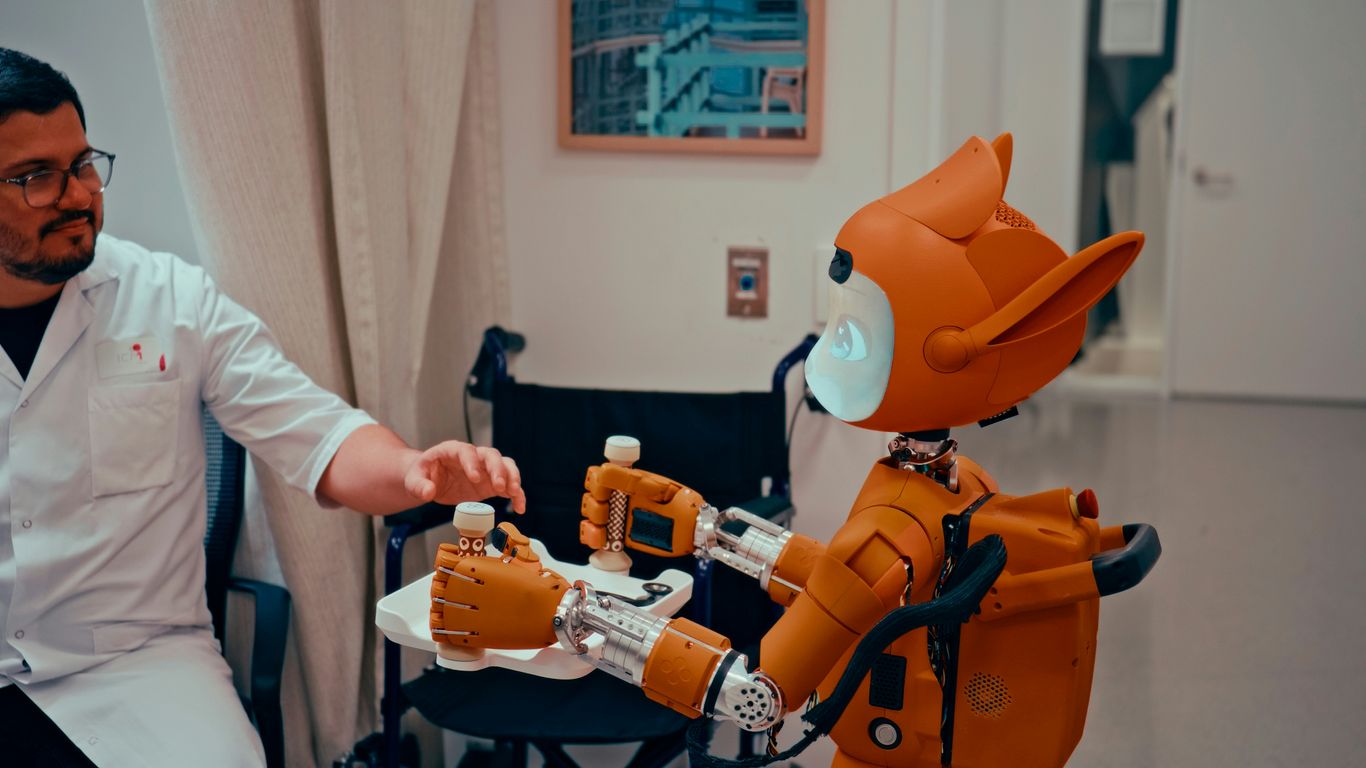
It’s pretty wild to think about how robots are changing the way we work, right? Dexterity Robotics is right in the middle of all this, making robots that can actually do physical jobs, not just sit around and look fancy. They’re talking about robots that can handle some of the toughest, most repetitive tasks out there, the kind of jobs that are hard to fill and can really take a toll on people.
Improving Efficiency and Reducing Workplace Injuries
Think about loading trucks, for example. It’s a physically demanding job, and doing it day in and day out can lead to injuries. Dexterity’s robots, like their Mech "super-humanoid" model, are designed to take on these kinds of tasks. With a wide reach and the ability to lift heavy items, these robots can work alongside humans, or even take over entirely for certain jobs. This means fewer people getting hurt on the job, and businesses can keep things moving smoothly. It’s not about replacing people entirely, but about making the workplace safer and more efficient for everyone involved.
Supervising Multiple Robots for Enhanced Productivity
One of the really interesting things Dexterity is pointing out is how one person can actually manage quite a few of these robots. Imagine a supervisor overseeing, say, ten robots working on a production line or in a warehouse. This setup could seriously boost how much work gets done. Instead of one person doing one task, they’re now orchestrating a whole team of robots. This kind of supervision requires a different skill set, focusing more on monitoring, problem-solving, and making sure the robots are working together effectively.
Adaptability and Scalability of Dexterity’s Solutions
What’s also pretty neat is that Dexterity’s technology isn’t just for one specific job. They talk about their "Physical AI" being application-agnostic and hardware-agnostic. Basically, it means the same core AI can be used for different tasks and on different types of robots. This makes it easier for companies to adopt the technology and scale up their operations as needed. If a company needs to handle more packages or start a new production line, they can adapt the existing robotic systems rather than starting from scratch. It’s about building solutions that can grow and change with the business.
Dexterity Robotics: A New Era of Automation
It feels like just yesterday we were talking about robots in factories being these big, clunky machines that did one specific thing. Now, things are really changing. Dexterity Robotics is pushing this idea of "production-grade AI" that’s not tied to one specific robot or one specific job. Think of it as a smart brain that can work with different robot bodies and learn to do all sorts of tasks.
Dexterity’s Commitment to Production-Grade AI
What does "production-grade" even mean in this context? It means the AI is ready for the real world, not just a lab. It’s built to handle the messy, unpredictable nature of actual workplaces. Dexterity has put a lot of effort into making sure their AI can perceive what’s going on, make smart decisions, and then actually do the work. This isn’t just about making robots move; it’s about making them think and act effectively in complex environments.
The Application-Agnostic and Hardware-Agnostic Approach
This is where it gets really interesting. Instead of building AI for just one robot arm or one type of factory task, Dexterity is creating a system that can be used more broadly. It’s like having a universal remote for robots. This means the same core AI can be used for:
- Loading trucks
- Sorting packages
- Operating machinery
- Performing quality checks
And it doesn’t matter if the robot has wheels or legs, or what kind of grippers it has. This flexibility is a big deal because it means companies can adapt their automation without needing entirely new systems every time.
Learning from Over 100 Million Autonomous Actions
How do you get an AI to be this adaptable? You train it. A lot. Dexterity has gathered experience from over 100 million autonomous actions. That’s a massive amount of data. Imagine trying to learn a new skill by watching someone do it millions of times – you’d get pretty good, right? This extensive training allows their AI, particularly their "Foresight" world model, to understand physics and predict how actions will affect the environment. It’s this deep learning from real-world (and simulated) experience that makes their approach so powerful and ready for the demands of modern industry.
What’s Next for Humanoid Robots?
So, we’ve seen some pretty wild stuff happening with humanoid robots lately. Companies like Dexterity are putting out robots that can do heavy lifting and tricky tasks in warehouses, and others are making robots for customer service or even helping out in hospitals. It feels like we’re moving past just the idea of robots and actually getting them to do useful work. It’s not science fiction anymore; these machines are starting to show up in real places, doing real jobs. The tech is getting better fast, and it looks like these robots are going to become a bigger part of our lives, whether at work or maybe even at home down the line. It’s definitely something to keep an eye on.