Trying to figure out the best book for marketing can feel like a jungle out there. So many choices, right? Whether you’re just starting or you’ve been in the game for a while, having the right books on your shelf can make a huge difference. These aren’t just any books; they’re the ones that have helped countless strategists get a better handle on what works. We’ve put together a list of must-reads that cover everything from old-school advertising wisdom to modern growth tactics. Let’s find your next favorite marketing read.
Key Takeaways
- Breakthrough Advertising: This book is considered by many to be the most influential marketing book ever written, focusing on core advertising principles that still hold true today.
- Scientific Advertising: Written in 1923, this book pioneered concepts like split testing and coupon tracking, emphasizing a data-driven approach to advertising.
- The 22 Immutable Laws of Marketing: A foundational text that, despite being written before the internet, explains timeless principles of marketing communication that are still relevant.
- Blue Ocean Strategy: This book suggests moving away from crowded markets (red oceans) to create new, uncontested market space (blue oceans) where competition is irrelevant.
- Building a StoryBrand: Focuses on clarifying a brand’s message so customers understand what problem it solves and why they should care, using a clear, seven-step framework.
1. Breakthrough Advertising
Okay, let’s talk about Breakthrough Advertising. This book, written by Eugene M. Schwartz back in 1966, is kind of a legend in marketing circles. It’s not exactly a light read; some people find it a bit dense, almost like a reference book you keep going back to. But honestly, that’s part of its power. It dives deep into understanding your audience’s mindset, specifically their level of awareness about your product or service. Schwartz breaks down how to tailor your message to meet people exactly where they are.
Think of it this way:
- People who don’t know they have a problem: You need to make them aware of the issue first.
- People who know they have a problem but don’t know about solutions: You introduce your solution.
- People who know about solutions but don’t know about yours: You highlight why your specific offering is the best choice.
- People who know about your solution but aren’t convinced: You build trust and provide proof.
This book is often cited by marketers and business owners who’ve seen serious success, even attributing millions in profit to the principles within. While it’s technically a copywriting book, its lessons on audience psychology and messaging strategy are gold for any marketer. It’s a bit of an investment, price-wise, especially if you’re looking on places like Amazon, but many feel it’s worth every penny. If you’re serious about making your marketing connect, this is one of those books that can really change how you think about advertising. It’s a resource many consider foundational for building profitable businesses Breakthrough Advertising.
2. Scientific Advertising
Published way back in 1923, Claude C. Hopkins’ "Scientific Advertising" might seem ancient, but honestly, the stuff in it is still super relevant. It’s one of those foundational texts that really changed how people thought about advertising. Hopkins was all about testing things out, seeing what worked, and then doing more of that. He wasn’t just guessing; he was trying to figure out the actual science behind what makes an ad grab attention and get results.
He talked about things like tracking responses to ads, which sounds basic now, but back then it was pretty revolutionary. It’s like he was doing early versions of A/B testing before anyone even had a name for it. The main idea is that you should approach advertising like a scientist: form a hypothesis, run an experiment (your ad), measure the outcome, and then adjust your approach based on the data. This data-driven mindset is probably the biggest takeaway from the book.
Here are a few key ideas Hopkins hammered home:
- Know your audience: Don’t just guess who you’re talking to. Figure out their needs and desires.
- Test everything: Headlines, offers, visuals – see what performs best.
- Be specific: Vague claims don’t work. Tell people exactly what you’re offering and why they need it.
- Follow the money: Understand how your advertising efforts actually lead to sales.
It’s a short book, but packed with practical advice. If you’re looking to get a handle on the core principles of effective advertising, this is a great place to start. It really lays the groundwork for understanding why certain advertising strategies are more successful than others, and it’s a classic for a reason. You can find a lot of good info on scientific advertising principles if you want to dig a bit deeper.
3. The 22 Immutable Laws of Marketing
Al Ries and Jack Trout dropped a bomb on the marketing world with "The 22 Immutable Laws of Marketing." Even though this book came out before the internet really took off, the core ideas still hold up. It’s like learning the basic rules of grammar before you start writing poetry; you need to know the fundamentals.
This book breaks down marketing into simple, unchangeable principles. Think of them as laws of physics for your brand. You can try to ignore them, but you’ll probably just end up crashing and burning. It’s a pretty straightforward read, and honestly, it makes you rethink a lot of what you thought you knew about marketing.
Here are a few of those laws that really stick:
- The Law of Leadership: It’s better to be first than to be better. Think about it – people remember the first person who did something, right? Like the first person on the moon.
- The Law of the Category: If you can’t be first in a category, invent a new category you can be first in. This is about carving out your own space.
- The Law of the Mind: It’s better to be first in the mind than to be first in the marketplace. Getting people to think of your brand first when they need something is the real win.
Seriously, if you’re doing any kind of marketing strategy, you should probably have this on your shelf. It’s a classic for a reason.
4. Blue Ocean Strategy
Forget about fighting tooth and nail with everyone else in a crowded market. That’s what W. Chan Kim and Renée Mauborgne talk about in Blue Ocean Strategy. They argue that instead of trying to beat the competition, you should aim to make them irrelevant. How? By finding or creating new market spaces where there’s little to no competition. Think of it like finding a calm, open ocean instead of a blood-red, shark-infested one.
This approach isn’t just some abstract idea; it’s based on studying a ton of companies over many years. The core idea is to look for unmet customer needs or ways to serve existing customers differently. It’s about value innovation – creating a leap in value for buyers while also lowering your costs. This means you’re not just competing on price or features; you’re redefining the game.
Here are a few ways to start thinking about creating your own blue ocean:
- Look beyond existing demand: Don’t just focus on the customers you already have. Think about the non-customers and why they aren’t buying from your industry.
- Reconstruct market boundaries: Challenge the usual ways your industry defines its customers, products, or services.
- Focus on the big picture, not just the numbers: Use visual tools to map out your strategy rather than getting lost in spreadsheets.
- Reach beyond existing demand: Consider who isn’t buying from your industry and why.
It’s a different way of looking at strategy, one that encourages you to be creative and look for opportunities where others aren’t. If you’re tired of the constant battle in your market, this book offers a path to create uncontested market space.
5. Building a StoryBrand
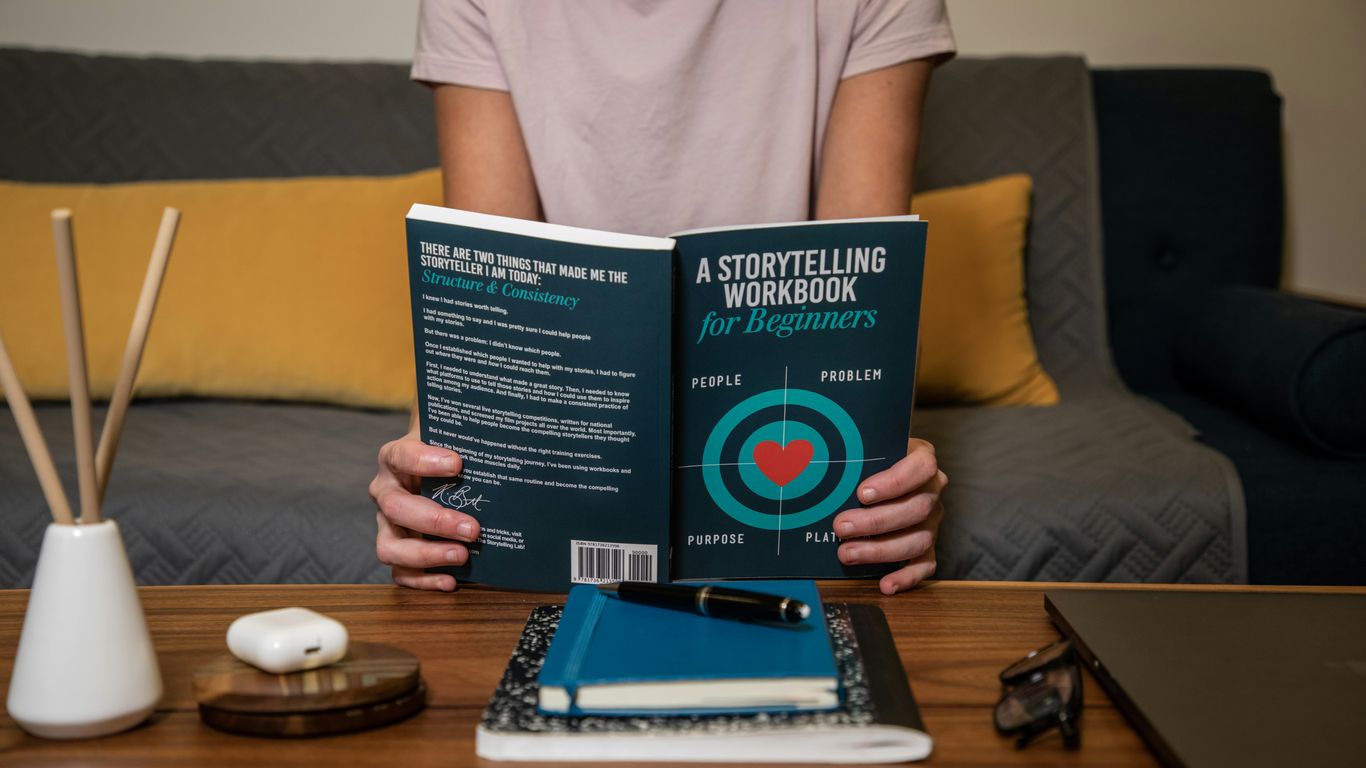
Donald Miller’s "Building a StoryBrand" is a book that really changed how I think about talking to customers. It’s not just about what you sell; it’s about how you frame it. Miller lays out a pretty straightforward, seven-step plan for making your brand’s message clear and compelling. The core idea is to position your customer as the hero of the story, with your brand acting as the guide that helps them overcome their challenges.
This approach helps cut through the noise because it focuses on what the customer actually needs and wants. When you get this right, your marketing stops feeling like marketing and starts feeling like a helpful conversation. It’s about simplifying your message so people actually understand it and remember it.
Here’s a look at Miller’s seven steps:
- Establish a clear plan: Define what you want customers to do.
- Tell a clear story: Use a narrative structure that makes sense.
- Make the customer the hero: They are the main character.
- Position your brand as the guide: Offer help and solutions.
- Outline a clear path: Show customers how to get what they need.
- Address potential obstacles: Anticipate and resolve customer fears.
- Explain what success looks like: Show the positive outcome of using your product or service.
The real power of this book lies in its practicality. Miller provides tons of examples, making it easy to see how these principles apply to different businesses. If your marketing messages feel a bit muddled or aren’t getting the traction you want, this book offers a solid framework to fix that.
6. This is Marketing
Seth Godin’s "This is Marketing" is a book that really makes you stop and think about what marketing actually is. Forget all the fancy jargon and complicated strategies for a second. Godin argues that at its core, marketing is about empathy. It’s about understanding the people you’re trying to reach, figuring out what problems they have, and then creating something that actually helps them.
He pushes back against the idea that marketing is just about shouting louder than everyone else or tricking people into buying things. Instead, he talks about building trust and making a connection. It’s about serving a specific group of people who need what you offer, rather than trying to appeal to everyone.
Here are a few key takeaways that stuck with me:
- Marketing is about making a difference for a specific audience. Don’t try to be everything to everyone. Find your people and serve them well.
- Empathy is your most powerful tool. Understand your audience’s struggles and desires.
- Focus on the story and the connection. People buy into what you stand for, not just what you sell.
- Permission is better than interruption. Build relationships where people want to hear from you.
Godin also touches on how the digital age has changed things, but the fundamental principles remain the same. It’s a reminder that good marketing isn’t just about selling; it’s about creating value and solving problems. This book is a great reset button for anyone feeling overwhelmed by modern marketing tactics. It brings you back to the human element, which, let’s be honest, is probably the most important part.
7. The 1-Page Marketing Plan
Allan Dib’s "The 1-Page Marketing Plan" is a bit of a game-changer, honestly. It’s not just about marketing; it’s really a business plan distilled down to its most effective form. If you’re running a business or trying to figure out the marketing side of things, this book is a solid read. It cuts through all the noise and gives you a clear path forward, especially when you feel stuck in the weeds of planning.
The core idea is to simplify the entire marketing process into a single, actionable page. It breaks down the customer journey into three main phases:
- Prospects: People who might buy from you.
- Customers: People who are currently buying from you.
- Champions: People who buy from you repeatedly and refer others.
Dib lays out a straightforward system to move people through these stages. It’s all about creating a predictable system for getting new customers, making more money, and standing out. The beauty of this approach is its sheer simplicity and focus on execution. You get a clear roadmap that covers lead generation, sales conversion, and customer retention, all on one page. It’s the kind of book that helps you stop overthinking and start doing.
8. Epic Content Marketing
Okay, so let’s talk about Joe Pulizzi’s "Epic Content Marketing." This book really opened my eyes when I first started out in marketing. It came out back in 2013, and while the landscape has changed a lot since then, the core ideas are still super solid. Pulizzi breaks down how to create content that people actually want to consume, rather than just pushing sales messages all the time. It’s about building an audience by being helpful and interesting.
The main takeaway is that you need to think like a publisher, not just a marketer. This means creating content that informs, entertains, and solves problems for your target audience. It’s a shift from just talking about your product to talking about the things your customers care about.
Here’s a simplified look at the process Pulizzi suggests:
- Define Your Sweet Spot: Figure out what your audience is interested in and what your business is good at. Find that overlap.
- Choose Your Format: Decide if you’re going to focus on blog posts, videos, podcasts, or something else. Stick with it.
- Create a Content Calendar: Plan out what you’re going to publish and when. Consistency is key.
- Distribute Your Content: Don’t just create it; make sure people can find it. This involves SEO, social media, and email.
- Monetize Your Audience: Figure out how your content will eventually lead to revenue, whether through direct sales, lead generation, or other means.
It’s a practical guide for anyone looking to build a strong online presence through valuable content. If you’re new to content marketing or feeling a bit stuck, this book offers a great starting point. It really helps you understand how to build a foundation for attracting and keeping customers by giving them something they actually want. You can find more about creating compelling stories that drive action on this page.
9. Dotcom Secrets
When I first got into online marketing, Dotcom Secrets by Russell Brunson was one of those books that really got me fired up. It’s a solid read if you’re just starting out and want to get a handle on how to sell things on the internet. It breaks down a lot of the basic strategies that people use to get customers online.
Now, I’ll be honest, as I’ve gotten more experience, my thinking has shifted a bit. I don’t focus solely on internet tactics anymore; I look at the bigger picture of marketing. But for someone who’s brand new to digital marketing, this book still offers a lot. It definitely had a big impact on me when I was starting out, which is why it’s on this list.
Here are a few key ideas you’ll find in the book:
- The Sales Funnel: Brunson talks a lot about creating a journey for your potential customers, guiding them from being a stranger to a loyal buyer.
- Understanding Your Customer: It emphasizes figuring out who your ideal customer is and what they really want.
- Building an Online Business: The book provides a roadmap for setting up and growing an online business, focusing on getting those first sales.
It’s a good starting point for understanding the mechanics of online sales and how to attract people to your website or offers.
10. Hacking Growth
Okay, so you’ve heard the term "growth hacking" thrown around, and maybe it sounds a bit like a buzzword. But Sean Ellis and Morgan Brown’s book, Hacking Growth, is way more than just a catchy title. It’s really about figuring out smart, fast ways to grow a business, especially in today’s digital world. Think of it less as sneaky tricks and more as a systematic approach to finding what works.
This book is a solid read if you’re in a startup, particularly a tech one. It helps you shift your thinking towards experimentation and data. They break down the whole growth process into a few key stages:
- Ideation: Coming up with new ideas for growth.
- Prioritization: Deciding which ideas are most likely to work.
- Testing: Running experiments to see if those ideas actually pan out.
- Analysis: Looking at the results to learn what happened.
The core idea is that sustainable growth comes from a continuous cycle of learning and improving. It’s not about one big marketing splash; it’s about consistently finding and optimizing the things that bring in and keep customers. If you’re looking to build a business that scales, this book gives you a practical framework to start thinking about how to make that happen.
Wrapping Up Your Marketing Reading List
So, there you have it. We’ve gone through a bunch of books that can really help you out with your marketing game. Whether you’re just starting or you’ve been doing this for a while, there’s something here for everyone. Remember, reading these isn’t just about learning new tricks; it’s about changing how you think about marketing and business. Keep these on your shelf, revisit them when you need a boost, and you’ll be well on your way to becoming a marketing pro. Happy reading!
Frequently Asked Questions
Why are these books considered essential for marketing strategists?
These books are like a treasure chest of ideas for anyone trying to get better at marketing. They cover everything from how to grab people’s attention to how to create messages that stick. Think of them as guides that have helped tons of people learn the secrets of great marketing, whether you’re just starting out or you’ve been doing this for a while.
Are these books still relevant even though some were written a long time ago?
Absolutely! While some of these books were written before the internet was a big thing, the main ideas about how people think and what makes them want to buy something haven’t really changed. The way we market things might be different now, but the core reasons why people connect with a product or service are still the same. These older books give you a strong foundation.
I’m new to marketing. Where should I start?
If you’re just getting started, it’s a good idea to begin with books that cover the basics. Books like ‘Scientific Advertising’ or ‘The 22 Immutable Laws of Marketing’ are great for understanding the fundamental rules. ‘Building a StoryBrand’ is also fantastic for learning how to communicate your message clearly to customers.
What if I’m more interested in online marketing?
For online marketing, books like ‘Dotcom Secrets’ and ‘Hacking Growth’ are really helpful. They dive into how to grow a business using digital tools and strategies. ‘Epic Content Marketing’ is also a must-read if you want to learn how to create content that attracts customers online.
Do I need to read all of these books?
Not necessarily! While all these books offer valuable insights, you might find some more helpful than others depending on your specific goals. Think about what you want to improve in your marketing skills. Are you looking to write better ads, understand customer behavior, or build a stronger brand? Pick the books that best match what you want to learn.
Can reading these books really help me get a better job?
Yes, definitely! Knowing the ideas in these books can make you stand out when you’re talking about marketing strategies or interviewing for jobs. It shows you’ve put in the effort to learn from the best and understand the core principles that drive successful marketing campaigns. It’s like having a secret weapon in your career toolkit.