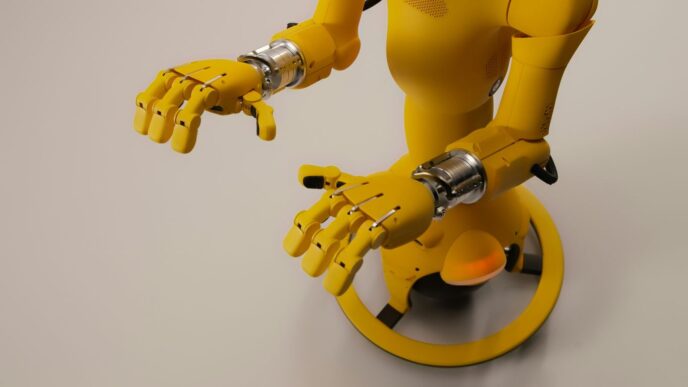

So, does AI use a lot of energy? It’s a question on a lot of people’s minds these days, and honestly, it’s complicated. We hear about AI doing amazing things, helping us in all sorts of ways, but there’s also this growing concern about its environmental impact. Think about all the computers and servers working non-stop to make AI happen – that’s got to take a toll, right? This article is going to break down where all that energy goes and what it means for our planet. We’ll look at both the good and the bad, so you can get a clearer picture of AI’s real environmental cost.
Key Takeaways
- Training complex AI models requires a huge amount of electricity, sometimes more than expected, and this contributes significantly to AI’s carbon footprint.
- Data centers, which are the backbone of AI, consume vast amounts of power and water, putting a strain on resources.
- While AI can help make systems more efficient and reduce waste, its own energy needs are growing rapidly, creating an energy paradox.
- Beyond energy, AI’s environmental cost includes hardware production using rare metals and the electronic waste generated from frequent hardware upgrades.
- To make AI more sustainable, we need to develop smarter, more efficient models and algorithms, and use green computing resources, alongside better regulations and transparency.
The Energy Paradox Of Artificial Intelligence
It’s kind of wild when you think about it. Artificial intelligence is popping up everywhere, promising to make our lives easier and our businesses run smoother. We hear about how it can optimize energy grids, help design more efficient buildings, and even speed up scientific discovery. On the surface, it sounds like a win for everyone, especially when it comes to the environment. But there’s this other side to the story, a bit of a head-scratcher, really.
Is AI A Net Positive Or Negative For The Environment?
This is the big question, isn’t it? On one hand, AI can be a tool for good, helping us tackle complex environmental problems. Think about AI systems that can predict weather patterns with more accuracy, allowing farmers to use water more wisely, or AI that helps manage traffic flow in cities, cutting down on emissions. These are real benefits. However, the very technology enabling these solutions has its own hefty energy demands. The paradox is that the tools we’re building to potentially save the planet might be consuming a significant amount of energy themselves. It’s like trying to put out a fire with a hose that’s also leaking a lot of water. We need to figure out if the good AI does outweighs the energy it uses.
The Growing Demand For AI’s Computational Power
So, why does AI use so much energy? Well, it mostly comes down to computation. Training these advanced AI models, especially the really big ones like those used for language or image generation, requires an immense amount of processing power. Imagine trying to teach a computer everything about the world – it needs to crunch through vast amounts of data, performing trillions of calculations. This isn’t something your laptop can do. It requires specialized hardware, often housed in massive data centers, all of which need a constant, substantial supply of electricity. And as AI gets more sophisticated and more people use it, this demand just keeps climbing.
Here’s a rough idea of what goes into it:
- Training: This is the most energy-intensive phase. Think of it as the AI’s ‘education’.
- Inference: This is when the trained AI is actually used to make predictions or generate outputs. It still uses energy, but generally less than training.
- Data Centers: These facilities house the servers and cooling systems, and they are huge energy consumers.
Assessing The Overall Net Effect On Global Energy Use
Trying to get a clear picture of AI’s total impact on global energy use is tricky. We have the energy saved by AI applications, like optimizing industrial processes or improving logistics. For example, if AI helps a factory reduce its energy waste by 15%, that’s a win. But then you have the energy consumed by the AI itself – the training, the running of models, the data centers. It’s like a balancing act. Some studies suggest that the energy saved could eventually outweigh the energy consumed, but we’re not quite there yet. Plus, the way we measure these things is still evolving. It’s a complex equation with a lot of moving parts, and honestly, nobody has a definitive answer right now.
Unpacking AI’s Significant Carbon Footprint
It’s easy to get caught up in what AI can do for us, but we also need to talk about what AI does to the planet. The energy AI uses, especially for training those really big, complex models, is a big deal. Think about it: training just one of these advanced AI systems can pump out as much carbon dioxide as a car does over its entire lifespan. That’s a lot of pollution from a single task.
The Environmental Cost Of Training Complex Models
Building these sophisticated AI brains isn’t like baking a cake. It requires massive amounts of computing power, which translates directly into electricity consumption. The more data you throw at it, and the more intricate the model’s architecture, the longer and harder the computers have to work. This intense computational effort generates significant heat and, consequently, a large carbon footprint. It’s a bit like running a supercomputer in your house 24/7, but on a global scale.
Data Centers And Their Growing Electricity Consumption
All that computing needs a home, and that home is the data center. These massive facilities are the backbone of AI, storing data and running the algorithms. They are incredibly power-hungry, not just for the servers themselves but also for cooling systems to prevent overheating. Projections show data centers could soon account for a significant chunk of the world’s electricity use. We’re talking about a growing demand that puts a real strain on energy grids and, by extension, the environment.
The Impact Of Iterative Model Development
AI development isn’t a one-and-done process. It’s a cycle of building, testing, and refining. This means models are often trained, tweaked, and retrained multiple times. Each iteration, even small adjustments, requires another round of heavy computation. This constant tinkering, while necessary for improving AI performance, adds up. It’s like constantly restarting a complex calculation just to change one tiny number – it wastes a lot of time and, in this case, a lot of energy.
Here’s a look at the energy demands:
- Training Large Language Models (LLMs): Can consume thousands of kilowatt-hours (kWh) of electricity.
- Data Center Power Usage: Continues to rise, with some estimates suggesting it could rival the energy use of entire countries.
- Carbon Emissions: A single AI training run can emit hundreds of pounds of CO2 equivalent, comparable to several round-trip flights.
AI’s Environmental Costs Beyond Energy
So, we’ve talked a lot about the electricity AI gobbles up, but that’s not the whole story. There are other environmental costs that often get overlooked when we’re just thinking about servers humming away.
The Water Footprint Of Data Center Cooling
Those massive data centers that power AI? They get hot. Really hot. To keep all those computers from melting, they need cooling systems, and a lot of those systems use water. Think about it: huge amounts of water are pumped through to keep things chill. In places that are already dry, this can put a serious strain on local water supplies. It’s like running a giant air conditioner, but instead of just blowing cold air, it’s also draining the local reservoir. Some companies are trying to use less water or recycle it, but it’s still a big issue, especially as data centers keep popping up everywhere.
Hardware Production And Rare Earth Metals
Building the actual machines that run AI – the specialized chips, the servers – isn’t exactly eco-friendly either. Making these components requires mining for various materials, including what we call rare earth metals. Getting these metals out of the ground can be pretty damaging to the environment, messing up landscapes and using a lot of energy and water in the process. Plus, the supply chains for these materials can be pretty complex and sometimes involve regions with less strict environmental rules. It’s a whole chain of impact before the AI even starts doing its thing.
Increased Electronic Waste From Hardware Refresh Cycles
AI moves fast. Like, really fast. What’s cutting-edge today might be outdated in a year or two. This means companies are constantly upgrading their hardware to keep up. When they swap out old servers and chips for new ones, all that old equipment becomes electronic waste, or e-waste. And e-waste is a big problem. It often contains toxic materials that can leach into the soil and water if not disposed of properly. Recycling electronics is tricky, and a lot of it ends up in landfills, creating a growing mountain of discarded tech.
The Promise Of AI For Environmental Efficiency
It might seem strange to talk about AI helping the environment when we’ve just spent time discussing its energy use. But here’s the thing: AI can also be a really powerful tool for making things more efficient, which in turn can help reduce waste and pollution. It’s not just theory, either; we’re already seeing this happen.
Direct Applications In Optimizing Physical Systems
Think about places that use a lot of energy or resources, like factories or water treatment plants. AI can step in and fine-tune how these operations run. It can look at tons of data – things like temperature, pressure, flow rates – and figure out the absolute best way to do things. This means less energy wasted, less water used, and less material thrown out.
- AI can predict equipment failures before they happen. This stops costly downtime and prevents situations where a breakdown causes a bigger environmental mess.
- It can optimize chemical processes in manufacturing, making sure just the right amount of ingredients are used, cutting down on waste.
- In agriculture, AI can help farmers use water and fertilizer more precisely, only applying them where and when they’re needed, which is a big win for the environment.
Indirect Applications In Business Process Improvement
Beyond the factory floor, AI can make the way businesses operate much smarter. This isn’t about directly controlling machines, but about making decisions and workflows better. For example, AI can help companies manage their supply chains more effectively. This means fewer trucks on the road, less fuel burned, and less chance of goods spoiling before they reach their destination.
- AI can analyze vast amounts of data to find patterns that humans might miss. This leads to better planning and fewer mistakes.
- It can automate repetitive tasks, freeing up people to focus on more complex problems that might have environmental implications.
- AI-powered tools can help design better products, leading to less material use and longer product lifespans.
Dematerialisation Through Virtual Prototyping
This is a really interesting one. Before AI, creating a new product often meant building lots of physical prototypes. You’d make one, test it, tweak it, make another, and so on. This uses materials, energy, and creates waste. With AI, companies can create highly realistic virtual models. They can test and refine these digital prototypes endlessly without ever needing to build a physical version until the design is pretty much perfect.
This process, often called virtual prototyping, means:
- Significantly fewer physical prototypes are needed.
- Less raw material is consumed in the design phase.
- The energy used for testing and manufacturing is reduced because the design is more refined from the start.
So, while AI itself uses energy, its ability to optimize and streamline processes, both physical and digital, holds a lot of promise for actually reducing our overall environmental impact. It’s about using smart technology to be less wasteful.
Mitigating AI’s Environmental Impact
So, AI is pretty energy-hungry, right? We’ve talked about the training and the data centers. But it’s not all doom and gloom. There are ways we can make AI kinder to the planet. It’s about being smart with how we build and use these tools.
Developing Energy-Efficient AI Models
Think of it like trying to get the most out of your phone battery. You don’t just leave every app running all the time. Similarly, with AI, we can design models that just don’t need as much juice. This means looking at the actual structure of the AI. Some models are just way more complex than they need to be for the job they’re doing. We’re seeing a shift towards smaller, more specialized models. Instead of one giant AI that tries to do everything, we can have several smaller ones that are really good at specific tasks. These "small language models," or SLMs, can get the job done with a fraction of the energy.
- Focus on model size: Using fewer parameters in a model often means less computation and therefore less energy. It’s like using a smaller hammer for a smaller nail.
- Efficient training techniques: Researchers are finding new ways to train models that require fewer passes over the data, cutting down on the time and energy needed.
- Pruning and quantization: These are fancy terms for techniques that trim down AI models after they’re trained, making them smaller and faster without losing too much accuracy.
Optimizing AI Algorithms For Sustainability
Beyond just the model itself, the way we tell the AI what to do – the algorithms – can also be tweaked. It’s about making the instructions more direct and less wasteful. Some algorithms are like giving someone a novel to find one specific word; others are like using a search function. We want the latter.
- Carbon-aware computing: This is pretty neat. It means scheduling AI tasks to run when renewable energy is plentiful on the grid, or when electricity is cheaper and cleaner. If a task doesn’t need to be done right now, why not run it when the sun is shining or the wind is blowing?
- Algorithmic efficiency: This involves mathematical tricks and clever coding to reduce the number of calculations needed. It’s about finding the shortest path between point A and point B.
- Hardware-software co-design: Sometimes, the best way to make things efficient is to design the software and the hardware it runs on together, so they work perfectly in sync.
Prioritizing Green Computing Resources
Where AI runs matters. Data centers are huge energy consumers, but not all data centers are created equal. Some are powered by fossil fuels, while others are increasingly running on renewable energy. Choosing to use computing resources that are powered by clean energy is a straightforward way to reduce AI’s carbon footprint. It’s like choosing to buy groceries from a local farmer instead of a massive chain that ships everything across the country.
- Renewable energy sources: Supporting data centers that are committed to using solar, wind, or hydroelectric power.
- Heat reuse: Some data centers are capturing the heat they generate and using it to warm nearby buildings or greenhouses. It’s a way to turn waste into a resource.
- Location matters: Building data centers in cooler climates can reduce the need for energy-intensive cooling systems. Plus, placing them closer to renewable energy sources makes a lot of sense.
Towards Sustainable AI Practices
So, we’ve talked about how AI uses energy and its carbon footprint. Now, what can we actually do about it? It’s not just about complaining; it’s about building AI in a way that doesn’t wreck the planet. Think of it like building a house – you wouldn’t just throw it up without thinking about insulation or where the sun hits, right? We need to do the same for AI.
Sustainability By Design In AI Development
This is a big one. It means thinking about the environment from the very start, not as an afterthought. It’s like baking sustainability right into the recipe for AI. We want AI that’s powerful but also kind to the Earth. This involves a few key ideas:
- Prioritize Energy-Efficient Algorithms: When developers are creating AI models, they should actively look for ways to make them use less power. This could mean choosing smarter ways to process information or designing models that don’t need as much brute computational force.
- Choose Leaner Model Architectures: Not every AI needs to be a giant, super-complex model. Sometimes, a smaller, more focused model can do the job just as well, if not better, and it uses way less energy. It’s about picking the right tool for the job, not just the biggest one.
- Integrate Sustainability Early: Just like we think about privacy when designing software, we need to build environmental impact into the AI’s core design. This way, efficiency isn’t a patch-up job; it’s part of the foundation.
Implementing Energy-Efficient Algorithms
This is where the rubber meets the road. We need practical steps to make AI less thirsty for power. It’s not just about the big picture; it’s about the nitty-gritty details of how AI works.
- Reduce Unnecessary Retraining: Training AI models takes a ton of energy. We need to be smart about when and how often we retrain them. Techniques like transfer learning, where a model learns from a previous task, can save a lot of energy compared to starting from scratch.
- Optimize Model Distillation: This is a fancy term for making a big AI model smaller and faster without losing too much of its smarts. Think of it like creating a condensed version of a book that still gets the main points across. It means less computation and less energy used.
- Carbon-Aware Computing: This is a cool concept where we schedule AI tasks to run when renewable energy is most available on the grid. If a task doesn’t need to be done right now, why not run it when the power is cleaner?
Choosing Model Architectures With Fewer Parameters
This ties into the ‘Sustainability by Design’ idea, but it’s worth highlighting on its own. Parameters are basically the knobs and dials that an AI model adjusts as it learns. More parameters often mean a more complex, and energy-hungry, model.
- The Trade-off: Generally, models with fewer parameters are more energy-efficient. The challenge is finding that sweet spot where the model is still effective for its intended task. It’s a constant balancing act between performance and power consumption.
- Specialized Models: Instead of one massive model trying to do everything, we can use smaller, specialized models. These ‘small language models’ (SLMs) are trained for specific jobs and can be much more efficient than their giant counterparts.
- Research and Development: A lot of research is going into creating new types of AI architectures that are inherently more efficient. This is where innovation can really make a difference in the long run.
The Imperative Of Regulation And Transparency
Look, AI is getting pretty powerful, and it’s easy to get caught up in all the cool things it can do. But we can’t just ignore the impact it’s having on our planet. That’s where rules and being upfront about what’s happening come in. It’s not just about making AI work better; it’s about making sure it doesn’t mess things up too badly for everyone else.
The Need For Comprehensive Lifecycle Cost Studies
We really need to get a handle on the full picture of what AI costs, not just in terms of money, but environmentally too. This means looking at everything from the moment the hardware is made, to how much energy it uses when it’s running, and even what happens when it’s thrown away. Right now, it feels like we’re only seeing part of the story. Companies might tell you how efficient their AI is for a specific task, but that doesn’t account for the mining of rare earth metals for the chips or the massive amounts of water used to cool down the servers. We need studies that track AI’s impact from cradle to grave, so we know the real trade-offs.
Transparent Reporting Of Energy Consumption
It’s pretty simple, really: companies building and using AI should have to tell us how much energy they’re using. Think of it like a nutrition label for your AI. This isn’t about shaming anyone, but about creating a level playing field and letting people make informed choices. If one company’s AI uses way more electricity than another’s for the same job, we should know about it. Some places are starting to ask for this, like the EU AI Act, which requires developers of big AI systems to share their energy and resource use. This kind of openness can push the industry to be more responsible.
Regulatory Frameworks For AI Accountability
Ultimately, we need some guardrails. Market forces and good intentions are great, but they might not be enough to steer AI development in a truly sustainable direction. We need clear rules that hold companies accountable for the environmental consequences of their AI. This could involve setting limits on energy use, requiring the use of renewable energy sources for data centers, or even putting a price on carbon emissions related to AI. Without some form of regulation, it’s easy for the focus to stay on innovation and profit, while the environmental costs get pushed aside. We have to make sure that as AI gets smarter, it also gets greener.
So, What’s the Verdict?
Look, AI is kind of a double-edged sword when it comes to the environment. On one hand, it can help us be way more efficient, cutting down on waste and energy use in all sorts of industries. Think smarter factories or better resource management. But on the flip side, the AI itself gobbles up a ton of energy, especially those massive data centers and the training of complex models. It’s like we’re trying to solve climate change with a tool that’s also contributing to it. The real challenge is figuring out how to get the good stuff without making the energy problem even worse. We need to be smart about how we build and use AI, pushing for greener tech and being mindful of our own usage. It’s not a simple answer, and honestly, we’re still figuring it out.
Frequently Asked Questions
Does using AI really use a lot of energy?
Yes, AI can use a significant amount of energy. Training very complex AI models, like those used for advanced tasks, requires a huge amount of computing power, which in turn uses a lot of electricity. Think of it like powering up a super-computer for a long time. Even using AI regularly, like asking questions to a chatbot, adds up the energy use over time.
What are the biggest energy users when it comes to AI?
The two main energy hogs are training AI models and running the massive buildings called data centers that store and process information for AI. Training an AI model can use as much electricity as many homes use in a year! Data centers also need a lot of power to keep their computers running and cool.
Is AI bad for the environment because of its energy use?
It’s a bit complicated. AI can help us solve environmental problems, like making factories more efficient or managing water use better. However, the technology itself uses a lot of energy and resources. So, while AI can help the planet in some ways, its own energy needs are a big concern we need to manage.
Besides energy, what other environmental problems does AI cause?
AI’s impact goes beyond just electricity. The data centers that power AI need a lot of water to stay cool, which can strain local water supplies. Also, the special computer parts needed for AI are made using materials that are hard to find, and their production uses energy and water. Plus, as AI technology gets updated quickly, old computer parts are thrown away more often, creating electronic waste.
Can AI help us become more environmentally friendly?
Absolutely! AI can be a powerful tool for good. It can help businesses run more smoothly, use less energy and materials, and reduce waste. For example, AI can help design products virtually, so we don’t need to make as many physical models. It can also optimize systems like traffic lights or power grids to save energy.
What can be done to make AI more sustainable?
There are several things we can do. Developers can create AI models that need less power to run and train. We can also make sure that the computers and data centers used for AI are powered by clean energy sources like solar or wind. Being smart about how we design and use AI, and being open about how much energy it uses, are key steps towards a greener future for AI.