

Understanding Nanotechnology Materials
So, what exactly are we talking about when we say ‘nanotechnology materials’? It’s all about working with stuff at a super, super tiny level. We’re talking about the nanometer scale, which is one billionth of a meter. To give you an idea, a human hair is about 80,000 to 100,000 nanometers wide. So, yeah, we’re dealing with things that are incredibly small.
Defining Nanoscale Science and Engineering
Basically, nanotechnology is the science and engineering of making and using materials, structures, and devices that are on this nanometer scale. It’s not just about making things smaller; it’s about how materials behave differently when they get that small. Think of it like this: when you shrink something down to the nanoscale, its properties can change in really surprising ways. This is because a much larger proportion of the atoms are on the surface compared to the inside. This shift in surface-to-volume ratio is a big deal.
The Significance of Nanometer-Scale Dimensions
Why is this tiny scale so important? Because materials act differently down there. Their electrical, optical, and mechanical characteristics can be totally unlike their larger counterparts. For instance, a material that’s normally not very strong might become super tough at the nanoscale. Or a material that doesn’t conduct electricity well might become a great conductor. This is all thanks to things like quantum confinement effects and the sheer number of atoms on the surface.
Exploring Quantum Dots, Wires, and Nanotubes
When we talk about specific types of nanomaterials, a few common ones pop up. You’ve probably heard of:
- Quantum Dots: These are tiny semiconductor particles, usually between 2 and 10 nanometers in size. What’s cool about them is that they can emit different colors of light depending on their size. Smaller dots give off bluer light, and bigger ones give off redder light.
- Nanotubes: Imagine a rolled-up sheet of graphene (which is just a single layer of carbon atoms). That’s essentially a carbon nanotube. They are incredibly strong and can conduct electricity and heat really well.
- Nanowires: These are like tiny wires, often just a few nanometers thick. They can be made from various materials and are being explored for use in electronics.
These are just a few examples, but they show how different shapes and structures at the nanoscale lead to unique properties that we can then use for all sorts of applications.
Synthesis and Processing of Nanomaterials
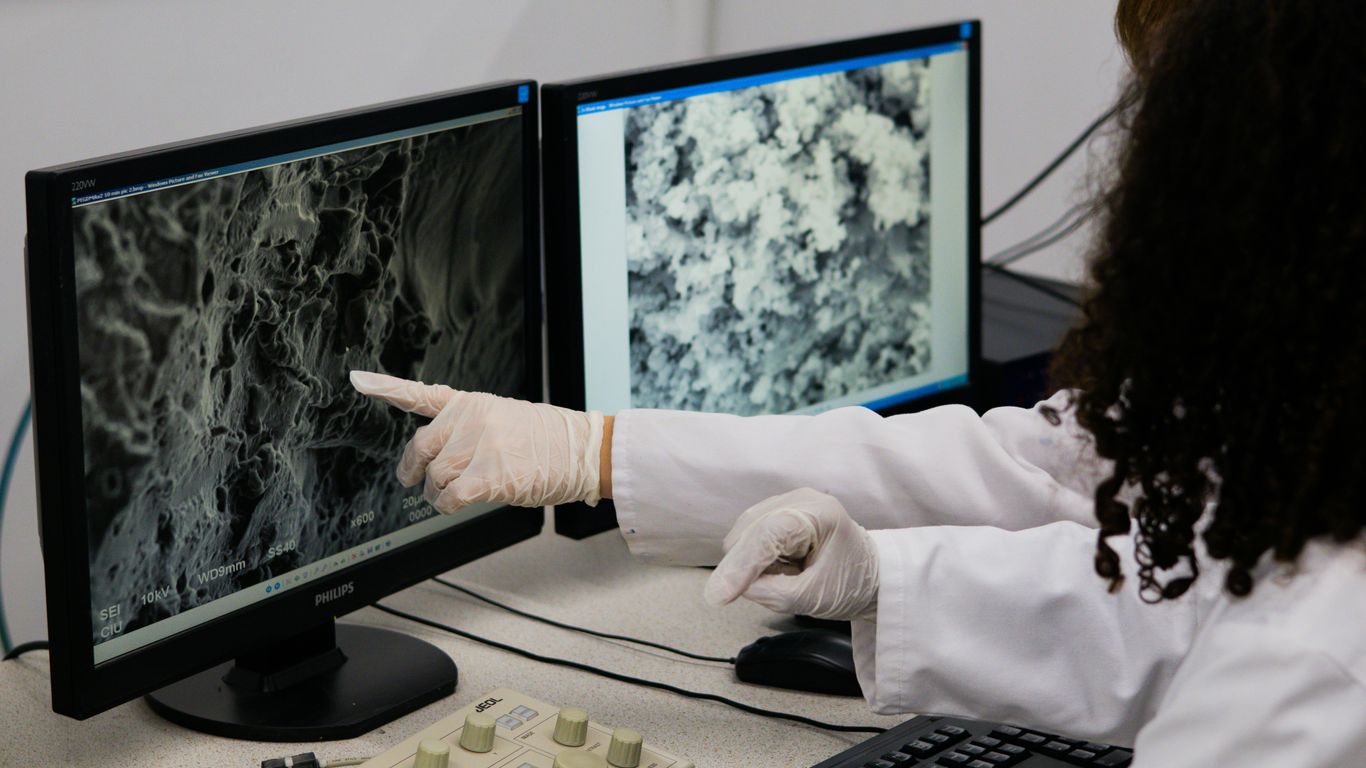
Making stuff at the nanoscale isn’t quite like baking a cake, but there are definitely some key steps and methods involved. It’s all about how you put those tiny building blocks together to get the properties you want. The way you create nanomaterials really dictates what they can do later on.
Chemical Synthesis of Nanostructured Metals and Semiconductors
This is a big one. Think of it like mixing ingredients in a very precise way to get specific nanoparticles. For metals and semiconductors, chemists often use reactions in liquids. They might start with metal salts or other precursor chemicals and then trigger a reaction that causes the metal or semiconductor atoms to clump together, forming tiny particles. The trick is controlling the size and shape of these particles as they form. Factors like temperature, the concentration of chemicals, and even the type of solvent used can make a big difference. It’s a bit like trying to get perfectly uniform sprinkles for a cake – you need the right conditions.
Some common approaches include:
- Precipitation: Dissolving a chemical and then causing it to form solid nanoparticles in the liquid.
- Reduction: Using a chemical agent to remove electrons from metal ions, turning them into neutral metal atoms that can then form particles.
- Sol-Gel Methods: This involves creating a gel from liquid precursors, which can then be dried and heated to form nanostructured materials. We’ll touch on this more later.
Fabrication Techniques for Nanostructured Coatings
So, you’ve got your nanomaterials, but how do you get them onto a surface as a coating? This is where fabrication techniques come in. You don’t want a lumpy, uneven coating; you want something smooth and consistent that actually does what it’s supposed to, whether that’s making a surface tougher, more slippery, or electrically conductive.
Some methods used for coatings include:
- Physical Vapor Deposition (PVD): This involves vaporizing a material and then letting it condense onto the surface you want to coat. Think of it like a very controlled form of evaporation and re-deposition.
- Chemical Vapor Deposition (CVD): Here, chemical reactions happen on or near the surface, depositing the desired nanostructured material. It’s like painting with chemicals that form tiny structures.
- Spray Coating: This is more straightforward, where a liquid containing nanoparticles is sprayed onto a surface. The trick is getting the nanoparticles to stick and form a uniform layer without clumping too much.
Sol-Gel Methods for Nanocomposite Preparation
Sol-gel is a really versatile technique, especially when you want to mix different types of nanomaterials together to create a nanocomposite. A nanocomposite is basically a material made of two or more components, where at least one component is on the nanoscale. This allows you to combine the properties of different materials.
The sol-gel process generally involves these steps:
- Formation of a Sol: A liquid solution (the sol) is prepared containing the precursors for your nanomaterials. These could be metal alkoxides or salts.
- Gelation: Through chemical reactions (like hydrolysis and condensation), the sol transforms into a solid network, or gel, that holds the liquid within its structure.
- Drying and Calcination: The gel is then dried to remove the liquid, and often heated (calcined) to a high temperature. This step solidifies the structure and can help form the final nanostructured components within the composite.
This method is great because you can often control the mixing of different components at a very fine level, leading to materials with unique combinations of strength, conductivity, or optical properties.
Properties and Characterization of Nanomaterials
So, you’ve got these tiny bits of material, right? Nanomaterials. They’re super small, like, smaller than a speck of dust you can even see. Because they’re so small, they start acting a bit weird, or rather, differently than their bigger counterparts. This is where understanding their properties and how to measure them becomes a big deal.
Spectroscopic Analysis of Nanosized Particles
When you’re dealing with stuff at the nanoscale, you can’t just use a regular magnifying glass. You need special tools. Spectroscopy is one of those tools. Think of it like shining different kinds of light on the nanoparticles and seeing how they react. Different materials absorb or reflect light in unique ways, and this gives us clues about what they’re made of and how their atoms are arranged. For instance, techniques like Fourier Transform Infrared (FTIR) spectroscopy can help identify the specific chemical groups present on the surface of these tiny particles. This is important because the surface is a huge part of what makes nanomaterials special. The surface area of nanoparticles is enormous compared to their volume, meaning surface interactions play a massive role in their behavior.
Theoretical Aspects of Nanostructured Materials
It’s not all about looking and measuring, though. Scientists also spend a lot of time thinking about why these materials behave the way they do. This is where theory comes in. When materials get this small, quantum mechanics starts to matter. Things like quantum confinement, where the electrons in the material are restricted in ways they aren’t in bulk materials, can change properties like how they absorb and emit light. Theorists use complex math and computer models to predict these behaviors. They try to figure out how the size and shape of a nanoparticle affect its electronic, magnetic, and optical characteristics. It’s like trying to build a blueprint for how these tiny things should work before you even make them.
Electrical Transport Properties of Semiconductor Nanostructures
Semiconductors are the backbone of a lot of our electronics, and when you make them into nanostructures, things get interesting. Their electrical properties can change dramatically. For example, tiny semiconductor wires or dots can conduct electricity differently than a solid block of the same material. This is partly due to quantum effects and partly because of the sheer number of grain boundaries or interfaces in nanostructured materials. These interfaces can act as roadblocks or pathways for electrons. Researchers study how voltage and current flow through these tiny structures. This knowledge is key for developing next-generation electronic devices, like faster transistors or more efficient solar cells. It’s a complex puzzle, but figuring out how electrons move at this scale is pretty exciting.
Applications of Nanotechnology Materials
So, where are all these tiny materials actually showing up? It turns out, they’re starting to pop up in a lot of places, making things work better or even making entirely new things possible. It’s pretty wild when you think about it.
Enhancements in Coatings and Surface Treatments
Think about surfaces. Nanomaterials can be used to create coatings that do more than just look good. We’re talking about surfaces that can resist scratches way better than before, or coatings that can actually clean themselves. Imagine windows that repel dirt or car paint that stays shiny for ages with less effort. Some of these coatings can even add a layer of protection against fire or stop corrosion in its tracks. It’s like giving everyday objects a super-powered upgrade, just by adding a super thin layer of something small.
Innovations in Electronics and Photonics
This is a big one. Nanotechnology is really shaking things up in the world of electronics. We’re seeing improvements in how quickly computers can process information and how much data can be stored in smaller spaces. Think about faster chips and more efficient memory. In photonics, which deals with light, nanomaterials are helping to make things like solar cells more effective at capturing sunlight, meaning we could get more power from the same panel. It also plays a role in developing better lighting systems and even improving fiber optics for faster communication.
Biotechnology and Medical Applications of Nanomaterials
This is where things get really interesting, and maybe a little sci-fi. Nanomaterials are opening doors in medicine that were previously closed. For example, tiny particles can be designed to deliver drugs directly to specific cells in the body, like cancer cells, which could mean fewer side effects for patients. They’re also being explored for diagnostic tools, helping doctors spot diseases earlier than ever before. And looking further ahead, there’s research into using nanotech to help repair damaged tissues or even organs. It’s a complex area, and safety is a huge focus, but the potential to treat diseases and improve health is pretty significant.
Exploring Diverse Nanomaterial Types
When we talk about nanotechnology, it’s not just one thing. There’s a whole zoo of materials out there, each with its own quirks and uses. Let’s break down some of the main players.
Nano-Sized Oxide Powders and Thin Films
Oxides are super common in the nano world. Think about things like silica (SiO2) and alumina (Al2O3). These aren’t just simple powders; they can be engineered into tiny particles or super-thin layers. For example, nano-sized titanium dioxide (TiO2) is used in sunscreens because it can block UV rays really well. It’s also showing up in self-cleaning surfaces. Then there are things like tin oxide (SnO2) and zirconia (ZrO2), which have their own special electrical or structural properties that make them useful in different gadgets and coatings.
Carbon-Related Nanomaterials
Carbon is a superstar element, and at the nanoscale, it gets even more interesting. You’ve probably heard of carbon nanotubes (CNTs). These are like tiny, hollow tubes made of carbon atoms, and they’re incredibly strong and conductive. They’re being looked at for everything from stronger bike frames to better electronics. Then there are fullerenes, which are like soccer balls made of carbon, and graphene, which is a single layer of carbon atoms arranged in a honeycomb pattern. Graphene is super thin, super strong, and conducts electricity like a champ. It’s got a lot of people excited about its potential in electronics and materials science.
Development of Self-Assembled Nanostructures
This is where things get really cool. Instead of building nanostructures piece by piece, scientists are figuring out how to make them build themselves. It’s like giving molecules a set of instructions and letting them click together into the desired shape. This can lead to very ordered and complex structures, like tiny wires or intricate patterns. Think of it like LEGO bricks that know how to connect themselves. This approach is key for creating advanced materials for things like drug delivery systems or super-efficient solar cells. The ability to control how these tiny building blocks arrange themselves is what really opens up new possibilities.
Here’s a quick look at some common types:
- Oxides: Silica, Alumina, Titanium Dioxide, Tin Oxide, Zirconia
- Carbon-Based: Carbon Nanotubes, Fullerenes, Graphene
- Self-Assembled: Block copolymers, DNA origami, Nanoparticle superlattices
The Future of Nanotechnology Materials
So, what’s next for tiny materials? It’s a pretty exciting picture, honestly. We’re talking about a future where we can build things, atom by atom, molecule by molecule. Imagine creating materials with exactly the properties we need, no more compromises.
Emerging Trends in Nanotechnology Research
Right now, a lot of smart people are working on a few key areas. One big one is making nanomaterials even more precise. We’re getting better at controlling the size and shape of nanoparticles, which means we can fine-tune their abilities. Think about catalysts that are super efficient or sensors that can detect the tiniest traces of something.
- Self-assembly: Materials that can build themselves, like tiny LEGO bricks clicking into place.
- Bio-integration: Nanomaterials that work with living systems, for things like targeted drug delivery or better medical imaging.
- Energy solutions: Developing new materials for solar cells, batteries, and even ways to capture carbon.
Potential for Atom-by-Atom Material Creation
This is where things get really sci-fi, but it’s actually being worked on. The idea is to have machines, or maybe even advanced chemical processes, that can place individual atoms exactly where we want them. This would let us design and build materials from the ground up, with properties we can only dream of today. It’s like having a molecular 3D printer. This level of control could revolutionize everything from electronics to medicine.
Impact on Future Industries and Technologies
If we can truly master atom-by-atom construction, the ripple effects will be huge. Industries that rely on advanced materials will be transformed. We could see:
- Electronics: Computers and devices that are incredibly fast, small, and energy-efficient.
- Medicine: New ways to diagnose and treat diseases, perhaps even repairing damaged tissues at a molecular level.
- Manufacturing: Stronger, lighter materials for everything from airplanes to buildings, making them more durable and sustainable.
- Environmental Tech: Better filters for clean water and air, and more efficient ways to produce clean energy.
It’s a long road, for sure, and there are still challenges to figure out, like making sure these materials are safe and affordable. But the potential is undeniable. The future is looking very, very small, and very, very powerful.
Wrapping Up
So, we’ve covered a lot of ground on nanotechnology materials. It’s a pretty wild field, with tiny stuff doing big things in medicine, electronics, and more. This PDF guide is just the start, really. There’s so much more to learn and discover as scientists keep pushing the limits. Hopefully, this download gives you a good starting point to explore this fascinating area further. Keep an eye out for new developments – this technology is changing fast!