The Future of Driving: Mercedes-Benz Self-Driving Technology
Mercedes-Benz is really pushing the envelope when it comes to cars that can drive themselves. They’re not just talking about it; they’re actually putting this tech into their vehicles and testing it out in the real world. It’s a big deal because it could change how we all get around.
Setting New Industry Standards
This company has been working hard to make self-driving cars a reality, and they’re aiming to be at the front of the pack. Their goal is to create systems that are not only advanced but also safe and reliable. They want to set a new benchmark for what automated driving can be. It’s not just about making a car that can steer itself; it’s about creating a whole new experience for drivers and passengers.
From Level 3 to Level 4 Autonomy
When we talk about self-driving, there are different levels. Mercedes-Benz has already got systems that can handle some driving tasks for you (that’s Level 3), but they’re moving towards Level 4. This means the car can handle most driving situations on its own, without you needing to step in, at least in certain areas or conditions. Think of it like this:
- Level 3: The car drives itself, but you need to be ready to take over when it asks.
- Level 4: The car can handle pretty much everything in its operating domain, and you don’t need to pay attention all the time.
They’re working on making these systems smarter and more capable, so they can handle more complex driving scenarios.
Global Testing and Development
To make sure these systems work everywhere, Mercedes-Benz is testing them all over the world. They’ve been seen testing in places like Beijing, which has some seriously challenging city traffic. This kind of real-world testing is super important. It helps them find any issues and fine-tune the software. They’re gathering data from all these different environments to make the technology as robust as possible before it becomes widely available.
Inside the Self-Driving Mercedes-Benz S-Class
Advanced Sensor Suite
So, what’s actually making this S-Class so smart? It’s a whole bunch of sensors working together. Think cameras, radar, and even lidar, which is that spinning thing you might see on the roof of some test cars. These sensors are like the car’s eyes and ears, constantly scanning the road. They can spot other cars, bikes, people walking, and even lane lines. This complex network of sensors is what allows the car to “see” its surroundings in incredible detail. It’s not just about seeing, though; it’s about understanding what it’s seeing. The car uses all this data to build a 3D picture of the world around it.
Intuitive Digital Displays
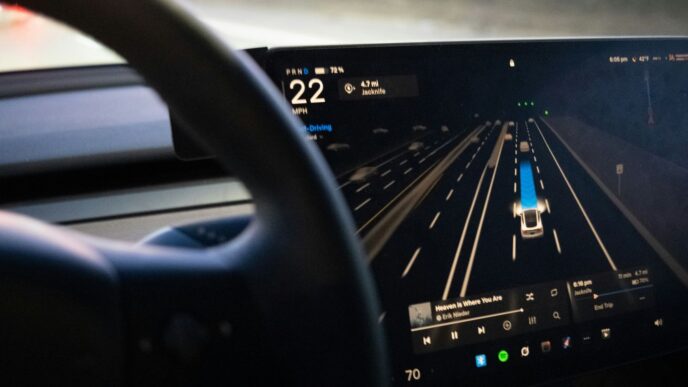
When you’re in the car, you’ll notice some pretty cool screens. One of them shows you what the car is detecting – all the other vehicles, pedestrians, and cyclists nearby. It even highlights the lane markings. It’s designed to be easy to understand, so you can see what the car is thinking. It’s like having a co-pilot who’s constantly giving you a heads-up about everything happening on the road. This display helps build trust, showing you that the car is aware and in control.
Seamless Navigation Integration
Getting the car to drive itself is pretty straightforward. You put in your destination, just like you normally would with a GPS. Then, you start driving manually for a bit, and when you’re ready, you activate the self-driving system. From there, the car takes over. It follows the navigation route, changes lanes when needed to pass slower traffic, and even knows when to speed up or slow down. It’s designed to handle a lot of the driving for you, making longer trips feel a lot less tiring. For example, it can perform tricky maneuvers like U-turns all by itself, which is something many companies are still trying to figure out.
Navigating Complex Urban Environments
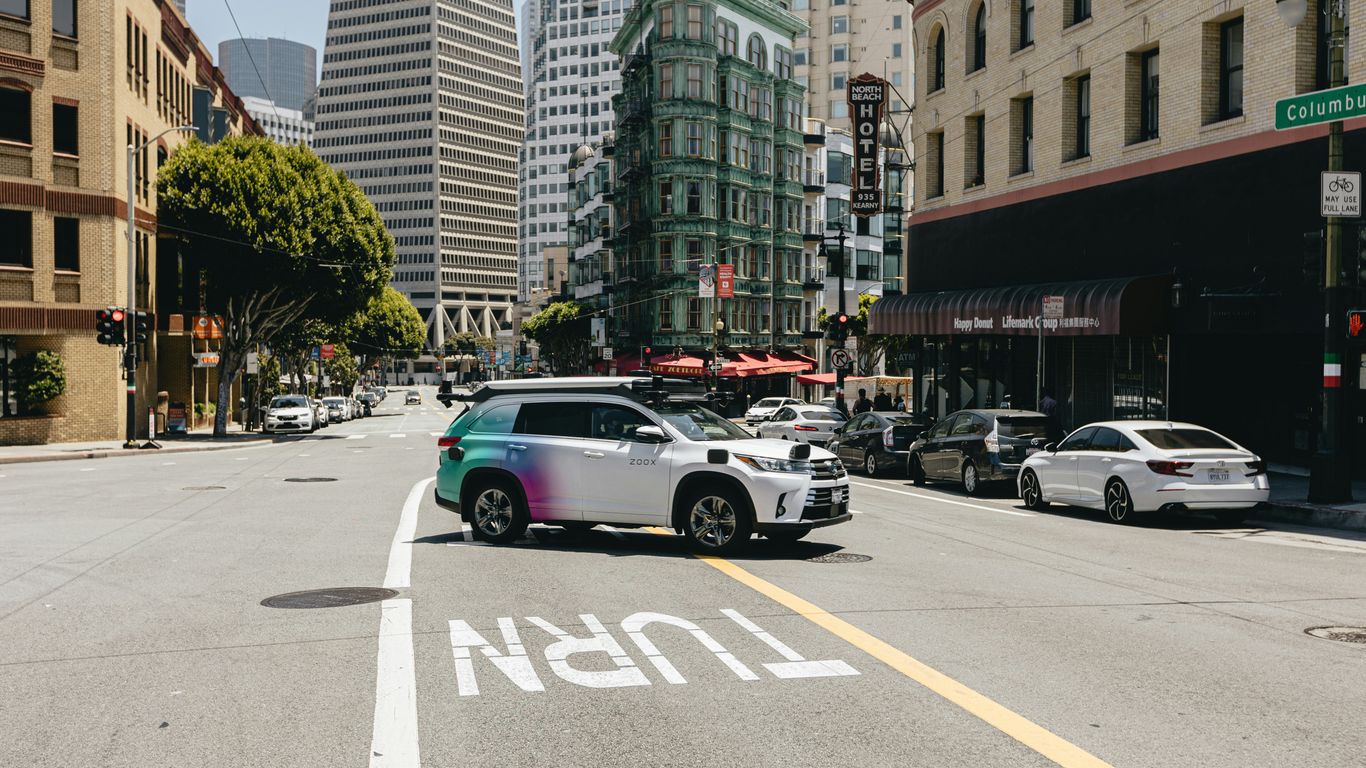
Driving in the city can be a real headache, right? Stop-and-go traffic, unexpected pedestrians, tricky intersections – it’s a lot. But Mercedes-Benz’s self-driving tech is designed to handle all that chaos. Imagine cruising through downtown without touching the steering wheel or pedals. The car can manage itself in heavy traffic, braking and accelerating smoothly. It’s not just about following the car in front; it’s about understanding the whole scene around you.
Hands-Off Driving in City Traffic
This system lets you take your hands off the wheel in certain city situations. Think of those moments when you’re stuck in a slow-moving line of cars. The car can handle the constant starting and stopping, keeping a safe distance from the vehicle ahead. It’s like having a very patient co-pilot who never gets tired of the commute. You can relax a bit, maybe check your messages (but keep an ear out for the system’s prompts, of course).
Autonomous Braking and Acceleration
One of the most impressive parts is how the car manages its speed. It uses its sensors to see other vehicles, cyclists, and even people walking. If the car in front brakes suddenly, your Mercedes will too, but it aims to do it smoothly, not with a jolt. Likewise, when traffic starts moving again, it accelerates gently to keep pace. This makes the ride much more comfortable for everyone inside and helps keep traffic flowing better.
Mastering Challenging Maneuvers Like U-Turns
Performing a U-turn in busy city traffic used to be a nerve-wracking task for many drivers. Mercedes-Benz’s autonomous system is programmed to handle even these difficult moves. The car can assess oncoming traffic, wait for a safe gap, and then execute the U-turn all by itself. This capability shows a high level of sophistication in its programming, dealing with complex scenarios that require precise timing and awareness of multiple moving objects. It’s a testament to the advanced software and sensor fusion working together.
Mercedes-Benz’s Autonomous Driving Strategy
Mercedes-Benz isn’t just building cool self-driving cars; they’ve got a whole plan for how this tech fits into the bigger picture. It’s not just about making a fancy S-Class that drives itself. They’re thinking about how people will use this technology every day, and also how businesses can get in on it.
Consumer and Commercial Applications
Right now, Mercedes is working on a few different fronts. For regular folks, they’re pushing towards systems that can handle more of the driving, especially in tricky city spots. Think about being able to take your hands off the wheel in stop-and-go traffic – that’s the goal for many of their upcoming models. But they’re also looking at the commercial side. This means exploring how self-driving tech can work for things like delivery vehicles or even ride-sharing services. The idea is to make autonomous driving useful for everyone, not just a select few.
Partnerships for Robotaxi Services
To really get robotaxis off the ground, Mercedes is teaming up with other companies. They’ve announced plans to launch Level 4 robotaxis in places like Abu Dhabi. This involves working with partners who can handle the actual operation of the taxi fleet, like managing the cars and picking up passengers. It’s a smart way to get into the robotaxi business without having to build everything from scratch. They’re aiming to start in one city and then expand to more locations as the technology proves itself and regulations allow.
Future Models with Advanced Autonomy
Looking ahead, Mercedes plans to put more advanced self-driving features into a wider range of their vehicles. While the S-Class is often the first to get the top-tier tech, they’re not keeping it exclusive. Systems that allow for hands-off driving are planned for models built on new platforms, like the upcoming MMA architecture. This means that even cars that aren’t the absolute top-of-the-line will eventually get some pretty impressive autonomous capabilities. It’s all part of a gradual rollout, making sure the tech is solid before it becomes standard across the board.
The Technology Behind the Wheel
Proprietary Software and AI
So, how does this Mercedes actually do all that self-driving stuff? It’s not magic, though it might feel like it sometimes. It all comes down to some really smart software and artificial intelligence that Mercedes-Benz has been cooking up. They’ve developed their own systems, which means they have a lot of control over how everything works. Think of it like a chef creating their own secret sauce – it’s tailored exactly to their taste and needs.
This software is constantly learning and improving. The AI is trained on tons of data from real-world driving scenarios. This helps it recognize things like traffic lights, other cars, pedestrians, and even tricky road markings. It’s all about making split-second decisions that keep you safe and moving.
Nvidia Drive AV Platform Integration
While Mercedes-Benz has its own software, it doesn’t build everything from scratch. For the heavy lifting in processing all the sensor data and running the AI models, they team up with Nvidia. You know, the company famous for its graphics cards? Well, they also make powerful computing platforms specifically for self-driving cars, called Nvidia Drive AV. It’s like giving the car a super-brain that can handle all the complex calculations needed for autonomous driving. This platform is designed to be super efficient and powerful, which is exactly what you need when you’re trying to make a car drive itself.
Sensors and Neural Network Processing
All that smart software and processing power needs input, right? That’s where the sensors come in. The car is covered in them – cameras, radar, lidar (which uses lasers to map the environment). These sensors are the car’s eyes and ears, constantly feeding information back to the central computer. This constant stream of data is then processed by neural networks, which are a type of AI inspired by the human brain. These networks are trained to identify patterns and make sense of the chaotic world outside the car. For example, a neural network might be trained to spot a pedestrian stepping out from behind a parked car, even if they’re partially hidden. It’s a complex dance between gathering information and making intelligent decisions based on it, all happening faster than you can blink.
Beyond the S-Class: Autonomous Features Across the Lineup
You might think all this fancy self-driving tech is just for the super-luxury S-Class, but Mercedes-Benz is planning to bring some of it to more everyday cars too. It’s not just about the top-tier models anymore; they’re working on making driving a bit easier for more people.
Level 2++ System for CLA Sedan
Get ready for a new system coming to the third-generation CLA sedan, expected in North America around 2025. This isn’t quite full self-driving, but it’s a big step up. It’s designed to let you take your hands off the wheel for point-to-point driving on busy city streets and faster roads. Think of it as a really advanced cruise control that can handle steering, braking, and accelerating for you, following the navigation route. It’s pretty neat because it doesn’t even need super-detailed maps to work. They’ve been testing this a lot, even in tricky Beijing traffic, and while it’s not perfect yet, it’s getting close to making daily commutes much less stressful.
MMA Platform Integration
This new Level 2++ system isn’t just for the CLA. It’s going to be available on all upcoming Mercedes-Benz models that use the MMA platform. This platform is pretty flexible, supporting both regular gasoline engines and all-electric powertrains. So, whether you’re looking at a gas-powered car or an EV from Mercedes in the future, you might get access to these driver-assistance features. It shows they’re thinking about how to spread this technology across their range, not just keep it in the most expensive cars.
Hands-Off Driving for Everyday Commutes
What does this mean for your average drive? Well, it means less fatigue on long trips or in stop-and-go traffic. The system uses a bunch of sensors – cameras, radar, and ultrasonic ones – along with smart software. It’s programmed to handle the usual driving tasks, letting you relax a bit more. Of course, you still need to pay attention and be ready to take over if the car warns you, but the goal is to reduce the workload significantly. It’s a move towards making advanced driving assistance more common, aiming to change how we experience our daily drives, even in entry-level models.
The Road Ahead
So, what does all this mean for the future of driving? Mercedes-Benz is clearly pushing hard to make self-driving cars a reality, not just a sci-fi dream. From the fancy S-Class prototypes we’ve seen to plans for robotaxis, they’re aiming for a big impact. It’s not perfect yet, and there’s still work to do, but the progress is undeniable. Imagine your commute becoming less stressful, or getting back some of that lost time. That’s the promise, and Mercedes seems determined to deliver it. It’s exciting to think about where this technology will take us, and it looks like Mercedes-Benz will be leading the charge.