Experience the Future of Self-Driving Mercedes
Self-driving cars aren’t just a concept from movies anymore; they’re here, and they’re changing how we get around. Mercedes-Benz is really pushing the envelope with this stuff, making driving safer and, honestly, a lot less stressful, especially when you’re stuck in traffic. They’ve been working on this for a while, and it shows.
Introducing the Next Era of Automotive Innovation
We’re talking about a whole new way to think about cars. It’s not just about getting from point A to point B; it’s about the experience along the way. Mercedes-Benz is leading the charge, bringing practical, real-world automated features to the road right now. Think less about the mechanics of driving and more about what you can do while the car handles the highway.
Mercedes-Benz: A Leader in Autonomous Technology
Mercedes-Benz has a solid reputation for safety, and their work in self-driving tech builds on that. They’re not just throwing sensors at a car; they’re carefully designing systems like DRIVE PILOT and Intelligent Park Pilot. The main goal is to help drivers out in certain situations while keeping safety and responsibility front and center. It’s about making driving easier, not taking the driver out of the loop entirely.
Understanding SAE Levels of Automation
To get a handle on what these cars can do, the industry uses something called SAE Levels. It’s a scale from 0 to 5, where 0 means you’re doing all the driving, and 5 means the car can handle everything, everywhere, all the time. Most cars today have Level 1 or 2 features, which are basically advanced driver aids. But Mercedes-Benz is moving into Level 3 with DRIVE PILOT, which means the car can drive itself under specific conditions. It’s a big step, but it still requires you to be ready to take over when the car asks.
A Deep Dive into DRIVE PILOT
So, what exactly is DRIVE PILOT? It’s Mercedes-Benz’s system for conditional automated driving, meaning the car can handle certain driving tasks for you. This is a big step, putting it at SAE Level 3 automation. But here’s the catch: you, the driver, still need to be ready to take over when the car asks. It’s not a ‘set it and forget it’ kind of deal.
Level 3 Autonomy: Hands Off the Wheel
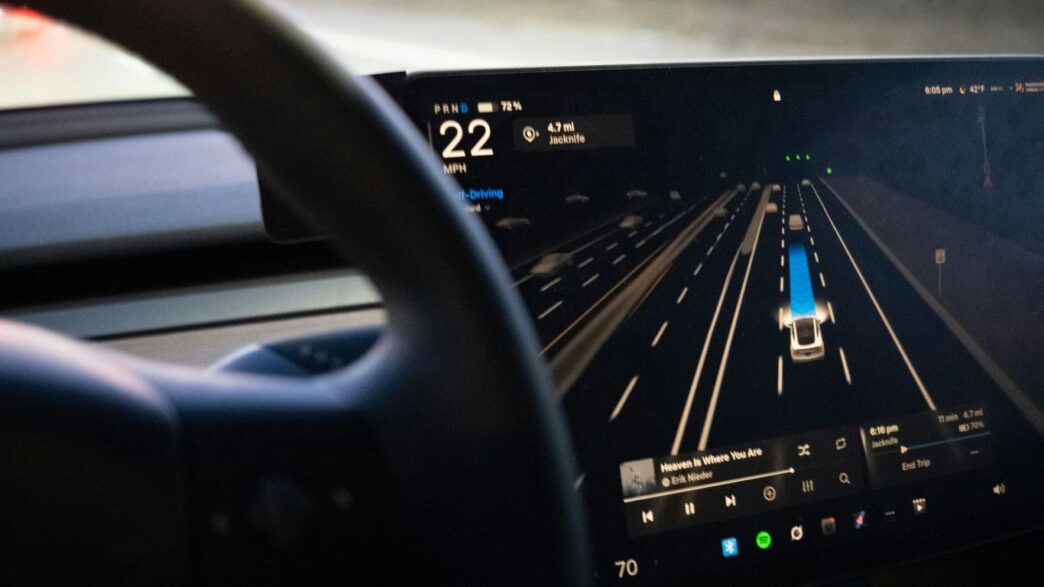
With Level 3, the car can manage steering, braking, and accelerating in specific situations. Think of those frustrating highway traffic jams where you’re crawling along. DRIVE PILOT can take over in these scenarios, allowing you to do things like catch up on emails or even watch a video on the central display. It’s designed to make those tedious driving moments a bit more productive, or at least less stressful. However, the system is designed to alert you well in advance when it needs you back in control, giving you plenty of time to re-engage.
The Technology Behind DRIVE PILOT
This system isn’t magic; it’s a complex network of sensors and sophisticated software. It uses things like LiDAR, radar, and cameras to get a 360-degree view of the road and its surroundings. High-definition maps are also a key component, providing detailed information about the road ahead, like curves, speed limits, and even traffic signs. All this data is processed in real-time to make driving decisions.
Required Operating Conditions for DRIVE PILOT
DRIVE PILOT isn’t an all-the-time feature. It has specific conditions it needs to operate safely:
- Clear Lane Markings: The road needs to have visible lines marking the lanes.
- Traffic Congestion: It’s designed for moderate to heavy traffic, typically at speeds below 40 MPH.
- Good Weather and Lighting: You’ll need clear skies and daylight for it to work.
- No Construction Zones: The system avoids areas with active construction.
- Driver Monitoring: A camera above the display checks that the driver is present and ready.
It’s important to remember that these conditions are for safety. If any of these aren’t met, DRIVE PILOT won’t engage, and you’ll need to drive manually.
Intelligent Parking Solutions
Parking can be a real pain, right? Especially in busy city centers or tight garages. Mercedes-Benz gets it, and they’ve come up with some pretty neat tech to help out. We’re talking about Intelligent Park Pilot, which is basically a super-smart way for your car to park itself.
Automated Valet Parking with Intelligent Park Pilot
This is where things get really futuristic. With Intelligent Park Pilot, your car can actually find a parking spot and park itself, all without you even being in the driver’s seat. Imagine pulling into a compatible parking garage, hopping out, and just telling your car to go park. It’s like having a personal valet, but it’s your car! This system is considered SAE Level 4, meaning it can handle the parking task completely on its own in specific, approved locations.
How Intelligent Park Pilot Works
So, how does it pull off this magic trick? It’s a combination of advanced sensors, cameras, and high-definition maps working together. When you’re in a garage that supports this feature, you can use a smartphone app to send your car to a pre-booked spot. The car then uses its sensors to detect its surroundings, other vehicles, and the parking space itself. It maneuvers carefully, avoiding obstacles, and gets itself neatly parked. When you’re ready to leave, you just use the app again, and your car will drive itself back to a designated pickup area. It really takes the stress out of finding a spot and squeezing into tight spaces.
Safety and Driver Readiness
When you think about self-driving cars, it’s easy to imagine just kicking back and letting the machine handle everything. But with the current Mercedes-Benz DRIVE PILOT features, safety and driver awareness are still right in the center of things. The technology is advanced, but it expects you to be ready to jump in if anything goes sideways.
The Importance of Driver Alertness
You can’t nap, read a book, or hop on a video call just yet. While DRIVE PILOT can take over certain tasks, you’re expected to pay attention to the road and be awake the whole time. The system watches you with an onboard camera to make sure your eyes are open and you’re facing forward. Here’s what’s expected from you:
- Stay awake at all times while DRIVE PILOT is on.
- Watch for takeover requests—these can happen at any moment.
- Be ready to take back control, especially if the car senses something unusual about your driving status or the road conditions change.
Emergency Stop Procedures
Mercedes has put a lot of thought into what happens if you don’t answer when the car needs you to take back control. If you ignore a takeover prompt, here’s what the car does automatically:
- Starts to brake gently in the current lane.
- Turns on the hazard lights to alert other drivers that something’s up.
- Comes to a stop.
- Activates the emergency call system, so help can be sent right away.
- Unlocks the doors to let emergency teams reach you quickly.
This process is designed to keep you and others on the road safe, even if you’re not able to respond.
Emergency Stop Procedure Table:
| Step | Action |
|---|---|
| 1 | Gentle braking in lane |
| 2 | Hazard lights activated |
| 3 | Full stop |
| 4 | Emergency call initiated |
| 5 | Doors unlocked for rescue access |
Understanding Takeover Requests
Takeover requests are the car’s way of letting you know it needs you to drive again—right now. You have ten seconds to grab the wheel, press a pedal, or otherwise show the car you’re back in charge. That means no zoning out!
A typical sequence:
- The system detects something requiring your control (maybe the weather gets bad or the car leaves the approved freeway).
- You see and hear a warning telling you to take over.
- If you don’t react in ten seconds, the emergency stop procedure kicks in.
It’s not foolproof, but it’s far from just giving up control—DRIVE PILOT still holds the driver accountable. Technology is inching forward, but humans still play the final, vital role for now.
The Sensor Fusion Behind the System
LiDAR, Radar, and Ultrasonic Sensors
So, how does a car actually see the road and everything around it well enough to drive itself? It’s not just one thing, it’s a whole bunch of different sensors working together. Think of it like your own senses – you use your eyes, ears, and even touch to figure out what’s going on. Mercedes-Benz’s system does something similar, but with high-tech gear.
First up, there’s LiDAR. This uses lasers to create a super detailed 3D map of the surroundings. It’s really good at spotting objects and figuring out their exact distance, even in tricky lighting. Then you have radar sensors. These are great for seeing through bad weather like fog or heavy rain, and they’re also good at tracking how fast other cars are moving. Finally, ultrasonic sensors are used for close-up stuff, like when the car is parking or maneuvering in tight spots. They’re like the car’s parking sensors, but way more advanced.
The Role of High-Definition Maps
These sensors are amazing, but they need a bit of help to really understand where they are and what the road ahead looks like. That’s where high-definition maps come in. These aren’t your average GPS maps; they’re incredibly detailed, showing things like lane markings, road edges, speed limits, and even the shape of the road, like curves and inclines. The car uses these maps to know what to expect and to double-check what its sensors are seeing. It’s like having a super-accurate blueprint of the road system.
Camera and Microphone Integration
Beyond the lasers and radar waves, cameras and microphones play a part too. Cameras are used to read traffic signs, detect traffic lights, and identify lane markings that might be faded. They help the car understand the visual cues that human drivers rely on. Microphones are a bit less obvious, but they can pick up things like emergency vehicle sirens, which is another layer of awareness. All these different inputs – from LiDAR, radar, ultrasonic sensors, maps, cameras, and microphones – get combined, or ‘fused’, by the car’s computer to create a complete picture of the driving environment. This allows the car to make informed decisions about acceleration, braking, and steering.
Models Featuring Self-Driving Mercedes Technology
Exploring the S-Class and EQS Sedan
So, which Mercedes-Benz models are actually packing this futuristic self-driving tech right now? Well, if you’re looking to experience DRIVE PILOT, the company’s Level 3 system, you’ll want to check out the S-Class Sedan and the EQS Sedan. These are the vehicles where Mercedes-Benz is currently rolling out this advanced capability. It’s not on every single car they make, mind you, but these two are the flagships for this particular innovation. The S-Class and EQS Sedan are the current stars of the show for Mercedes-Benz’s conditionally automated driving.
Availability in Select Markets
Now, before you get too excited and head down to your local dealer, there’s a bit of a catch. DRIVE PILOT isn’t available everywhere. Mercedes-Benz is rolling this out in specific markets, and it also depends on local regulations. Think of it like this: the technology is ready, but the roads and laws need to be ready too. So, what’s available in one country or even one state might not be in another. It’s a bit of a patchwork right now, which is pretty typical for cutting-edge tech like this.
How to Experience These Features
Want to get behind the wheel? Your best bet is to connect with a Mercedes-Benz dealership. They can tell you exactly which models they have in stock that are equipped with DRIVE PILOT and are legal to use in your area. You’ll likely need to schedule a test drive, and it’s a good idea to ask the salesperson to walk you through exactly how the system works and what its limitations are. Remember, even with Level 3, you still need to be ready to take over when the car asks. It’s an amazing glimpse into the future, but it’s still a system that requires your attention when it matters.
The Road to Full Autonomy
What Level 5 Autonomy Entails
So, we’ve talked about Level 3 systems like DRIVE PILOT, which let you take your hands off the wheel under certain conditions. But what’s the ultimate goal? That’s Level 5 autonomy. Think of it as a car that can handle absolutely everything a human driver can, in any situation, without ever needing you to step in. Rain, snow, rush hour traffic jams in the city, winding country roads – the car just drives itself, no questions asked. It’s the dream of truly driverless travel, where you can just sit back and relax, or get some work done, or even take a nap.
Mercedes-Benz’s Long-Term Vision
Mercedes-Benz is definitely playing the long game here. They’re not just focused on the next step; they’re building towards that Level 5 future. This means a lot of ongoing work behind the scenes. They’re pouring resources into making the artificial intelligence smarter, so the car can figure out tricky situations on its own. Plus, they’re looking at how cars can talk to each other and to the road infrastructure using things like 5G. It’s all about creating a connected ecosystem where the car isn’t just an isolated box on wheels.
Advancements in AI and Connectivity
Getting to Level 5 isn’t just about better sensors, though those are important. It’s really about the brains and the communication. The AI needs to be incredibly sophisticated to handle the unpredictable nature of real-world driving. Imagine a child chasing a ball into the street – the AI needs to react instantly and safely. Connectivity is also key. Cars will need to communicate with traffic lights, other vehicles, and even pedestrians’ phones to anticipate problems and make driving smoother and safer for everyone. It’s a massive undertaking, but it’s where the industry is headed.
Conclusion
Trying out the self-driving Mercedes felt a bit like stepping into the future, but with my feet still firmly planted in the present. The tech is impressive—there’s no denying that. Watching the car handle stop-and-go traffic while I scrolled through my phone was both weird and kind of relaxing. Still, it’s clear we’re not at the point where you can just nap in the back seat and let the car do everything. You have to stay alert, ready to jump in if the car asks for help. It’s a big leap from cruise control, but not quite the sci-fi dream yet. For now, these features make driving less stressful, especially in traffic jams or tight parking spots. Mercedes is definitely leading the way, but there are still a lot of questions about safety, rules, and how people will actually use this stuff day-to-day. If you’re curious, it’s worth taking a test drive and seeing for yourself. The future’s not here all the way, but it’s getting closer—one cautious step at a time.