Unveiling the Latest Spacenews Magazine Discoveries
This issue of Spacenews Magazine is packed with some seriously cool new findings that are changing how we see the universe. It feels like every week there’s something new, and this month is no exception.
A New Atlas of the Milky Way’s Ghost Particles
Did you know that trillions of tiny, invisible particles called neutrinos zip through you every second? They’re like cosmic messengers, but for a long time, we didn’t really know where most of them came from within our own galaxy. Well, scientists have put together a new map, the most detailed one yet, showing us the origins of these "ghost particles" in the Milky Way. It’s pretty wild to think about what secrets they might be carrying from the hearts of stars.
Unmasking the Sun’s Hidden Gamma Ray Factory
Solar flares are intense, right? But figuring out exactly where the most powerful radiation bursts come from has been a puzzle for ages. Now, researchers have pinpointed the source. They’ve identified a population of particles in the Sun’s atmosphere that get supercharged, creating these intense gamma rays. It’s like finding the hidden engine behind some of the Sun’s most dramatic outbursts.
Two New Exoplanets and Habitable Zone Definitions
We keep finding new planets outside our solar system, and this issue talks about two more. But it’s not just about finding them; it’s about understanding if they could support life. The magazine explores how our ideas about the "habitable zone" – that sweet spot where liquid water could exist – might need tweaking. New research is suggesting a broader "temperate zone," which could help us identify planets that are good candidates for study with telescopes like the JWST.
Exploring Cosmic Phenomena and Celestial Bodies
This section of Spacenews Magazine really gets into the nitty-gritty of what’s happening out there in the universe. It’s not just about pretty pictures; it’s about the science behind the spectacle.
Black Holes: A Seesaw Between Winds and Jets
So, black holes. We usually think of them as cosmic vacuum cleaners, right? Well, turns out they’re a bit more complex. New research suggests that black holes don’t just gobble up everything around them. They also have a way of managing that material. Scientists have found that black holes can "choose" whether to blast matter away as powerful jets or push it out in less focused winds. It’s like they have two different ways of dealing with their leftovers, and understanding this balance helps us figure out how galaxies evolve.
Dwarf Galaxies and Their Massive Black Holes
Speaking of galaxies, did you know that even the smaller ones, called dwarf galaxies, can have black holes? And not just tiny ones either. A recent survey looked at over 8,000 galaxies and found that the number of active black holes seems to increase as the galaxy gets bigger. This is especially noticeable in galaxies that are about the same size as our own Milky Way. It makes you wonder about the early universe and how these supermassive objects got so big, so fast.
Analysis of Chang’e-6 Samples on the Moon
The Moon, our closest neighbor, still holds plenty of secrets. For years, scientists have been puzzled by why the near side looks so different from the far side. The near side has those dark, flat plains, while the far side is more rugged and has a thicker crust. Now, with the analysis of samples brought back by China’s Chang’e-6 mission, we might be getting closer to understanding what caused this difference. It’s a big step in figuring out the Moon’s history and how it formed.
The Search for Life Beyond Earth
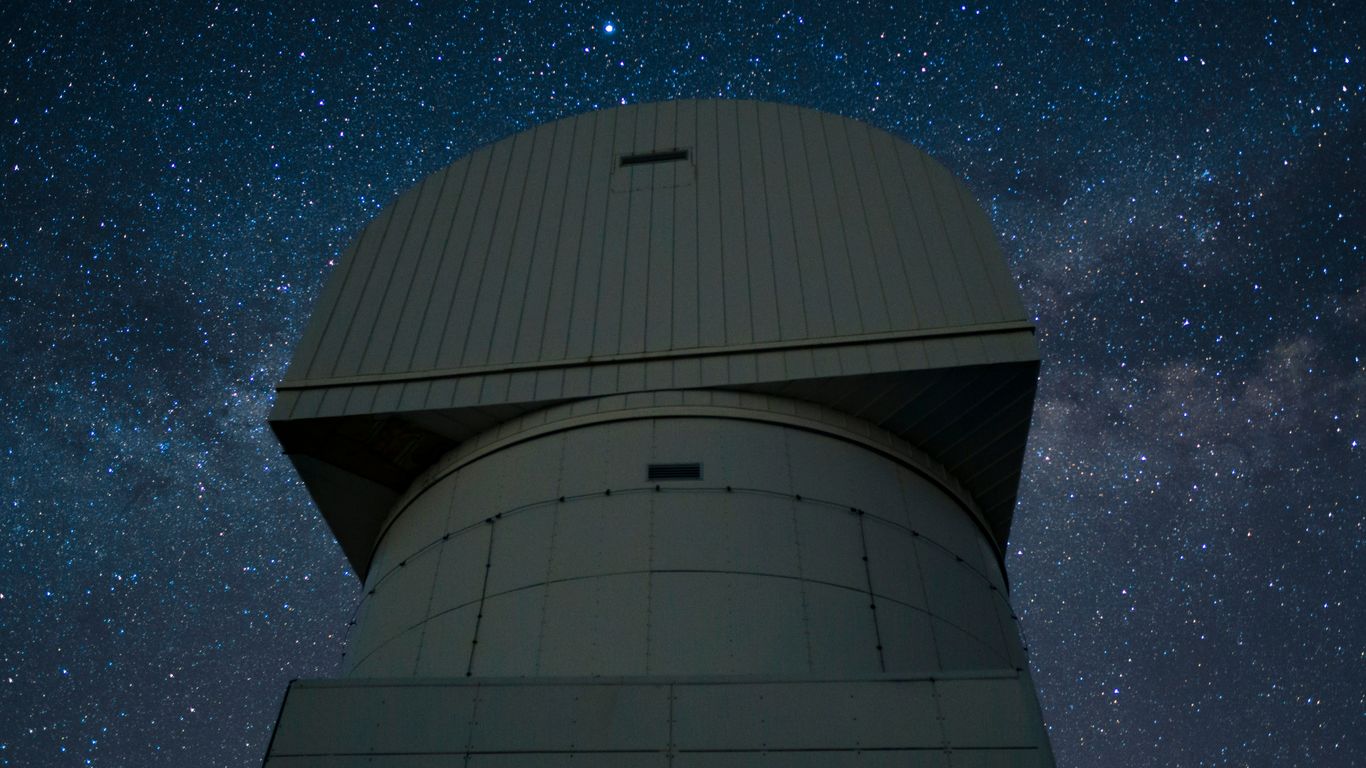
Are we alone? It’s the big question, right? This section of Spacenews Magazine really digs into how scientists are trying to find out. It’s not just about spotting little green men, though. We’re talking about looking for the building blocks of life and understanding what makes a planet a good candidate for it.
Searching for ‘Green Oceans’ and ‘Purple Earths’
Imagine looking at a distant planet and seeing signs of life. That’s the goal here. Astronomers are working on new ways to analyze the light from exoplanets. They want to see if they can detect specific colors that might indicate oceans or even plant life. Think "green oceans" for water and "purple Earths" if alien plants use different pigments than ours. It’s a tough job, requiring super-powerful telescopes that can capture a wide range of light with amazing detail. They’re trying to figure out what instruments and systems are needed to make these observations possible.
Could Bees Be a Model for SETI Searches?
This is a pretty wild idea, but hear me out. When we think about finding alien intelligence (SETI), we often imagine them sending us radio signals. But what if they communicate differently? This article explores the idea of using bees as a model. Bees have a complex communication system, using dances and pheromones. Could advanced alien life use something similar, but on a cosmic scale? It makes you wonder about the different ways life might express itself and how we might miss it if we’re only looking for what we expect.
Deep Magma Oceans and Super-Earth Habitability
When we talk about habitable planets, we usually think about liquid water on the surface. But what about what’s going on underneath? For those massive planets called "super-Earths," there might be deep oceans of molten rock. These aren’t just hot messes; they could actually be helping these planets out. The idea is that these magma oceans might generate strong magnetic fields. These fields act like a shield, protecting the planet’s surface from harmful radiation from space. So, a planet with a fiery interior could actually be a safer bet for life than we initially thought.
Understanding Planetary Interiors and Atmospheres
Ever wonder what’s really going on inside planets, both here and far away? It’s not just about what we see on the surface. Scientists are digging deep, sometimes literally, to figure out the hidden workings of these celestial bodies.
Superionic Water and Ice Giant Magnetic Fields
Think about water. We know it as a liquid, solid ice, or gas. But under extreme pressure, like deep inside ice giants such as Uranus and Neptune, water can become something else entirely: superionic water. This is a state where the oxygen atoms form a crystal lattice, but the hydrogen atoms flow around like a liquid. This bizarre state is thought to play a big role in generating the magnetic fields of these planets. The movement of this charged, fluid-like hydrogen within the superionic water could be the dynamo that creates powerful magnetic fields, which are often tilted and oddly shaped compared to Earth’s.
The Universe’s Most Common Water: A Hot Mess
Water is everywhere, but it’s not always the familiar H₂O we know. In many parts of the universe, water exists in extremely hot and dense conditions. This ‘hot mess’ of water, often found in the atmospheres of exoplanets or in the disks around young stars, behaves very differently from the water on Earth. It can be so hot that it doesn’t condense into liquid or ice, and its chemical properties change dramatically. Understanding this extreme water is key to figuring out the conditions on other worlds.
Martian Chemistry Driven by Electricity
Mars is a dry, cold place, so how do its chemicals form? For a long time, scientists thought water and heat were the main drivers, like on Earth. But Mars doesn’t have much of either. New research suggests that electricity might be the unsung hero of Martian chemistry. Electrical discharges, similar to lightning, could be providing the energy needed to drive chemical reactions in the Martian soil and atmosphere, creating compounds we wouldn’t expect in such an environment. It’s a whole new way of looking at how planetary chemistry works, especially on worlds very different from our own.
Spacenews Magazine: A Legacy of Exploration

Astronomy Magazine: 50 Years and Counting
For half a century, Astronomy magazine has been a go-to source for anyone looking up at the night sky. It’s not just about pretty pictures, though it has plenty of those. Each issue is packed with solid reporting from scientists, tips for stargazers, and reviews of the latest gear. Whether you’re just starting out or you’ve been looking through telescopes for years, it’s a friendly read that keeps you connected to what’s happening out there.
Perspectives from the Spacenews Community
Spacenews isn’t just a publication; it’s a hub for people who care deeply about space. They actively encourage a wide range of voices to share their thoughts. If you’ve got an idea, a concern, or just a strong opinion about where we’re headed in space, they want to hear it. You can send your viewpoints to opinion@spacenews.com. It’s a great way to get your perspective out there, whether it ends up online or in the next print edition. Just remember, the opinions shared are from the authors themselves, not necessarily the magazine’s official stance.
Future of Space Exploration and NASA’s Role
NASA’s Path Forward: A Mission-First Mandate
It feels like NASA is at a bit of a crossroads right now. We’ve seen some leadership changes, budget questions, and a general sense that things could be moving faster. But honestly, this kind of disruption can actually be a good thing. It’s a chance to really shake things up and get back to what made NASA so amazing in the first place: the mission.
Think about it. People don’t go to NASA to just punch a clock; they go because they’re inspired by the mission. When that mission gets lost, and career moves become more important than, well, the actual mission, that’s when things start to slide. We need to get back to a "mission first" mentality. It’s not just about having cool rockets; it’s about having clear goals that drive everything else. This is especially important now, with other countries making big strides in space and commercial companies innovating like crazy. We can’t afford to just tread water.
A Generational Opportunity for American Space Leadership
This moment, as chaotic as it might seem, is actually a huge opportunity. It’s a chance to rebuild NASA’s culture and set a course that lasts for decades, not just a few years. We need to stop making decisions based on what’s easy or what fits the current political climate. Instead, we should be building a strategy that has real staying power.
What does that look like? For starters, we need to start with the end goal in mind. What are we trying to achieve? Then, we figure out what we need to get there. It’s the opposite of what sometimes happens, where we develop cool technology and then try to find a mission for it. That’s backward. We also need to be more open about how we make decisions and why we invest in certain projects. People need to see that the money is being spent wisely and that it’s all tied back to those big mission goals.
Strategic Principles for Lasting Success
To make sure NASA stays on track, we need a few guiding principles:
- Objective-Based Planning: Always start with the mission objective. What do we want to accomplish? Then, work backward to figure out the technology and capabilities needed. This prevents us from getting sidetracked by cool tech that doesn’t serve a real purpose.
- Technology Serves the Mission: Technology development should be driven by mission needs, not the other way around. If a specific technology isn’t helping us achieve our goals, we shouldn’t be pouring resources into it just because it’s interesting.
- Embrace Calculated Risk: Big discoveries often come with big risks. We need to be willing to take those risks, but also be smart about it. That means having the courage to cut our losses if a project isn’t working out. It’s not failure; it’s just good management and responsible use of taxpayer money.
Ultimately, NASA’s greatest achievements have always come when the mission was the clear focus. By adopting these principles, we can ensure that America continues to lead in space for generations to come.
Keep Looking Up!
So, that’s a quick look at some of the cool stuff happening out there in space. From weird black hole behavior to new ideas about alien worlds, it’s a busy universe. This magazine really does a great job of breaking it all down, making it easy to follow even if you’re not a rocket scientist. It’s a good reminder that there’s always something new to learn and explore, whether you’re looking through a telescope or just reading about it. Definitely worth picking up the next issue if you want to stay in the loop.