Understanding Core Robotics Concepts
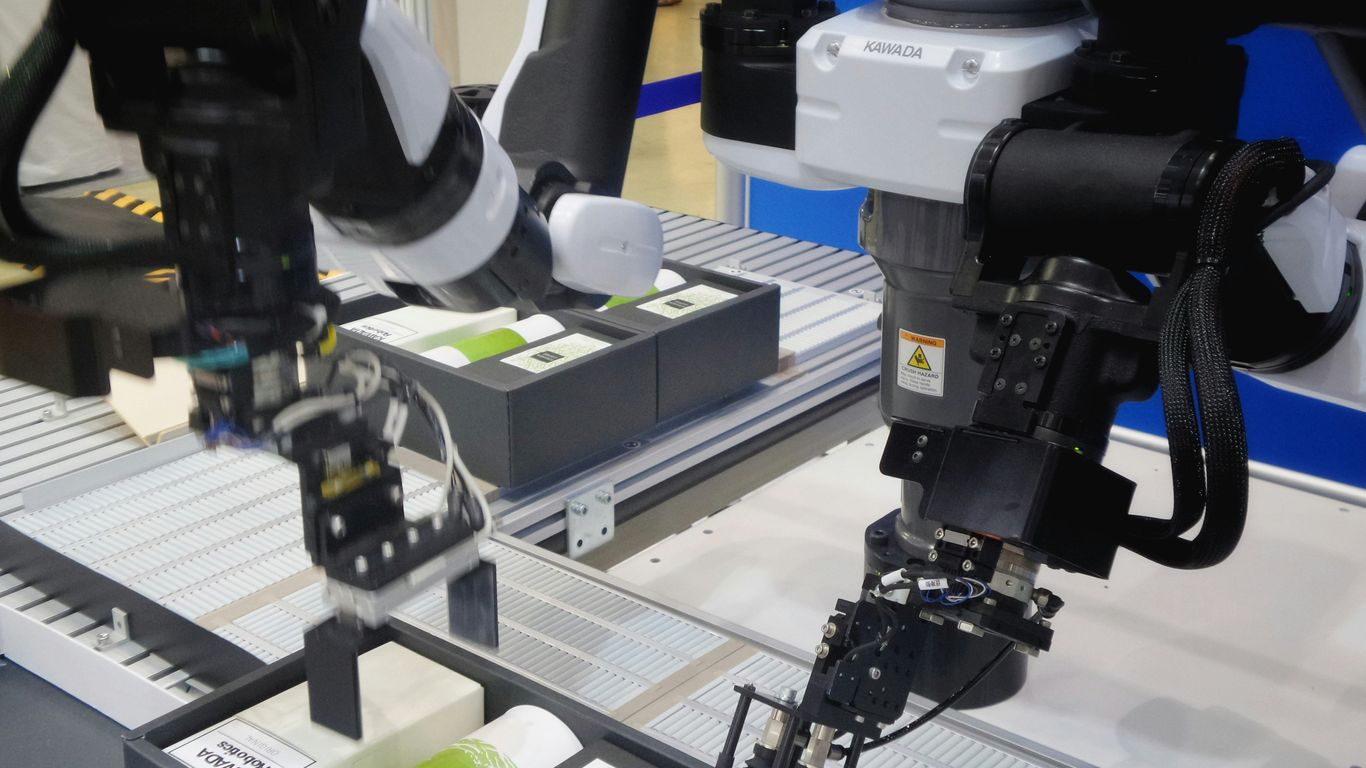
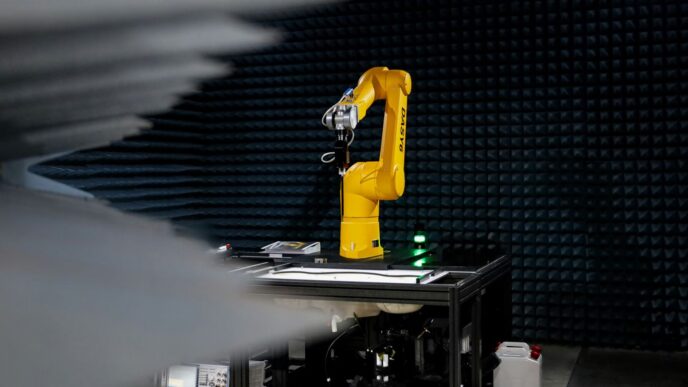
So, what exactly is robotics? At its heart, it’s a field where engineering meets computer science to build machines that can do things for us. Think of it as the art and science of creating intelligent devices, from the industrial arms you see in factories to the little vacuum cleaners that zip around your living room. The main goal is to make machines that can help people out, whether that’s by doing dangerous jobs, repetitive tasks, or even just making our lives a bit easier.
Defining Robotics and Its Significance
Robotics is all about designing, building, and operating robots. It’s not just about the physical machine, though; it’s also about the brains behind it – the software and programming that tell it what to do. The significance of robotics is huge. These machines can perform tasks that are too risky, too tedious, or too precise for humans. They can work in environments that are harmful to us, like deep underwater or in space, and they can do things with incredible accuracy, over and over again. This ability to automate tasks and extend human capabilities is why robotics is so important in so many different areas today.
The Interdisciplinary Nature of Robotics
Robotics isn’t a one-trick pony; it’s a real mix of different subjects. You’ve got mechanical engineering for the body and movement, electrical engineering for the power and circuits, and computer science for the programming and intelligence. Then there’s control theory, which is all about how to make the robot move and react correctly, and even psychology and design when we think about how robots interact with people. It’s this blend that makes robotics so interesting and challenging. You can’t really be a great roboticist without understanding a bit of everything.
Key Components of Robotic Design
Building a robot involves several key parts working together. You need:
- Sensors: These are like the robot’s senses, gathering information about its surroundings or its own state. Think cameras, touch sensors, or even just simple switches.
- Actuators: These are the parts that make the robot move, like motors or hydraulic systems. They take commands and turn them into physical action.
- Control System: This is the robot’s brain. It takes information from the sensors, processes it, and sends commands to the actuators. This can range from simple pre-programmed instructions to complex AI that learns and decides.
- Power Source: Robots need energy to run, usually from batteries or a direct power connection.
- Structure: This is the physical body of the robot, holding everything together and allowing for movement.
Exploring Related Fields and Technologies
Robotics doesn’t exist in a vacuum, you know? It’s like a big, interconnected web. To really get what robots are doing and where they’re headed, we need to look at the other areas that make them tick. Think of it as understanding the ingredients before you can appreciate the final dish.
Artificial Intelligence and Machine Learning in Robotics
This is probably the most talked-about connection. Artificial Intelligence (AI) is what gives robots their "brains." It’s the science of making machines smart, able to learn, reason, and make decisions. Machine Learning (ML), a subset of AI, is particularly important. Instead of programming every single possible scenario, ML allows robots to learn from data. They can spot patterns, improve their performance over time, and adapt to new situations without explicit instructions for each one. This is how a robot can learn to identify different objects, understand spoken commands, or even predict when a piece of machinery might fail.
- Learning from experience: Robots can get better at tasks the more they do them.
- Pattern recognition: Identifying objects, faces, or anomalies in data.
- Decision making: Choosing the best course of action based on learned information.
Cybernetics and Control Systems
Cybernetics is an older field, but its principles are still super relevant. It’s all about how systems, whether biological or mechanical, regulate themselves and interact with their environment. Think of feedback loops. A robot arm moves, sensors detect its position, and that information is fed back to the control system to make sure it reaches the exact target. Control systems are the practical application of these ideas. They are the algorithms and hardware that manage a robot’s movements, balance, and overall operation. Without robust control systems, even the smartest AI would just result in a clumsy, uncoordinated machine.
Mechatronics: The Integration of Disciplines
Mechatronics is where the magic really happens in terms of building a robot. It’s not just about software or just about hardware; it’s about how they work together. Mechatronics blends mechanical engineering, electrical engineering, computer science, and control engineering. It’s about designing systems where mechanical parts, electronics, and software are all integrated from the ground up. This interdisciplinary approach is what allows us to create robots that are not only intelligent but also physically capable, efficient, and reliable. It’s the reason we can have robots that can perform delicate surgeries or navigate rough terrain.
| Discipline | Contribution to Robotics |
|---|---|
| Mechanical Eng. | Design of physical structure, actuators, manipulators |
| Electrical Eng. | Power systems, sensors, motors, wiring |
| Computer Science | Programming, AI, machine learning, data processing |
| Control Engineering | Motion control, stability, feedback systems, navigation |
Classifying and Categorizing Robots
Sorting robots into clear categories helps us understand where and how they fit in our lives. Every type of robot serves a special purpose, often shaped by its design or the problems it aims to solve. Here’s a look at how robots are grouped and what sets each category apart.
Types of Robots by Form and Function
Robots come in many shapes, and each form suits the job it needs to do. Here are some of the most common types:
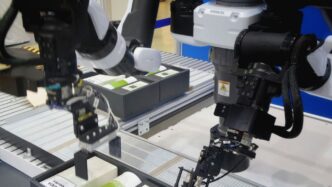
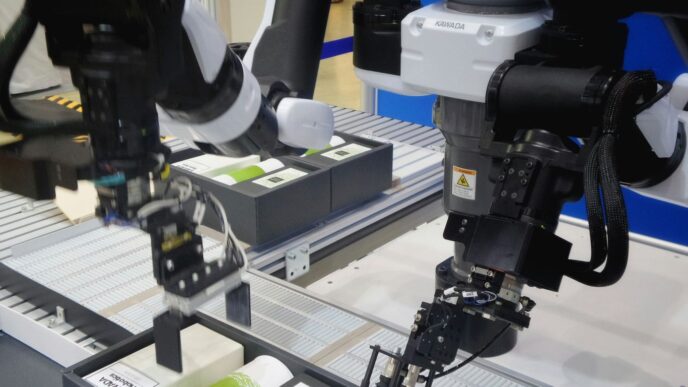
- Industrial robots: Usually found in factories, these robots handle welding, assembly, painting, and heavy lifting on production lines.
- Medical robots: Used for surgery, diagnostics, or assisting patients in hospitals. Think of robotic arms in the operating room or devices helping people recover after injury.
- Service robots: These handle tasks like cleaning, delivering items, or even helping customers in stores and hotels.
- Educational robots: Used in classrooms or workshops to help students learn programming, mechanics, and creative problem-solving.
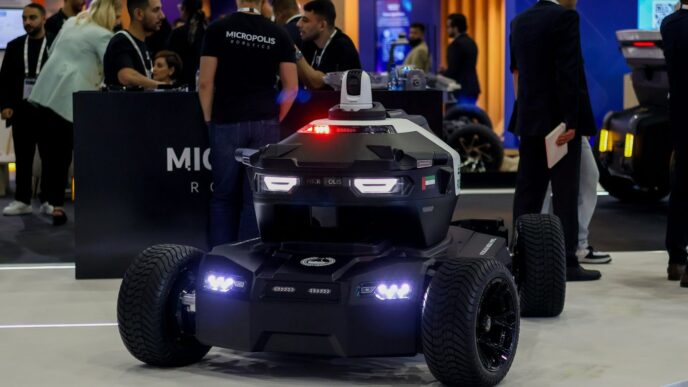
- Military and defense robots: Built for bomb disposal, surveillance, or search-and-rescue in dangerous places.
Here’s a quick table to show where these robots usually show up:
| Robot Type | Typical Environment | Main Purpose |
|---|---|---|
| Industrial | Factories, warehouses | Manufacturing, assembly, material handling |
| Medical | Hospitals, clinics | Surgery, rehabilitation, diagnostics |
| Service | Homes, public spaces | Cleaning, delivery, customer support |
| Educational | Schools, labs | Teaching, skill development |
| Military/Defense | Fields, disaster zones | Surveillance, rescue, hazardous tasks |
Robots in Specific Applications
If you look further, robots are popping up in all sorts of interesting niches:
- Exploration robots map the ocean floor, explore caves, or drive across Mars.
- Entertainment robots act as robotic pets or interactive toys.
- Agricultural robots plant seeds, monitor crops, and harvest produce.
- Autonomous vehicles (like self-driving cars and delivery drones) handle transportation.
- Retail robots stock shelves or guide customers in stores.
Classifications Based on Locomotion
How a robot moves also defines its category. Some get around by rolling, some walk, and others even swim or fly:
- Wheeled robots: The most common; great for smooth surfaces—think warehouse robots.
- Legged robots: Mimic walking or climbing, perfect for uneven or unpredictable areas.
- Aerial robots (drones): Fly using rotors or wings, often for delivery, surveillance, or filming.
- Underwater robots: Swim or crawl along the sea floor to research, repair, or monitor.
- Hybrid robots: Mix two or more ways of moving to handle tough or changing conditions.
This quick breakdown shows just how many ways there are to sort and talk about robots. Whether it’s their job, how they look, or how they get around, there’s a robot for just about any task you can think of.
The Evolution and History of Robotics
Early Concepts and Fictional Inspirations
Long before we had actual robots whirring around, people were dreaming them up. Think way back to ancient Greece, where inventors like Hero of Alexandria were building mechanical contraptions that could move on their own, powered by steam. These weren’t robots as we know them today, but they show that the idea of making machines mimic life has been around for ages. Fast forward a bit, and you see these ideas popping up in stories and plays. The word "robot" itself actually comes from a Czech play called "R.U.R." (Rossum’s Universal Robots) from 1920. It painted a picture of artificial workers, which really got people thinking about what machines could do.
Pioneering Inventions and Milestones
The real shift towards modern robotics started gaining steam in the mid-20th century. A big moment was the creation of Unimate in the 1950s by George Devol and Joseph Engelberger. This was the first programmable industrial robot, and it was put to work on an assembly line at General Motors. It was a game-changer for manufacturing, handling repetitive and tough jobs. Then came Shakey the robot in the late 1960s from Stanford Research Institute. Shakey was special because it could sense its surroundings and move around, making it one of the first mobile robots that could actually interact with its environment, even if in a limited way. These early machines were clunky, sure, but they laid the foundation for everything that followed.
The Modern Era of Robotic Development
From those early days, robotics has just exploded. We’ve seen robots go from factory floors to outer space, exploring planets with probes and assisting astronauts. The development of AI and better sensors has made robots smarter and more capable. Now, we’re seeing robots that can do delicate surgery, help out around the house, and even work alongside humans in collaborative ways. It’s a field that’s constantly changing, with new ideas and technologies popping up all the time, pushing the boundaries of what machines can achieve.
Robotics Synonyms and Semantic Connections
When we talk about robots, a bunch of words pop into our heads, right? It’s not always just "robot." Sometimes, people use different terms, and understanding these can really clear things up. It’s like knowing that "car" and "automobile" mean pretty much the same thing, but "truck" is a bit different. Let’s break down some of these related words.
Automation and Robotics
Often, "automation" and "robotics" get tossed around like they’re identical twins. They’re related, for sure, but not quite the same. Think of automation as the big umbrella. It’s all about using technology to do tasks with less human input. Robotics is a part of that, specifically when we’re talking about physical machines – the robots themselves – that can move and interact with the world.
- Automation: The broader concept of machines doing work automatically.
- Robotics: The design, building, and use of robots, which are often the tools that achieve automation.
- Robotic Process Automation (RPA): This is a bit different; it’s software that mimics human actions on a computer, like filling out forms or clicking buttons. It’s automation, but without a physical robot.
Terms Related to Robot Behavior and Interaction
How robots act and how they get along with us (or each other) is another area where words matter. We’ve got robots that are supposed to be helpful, some that are designed to be almost like pets, and others that work together.
- Autonomous: This means a robot can make decisions and act on its own, without constant human control. Think of a self-driving car or a drone that can map an area by itself.
- Teleoperation/Telerobotics: This is when a human is controlling a robot from a distance. It’s like a remote control, but often for more complex machines, like a robot arm used in surgery or a rover on Mars.
- Human-Robot Interaction (HRI): This is the study of how people and robots communicate and work together. It covers everything from how we give robots commands to how they signal their intentions to us.
Synonyms for Roboticists and Their Work
What do you call someone who works with robots? And what about the stuff they do? While "roboticist" is a common term, there are other ways to describe the people and the tasks involved.
- Roboticist: The most direct term for someone who designs, builds, or works with robots.
- Automation Engineer: Often, these engineers focus on implementing automated systems, which frequently involve robots.
- Mechatronics Engineer: This role blends mechanical engineering, electronics, computer science, and control engineering – all key ingredients for building robots.
The work itself often involves designing, programming, and maintaining these complex machines. It’s a field that’s always changing, so staying up-to-date is pretty important for anyone in it.
Advanced Robotics Methodologies
When you look past the basics, robotics gets pretty interesting—and sometimes strange. Some of the newer methods are beginning to change what we think robots can actually do. Let’s get into a few of these advanced approaches and why people are buzzing about them.
Evolutionary Robotics Approaches
Evolutionary robotics is kind of the wild west of robot design. It’s not about drawing up plans or designing algorithms from scratch—instead, it’s letting a computer "evolve" robots over many generations, just like animals in nature. This is all done in simulations first (nobody is letting dozens of failing robots loose in a real lab if they can help it).
How does it work?
- Start with a big set of random robot designs or behaviors.
- Test each one against a challenge (like walking or grabbing objects).
- The "winners"—the bots that do best—are copied, with tweaks, for the next round.
- This repeats over and over, until some really effective robots show up.
Here’s a quick table showing rough pros and cons:
| Method | Pros | Cons |
|---|---|---|
| Evolutionary Robotics | Finds weird, novel designs | Often must run in simulation |
| Manual Engineering | More predictable results | Can miss surprising solutions |
Evolutionary robotics can surprise everyone, even the researchers. Sometimes, a strange-looking design works better than anything a human would have built.
Swarm and Collective Robotics
If you’ve seen a bunch of robots working together, you’re looking at swarm or collective robotics. These bots usually aren’t smart on their own, but together, they get a job done—sort of like ants or bees.
Core qualities of swarm robotics:
- Lots of simple robots, not a few complex ones.
- Local rules: Each bot only knows about its neighbors, not the whole group.
- The end result is a kind of teamwork that looks like magic from the outside.
Common tasks for swarms:
- Search and rescue operations in disaster zones
- Coordinated cleaning or farming
- Assembling large structures piece by piece
A real strength here is resilience—if a few bots fail, the swarm keeps going.
Emerging Areas: Quantum and Bionic Robotics
Here’s where things get very experimental. Quantum robotics is a field looking at whether quantum computers could run robots better than today’s digital ones. It’s early days, but if it works out, robotics could see massive speed boosts for decision-making and problem-solving.
Bionic robotics is on the other side—taking inspiration from animal bodies and even artificial muscles (not just boring metal arms). Think robots that move more like animals, or use stretchy, flexible parts to squeeze into tight places.
Emerging fields to watch:
- Quantum robotics: Still mostly research, but promising
- Bionics: Already showing up in artificial limbs and animal-inspired bots
- Soft robotics: Using gels and polymers for delicate, gentle tasks
Advanced methods are shifting what’s possible in robotics, making it a lot less predictable—and a lot more interesting—than it used to be.
Wrapping It Up
So, we’ve looked at a bunch of words that all kind of mean ‘robot’ or are related to robots. It’s pretty clear that this whole field is huge and keeps growing. Whether you’re talking about automation, AI, or just the machines themselves, there are tons of ways to describe what’s happening. It’s not just about the metal and wires; it’s about how these things help us, change our jobs, and even how we think about the future. Understanding these different terms helps us talk about this tech more clearly, which is pretty important as robots become a bigger part of our everyday lives.