
Foundational Concepts In The Topics Of AI
So, what exactly is Artificial Intelligence, anyway? It’s basically the idea of making machines that can do things we normally associate with human minds. Think learning, figuring stuff out, and even fixing their own mistakes. It’s a pretty broad field, covering everything from how computers understand what we say (that’s Natural Language Processing, or NLP) to how they ‘see’ the world (computer vision) and how they can move and interact physically (robotics).
Defining Artificial Intelligence And Its Scope
At its heart, AI is about mimicking human thinking and actions in machines. This isn’t a new idea; people have been dreaming up intelligent automatons for ages, but the real work started picking up steam around the 1950s. Back then, researchers were trying to figure out if machines could actually ‘think’. The scope is huge, really. It’s not just one thing; it’s a collection of different areas all working towards making machines smarter. We’re talking about machine learning, where systems learn from data without being explicitly programmed, and areas like planning and problem-solving.
Historical Roots Of AI Development
The journey of AI didn’t just start yesterday. Its roots go way back, with early thinkers pondering the possibility of artificial minds. The formal study really kicked off in the mid-20th century. Early efforts focused on symbolic reasoning – essentially, trying to get computers to manipulate symbols and rules like humans do. It was a time of big ideas and theoretical groundwork, setting the stage for everything that came after. Think of it as building the foundation before you can even think about putting up walls.
The Core Ingredients: Algorithms, Computing Power, And Data
For AI to work, it needs a few key things. You can’t have AI without:
- Algorithms: These are the sets of instructions or rules that tell the AI how to process information and make decisions. Early AI was heavily focused on creating clever algorithms.
- Computing Power: You need serious processing muscle to run these algorithms, especially as they get more complex. Think of it like needing a powerful engine for a fast car.
- Data: This is the fuel for AI. Algorithms learn from data, so having lots of it, and good quality data at that, is super important. The balance between these three ingredients has shifted dramatically over AI’s history, with data and computing power becoming increasingly dominant.
Initially, the main challenge was coming up with smart algorithms. But as computers got faster and we started collecting massive amounts of data, the focus shifted. Now, it’s often about how to best use the available computing power and data to train effective AI models.
The Four Generations Of AI Topics

Artificial intelligence hasn’t just appeared out of nowhere; it’s evolved through distinct phases, each building on the last. Think of it like different versions of software, but for intelligence itself. We can break down this journey into four main generations, each with its own focus and capabilities.
AI 1.0: The Age Of Algorithmic Innovations
This first wave, stretching from the mid-20th century onwards, was all about figuring out the rules. Researchers were focused on creating clever algorithms and logical systems. The goal was to get machines to process information and make decisions based on predefined instructions. Think of early chess-playing programs or expert systems designed to mimic human decision-making in specific fields. The primary driver here was the ingenuity of the algorithms themselves, as computing power and data were quite limited back then.
- Focus: Symbolic reasoning and rule-based systems.
- Key Techniques: Logic programming, search algorithms, knowledge representation.
- Limitations: Brittle systems, difficulty handling uncertainty, required extensive manual programming.
AI 2.0: Embracing Data-Driven Learning
As computing power grew and we started generating massive amounts of digital data, the game changed. AI 2.0 shifted from hand-coded rules to learning from examples. This is where machine learning, especially deep learning, really took off. Instead of telling the AI exactly what to do, we fed it tons of data and let it figure out the patterns itself. This led to breakthroughs in areas like image recognition, natural language processing, and recommendation engines.
- Focus: Learning patterns from data.
- Key Techniques: Neural networks, support vector machines, decision trees.
- Enabling Technologies: Increased computational power (GPUs), large datasets.
AI 3.0: Physical Embodiment And Sensory Integration
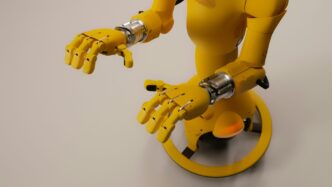
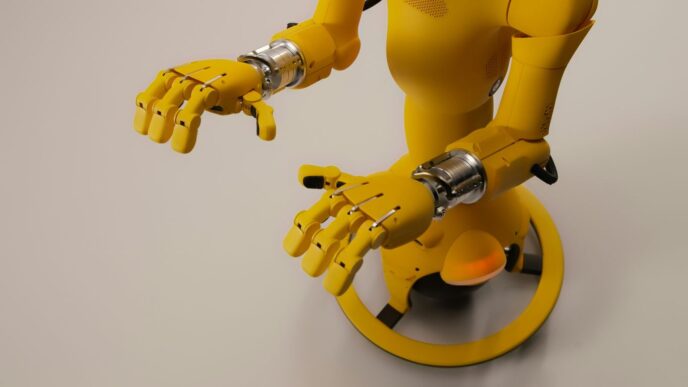
With AI 2.0 systems becoming adept at understanding data, the next logical step was to get them interacting with the physical world. AI 3.0 is about giving AI a body and senses. This generation focuses on robotics, autonomous vehicles, and systems that can perceive their environment through sensors (like cameras, microphones, and lidar) and act within it. It’s about AI moving beyond the screen and into our physical spaces, performing tasks that require physical manipulation and real-time interaction.
- Focus: Interacting with and acting in the physical world.
- Key Capabilities: Robotics, autonomous systems, sensor fusion, real-time control.
- Challenges: Real-world variability, safety, complex physical interactions.
AI 4.0: The Frontier Of Conscious AI
This is the most speculative generation, pushing the boundaries towards what might be considered artificial general intelligence (AGI) or even consciousness. AI 4.0 aims for systems that possess a broader range of cognitive abilities, can learn and adapt across diverse tasks with human-like flexibility, and potentially exhibit self-awareness or subjective experience. While still largely theoretical, this generation explores concepts like advanced reasoning, creativity, and understanding context and intent at a much deeper level than current systems. It’s the frontier where AI might not just perform tasks but truly understand and reason about the world.
- Focus: General intelligence, self-awareness, advanced reasoning.
- Potential Capabilities: Human-level cognitive abilities, creativity, adaptability.
- Current Status: Highly theoretical, active research area with significant open questions.
Key Shifts In AI Topics And Their Drivers
From Algorithmic Limitations To Computational Power
Back in the day, getting AI to do anything smart was mostly about figuring out the right instructions, the algorithms. Think of it like trying to bake a cake with a really complicated recipe but only a tiny oven and a handful of ingredients. The recipe (algorithm) was the main puzzle. Early AI research, starting in the 1950s, was all about developing clever ways for machines to think, reason, and solve problems using logic and rules. The hardware was slow, and data wasn’t easy to come by, so the focus was on making the most of what you had with smart code. It was a time of big ideas and theoretical breakthroughs, but practical applications were often limited by how much a computer could actually process.
- Early AI (AI 1.0): Focused on symbolic reasoning and rule-based systems.
- Limitation: Heavily dependent on human-defined logic and struggled with complexity.
- Driver: Algorithmic innovation was the primary engine of progress.
The Rise Of Big Data In AI Advancements
Then, things started to change. Around the 2010s, something big happened: computers got way faster, and we started collecting enormous amounts of information. Suddenly, that tiny oven got a lot bigger, and we had tons of ingredients. This is where AI 2.0 really took off. Instead of just following strict rules, AI systems began to learn from patterns in all that data. Machine learning, especially deep learning, became the star. These systems could look at millions of images, texts, or sounds and figure out what was what, often better than humans. The availability of vast datasets, coupled with powerful graphics processing units (GPUs) originally designed for gaming, became the new fuel for AI development. This shift meant that AI could tackle problems that were too complex for simple algorithms, like recognizing faces or understanding spoken language.
Technological Bottlenecks And Their Impact
Even with all that computing power and data, AI still hit walls. Sometimes, the algorithms weren’t quite good enough to handle the real world’s messiness. Other times, getting the right kind of data was the problem – not just a lot of data, but clean, relevant, and unbiased data. This is a challenge we’re still dealing with. For AI 3.0, which involves AI interacting with the physical world (like robots), we need systems that can perceive, reason, and act in real-time, which is incredibly demanding. Think about a self-driving car needing to react instantly to a pedestrian. It’s not just about having data; it’s about processing it perfectly and making the right decision in a split second. So, while we’ve moved past the early algorithmic limits and data scarcity, new challenges keep popping up, pushing the boundaries of what AI can do and how we build it.
Convergence And Future Frontiers In AI Topics
It’s pretty wild to think about how far AI has come, right? We’ve gone from simple algorithms to systems that can learn from massive amounts of data, and now we’re even talking about AI that can interact with the physical world. But what’s next? The real excitement is in how these different stages of AI are starting to blend together, creating possibilities we’re only just beginning to grasp.
Synergies Among AI Generations
Think of it like this: AI 1.0 gave us the smart algorithms, AI 2.0 taught them to learn from data, and AI 3.0 is giving them bodies and senses. Now, these aren’t just separate steps anymore; they’re becoming ingredients that can be mixed and matched. For example, a physically embodied AI (AI 3.0) can use advanced learning techniques (AI 2.0) powered by sophisticated algorithms (AI 1.0) to perform complex tasks. This combination is what allows for things like advanced robotics that can adapt to new environments or medical tools that can analyze patient data in real-time and even perform delicate procedures.
The Promise Of Generative And Quantum AI
Looking ahead, two areas really stand out: generative AI and quantum AI. Generative AI, like the models that can create text or images, is already changing creative fields and how we interact with information. But when you combine this with the other AI generations, you get systems that can not only generate content but also act on it in the real world, or even design new AI systems themselves. It’s a bit mind-bending.
Then there’s quantum AI. This is still pretty theoretical, but the idea is that quantum computers could supercharge AI. Imagine AI that can solve problems currently impossible for even the most powerful supercomputers. This could lead to breakthroughs in areas like drug discovery, materials science, and complex system modeling. It’s like going from a calculator to a supercomputer, but for AI.
Grand Challenges And Future Directions
So, what are the big hurdles we still need to clear? Well, making AI truly understand context and common sense is a huge one. We also need to figure out how to make AI systems more transparent and explainable, especially as they get more complex. And, of course, there’s the ongoing challenge of ensuring AI is developed and used ethically and responsibly.
Here are some of the key areas researchers are focusing on:
- AI Alignment: Making sure AI goals match human values.
- Explainable AI (XAI): Developing AI that can explain its decisions.
- Robustness and Safety: Building AI that is reliable and doesn’t cause harm.
- Energy Efficiency: Reducing the significant power consumption of large AI models.
- Ethical Frameworks: Creating guidelines for responsible AI development and deployment.
The ultimate goal is to create AI that benefits humanity, and that requires a lot of careful thought and collaboration. It’s not just about building smarter machines; it’s about building a better future with them.
Societal And Ethical Dimensions Of AI Topics

As AI gets more capable, we have to think hard about how it affects people and society. It’s not just about making smarter machines anymore; it’s about how these machines fit into our lives and what rules we need.
Implications Of Advanced AI Systems
Each step in AI development has brought its own set of questions. Early AI focused on logic and rules, and the main worries were about whether it could actually do what we wanted. Then, with AI 2.0, which is all about learning from data, we started seeing issues like bias creeping into systems. If the data fed to the AI is skewed, the AI’s decisions will be too. Think about loan applications or hiring tools that might unfairly disadvantage certain groups because the historical data they learned from was biased. AI 3.0, the kind that interacts with the physical world – like self-driving cars or robots in factories – brings up safety concerns. What happens when a robot malfunctions in a crowded space, or a car has to make a split-second decision in an accident? Who is responsible?
The prospect of AI 4.0, with its potential for consciousness or self-directed goals, opens up a whole new level of complex ethical debates. We’re talking about machines that might not just follow orders but set their own objectives. This raises profound questions about machine rights, accountability, and even what it means to be intelligent or conscious.
Navigating Ethical And Regulatory Complexities
Dealing with these issues means we need clear guidelines and laws. It’s a tricky balancing act. We want to encourage innovation and the benefits AI can bring, but we also need to protect people and society.
Here are some of the big areas we’re grappling with:
- Bias and Fairness: How do we make sure AI systems treat everyone fairly and don’t perpetuate existing societal inequalities?
- Privacy: With AI systems collecting and processing vast amounts of data, how do we protect individual privacy?
- Job Displacement: As AI automates more tasks, what happens to the human workforce, and how do we support those affected?
- Accountability: When an AI system makes a mistake or causes harm, who is to blame? The developers, the users, or the AI itself?
- Security: How do we prevent AI from being used for malicious purposes, like creating sophisticated scams or autonomous weapons?
Ensuring Responsible Innovation And Governance
Moving forward, it’s clear that we can’t just focus on the technical side of AI. We need a broad conversation involving everyone – researchers, policymakers, businesses, and the public – to shape how AI is developed and used.
- Collaboration: Different fields need to work together. Computer scientists need to talk to ethicists, lawyers, and social scientists.
- Transparency: We need to understand, as much as possible, how AI systems make their decisions, especially in critical areas.
- Adaptability: Laws and regulations need to be flexible enough to keep up with the rapid pace of AI development.
Ultimately, the goal is to make sure that as AI continues to evolve, it does so in a way that benefits humanity as a whole, aligning with our values and improving our collective future.
Looking Ahead
So, we’ve walked through how AI got here, from those early ideas to the really advanced stuff we’re seeing now. It’s been a wild ride, with algorithms, computer power, and data all playing their part at different times. Now, with things like generative AI and even quantum computing on the horizon, it feels like we’re on the edge of something huge. It’s not just about building smarter machines, though. It’s about figuring out how this technology fits into our lives, what it means for jobs, and how we make sure it’s used for good. The future of AI isn’t set in stone; it’s something we’re all helping to shape, and that’s pretty exciting, and honestly, a little bit daunting too.