
Pioneering Research in Advanced Materials
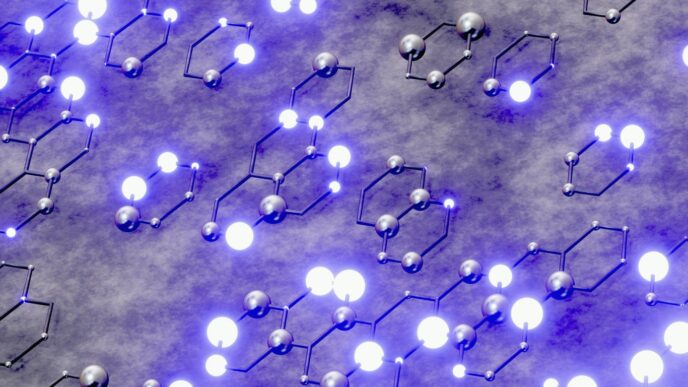
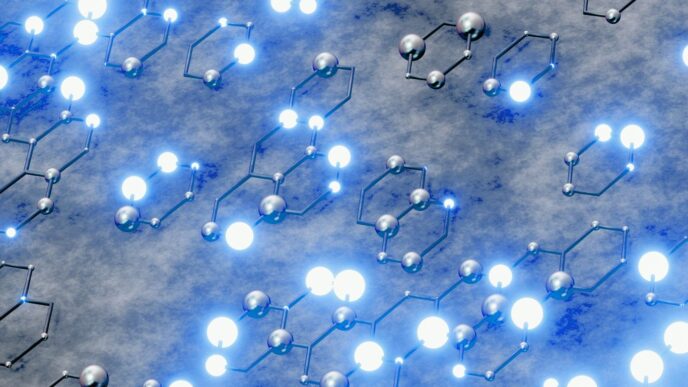
We’re seeing some really cool stuff happening where quantum science meets materials engineering and how we control light. It’s not just about looking at light anymore; we’re actually building things with it. Using quantum semiconductor tech, scientists can now design materials, atom by atom, to shape light itself. This works across a huge range of light, from deep ultraviolet all the way to far-infrared and terahertz waves.
Quantum Semiconductor Innovations
This part of the lecture series looks at how these quantum-engineered semiconductors are changing what we thought was possible with regular optics and electronics. We’re getting a new generation of smart photonic systems that can sense things, send information, and even compute, all at the speed of light. Think about breakthroughs like tiny quantum emitters on chips, detectors that can sense spin, and systems that mimic the brain or use free-space optics for super-fast, energy-saving, and secure communication. It’s pretty wild.
Atomically Designed Materials for Sensing and Medicine
But it’s not just about communication. These same advances are making waves in quantum sensing and photonic medicine. We can now use materials designed at the atomic level to see molecular and neural processes with incredible detail, down to sub-nanometer precision. This is bridging the gap between the quantum world and the biological world. Imagine being able to see things happening inside cells or the brain with that kind of clarity.
Exploring the Universe with Advanced Photonics
And if that wasn’t enough, these technologies are also opening up new ways to explore space. In astro-photonics and planetary science, similar tech is helping us detect the faint quantum signals from planets far away and map the spectral signatures of the early universe. It’s like having super-powered telescopes that can see things we never could before. These frontiers are being shaped by computer simulations and fabrication done with atomic precision, merging physics with design.
Here’s a quick look at some of the areas we’ll touch upon:
- Quantum Emitters: Devices that produce single photons on demand.
- Spin-Polarized Detectors: Sensors that can identify the spin of incoming light particles.
- Neuromorphic Photonics: Systems that mimic brain functions using light.
- Astro-Photonics: Using light-based tech to study celestial objects.
The Intersection of Chemistry and Materials Science
This section really gets into how chemists and materials scientists are working together, blurring the lines between their fields. It’s all about using chemical principles to build and understand new materials, and vice versa. Think about it: the properties of any material, from the plastic in your phone to the advanced alloys in an airplane, are determined by the atoms and molecules it’s made of and how they’re arranged. That’s where chemistry comes in.
Plasmonics: Harnessing Nanoparticles for Light Applications
We’re seeing some really cool stuff with plasmonics. This is where tiny metal particles, usually gold or silver, are engineered at the nanoscale. When light hits these nanoparticles, it makes the electrons on the surface wiggle in a specific way. This "plasmon" effect can concentrate light in really small areas, or even generate heat. Scientists are figuring out how to use this to improve solar cells, create better sensors, and even develop new ways to treat diseases by targeting cancer cells with heat. It’s a whole area where understanding light-matter interactions at the atomic level is key.
Advances in Computational Quantum Chemistry
Figuring out how molecules will behave and interact used to be a lot of trial and error. Now, with powerful computers, we can simulate these interactions using quantum chemistry. This means we can predict the properties of new molecules and materials before we even make them in the lab. It saves a ton of time and resources. Researchers are using these computational tools to:
- Design new catalysts for chemical reactions.
- Predict the stability and reactivity of complex molecular structures.
- Explore the electronic properties of novel materials.
It’s like having a crystal ball for molecular behavior.
Macromolecular Engineering Through Polymerization
Polymers are everywhere – plastics, rubber, even DNA. Macromolecular engineering is all about precisely controlling how these long chains of molecules are built. Polymerization is the process of linking smaller units (monomers) together to form these long chains (polymers). By tweaking the conditions of polymerization, scientists can control:
- The length of the polymer chains.
- The arrangement of monomers along the chain.
- The overall shape and structure of the polymer molecule.
This level of control allows for the creation of polymers with very specific properties, like materials that are super strong yet lightweight, or ones that can conduct electricity. It’s a way to design materials from the ground up, molecule by molecule.
Emerging Frontiers in Chemical Research
This section looks at some really interesting new areas in chemistry. It’s not just about making new molecules anymore; it’s about how those molecules can do specific jobs, especially in biology and for the planet.
Bio-organometallic Chemistry Applications
This is where organic chemistry meets inorganic chemistry, specifically focusing on compounds that have a metal-carbon bond. Think of it like building bridges between two different worlds of chemistry. These compounds are showing up in some pretty cool places. For instance, they’re being explored for how they can help deliver drugs more effectively or even act as catalysts in biological processes. The ability to precisely control metal-carbon bonds opens up new avenues for designing molecules with tailored functions. Researchers are looking at how these molecules interact with biological systems, like proteins or DNA, to see if they can be used to treat diseases or diagnose conditions. It’s a bit like having a special key that can interact with specific locks inside our bodies.
Inorganic Chemistry in Neuroscience and Energy
Inorganic chemistry, often thought of as dealing with simple elements and compounds, is actually playing a big role in understanding the brain and finding ways to power our world. In neuroscience, scientists are using inorganic compounds to study how nerve cells communicate. They might use metal ions or complexes to track signals or even influence how neurons fire. This can help us learn more about brain function and disorders. On the energy front, inorganic materials are key to developing better batteries, solar cells, and catalysts for producing clean fuels. Think about the materials that make up your phone’s battery or the panels on a solar farm – a lot of that is thanks to advances in inorganic chemistry. It’s about finding materials that can store, convert, or generate energy efficiently.
New Boron-Containing Molecules for Synthesis
Boron, that element often found in cleaning products, is also a surprisingly versatile building block for chemists. New types of molecules that contain boron are being developed, and they’re proving useful in all sorts of chemical reactions. These boron compounds can act as special tools, helping chemists put other molecules together in ways that were difficult or impossible before. They can be used to make complex organic molecules, which are the basis for many medicines and materials. The unique electronic properties of boron make these molecules behave in interesting ways, allowing for more precise control over chemical transformations. It’s like discovering a new set of LEGO bricks that let you build much more intricate structures.
Artificial Intelligence in Materials Discovery
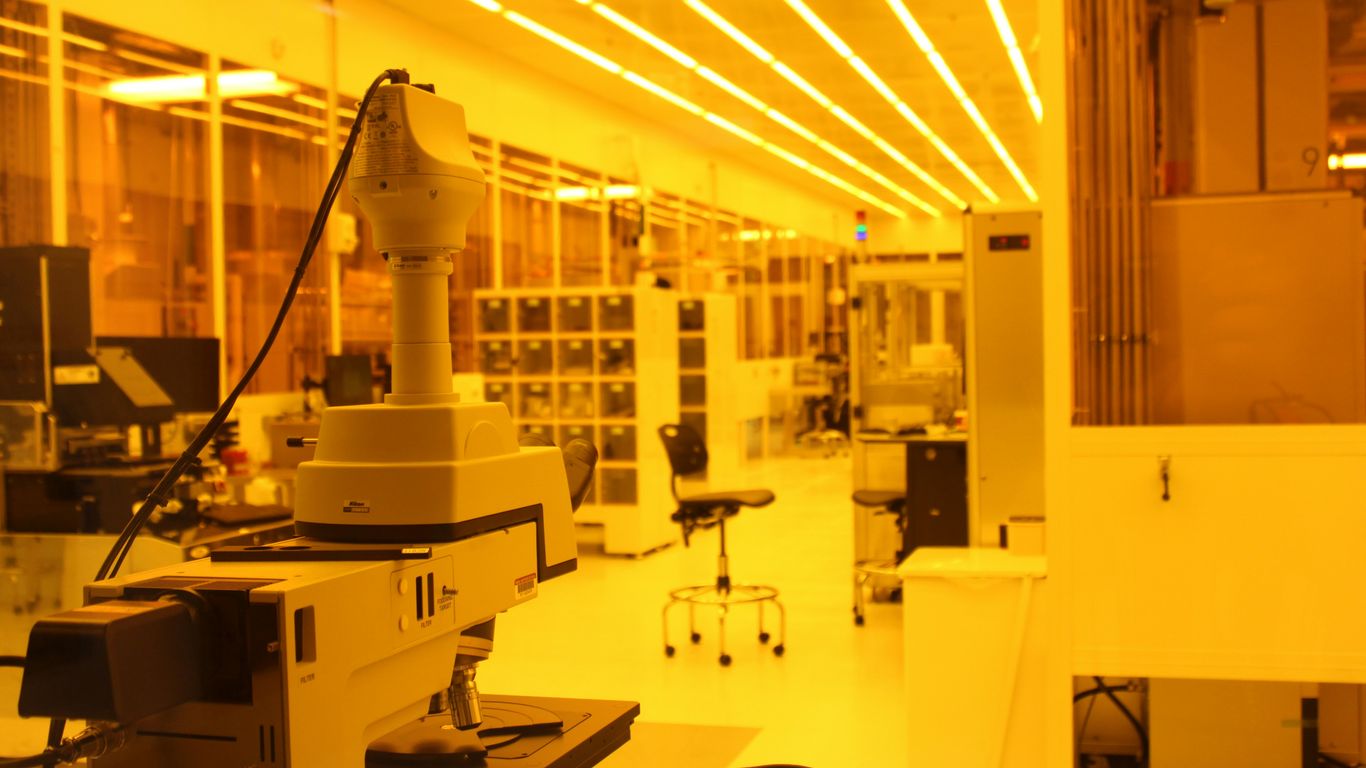
It feels like artificial intelligence, or AI, is popping up everywhere these days, doesn’t it? But what exactly is it, and how can we actually use it to find new materials? This part of our lecture series aims to demystify AI and show how it can become a helpful tool in your research. We’ll start with the basics, covering what AI and machine learning really are. Think of it as learning the alphabet before you can write a novel.
Foundations of AI and Machine Learning
We’ll break down the core ideas behind AI and machine learning. This isn’t about complex math right away; it’s about understanding the building blocks. We’ll look at:
- What are models? These are like the recipes AI uses to learn.
- How do they learn? We’ll talk about training, which is how AI gets smarter with data.
- How do we know if it’s working? Evaluating performance is key to making sure the AI is actually useful.
Machine Learning Applications in Materials Science
Once we have a handle on the basics, we’ll jump into how this technology is being used right now in materials science. It’s pretty amazing stuff. Imagine using AI to predict how a new material will behave before you even make it, or speeding up the search for materials with specific properties. We’ll discuss real-world examples where AI is helping scientists discover new compounds for everything from better batteries to more efficient solar cells.
Demystifying AI as a Research Tool
Our goal here is to take the ‘magic’ out of AI. It’s not some black box that only a few people understand. Instead, we want to show you how it can be integrated into your own work. By understanding the principles, you can start to see how AI can assist in your research, making it a practical addition to your scientific toolkit. We’ll explore how AI can help analyze large datasets, identify patterns you might miss, and even suggest new experiments. It’s about making advanced technology accessible and useful for everyone.
Innovations in Molecular and Cellular Systems
Exploiting the Cell’s Carbohydrate Coat
Cells are covered in a fuzzy layer of sugars, called the glycocalyx. It’s not just decoration; this sugar coat plays a big role in how cells talk to each other and how they interact with their environment. Researchers are figuring out how to use this to their advantage, especially when it comes to health and disease. Think about it: if we can understand how these sugar patterns change when a cell is sick, we might be able to spot diseases earlier or even develop new ways to treat them. It’s like learning a new language, but instead of words, it’s sugar chains.
Illuminating Complex Chemical Systems
Sometimes, understanding what’s happening inside a cell or a complex biological system is like trying to see in the dark. Scientists are developing new tools and techniques to light up these hidden chemical processes. This could involve using special dyes that glow under certain conditions or creating tiny sensors that can detect specific molecules. The goal is to watch chemical reactions happen in real-time, from single molecules all the way up to whole organisms. This kind of insight is super important for figuring out how life works and what goes wrong when things break down.
Molecular Motion and Reactivity Studies
Everything in biology is constantly moving and changing. Molecules bump into each other, change shape, and react. Understanding these movements and reactions at the most basic level is key to understanding life itself. Researchers are using advanced computer simulations and clever experiments to track these tiny dances. They want to know:
- How fast do molecules move?
- What makes them react with each other?
- How do these movements and reactions lead to bigger biological functions?
By studying molecular motion and reactivity, we get a clearer picture of everything from how drugs work to how our bodies repair themselves.
Catalysis and Sustainable Energy Solutions
This section looks at how we can use chemistry to make better catalysts and find new ways to power our world. It’s all about making things more efficient and less harmful to the environment.
Aerobic Oxidation Catalysis
We’re talking about using oxygen from the air to help chemical reactions happen. This is a big deal because it can replace older methods that use harsher chemicals or create more waste. Think about making chemicals for everyday products or even fuels. The goal is to make these processes cleaner and more direct.
Some key areas we’re exploring include:
- Developing new metal-based catalysts that are really good at grabbing oxygen and putting it where we need it in a molecule.
- Understanding exactly how these catalysts work at the molecular level so we can design even better ones.
- Finding ways to make these reactions happen at lower temperatures and pressures, which saves energy.
Chemical Synthesis for Fuel Cells
Fuel cells are a promising technology for clean energy, but they need specific materials to work. This part focuses on creating those materials. We’re looking at how to build the components of fuel cells, like the membranes that separate gases and the electrodes where the chemical reactions take place.
Here’s a quick look at what’s involved:
- Designing new materials that can conduct electricity or ions really well.
- Making sure these materials can handle the tough conditions inside a fuel cell, like heat and corrosive chemicals.
- Finding ways to produce these materials affordably and at a large scale.
Inorganic Chemistry for Sustainable Energy
Inorganic chemistry, which deals with non-carbon-based compounds, plays a huge role in sustainable energy. This subsection covers how we can use elements like metals, ceramics, and minerals to create solutions for energy storage and conversion. It’s about looking beyond traditional organic chemistry to find novel materials and processes.
We’re investigating:
- New battery materials that can store more energy and last longer.
- Catalysts for splitting water to produce hydrogen, a clean fuel.
- Materials for capturing and converting solar energy more effectively.
Advanced Materials Lecture Series Highlights

This lecture series brought together some really interesting minds to talk about what’s new and exciting in materials science. It wasn’t just about one thing, either; they covered a lot of ground, from how we can use tiny particles to work with light, to figuring out how computers can help us find new materials faster. The whole point was to get people talking across different fields and see what new ideas pop up.
We heard from some top researchers about their latest work. For example, one talk focused on how we can engineer polymers, which are basically big molecules, to make new materials with specific jobs. Another session looked at how chemistry can help us understand the brain and also create better ways to store energy. It’s pretty wild how connected everything is.
Here’s a quick look at some of the topics covered:
- Quantum Semiconductor Innovations: Discussing the latest in materials that control electricity at a very small level.
- AI in Materials Discovery: How machine learning is changing the game for finding new materials, making the process quicker and more efficient.
- Catalysis and Sustainable Energy: Exploring new ways to use chemical reactions to create cleaner energy sources.
It was a great chance to see where science is heading and how different areas are starting to work together. The discussions really showed how much is still left to explore and invent.
Wrapping Up Our Exploration
So, that wraps up our look into the "Exploring the Frontiers" lecture series. We’ve seen how researchers are pushing the limits in areas like quantum materials, AI in science, and even how chemistry plays a role in everything from energy to biology. It’s pretty wild to think about how fast things are changing and what new discoveries are just around the corner. This series really shows that the world of advanced materials is constantly evolving, and there’s always something new and exciting to learn. It’s been a great journey, and we hope it sparked some curiosity for what’s next.