The manufacturing world is changing fast. It feels like every week there’s a new technology or a new way of doing things. We’re talking about how companies are spreading out their production, not putting all their eggs in one basket. Plus, all this new tech like AI and 3D printing is shaking things up. It’s a lot to keep up with, but it’s also pretty exciting. Let’s break down what’s happening with diversified manufacturing technologies.
Key Takeaways
- Spreading out where you make things isn’t just about avoiding problems; it’s a smart move to save money and get into new markets.
- New tech like AI and smart factories are making production faster and more efficient, helping companies keep up.
- Making things closer to home, or ‘reshoring,’ is becoming more important for reliable supply chains, especially with global changes.
- 3D printing and digital tools are changing how we design, build, and fix products, making things more customizable and quicker.
- Companies need to train their workers for these new technologies and also focus on keeping factories safe and secure from cyber threats.
The Evolving Landscape Of Diversified Manufacturing Technologies
Manufacturing isn’t what it used to be. Things are changing fast, and companies that don’t keep up risk getting left behind. It’s not just about making stuff anymore; it’s about making it smarter, faster, and in a way that doesn’t wreck the planet. We’re seeing a big shift towards making operations more flexible and less prone to sudden stops, like when a port closes or a trade route gets blocked. This push for diversification is about building a more stable and competitive business for the long haul.
Understanding Manufacturing Diversification
So, what does diversifying manufacturing actually mean? It’s basically spreading out your production and sourcing across different locations and technologies. Think of it like not putting all your eggs in one basket. Instead of relying on a single factory or a single country, you’re setting up operations in multiple places. This helps you avoid big problems if something goes wrong in one spot. It also means you can tap into different markets and maybe even find better prices for materials or labor. It’s a way to make your whole operation tougher and more adaptable to whatever the world throws at it.
Strategic Imperatives For Diversification
Why are companies doing this now? Well, a few big things are driving this change. For starters, recent global events have shown us just how fragile supply chains can be. A disruption in one part of the world can stop production everywhere else. Companies are also looking to get closer to their customers, which means setting up shop in new regions. Plus, there’s a growing pressure to be more environmentally friendly, and different locations might offer better resources or incentives for that. It’s a mix of avoiding risks and finding new opportunities.
The ‘China + 1’ Strategy Explained
You’ve probably heard of the ‘China + 1’ strategy. It’s a popular way for companies to diversify. The idea is simple: keep your manufacturing in China, but also set up a second production base somewhere else. This ‘plus one’ location could be in Vietnam, Mexico, India, or another country. It gives you the benefits of China’s established infrastructure and workforce, while also reducing your reliance on a single country. This way, if there are any issues in China, your business can keep running from the other location. It’s a practical step many are taking to build more resilient supply chains.
Key Technological Advancements Driving Manufacturing
Manufacturing isn’t just about making things anymore; it’s about making them smarter, faster, and more efficiently. A lot of this change is thanks to new tech that’s popping up everywhere. Think about smart factories, for instance. These aren’t just buzzwords; they’re becoming the norm. Machines are talking to each other, sending data back to central systems, and it’s all about making processes smoother.
The Rise Of Smart Factories And Automation
Smart factories are really taking off. It’s not just about having a few automated machines anymore. We’re seeing more complete systems where everything is connected. Why is this happening? Well, newer machines come with built-in sensors, which is a big help. Plus, companies see what their competitors are doing and want to keep up. It’s a bit of a race to be more efficient.
- Newer machines have integrated sensors.
- Competition pushes adoption of smart tech.
- Data analytics are becoming standard.
Leveraging Artificial Intelligence And Virtual Processes
Artificial intelligence (AI) and virtual reality (VR) are changing how we work. Imagine being able to control or fix a machine from miles away, almost like you’re right there. That’s what AI and VR are starting to make possible. This is great for remote monitoring and servicing, cutting down on travel and getting things fixed quicker. It’s all about making things more flexible and safer.
Data-Driven Maintenance For Enhanced Margins
Keeping machines running smoothly is a big deal, especially when costs are tight. That’s where data-driven maintenance comes in. Sensors and connected devices are everywhere now, collecting information. This data helps predict when a machine might break down before it happens. This means less unexpected downtime, which saves a lot of money. With faster networks like 5G, sending all this data is easier than ever. It helps keep equipment running longer and avoids costly repairs.
Here’s a quick look at how data helps:
| Benefit | Description |
|---|---|
| Reduced Downtime | Predicts failures, preventing unexpected stops. |
| Cost Savings | Minimizes repair expenses and lost production. |
| Equipment Lifespan | Optimizes usage to make machines last longer. |
| Process Efficiency | Provides insights to improve how things are made. |
Sustainability And Reshoring In Modern Manufacturing
It feels like everywhere you look these days, people are talking about making things more sustainable and bringing manufacturing back home. And honestly, it makes sense. The last few years really showed us how fragile our global supply chains can be. One hiccup, and suddenly you can’t get the parts you need, or the prices go through the roof. It’s a bit of a mess.
Focus On Sustainability And Carbon Neutrality
So, what does sustainability even mean in manufacturing? It’s not just about recycling bins anymore. We’re talking about reducing waste, using less energy, and cutting down on pollution. Think about factories running on solar power or using materials that don’t harm the environment. The goal is to get to "carbon neutrality," which basically means not adding any extra greenhouse gases to the atmosphere. It’s a big undertaking, but companies are starting to see it as a smart move, not just for the planet, but for their bottom line too. Plus, consumers are paying more attention to where their stuff comes from and how it’s made.
The Growing Importance Of Reshoring And Nearshoring
This is where "reshoring" and "nearshoring" come in. Reshoring means bringing manufacturing back to the home country, like back to the U.S. Nearshoring is similar, but it means moving production to a country that’s closer by. For a U.S. company, that might mean moving operations from Asia to Mexico or Canada. Why the sudden interest? Well, it cuts down on shipping times and costs, and it gives companies more control over their production. It also helps avoid those massive disruptions we saw when global shipping got all messed up. Having production closer to home makes supply chains more reliable. It’s a way to build resilience, especially with all the global uncertainties out there. It’s not just a trend; it’s becoming a standard way of doing business. Of course, there are challenges, like finding enough skilled workers. The manufacturing industry faces a potential shortage of skilled workers if the trend towards reshoring accelerates, even with the utilization of existing US capacity [084e].
Navigating Incentives For Global Manufacturing
Governments are getting involved too, offering incentives to encourage companies to build or expand manufacturing facilities. These incentives can take many forms, like tax breaks or grants for investing in new equipment. They’re designed to make it more attractive for companies to set up shop locally or in friendly neighboring countries. It’s a complex puzzle, trying to figure out the best locations, manage supply chains, and take advantage of these government programs. But for manufacturers looking to stay competitive and build a more stable future, it’s a landscape worth exploring.
Innovations In Additive Manufacturing And Digitalization
It feels like every week there’s some new tech making waves in manufacturing, and this section is all about the really cool stuff happening with 3D printing and digital tools. Honestly, it’s changing how things are made at a pretty fast pace.
The Impact Of 3D Printing And Additive Manufacturing
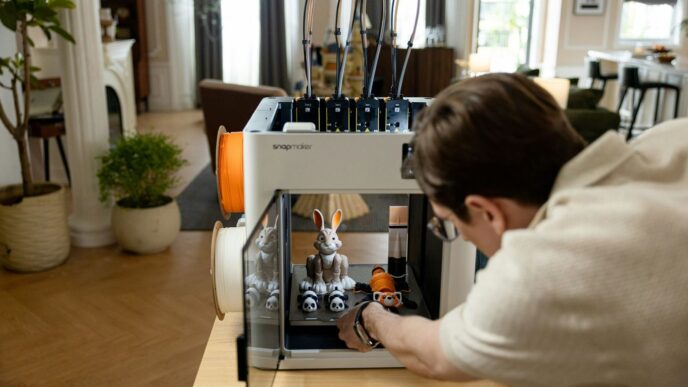
Remember when 3D printing was mostly for making little plastic trinkets? Well, it’s come a long way. Now, additive manufacturing is a serious player. It’s not just for making prototypes anymore; companies are using it to create actual finished parts, often with complex designs that would be impossible or way too expensive with traditional methods. Think about it: you can design a part, print it, and have it ready much faster than waiting for a shipment from a supplier. This speed is a big deal, especially when you need a replacement part quickly to get a machine back online. Plus, the ability to customize each part means manufacturers can tailor things precisely to their needs, reducing waste and improving performance.
Digital Twins And Real-Time Analytics
This is where things get really interesting. A "digital twin" is basically a virtual copy of a physical asset, like a machine or even an entire factory. It’s fed data in real-time from sensors on the actual equipment. What does this mean? It means you can monitor everything that’s happening without actually being there. You can see how a machine is performing, predict when it might need maintenance, and even test out changes in the virtual world before you try them on the real thing. This kind of data analysis helps spot problems before they become big, costly issues. It’s like having a crystal ball for your production line.
Augmented And Virtual Reality Applications
Augmented Reality (AR) and Virtual Reality (VR) are also starting to show up in manufacturing in some pretty neat ways. AR can overlay digital information onto the real world. Imagine a technician wearing smart glasses that show them exactly which tool to use or highlight the exact spot on a machine that needs attention. It’s like having an expert guiding you through the process. VR, on the other hand, is great for training. New employees can learn how to operate complex machinery in a safe, virtual environment without any risk to themselves or the equipment. These technologies are making complex tasks simpler and training more effective. It’s a big step up from just reading a manual.
Addressing Workforce And Security Challenges
It feels like every manufacturing plant I visit is talking about two big things: finding good people and keeping their digital doors locked tight. It’s a double whammy, really. On one hand, we’ve got this growing need for skilled workers, especially with all the new tech coming in. On the other, the more connected everything gets, the more attractive it is to folks who want to cause trouble online.
Bridging The Skills Gap With New Technologies
Finding people who know how to run the latest machines or understand complex software is getting tougher. It’s not just about hiring; it’s about training too. Companies are looking at ways to get new hires up to speed faster. Think about using augmented reality (AR) to guide someone through a tricky repair, or AI-powered training programs that adapt to how a person learns. It’s about making sure the skills people have match the jobs that need doing, and that training is more hands-on and less textbook.
- AR for training: Imagine a new technician wearing glasses that show them exactly where to place a tool or what setting to use on a machine. It’s like having an expert looking over their shoulder, but without the cost.
- AI-driven learning: These systems can figure out where a trainee is struggling and give them extra practice on those specific areas, making training more efficient.
- Digital simulations: Practicing complex procedures in a virtual environment before doing it on the actual equipment can significantly reduce errors and speed up learning.
Enhancing Employee Safety And Health
Keeping workers safe has always been important, but now we’re seeing more tech used to monitor it. It’s not just about hard hats and safety glasses anymore. Some places are using wearables that can track if someone is getting too tired or is in a position that might lead to an injury. These devices can send alerts, helping to prevent accidents before they happen. It’s a proactive approach to worker well-being.
Strengthening Cybersecurity In Manufacturing
As factories become more digital, they also become targets. All those connected machines and systems generate a lot of data, and that data needs protection. We’re seeing more cyber threats aimed at the systems that control the factory floor. So, companies are beefing up their defenses. This includes things like making sure only authorized people and devices can access systems (zero-trust architecture) and using smart software to spot unusual activity that might signal an attack. Protecting operational technology networks is becoming just as important as protecting the physical factory itself.
Strategic Planning For Diversified Manufacturing
Thinking about spreading out your manufacturing operations? It’s not just about avoiding problems when something goes wrong somewhere. It’s a smart move to get better prices, have more say with suppliers, and tap into new markets. You can’t just wait for a crisis to hit before you start looking around. Companies that scramble to find new sources when their main one dries up often end up with lower quality, pay too much, or work with suppliers they haven’t properly checked out. Planning ahead means you can properly vet potential partners, get better deals, and set up the best incentive packages. This builds real advantages for your business.
Proactive Diversification Versus Reactive Responses
So, should you diversify your manufacturing now or wait? Honestly, the best time to start is before you have a supply chain disaster. When you’re forced to make quick decisions about where to make your products, you might compromise on quality, accept bad pricing, or commit to suppliers without doing your homework. Starting the planning process now lets you properly qualify suppliers, negotiate better terms, and build relationships that actually help your business compete. It’s not really a question of if you should diversify, but how you’re going to do it – strategically or just reacting to problems.
Optimizing Sourcing Locations And Supply Chains
When you’re looking at where to make your stuff, think about more than just the factory floor. Many countries offer sweet deals, like tax breaks or investment incentives, to get foreign companies to set up shop. These programs can really help offset costs, especially if there are tariffs involved. For example, if you’re facing a 20% tariff, but a country offers a 15% incentive, that’s a big difference compared to just eating the whole tariff cost. It’s important to compare what you’ll pay in tariffs with what you can gain from these incentives. A 30% tariff with only a 5% incentive isn’t going to help much, so doing the math before you pick a new spot is key. This research explores how things like ICT and Industry 4.0 can help with these diversification strategies.
The Role Of Government Incentives In Diversification
Countries are always trying to attract manufacturing and export business. They do this by offering tax rebates, subsidies, and making customs processes smoother. If your products fit the bill, you can often negotiate better production prices. Sometimes, these incentives are enough to significantly reduce the impact of tariffs. It’s a competitive game, and these programs make it more appealing for companies like yours to set up production. Understanding and using these incentives can make a real difference in your bottom line and give you more flexibility when dealing with suppliers. It’s about finding the right mix of locations that not only spreads your risk but also makes financial sense.
Wrapping It Up
So, looking at all these changes, it’s pretty clear that manufacturing isn’t just about making stuff anymore. It’s about being smart, being flexible, and thinking ahead. Whether it’s using new tech like AI to keep machines running smoothly or spreading out where you make things to avoid getting caught in a bind, the game has changed. Companies that are paying attention and adapting to these trends, like focusing on sustainability or making their supply chains tougher, are the ones that will likely do well. It’s a lot to keep up with, but staying aware of these shifts is key to staying competitive.