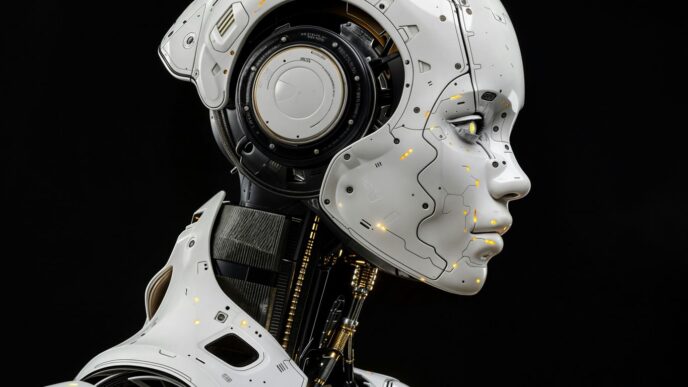

The Rapid Growth of AI Adoption Across Industries
Artificial Intelligence isn’t just a buzzword anymore—it’s woven into almost every part of business and daily life. In the past few years, companies big and small have started using AI tech not just to keep up, but also to stay ahead.
Increasing AI Use in Business Operations
Businesses everywhere are ramping up their use of AI—sometimes you don’t even notice, but it’s running in the background, helping things run smoother. Whether it’s chatbots answering your questions, AI tools analyzing data trends, or robot arms assembling products, the tech is everywhere.
- 77% of companies are already using or considering using some form of AI.
- For most companies, AI is now one of their main priorities.
- AI isn’t just for tech companies—banks, retailers, logistics, and even small businesses are on board.
AI ‘factories’ are showing up everywhere, especially in banking, retail, and SaaS. These setups help companies create and deploy AI models faster, without everyone having to start from scratch each time.
AI Market Size and Economic Impact
When you look at the numbers, the growth is wild. AI is one of the fastest-growing markets ever—and it isn’t showing signs of slowing down.
| Year | Global AI Market Size (USD) | Year-Over-Year Growth |
|---|---|---|
| 2024 | $300B | 33% |
| 2025 | ~$400B (estimated) | 33% |
| 2030 | $15.7T (impact projected) | — |
- AI is projected to add trillions to the world economy by 2030.
- It’s growing about 33% every year right now, possibly even faster in certain sectors.
AI’s Role in Global Productivity
When people argue about robots taking jobs, they’re not wrong, but that’s just part of the story. AI is also making workers more productive—sometimes by taking care of the tedious stuff, and sometimes by giving humans new kinds of tools.
- AI could boost labor productivity growth by 1.5 percentage points each year for the next decade.
- Some sectors are seeing a 40% jump in employee productivity, thanks to AI tools handling routine tasks.
- Experts say the best gains come when people and AI work together, not when machines just replace workers outright.
Sectors Leading in AI Integration
Some industries are way ahead in using AI, while others are just getting started.
Front-Runners:
- IT and Telecom – 63% of organizations in this sector already use AI, mainly for automation, cybersecurity, and customer questions.
- Manufacturing – Using AI for robotics, quality checks, and supply chain management could add close to $4 trillion by 2035.
- Automotive – About 44% of companies are running or piloting AI for self-driving tech and smarter manufacturing lines.
- Finance and Banking – Early adopters, using AI for fraud detection, credit risk models, and customer service automation.
Other Sectors Gaining Speed:
- Retail – Personalized recommendations, inventory tracking.
- Healthcare – AI for patient data, diagnostics.
- Education, Logistics, and even Food Delivery – AI is stepping in to help automate and optimize.
AI adoption is moving fast, but it’s uneven—some industries are jumping in with both feet, others are taking smaller steps. Either way, it looks like AI is moving from something futuristic to just something businesses do every day.
Breakthrough Advancements in AI Technology
It feels like every week there’s something new popping up in the AI world, and honestly, it’s hard to keep track. But some of these developments are genuinely changing the game. We’re seeing AI get way smarter and more capable, moving beyond just simple tasks.
Recent Innovations in Generative Models
Generative AI, the kind that can create text, images, and even audio, is really taking off. Companies are not just sticking to massive, super-expensive models anymore. They’re figuring out how to make smaller, more efficient ones that can still do a lot. Think about Microsoft’s new MAI-Voice-1 model; it can whip up a minute of audio in less than a second with hardly any power. Plus, models like Alibaba’s Qwen 3.5 are being built for tasks where AI acts more like an assistant, and some are even designed to run on regular, high-end computers, not just giant server farms. This makes the tech more accessible.
Progress in Multimodal AI Systems
Remember when AI could only handle one type of data, like just text or just images? That’s old news. Multimodal AI is the big thing now. It’s AI that can understand and work with different kinds of information all at once – text, voice, pictures, video, you name it. It’s much more like how humans process the world. This means AI can understand more complex requests and give back more useful answers, maybe a mix of text and visuals. It’s going to make interacting with computers feel a lot more natural.
Memory and Efficiency Improvements
One of the tricky parts with AI has been making it remember things over long periods and do it without using a ton of energy or needing constant retraining. Well, there’s a new way of thinking about AI memory, called procedural memory. It lets AI agents learn, store, and reuse steps for tasks. This means they can get better over time and handle complicated, multi-step jobs without getting lost. It’s like teaching an AI a skill and having it actually remember and build on it, which is a big step for making AI more reliable and less costly to run.
Emergence of Next-Generation AI Chips
All these fancy AI models need serious computing power, and that’s where new chips come in. We’re seeing chips designed specifically for AI, like neuromorphic processors that mimic the human brain. These aren’t just faster; they’re way more energy-efficient. Researchers have shown these brain-like chips can handle complex physics problems that used to need massive supercomputers. This could mean a future where powerful AI doesn’t drain electricity like a power plant, making big scientific research and complex AI tasks more sustainable.
Shifting Dynamics in the AI Job Market and Workforce
It feels like everywhere you look these days, AI is changing how we work. It’s not just about robots on an assembly line anymore; it’s way more complex. We’re seeing AI pop up in all sorts of jobs, from helping customer service agents to writing code. This shift is definitely making waves in the job market, and it’s got people talking.
Emerging AI-Driven Roles and Skills
So, what kind of jobs are actually showing up because of AI? Well, a lot of them are centered around data. Think data engineers, data scientists, and data analysts – these roles are booming. Then there are machine learning engineers, who build and train the AI models themselves. It’s not just about building the tech, though. We’re also seeing a need for people who can manage AI systems, make sure they’re working right, and even figure out the ethical side of things. Basically, if you’re good with data, programming, or understanding how AI impacts people, you’re probably in a good spot.
Influence of AI on Workplace Productivity
Companies are really hoping AI will make things more efficient. The idea is that AI can handle a lot of the repetitive tasks, freeing up humans to do more creative or strategic work. Some reports suggest AI could really boost productivity, maybe even by 40% in some areas. Imagine not having to spend hours on data entry or basic report generation – that time could be used for problem-solving or coming up with new ideas. It’s like having a super-powered assistant for a lot of the grunt work.
AI-Related Job Displacement Concerns
Now, let’s be real, not everyone is thrilled about AI taking over tasks. There’s a genuine worry that automation will lead to job losses, especially in roles that involve a lot of routine work. Think about jobs like basic customer support or certain manufacturing tasks. Some experts predict that while AI will create new jobs, it will also displace others. It’s a bit of a double-edged sword. The big question is how we manage this transition, making sure people can get the training they need for these new AI-focused roles and that we don’t leave too many people behind. It’s a balancing act, for sure.
Transformative AI Applications in Everyday Life
It’s pretty wild how AI is popping up everywhere these days, making things we used to only dream about a normal part of our lives. Think about your morning routine. Your smart home assistant might already know your schedule, suggest breakfast based on what’s in the fridge, and even have your car ready to go, plotting the best route to avoid traffic jams. It’s like having a personal helper who’s always on, anticipating what you need.
AI in Customer Service and Personal Assistants
Remember when calling customer service meant waiting on hold forever? Now, AI-powered chatbots and virtual assistants can handle a lot of those common questions instantly. They’re getting smarter too, understanding more complex requests and even picking up on your mood. This means quicker answers for you and less repetitive work for human agents, who can then focus on trickier problems. It’s a win-win, really.
AI-Enabled Home and Automotive Technologies
Our homes are getting smarter, and so are our cars. AI is behind those smart thermostats that learn your habits, the security cameras that can tell the difference between a person and a pet, and even the refrigerators that can track inventory. In the automotive world, AI is the brain behind advanced driver-assistance systems, making driving safer and more comfortable. Soon, fully self-driving cars might be the norm, changing how we think about commuting entirely.
AI’s Impact on Healthcare and Financial Services
This is where things get really interesting. In healthcare, AI is helping doctors spot diseases earlier by analyzing medical images with incredible accuracy. It’s also being used to develop new drugs faster and personalize treatment plans for patients. On the financial side, AI helps detect fraud, manage investments, and provide personalized financial advice. These applications are not just about convenience; they’re about improving well-being and security for millions.
Ethical, Regulatory, and Social Issues in AI Topics
AI isn’t just about clever technology and new gadgets—it’s also stirring up serious ethical, social, and legal debates. People, companies, and governments are spending more time figuring out how to deal with the fast changes happening in this space.
Content Moderation and Generative AI Risks
One big concern is how AI is being used to create fake but realistic audio, video, and images. Deepfakes are showing up everywhere—sometimes messing with elections, spreading false stories, and damaging reputations. It’s getting harder for folks to know what’s real online. Some ideas to fight this problem include:
- Building better detection tools to spot AI-generated content fast.
- Pushing for stronger laws to punish people who use AI to create malicious deepfakes.
- Teaching people how to spot fakes and question what they see on social media.
If humans can’t trust what they see or hear online, that’s a real threat to democracy and social trust.
Debates on Representation and Bias
Bias in AI is another hot topic. Sometimes, AI makes decisions that are unfair, either because the data it learned from had built-in prejudices or because of how developers built the system in the first place. Bias isn’t always easy to see, but it can cause:
- Discrimination in hiring, lending, or law enforcement.
- Incorrect or unfair recommendations.
- Lower trust in automated systems for anyone who feels left out or mistreated.
Here are simple steps being discussed to reduce bias:
- Use more diverse data sets.
- Test AI outcomes regularly for fairness.
- Let human reviewers flag and fix problems found in automated decisions.
Ethics panels and outside watchdogs are becoming more common, but the challenge is keeping up with how fast the tech evolves.
Evolving Regulatory Frameworks
Laws and regulations are racing to catch up with all these changes. 2026 has seen lots of talk about new rules, especially in places like the EU. These often want AI developers to:
- Classify their technology by risk level—low, moderate, or high risk.
- Make sure their systems are transparent and can be explained to regular people.
- Build stronger ways to protect data privacy and security.
- Set up checks so humans can oversee critical decisions made by AI.
A recent survey showed just how much people care about these issues:
| Regulation Attitude | % of Respondents |
|---|---|
| Support national efforts for AI safety | 85% |
| Want more transparency on AI practices | 85% |
| Support increased spending on AI assurance | 81% |
Most folks across political backgrounds want clear rules that keep AI safe and honest. Public pressure is likely to keep pushing governments and companies to step up their efforts.
Wrapping Up
The conversation about AI isn’t just technical; it’s turning into a big social and legal debate. The more AI shapes daily life, the more vital it becomes to sort out these ethical challenges, write fair rules, and make sure everyone has a voice in the future of this technology.
Moonshot AI Topics Redefining Future Computing
Neuromorphic and Optical Computing Trends
We’re hitting some serious walls with current computer chips. They’re getting so powerful, but also so hot and power-hungry, especially for AI. That’s why folks are looking at totally new ways to build computers. Think about neuromorphic computing, which tries to copy how our brains work, with interconnected "neurons." It could be way more efficient for certain AI tasks. Then there’s optical computing, using light instead of electricity. Light moves faster and generates less heat, which sounds pretty good for crunching massive AI data. These aren’t just minor tweaks; they’re big shifts aiming to get around the limits of today’s tech.
Federated AI and Privacy Innovations
Right now, a lot of AI needs to send tons of data to big data centers. That’s not always ideal for privacy or speed. Federated AI is a different idea. Instead of bringing all the data to the AI, the AI goes to the data. Imagine your phone, your smart fridge, and your car all helping to train an AI model without sending your personal information anywhere. It’s like a distributed network where devices learn together locally. This could make AI much more private and work better on the edge, closer to where we are. It’s a complex puzzle to get all these devices talking and learning efficiently, but the payoff in privacy and speed could be huge.
Overcoming Transformer Context Limitations
Those big language models we use? They’re pretty good, but they struggle with really long conversations or documents. They have something called a "context window" that limits how much past information they can remember. As that window gets bigger, the computer has to do way more work, and it gets slow and expensive. Researchers are trying to find smarter ways to handle this. Some are looking at making the "attention" part of the model more efficient, maybe by processing information in chunks or using different math. The goal is to let AI remember and understand much longer stretches of information, making conversations and tasks more natural and less forgetful.
The Democratization and Accessibility of AI Development
It feels like just yesterday that AI was this big, scary thing only super-smart scientists in labs could mess with. Now? Not so much. Things are changing fast, and it’s getting way easier for regular folks to get their hands on AI tools. This shift is opening up a whole new world of possibilities for everyone, not just the tech giants.
Open-Source Models and Community Growth
Think of open-source AI like a giant, collaborative Lego set. Developers worldwide are sharing their AI models, letting others build on them, tweak them, and learn from them. Projects like Llama 3.1 and Mistral Large 2 are great examples. They’re not just powerful; they’re shared so more people can experiment and create. This community effort means AI is improving at lightning speed, and it’s not locked away in secret corporate vaults anymore. It’s pretty cool to see people from all over contributing to something so complex.
Simplified Model Creation Tools
Remember when building a website meant knowing how to code? Now, you can use drag-and-drop builders. AI is heading in a similar direction. We’re seeing more ‘no-code’ and ‘low-code’ platforms pop up. These tools let you build AI models using simple visual interfaces or by just describing what you want in plain English. It’s like having a conversation with the AI to get it to do what you need. This makes AI creation accessible to business owners, teachers, or even hobbyists who don’t have a computer science degree. Plus, smaller, more efficient models are coming out, making them cheaper to run and easier to put into everyday devices.
Wider Educational Initiatives for AI Literacy
It’s not just about the tools; it’s about knowing how to use them. Lots of places are stepping up to teach people about AI. Think free online courses, workshops, and even company-sponsored academies. The goal is to make sure people understand what AI can do, how it works, and how to use it responsibly. This push for AI literacy is super important. It means more people can benefit from AI, whether it’s for their job, their studies, or just to understand the world around them better. It’s about making sure everyone has a chance to be part of this AI future.
Public Trust and Perception of AI Technology
It feels like everywhere you look these days, AI is being talked about. And while a lot of us are using it without even realizing it – think spam filters or those music recommendations – there’s also a growing sense of unease. Building and keeping public trust is becoming a really big deal for AI’s future.
Factors Driving Declining AI Trust
So, what’s making people a bit wary? Well, a few things come to mind. For starters, the rise of deepfakes – those super realistic fake videos and audio clips – is a major concern. It’s getting harder to tell what’s real and what’s not, and that erodes confidence. Plus, there’s the worry about AI being used for bad stuff, like cyberattacks or spreading misinformation. It’s not just about the tech itself, but how it might be misused.
Transparency and Explainability Efforts
To combat this, there’s a big push for AI systems to be more open about how they work. People want to understand why an AI made a certain decision, especially in important areas like healthcare or finance. This means developers are working on making AI ‘explainable,’ so it’s not just a black box. Think of it like a doctor explaining a diagnosis – you want to know the reasoning, not just the outcome.
Strategies for Building Responsible AI
Ultimately, getting people to trust AI means showing that it’s being developed and used responsibly. This involves a few key steps:
- Clear Communication: Companies need to be upfront about when and how they’re using AI.
- Safety First: Prioritizing the security and privacy of user data is non-negotiable.
- Bias Mitigation: Actively working to remove unfair biases from AI systems so they treat everyone equitably.
- Accountability: Establishing clear lines of responsibility when AI systems make mistakes.
It’s a complex puzzle, but getting these pieces right is how we’ll move forward with AI in a way that benefits everyone.
So, What’s Next?
It’s pretty clear AI isn’t just some passing fad. It’s changing how we work, how businesses run, and even how we interact with technology every single day. We’ve seen how companies are jumping on board, and how jobs are shifting because of it. While there are still questions about trust and how to manage it all, the momentum is undeniable. Things are moving fast, and keeping up might feel like a lot, but it’s also kind of exciting to see what comes next. One thing’s for sure: AI is here to stay, and it’s going to keep shaping our world in ways we’re only just starting to figure out.