Artificial Intelligence Revolutionizing Robotics
It’s pretty wild how fast AI is changing what robots can do. We’re not just talking about robots that can do one specific job anymore. AI is making them smarter, more adaptable, and honestly, a lot more useful across the board. Think of it like giving robots a brain that can learn and figure things out on its own.
Generative AI for Intuitive Robot Programming
Remember when programming robots felt like you needed a computer science degree just to get started? Well, generative AI is shaking that up. Instead of writing complex lines of code, you can now describe what you want the robot to do in plain English. The AI then figures out the code for you. It’s like telling a friend how to bake a cake, and they just magically know all the steps and measurements. This makes it way easier for more people to get robots working for them, especially in smaller businesses that don’t have dedicated programming teams.
Predictive AI for Enhanced Maintenance
Nobody likes it when machines break down unexpectedly, right? Predictive AI is like a robot doctor that can tell when something’s not quite right before it becomes a big problem. By looking at data from sensors – like vibrations, temperature, or how much a robot is being used – AI can spot tiny patterns that signal a future issue. This means maintenance can be scheduled before a breakdown, saving a ton of time and money. It’s a game-changer for keeping factories and warehouses running smoothly.
Physical AI for Virtual Training Environments
This one’s pretty cool. Instead of risking damage to expensive equipment or even injuring someone during training, we can now use AI to create virtual worlds. Robots can learn and practice tasks in these simulated environments. They can try things out, make mistakes, and learn from them without any real-world consequences. It’s like a flight simulator, but for robots. This approach, sometimes called ’embodied AI,’ lets robots gain experience in a safe space before they’re deployed in the real world.
Agentic AI for Autonomous Operations
Agentic AI is taking robot autonomy to the next level. These aren’t just robots following pre-set instructions. They’re more like independent agents that can understand their goals, make decisions, and take actions to achieve them, even in unpredictable situations. Imagine a robot in a warehouse that not only finds an item but also figures out the best way to get it to you, avoiding obstacles and other robots along the way, all without constant human input. This level of autonomy is what’s really opening doors for robots to handle more complex jobs on their own.
Collaborative Robots Expanding Horizons
Collaborative robots, or cobots, are really changing how people and machines work together. It’s not just about robots doing tasks alone anymore; it’s about them working right alongside us. This is a big deal, especially with more and more industries facing worker shortages.
Human-Robot Collaboration in Action
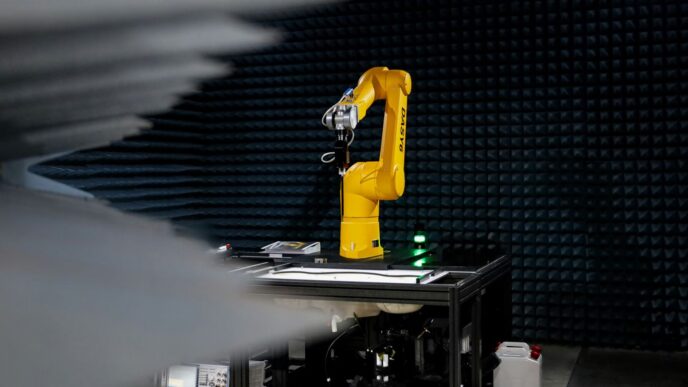
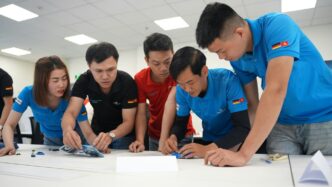
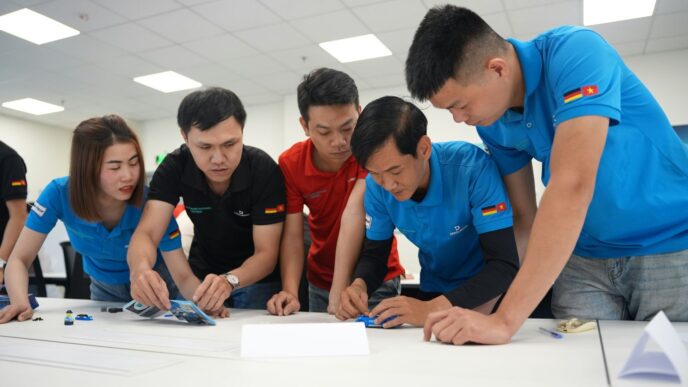
Think about a factory floor. Instead of a robot doing a whole assembly line by itself, a cobot might handle the heavy lifting or the repetitive screwing, while a human worker does the more intricate, quality-checking part. This partnership makes the whole process smoother and safer. Cobots are built with sensors that stop them if they get too close to a person, which is a huge step up from older industrial robots that just kept going no matter what. They’re also getting easier to use. You don’t always need a team of engineers to program them anymore; sometimes, you can just show them what to do, and they learn.
Cobots Assisting in Diverse Tasks
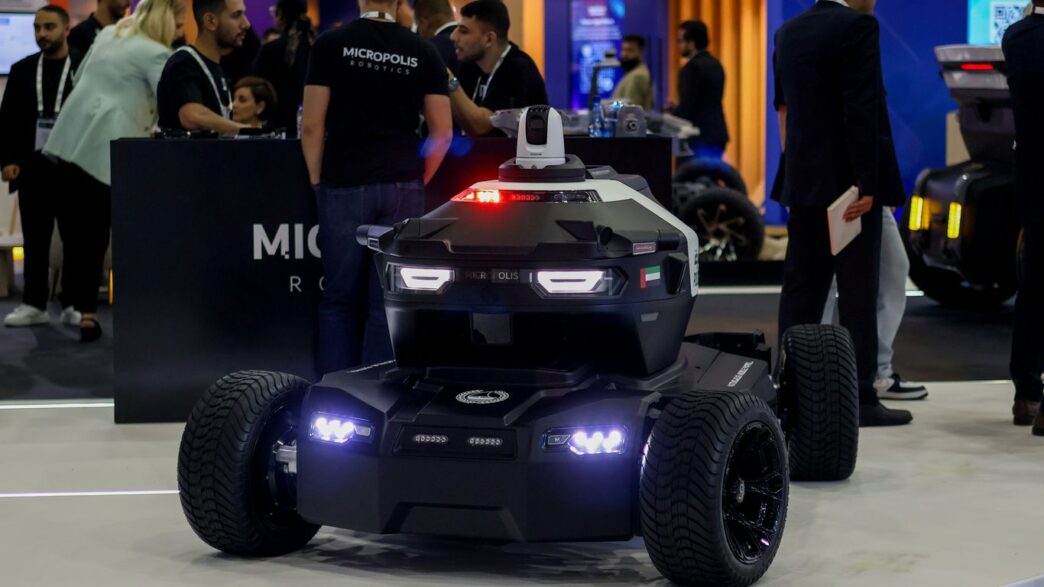
We’re seeing cobots pop up in all sorts of places now. Welding is a big one. With a shortage of skilled welders, cobots are stepping in to help out. They’re not necessarily replacing the experienced welders but are assisting them, making sure the work gets done. Then there are mobile manipulators, which are basically cobots on wheels. These can move around a warehouse or a factory, picking up parts, moving them, or even doing inspections. They’re really useful for tasks that involve a lot of walking or carrying.
Safety and Efficiency Gains with Cobots
So, what’s the payoff? Well, for starters, safety. When a cobot takes over the physically demanding or dangerous parts of a job, human workers are less likely to get injured. That’s a win for everyone. Efficiency is another big one. By dividing tasks between humans and cobots, companies can often speed up production without sacrificing quality. It’s about finding that sweet spot where technology supports human effort.
Here are a few ways cobots are making a difference:
- Reduced physical strain: Cobots handle heavy lifting and repetitive motions.
- Improved accuracy: They can perform tasks with consistent precision.
- Increased throughput: Tasks can be completed faster when humans and cobots work together.
- Adaptability: Cobots can be reprogrammed for different tasks, making them flexible for changing production needs.
The Rise of Humanoid Robots
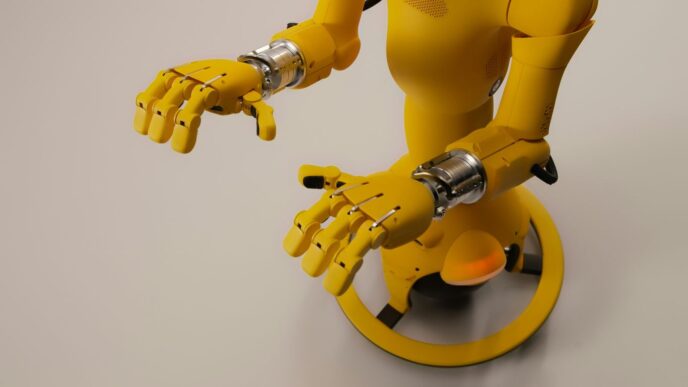
It feels like we’re seeing humanoid robots everywhere lately, doesn’t it? From sci-fi movies to actual news reports, these human-shaped machines are capturing our imagination. And it’s not just hype; there’s a real push to make them a part of our daily lives. The main reason for this surge? A shrinking workforce. Many countries are facing population declines, and that means fewer people to do the jobs. Humanoid robots are seen as a way to fill these gaps, especially in places designed for people.
Humanoid Robots as General-Purpose Tools
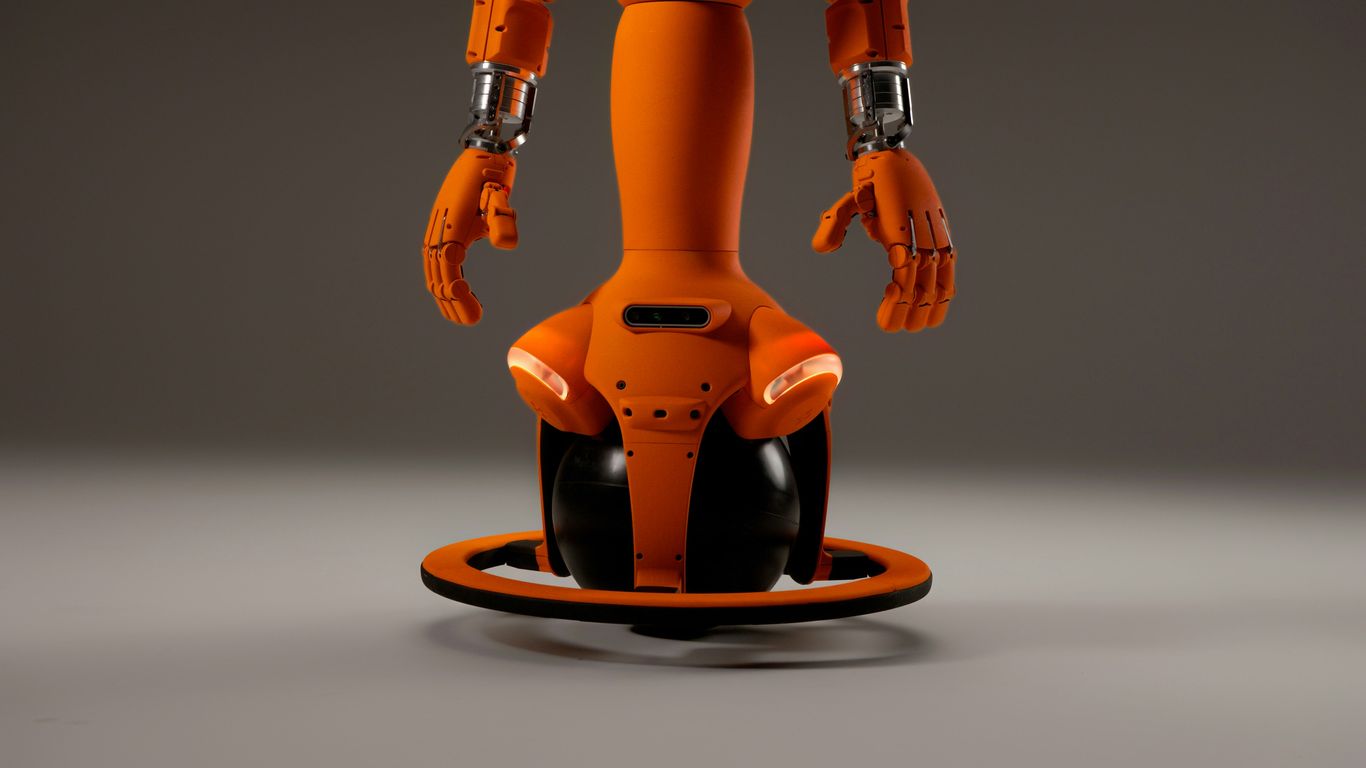
The idea is to create robots that can do more than just one specific task. Think of them as adaptable helpers. Because they’re built like us, they can potentially work in environments we’ve created, using tools and navigating spaces meant for human hands and bodies. This makes them quite different from the specialized robots you see on assembly lines.
Addressing Labor Shortages with Humanoids
This is a big one. With aging populations and fewer young people entering the workforce in many parts of the world, industries are struggling to find workers. Humanoid robots offer a potential solution. They could take on roles in manufacturing, customer service, elder care, and more. Some forecasts even suggest billions of these robots could be integrated into society by 2060, helping to keep economies running.
Here’s a look at how different regions are approaching this:
- China: Seeing a steep population drop, China is making humanoid robots a national priority. They’re focusing on building a strong supply chain and see these robots as key to maintaining economic output, with an initial focus on service roles.
- Japan: Already a pioneer with robots like ASIMO, Japan is developing humanoids as companions and social robots for education and elder care, fitting their aging society’s needs.
- Europe: The focus here is more on ethical considerations and collaborative robots that work with humans, rather than replacing them. They tend to be more cautious about widespread humanoid adoption for automation in the short term.
The Cultural Fascination with Humanoids
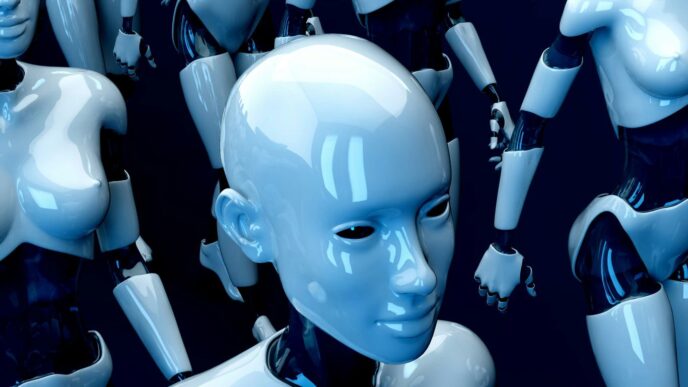
Let’s be honest, humanoids have always been a thing in stories and movies. We’re naturally drawn to the idea of machines that look and act like us. Recent advancements in AI, especially with large language models, are making these fictional ideas seem much closer to reality. Videos showing AI-powered humanoids performing complex tasks only fuel this fascination, making us wonder what the future holds.
However, it’s worth remembering that these robots, like any connected technology, will need strong cybersecurity. The thought of a hacked humanoid robot is, well, a bit unsettling.
Technological Innovations Driving Robot Adoption
It feels like robots are popping up everywhere these days, doesn’t it? A big reason for this is all the cool new tech making them smarter and more useful. We’re talking about advancements that are really changing the game.
AI and Machine Learning Advancements
Artificial intelligence, especially machine learning, is a huge driver. Think about how tools like ChatGPT can create new things based on what they’ve learned. Robot makers are using similar ideas to let people program robots using everyday language instead of complicated code. This means you won’t need to be a coding whiz to get a robot to do what you want. Plus, AI can look at data from robots to predict when they might need maintenance. This is a big deal because unplanned downtime can cost a lot of money – imagine a car factory losing over a million dollars for just one hour of stoppage! Machine learning also helps optimize how robots work together by analyzing their performance data. The more data these systems get, the better they become.
Improved Sensors and Vision Technologies
Robots are getting much better at seeing and understanding their surroundings. New sensors and camera systems allow robots to react instantly to changes, which is key for working safely alongside people. This means robots can handle tasks that are heavy, repetitive, or even a bit dangerous, freeing up human workers for other jobs.
Energy Efficiency in Modern Robots
Another important development is making robots more energy-efficient. This isn’t just about saving electricity; it also means robots can run longer on a single charge or with less power. This makes them more practical for a wider range of applications and helps reduce their environmental impact. It’s a win-win for businesses and the planet.
Robotics Meeting Operational Technology Needs
It’s pretty wild how robots are starting to fit right into the nuts and bolts of how businesses actually run, you know? We’re seeing a big shift where the techy stuff, like Information Technology (IT), is really starting to blend with the hands-on, physical side of things, which is Operational Technology (OT). This isn’t just some abstract idea; it means robots can do more, react faster, and work smarter because they’re getting real-time information and can actually do something with it. Think of it like giving a robot a brain that can process data and hands that can do the work, all connected and talking to each other.
Integrating IT and OT for Versatile Robots
This IT/OT merge is a big deal for making robots more adaptable. Before, IT was mostly about computers and data, and OT was about controlling machines on the factory floor. Now, they’re working together. This connection lets robots share data instantly, automate tasks more smoothly, and use advanced analysis to figure out the best way to do things. It’s a key part of what people are calling Industry 4.0, where everything is connected and digital. This breakdown of old barriers means data flows freely between the digital world and the physical world, making robots way more capable and flexible than they used to be.
Robots Enhancing Manufacturing Efficiency
In manufacturing, this integration is a game-changer. Robots are no longer just doing one repetitive task. With better IT and OT working together, they can handle more complex jobs, adapt to different product lines quickly, and even help with quality control by spotting issues humans might miss. For example, a robot arm on a mobile platform can now move around a factory floor, pick up parts, perform assembly, and then move to another station without needing a human to reprogram it extensively. This kind of flexibility means factories can produce more, faster, and with fewer errors. It’s also helping to fill gaps where there aren’t enough skilled workers for certain jobs.
The Role of Robots in Service Sectors
It’s not just factories, either. Service industries are starting to see the benefits too. Think about robots in warehouses, helping to sort and move packages, or even in hospitals, delivering supplies or assisting with cleaning. These robots are often designed to work alongside people, making tasks easier and safer. For instance, a robot might handle the heavy lifting of inventory, freeing up human workers for more customer-facing roles or tasks that require a human touch. The ability of these robots to connect to IT systems means they can be managed remotely, updated easily, and integrated into existing service workflows, making operations smoother and more efficient.
Sustainability and Longevity in Robotics
It’s not just about making robots do more; it’s also about making them last and be kinder to the planet. This is a big deal these days, with everyone talking about being more eco-friendly. Turns out, robots can actually help with that, and we’re seeing some cool stuff happening.
Energy-Saving Features in Robot Design
Think about it: robots are machines, and machines use power. So, engineers are working hard to make them sip power instead of guzzling it. This means smarter batteries, lighter parts that don’t need as much oomph to move, and even ways for robots to put energy back into the grid when they’re braking or slowing down. It’s like regenerative braking in a car, but for robots. Some robots even have different ‘sleep’ modes to save energy when they’re not actively working. This focus on efficiency isn’t just good for the environment; it also cuts down on operating costs for businesses, which is a win-win.
Giving Industrial Robots a Second Life
Robots, especially the big industrial ones, can be pretty expensive. So, instead of just tossing them when they’re no longer cutting-edge, there’s a growing trend to refurbish and reuse them. This means taking older robots, fixing them up, maybe giving them a software upgrade, and putting them back to work. It’s a bit like getting a classic car restored – it keeps something valuable out of the scrap heap and gives it new purpose. This approach helps reduce the demand for new materials and manufacturing, which all have an environmental footprint.
Circular Economy Contributions of Robotics
Robots are also stepping in to help with recycling and waste reduction. Imagine robots sorting through mixed materials with incredible accuracy, separating plastics from metals, or identifying components that can be reused. They can also help in manufacturing processes by reducing material waste in the first place, thanks to their precision. This fits right into the idea of a circular economy, where we try to keep resources in use for as long as possible, extract the maximum value from them, and then recover and regenerate products and materials at the end of their service life. It’s a whole system change, and robots are becoming key players in making it happen.
Wrapping Up: What’s Next for Robots?
So, we’ve looked at some pretty cool stuff happening with robots. It’s clear that things like AI are really changing how robots work, making them smarter and easier to use, even without needing to be a coding expert. We’re seeing robots work alongside people more and more, which is a big deal for making jobs safer and less of a drag. Plus, the idea of robots that look and act more like us, the humanoids, is getting a lot of attention, even if it’s still early days. All these changes mean robots are becoming a bigger part of how we do things, from factories to maybe even our homes someday. It’s an exciting time to see where all this innovation takes us next.