Hey there! So, 2026 is shaping up to be a pretty interesting year for medical tech. It feels like things are moving fast, and honestly, it can be a lot to keep up with. From smart devices you wear to machines that help surgeons, there’s a whole lot of new stuff coming out. We’re going to take a quick look at some of the biggest changes happening with new medical devices, so you can get a general idea of what’s on the horizon. It’s all about making healthcare better, faster, and maybe even a little easier.
Key Takeaways
- Artificial intelligence is getting smarter, helping doctors figure out what’s wrong and how best to treat people. It’s also making hospital work smoother and even helping design new medical tools.
- Wearable tech and connected devices are becoming more common. Think devices that keep an eye on your health from afar or right on your wrist, all talking to your doctor’s records.
- Robots are stepping up in medicine, from helping surgeons be more precise in operations to assisting with patient care and even making the manufacturing of medical gear more automated.
- There’s a bigger push for making medical devices in ways that are kinder to the planet. This means using better materials, designing things to be reused or recycled, and cutting down on pollution from making and shipping them.
- Getting quick health results is easier with new portable testing gadgets. Plus, 3D printing is now used to make custom parts and devices for patients, and keeping all this health information safe is a top priority.
Advancements in Artificial Intelligence and Machine Learning
Artificial intelligence (AI) and machine learning (ML) are no longer just buzzwords in the medical field; they’re becoming everyday tools. It feels like just yesterday we were talking about AI in theory, and now it’s actively changing how doctors work and how patients are treated. The numbers back this up, too. The market for AI in healthcare is expected to grow a lot in the next few years, showing just how much people are investing in these technologies.
AI-Driven Diagnostics and Treatment Personalization
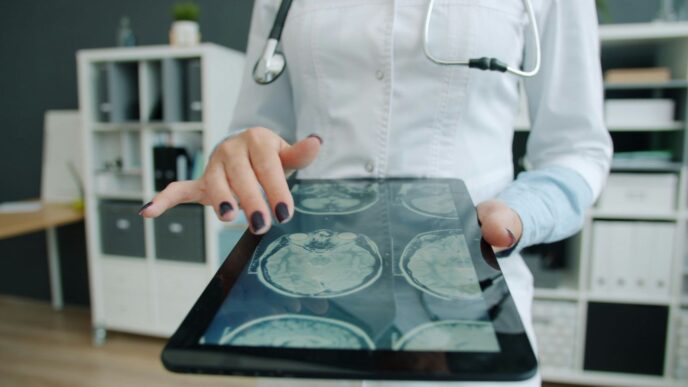
This is where AI is really making a splash. Think about medical images – X-rays, CT scans, MRIs. AI algorithms can look at these images and spot things that might be hard for the human eye to catch, especially in the early stages of diseases like cancer. It’s not about replacing radiologists, but giving them a super-powered assistant. Studies are showing AI can help reduce mistakes in diagnoses, which is a big deal for patient care. Beyond just spotting problems, AI is also helping tailor treatments. By looking at a patient’s unique genetic makeup, lifestyle, and medical history, AI can help doctors pick the most effective treatments, moving away from the old ‘one-size-fits-all’ approach. This personalized medicine means better results and fewer side effects for patients.
Machine Learning for Enhanced Workflow Efficiency
Let’s be honest, healthcare professionals are swamped with paperwork and administrative tasks. ML is stepping in to help lighten that load. Imagine AI handling appointment scheduling, sorting through insurance claims, or even helping draft patient notes. This frees up doctors and nurses to spend more time actually caring for patients. It’s not just about making things faster; it’s about reducing the chances of human error in routine tasks and helping prevent burnout, which is a huge issue in the medical world.
Here’s a look at some common tasks ML is helping with:
- Automating appointment reminders and scheduling.
- Processing and verifying insurance information.
- Summarizing patient medical records for quick review.
- Flagging potential drug interactions based on patient history.
AI in Medical Device Design and Prototyping
AI isn’t just being used with medical devices; it’s also helping to create them. Machine learning can analyze huge amounts of data to identify patterns and predict how a new device might perform. This speeds up the design process significantly. Instead of lengthy trial-and-error periods, AI can help engineers refine designs much faster. It can also be used to create realistic simulations, allowing for testing without needing physical prototypes for every single iteration. This means new, innovative devices can get to market quicker, ultimately benefiting patients.
The Rise of Connected and Wearable Health Technology
It feels like just yesterday we were marveling at basic fitness trackers, and now? We’re living in a world where our watches can tell us more about our health than we ever thought possible. This whole connected health scene is really taking off, and it’s changing how we think about staying well.
Internet of Medical Things (IoMT) for Remote Monitoring
This is where things get really interesting. The Internet of Medical Things, or IoMT, is basically a network of devices that can talk to each other and to healthcare providers. Think about it: sensors on your body, smart implants, even connected hospital equipment. They’re all sending data back, allowing doctors to keep an eye on things without you having to be in the office. It’s a big deal for people with ongoing conditions or those recovering at home. The market for this stuff is growing like crazy, and a lot of hospitals are already using it for everything from keeping tabs on patients to managing their facilities better. It means quicker reactions if something’s not right and, hopefully, fewer trips to the hospital.
Wearable Devices for Continuous Health Tracking
We’ve all seen them – smartwatches, rings, even patches that stick to your skin. These wearables are getting seriously sophisticated. They’re not just counting steps anymore. We’re talking about devices that can track your heart rhythm, monitor your blood oxygen, check your sleep patterns, and even keep an eye on your glucose levels. Some of these devices are now getting official clearance from places like the FDA, meaning they’re not just for fitness buffs but for actual medical monitoring. This constant stream of data helps doctors spot potential problems early, like irregular heartbeats or changes in chronic conditions. It also means we can get more personalized advice about our health.
Here’s a quick look at what some wearables are tracking:
- Heart Rate & Rhythm (ECG)
- Blood Oxygen Levels (SpO2)
- Sleep Quality & Stages
- Activity Levels & Calorie Burn
- Continuous Glucose Monitoring (CGM)
- Body Temperature
Seamless Integration with Electronic Health Records
All this data from IoMT and wearables is great, but what happens to it? The real magic happens when it can be easily shared and understood by your doctor. That’s where integrating with Electronic Health Records (EHRs) comes in. When your health data from your devices can flow directly into your medical chart, it gives your healthcare team a much clearer, up-to-date picture of your health. This makes it easier for them to make informed decisions, coordinate your care, and spot trends you might not even notice yourself. It’s about making all that data actually useful for better health outcomes.
Innovations in Robotics and Automation
Robots are no longer just science fiction; they’re becoming a real part of how we do things in medicine. Think about surgery – robots are making procedures much more precise. For instance, systems like Intuitive’s da Vinci 5 and Johnson & Johnson’s OTTAVA are helping surgeons perform complex operations with greater accuracy. This means less invasive procedures and quicker recovery times for patients. It’s pretty amazing how these machines can assist in delicate tasks.
But it’s not just in the operating room. Robots are also stepping in to help with patient care. We’re seeing UV-C disinfection robots keeping hospital rooms clean, and autonomous delivery systems are starting to move supplies around. Imagine prescription deliveries via drone – some hospitals are already planning for that. It’s all about making healthcare more efficient and safer.
Surgical Robotics Enhancing Precision
Surgical robots have really upped their game. They give surgeons a steadier hand and better vision, allowing for incredibly precise movements. This is especially helpful in minimally invasive surgeries where space is tight. Procedures that used to require large incisions can now be done through tiny ones, leading to less pain and faster healing.
- Improved Dexterity: Robotic arms can move in ways human hands can’t, offering a wider range of motion.
- Enhanced Visualization: 3D high-definition cameras provide surgeons with a magnified, detailed view of the surgical site.
- Reduced Tremor: Robotic systems filter out natural hand tremors, leading to more stable instrument control.
Robotic Assistance in Patient Care
Beyond surgery, robots are finding their place in everyday patient care. They can help with tasks that are repetitive or physically demanding for human staff. This frees up nurses and doctors to focus on more critical aspects of patient well-being. Think about robots that can deliver medications, transport lab samples, or even help patients with mobility.
- Disinfection: Autonomous robots equipped with UV-C light can thoroughly disinfect patient rooms, reducing the spread of infections.
- Logistics: Automated guided vehicles (AGVs) are being used to transport supplies, meals, and waste throughout hospitals.
- Patient Support: Some robots are being developed to assist patients with basic needs, like fetching items or providing companionship.
Automation in Medical Device Manufacturing
Manufacturing medical devices is also getting a robotic makeover. Automation is key to producing high-quality devices consistently and efficiently. This is particularly important for complex devices where precision is paramount. For example, startups are developing robotic systems that can precisely handle and inspect surgical instruments, making sure they are sterile and ready for use. This kind of automation helps prevent errors and speeds up the whole process, from making the instruments to getting them ready for surgery.
| Area of Automation | Benefit |
|---|---|
| Instrument Sterilization | Improved consistency, reduced contamination |
| Assembly of Devices | Higher precision, faster production |
| Quality Control Inspection | Early detection of defects, better reliability |
This push towards robotics and automation is really changing the landscape of healthcare, making things safer, more efficient, and ultimately better for patients.
Sustainable Practices in Medical Device Development
It’s not just about making things work anymore; it’s about making them work and being kind to the planet. In 2026, the medical device world is really starting to pay attention to sustainability. This isn’t just a nice-to-have; it’s becoming a pretty big deal, especially with more regulations popping up and customers wanting greener options.
Eco-Friendly Materials and Manufacturing
Think about what goes into a medical device. For years, it was whatever was cheapest or easiest to get. Now, companies are looking at materials that don’t harm the environment as much. This means less reliance on plastics that stick around forever and more use of things like biodegradable polymers or recycled metals. The manufacturing process itself is also getting a makeover. Factories are trying to use less energy, cut down on water waste, and generally be more efficient. It’s a big shift, but it’s happening.
Designing for Disassembly and Recycling
Ever tried to fix something only to find it’s impossible to take apart? That’s the opposite of what’s happening now. The idea is to design devices so that when they reach the end of their life, they can be easily taken apart. This makes it much simpler to sort the different materials – like metals, plastics, and electronics – so they can be recycled properly. It’s like building with LEGOs, but with a plan to put them back in the box when you’re done. This approach helps reduce the amount of medical waste that ends up in landfills.
Reducing Carbon Footprint in the Supply Chain
Getting a medical device from the factory to the hospital or clinic involves a lot of steps, and each step uses energy and creates emissions. Companies are looking at their entire supply chain, from where they get their raw materials to how they ship the finished products. They’re trying to find ways to cut down on the miles traveled, use more fuel-efficient transport, and even source materials from closer to their manufacturing sites. The goal is to make the whole journey of a medical device as green as possible. It’s a complex puzzle, but one that’s becoming increasingly important for the industry.
Next-Generation Diagnostics and Point-of-Care Solutions
Forget waiting days for lab results. 2026 is really shaking things up when it comes to getting health information, and fast. We’re seeing a big push for diagnostic tools that can be used right where the patient is, whether that’s a doctor’s office, an ambulance, or even your own home.
Handheld Diagnostic Devices for Rapid Results
These little gadgets are becoming incredibly smart. Think about handheld ultrasound devices, which are now pretty common in emergency services and primary care settings. They give doctors immediate insights without needing a big, bulky machine. Plus, regulatory bodies are making it easier for these devices to get to market. For instance, the FDA okayed the first over-the-counter home test for flu and COVID-19 in late 2024, and by March 2025, a fully at-home molecular test for common infections was approved, giving results in about 30 minutes. It’s all about getting answers quicker.
Point-of-Care Testing Advancements
Point-of-care (PoC) testing is expanding beyond just rapid antigen tests. We’re talking about molecular tests that can give results in minutes, right at the clinic. The technology is moving towards "lab-on-a-chip" systems and CRISPR-based tests that are simple to use and work well for testing near patients or at home. These systems are getting better at detecting diseases, including infections, cancer markers, and genetic conditions, with more accuracy and broader applications.
- Faster turnaround: Results in minutes, not days.
- Decentralized testing: Moves diagnostics out of central labs.
- Increased accessibility: Great for remote areas or busy clinics.
- Early detection: Catches issues sooner, leading to better outcomes.
3D Printing for Custom Implants and Devices
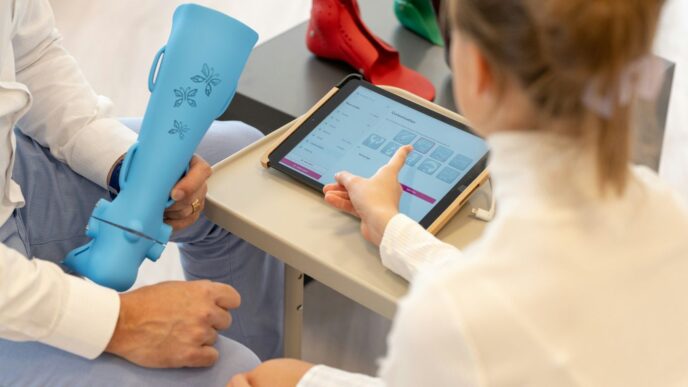
This is where things get really interesting. 3D printing, or additive manufacturing, is no longer just for prototypes. Companies are now using it to create custom medical devices and implants. Imagine a cranial implant perfectly shaped for a patient’s skull, or a silicone stent designed specifically to help someone with breathing problems. This technology allows for highly personalized solutions that weren’t possible before. It’s also making manufacturing more efficient, allowing for on-demand production and potentially lowering costs. The market for this is growing fast, with projections showing significant expansion over the next decade.
Focus on Cybersecurity and Data Integrity

It feels like every week there’s a new headline about a data breach, and unfortunately, the medical field isn’t immune. In fact, it’s a prime target. Think about it: medical devices, especially those connected to networks, hold incredibly sensitive patient information. Keeping that data safe and making sure the devices themselves aren’t compromised is a huge deal. We’re talking about patient trust, but also about preventing real harm.
Protecting Sensitive Patient Data
This is the big one, right? When a device collects health metrics, it’s gathering deeply personal stuff. We need to make sure that information is locked down tight. This means using strong encryption, not just when the data is being sent around, but also when it’s stored. Plus, who gets to see what data? Access controls need to be really smart, so only authorized people can view specific patient records. It’s like having a super secure vault, but for digital health information.
Ensuring Device Security Against Breaches
Beyond just the data, the devices themselves can be targets. Imagine a pacemaker or an insulin pump being tampered with remotely – that’s a scary thought. Manufacturers are putting more effort into building security right from the start. This includes things like:
- Secure Boot: Making sure the device only runs trusted software when it powers up.
- Firmware Signing: Verifying that any software updates are legitimate and haven’t been messed with.
- Regular Vulnerability Scanning: Actively looking for weaknesses in the device’s software and hardware.
- Network Segmentation: Isolating medical devices on their own network so if one gets hit, it doesn’t spread to others.
Regulatory Compliance for Data Protection
Governments and regulatory bodies are stepping up, too. Agencies like the FDA are putting out clearer guidelines on what manufacturers need to do to keep devices secure throughout their lifespan. This isn’t just a suggestion anymore; it’s a requirement. They’re looking at things like having a plan for how to handle security updates and patches long after a device is out in the field. Plus, with new rules coming into play, like Europe’s NIS2 directive, there are stricter timelines for reporting security incidents. It’s a complex landscape, but it’s all aimed at building more trustworthy medical technology.
Looking Ahead
So, as we wrap up our look at what’s new in medical devices for 2026, it’s pretty clear things are moving fast. We’ve seen how AI, smarter wearables, and even robots are becoming more common, making healthcare more personal and efficient. It’s not just about fancy new gadgets, though. There’s a big push for devices that are easier to use, safer, and kinder to the planet. For anyone involved in healthcare, keeping an eye on these changes isn’t just interesting, it’s pretty important for figuring out what’s next. The future of medical tech is definitely shaping up to be quite something.