Exploring Quantum Concepts in Cinema
Movies have a knack for taking really complicated ideas and making them seem, well, almost understandable. When it comes to quantum physics, this is especially true. Filmmakers often use these mind-bending concepts as a jumping-off point for incredible stories. It’s not always perfectly accurate, of course, but it gets us thinking.
The Matrix: Simulation Theory and Quantum Consciousness
Think about The Matrix. It throws us right into a world that isn’t real, a giant computer simulation. This idea plays with the concept of quantum consciousness – the thought that maybe our reality, or even our consciousness, is tied to quantum states. It makes you wonder, what if the "real world" we experience is just another layer of a much bigger, stranger system? It’s a classic example of how movies can make us question the very nature of existence.
Inception: The Quantum Mechanics of Dreams
Then there’s Inception. This movie dives into dreams within dreams, a sort of layered reality that feels a bit like quantum superposition. In quantum mechanics, a particle can exist in multiple states at once until it’s observed. Inception plays with this by having characters manipulate dream layers, where time and perception get all warped. It’s a wild ride that uses dream logic to hint at these quantum ideas, making us ponder how our own minds might work in ways we don’t fully grasp.
Interstellar: A Journey Beyond Time and Space
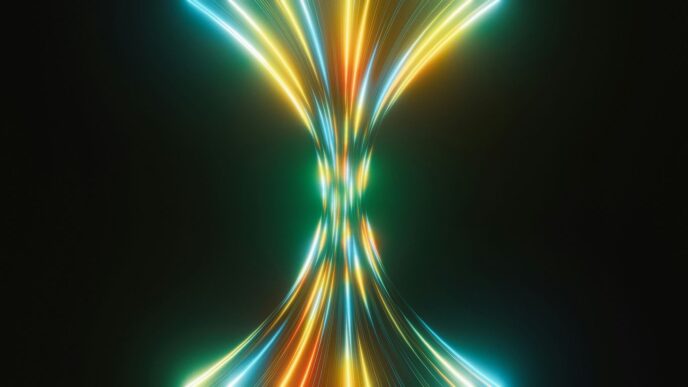
Christopher Nolan’s Interstellar takes us on a journey that really stretches the limits of what we think is possible. It tackles big ideas like wormholes, which are theoretical tunnels through spacetime, and time dilation, where time passes differently depending on gravity and speed. While the "quantum love" idea might be more poetic than scientific, the film’s visual representation of these extreme physics concepts, like entering a black hole’s environment, is pretty spectacular. It shows how movies can visualize the abstract and make us feel the awe of cosmic possibilities.
Mind-Bending Narratives and Quantum Physics
Predestination: Quantum Entanglement and Paradoxes
Movies like Predestination really make you think about how cause and effect might work if we could mess with time. The film plays with ideas that feel a lot like quantum entanglement, where two particles can be linked no matter how far apart they are. In the movie, characters seem connected across time in a similar, almost spooky way. It’s like their past, present, and future are all tangled up together, creating these loops that are hard to untangle. The movie suggests that maybe our choices aren’t as free as we think, especially when you consider how events might be predetermined. This gets really confusing when you think about paradoxes – like, if you go back and change something, does that erase your own existence? It’s a real head-scratcher, and the film doesn’t shy away from that complexity.
Donnie Darko: Wormholes and Temporal Anomalies
Donnie Darko is another film that throws us into a world where the rules of time and space get bent out of shape. We see Donnie dealing with visions and a giant rabbit named Frank, who tells him the world is going to end. The movie hints at the possibility of wormholes – shortcuts through spacetime – and temporal anomalies, which are basically glitches or strange occurrences in the timeline. It’s not a straightforward explanation, but the film uses these concepts to create a sense of unease and mystery. It makes you wonder if Donnie is just a kid having a breakdown or if he’s somehow caught in a situation where time itself is broken.
Primer: The Complexities of Time Travel
When it comes to complicated time travel stories, Primer is often at the top of the list. This movie doesn’t hold your hand; it throws you right into the deep end with its depiction of accidental time travel. The filmmakers really tried to make the science feel plausible, even if it gets incredibly tangled. You see multiple versions of the characters interacting with themselves, creating a web of paradoxes and confusing timelines. It’s a movie that rewards multiple viewings because there’s so much going on with the cause-and-effect loops. It shows how even a small change in the past could have massive, unpredictable consequences, making you question the very nature of reality and our place within it.
The Science Behind the Spectacle
Understanding Quantum Mechanics Through Film
Movies often take complex scientific ideas and make them more accessible, and quantum physics is no exception. While filmmakers might not always get every detail perfectly right, they do a pretty good job of sparking curiosity. Think about it – how many times have you seen a movie that made you go, "Whoa, what was that all about?" and then you actually looked it up?
- Many films use quantum concepts as plot devices to create mind-bending scenarios. This can range from characters experiencing alternate realities to objects behaving in ways that defy our everyday logic.
- These cinematic interpretations, even if simplified, can serve as a gateway to understanding more about the real science.
- It’s like getting a taste of a complex dish; you might not understand all the ingredients, but it makes you want to try the full recipe.
The Role of Probability in Quantum Theory
One of the weirdest parts of quantum mechanics is how it deals with probability. Unlike the physics we see in our daily lives, where things are pretty predictable (if you drop a ball, it falls), the quantum world is a bit more… fuzzy. At its core, quantum theory suggests that certain events aren’t predetermined. Instead, there’s a chance, or probability, that different outcomes can occur.
- This probabilistic nature is a cornerstone of quantum mechanics, suggesting reality itself might be inherently uncertain at its smallest scales.
- Movies sometimes show this by having characters face multiple potential futures or by having events happen in ways that seem random but are actually governed by these underlying probabilities.
- It’s a departure from classical physics, where knowing the initial conditions allows you to predict the future with certainty.
Superposition and Entanglement on Screen
Superposition and entanglement are two quantum phenomena that really capture the imagination and often find their way into sci-fi plots. Superposition is the idea that a quantum system can exist in multiple states at once until it’s measured. Entanglement is even stranger – two particles can become linked in such a way that they share the same fate, no matter how far apart they are. Measuring one instantly affects the other.
- Filmmakers use these concepts to create scenarios where characters might be in multiple places at once or where actions in one location have immediate, inexplicable effects elsewhere.
- These ideas are visually represented through split realities, instant communication across vast distances, or characters experiencing echoes of different timelines.
- While the on-screen portrayal might be dramatized, it’s rooted in real scientific principles that scientists are still exploring.
Beyond Entertainment: Inspiring Quantum Understanding
Movies that play with quantum ideas do more than just look cool on screen. They actually get us thinking about stuff that’s usually pretty hard to wrap our heads around. It’s like a gateway drug for science, you know? Suddenly, concepts like superposition or entanglement don’t seem so abstract when you see them woven into a story about saving the world or exploring dreams.
How Movies Illuminate Quantum Physics
Think about it. You’re watching a character make a choice, and the movie shows both outcomes happening at once. That’s a visual representation of superposition, and it sticks with you way more than just reading about it in a textbook. These films break down complex ideas into digestible pieces. They show us that the universe at its smallest level is way weirder and more wonderful than we might have imagined.
- Visualizing the Unseen: Films give us a way to see quantum phenomena, even if it’s just a cinematic interpretation.
- Relatable Narratives: By connecting quantum concepts to character motivations and plot points, movies make them feel more personal.
- Sparking Curiosity: A well-made sci-fi flick can make someone want to learn the actual science behind the magic.
The Potential of Quantum Technologies in Film
It’s not just about explaining current quantum physics; some movies hint at future possibilities. We see characters manipulating reality in ways that, while fictional, are inspired by the potential of quantum computing or quantum communication. It’s a fun way to speculate about what might be possible down the line. These cinematic explorations can actually inspire scientists and engineers to pursue new avenues of research.
Embracing Quantum Possibilities in Storytelling
Ultimately, these films show us that quantum physics isn’t just for scientists in labs. It’s a part of the fabric of reality, and it can be a powerful tool for storytelling. It allows for narratives that bend time, explore alternate realities, and question the very nature of existence. It’s exciting to see how filmmakers continue to push the boundaries, using quantum concepts to tell stories that are both thought-provoking and deeply human.
Filmmakers’ Interpretations of Quantum Reality
Filmmakers have a knack for taking complex scientific ideas and making them, well, cinematic. When it comes to quantum physics, this often means bending reality in ways that are both fascinating and, let’s be honest, sometimes a bit confusing. But that’s part of the fun, right? They aren’t just throwing around big words; they’re trying to visualize concepts that are otherwise invisible.
Christopher Nolan’s Quantum Explorations
Christopher Nolan, in particular, seems drawn to the mind-bending aspects of physics. Think about "Interstellar." While it’s heavy on relativity and gravity, the way characters interact across vast distances and through time hints at a deeper, more interconnected reality that echoes quantum principles. It’s not a direct textbook explanation, but it plays with the feeling of quantum mechanics – how things might not be as separate as they seem. Then there’s "Inception," which plays with layered realities and subjective experiences. The idea that dreams can be manipulated and that multiple consciousnesses can exist within these constructed worlds has a certain resonance with quantum superposition, where things can exist in multiple states at once until observed.
The Quantum Twist in Thriller Genres
Thrillers often use quantum ideas to amp up the mystery and suspense. "Predestination" is a prime example. This movie dives headfirst into paradoxes and causality loops, which, while not strictly quantum entanglement, certainly feel like it. The idea that events are linked in ways that defy linear time, and that a person’s past and future can be inextricably tied, gives the narrative a dizzying, almost quantum-like quality. It makes you question cause and effect in a way that’s very different from your average crime drama.
Visualizing the Unseen Quantum World
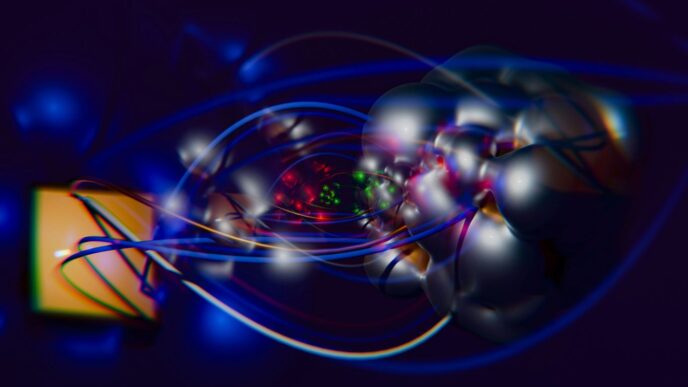
So, how do they actually show us this stuff? It’s a challenge, for sure. Filmmakers often rely on visual metaphors. Think about the "Quantum Realm" in "Ant-Man." It’s depicted as this bizarre, abstract space where the normal rules of physics don’t apply. This is a common approach: if you can’t show the actual quantum mechanics, show the result of it – a place where reality is fluid and unpredictable. They use:
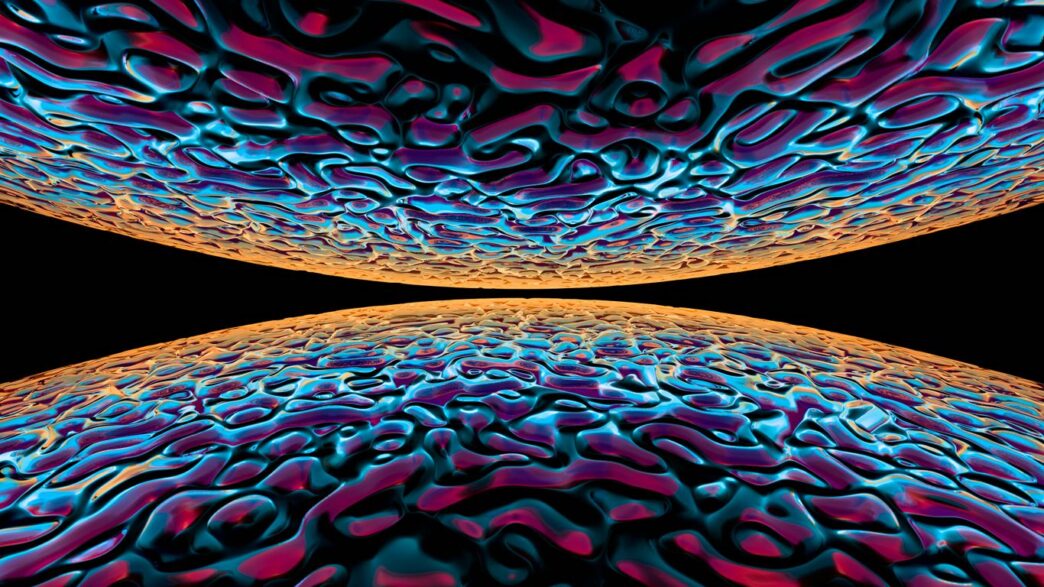
- Abstract Visuals: Swirling colors, distorted perspectives, and non-Euclidean geometry to represent states or dimensions beyond our everyday experience.
- Symbolic Representations: Using objects or characters to stand in for quantum particles or phenomena, like the "rabbit hole" in "Alice in Wonderland" (and "Donnie Darko").
- Narrative Paradoxes: Creating plotlines that seem to defy logic or linear time, forcing the audience to accept a more complex, interconnected reality.
It’s less about scientific accuracy and more about capturing the essence of quantum weirdness – the idea that the universe at its smallest level operates on principles that are profoundly counter-intuitive to our macroscopic experience.
The Quantum Realm in Science Fiction
Science fiction has always been a playground for big ideas, and when it comes to quantum physics, the screen really comes alive. Movies often take these mind-bending concepts and turn them into visual spectacles that can actually help us think about what’s going on at the smallest scales of reality. It’s not just about cool special effects; it’s about exploring possibilities that seem impossible in our everyday lives.
Journeying to the Quantum Realm
Think about films where characters shrink down to microscopic sizes, like in Ant-Man and the Wasp: Quantumania. This "Quantum Realm" is often depicted as a bizarre, unpredictable place where the normal rules of physics don’t quite apply. It’s a visual metaphor for the quantum world itself, where particles can behave in ways that defy our common sense. This cinematic interpretation highlights how strange and alien the universe can be when you zoom in far enough. It’s a place where probabilities rule and the very fabric of existence seems to shift and change.
The Fabric of Spacetime and Quantum Events
Many sci-fi stories play with the idea that spacetime isn’t just a smooth, continuous thing. Quantum physics suggests that at the smallest levels, reality might be choppy or granular. Movies like Interstellar touch on this by showing how gravity warps space and time, and while not strictly quantum, it hints at the interconnectedness of everything. Other films might show events happening out of sequence or in unexpected ways, mirroring how quantum events are governed by probability rather than strict cause-and-effect. It makes you wonder if what we perceive as solid reality is just a larger-scale illusion.
Coherence: A Quantum Dinner Party
When scientists talk about quantum coherence, they mean a system staying in a specific quantum state. In movies, this idea can be twisted into all sorts of narrative devices. Imagine a character who can maintain a specific state of being or memory across different timelines or realities – that’s a kind of narrative coherence. Or consider how certain sci-fi plots might hinge on maintaining a delicate balance, where one wrong move could collapse the entire scenario, much like a quantum system collapsing when observed. It’s like a dinner party where everyone has to stay perfectly still and quiet, or the whole event is ruined. These films use quantum ideas to explore themes of fate, free will, and the interconnectedness of actions and consequences across vast scales.
Wrapping Up Our Cosmic Journey
So, we’ve taken a look at how movies can play with some pretty wild ideas from quantum physics. It’s kind of neat how these films can make us think about things like alternate realities or how connected everything might be, even if it’s just for a couple of hours. While these movies aren’t textbooks, they do a decent job of sparking curiosity. Maybe after watching them, you’ll find yourself looking at the world a little differently, wondering about the strange and amazing stuff happening all around us, even if we can’t see it. It’s a fun way to get a little taste of the universe’s big mysteries.