Understanding The Unitree R1’s Value Proposition
So, what’s the big deal with the Unitree R1? Well, Unitree Robotics seems to be trying something pretty bold: making humanoid robots actually affordable. It’s like they looked at the crazy prices of other robots and said, ‘Nah, we can do better.’ And honestly, that’s a pretty cool goal.
An Accessible Humanoid Robot
The R1 is positioned as a way to bring advanced robotics out of super-specialized labs and into more hands. Think about it – most humanoid robots cost as much as a fancy car, or even a house. The R1, on the other hand, starts around $5,900. That’s still a chunk of change, don’t get me wrong, but it’s a massive difference compared to the $90,000+ price tags you see elsewhere. This lower cost is a big deal for anyone who’s been curious about humanoid robots but couldn’t justify the expense. It’s a step towards making these machines less of a distant dream and more of a tangible tool or research subject.
Key Features of the Unitree R1
What do you get for that price? For starters, the R1 is surprisingly agile. We’re talking about robots that can do cartwheels and handstands in demos – pretty wild stuff for a machine that isn’t costing a fortune. It’s also designed to interact using AI, so it can understand and respond to voice and visual input. This makes it more than just a moving piece of hardware; it’s something you can actually communicate with.
Here’s a quick rundown:
- Agility: Capable of dynamic movements, going beyond simple walking.
- Multimodal AI: Can process voice and visual information for interaction.
- Lightweight Design: Weighs about 55 pounds (25 kg), making it easier to handle.
- Customizable: Built with developers in mind, allowing for modifications and specific applications.
Comparing Unitree R1 Pricing
To really see where the R1 fits, let’s look at how its price stacks up against others. It really highlights Unitree’s strategy.
| Robot Model | Estimated Price Range | Key Differentiator |
|---|---|---|
| Unitree R1 | ~$5,900 | Affordability, agility, AI interaction |
| Unitree G1 | ~$16,000 | Heavier, designed for larger loads |
| Tesla Optimus | $20,000 – $30,000 | Multi-purpose, still in development |
| Unitree H1 | ~$90,000 | Advanced general-purpose capabilities |
| Agility Robotics Digit | ~$100,000 | Logistics and package handling focus |
As you can see, the R1 is in a league of its own when it comes to price. This makes it a really interesting option for people who might not have the budget for the more high-end models but still want to get involved with humanoid robotics.
Exploring The Unitree R1’s Technical Capabilities
When you first see the Unitree R1 in action, it’s hard not to be impressed. This robot isn’t just standing around; it’s moving. Let’s break down what makes it tick.
Agility and Movement Prowess
The R1 is built for motion. It’s got 26 joints, which is a lot, giving it a wide range of movement in its legs, waist, arms, and head. This allows for some pretty wild stuff. We’ve seen videos of it doing cartwheels, handstands, and even running downhill. This level of dynamic movement is pretty rare, especially at its price point. It shows a good deal of coordination and balance, which is key for any robot that needs to get around.
Multimodal AI and Interaction
It’s not just about moving, though. The R1 is designed to interact. It comes with a large AI model that can handle both voice and visual input. This means it can understand what you’re saying and, to some extent, what it’s seeing. It’s built with an 8-core processor and a graphics processor, which helps it make quick decisions and react smoothly. Think of it as being able to have a basic conversation and respond to its surroundings.
Hardware Specifications and Design
So, what are the actual specs? The R1 stands about 1.21 meters tall, which is roughly 4 feet. It weighs in at 25 kilograms, or about 55 pounds, making it relatively light for a humanoid robot. For seeing the world, it has a binocular camera for depth perception and four microphones for picking up sound. Powering all this is a lithium battery that gives you about an hour of use on a full charge. It’s a pretty compact design, meant to be accessible and not take up too much space.
Who Is The Unitree R1 For?
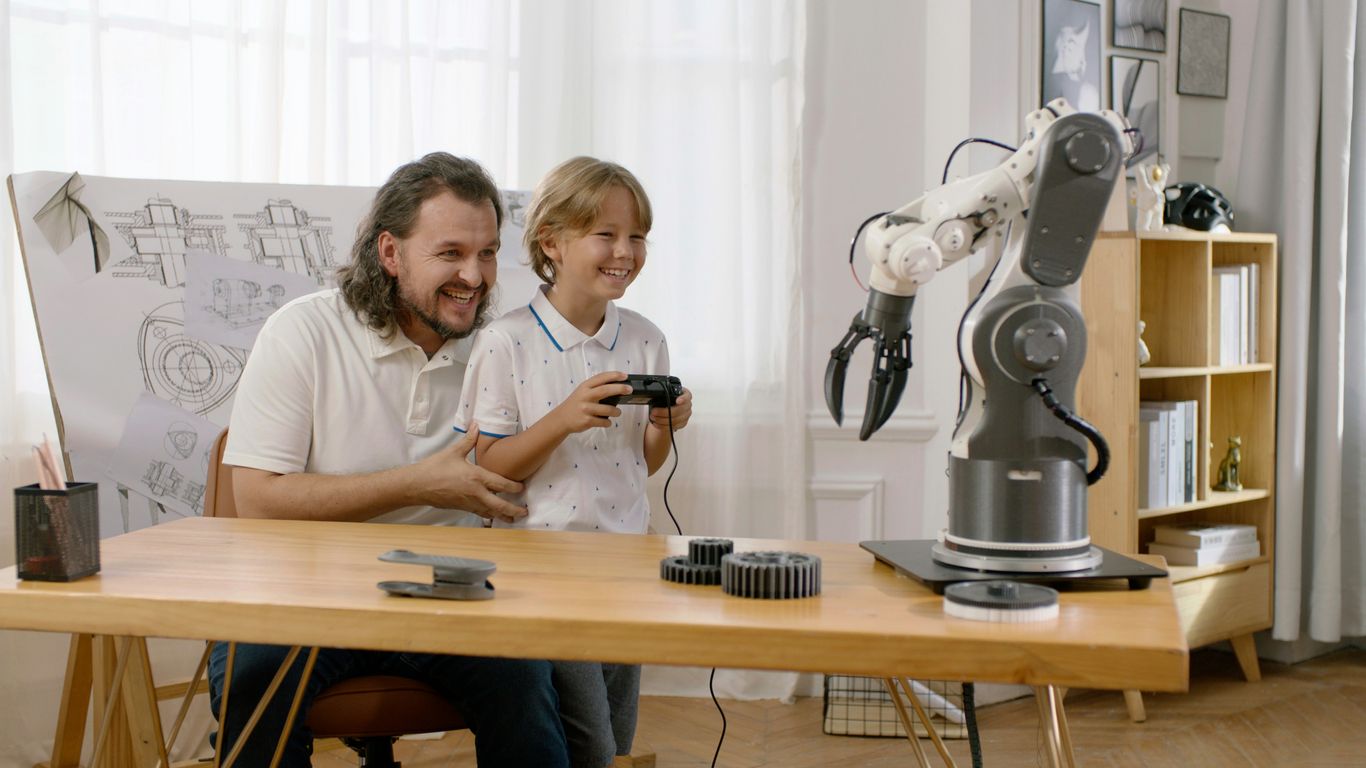
So, who exactly is this Unitree R1 robot built for? It’s not really a toy for your living room, despite how cool it looks doing flips. Unitree seems to be aiming this machine at folks who want to tinker, learn, and build. The R1 is positioned as an accessible platform for advanced robotics.
Developers and Researchers
This is probably the biggest group Unitree has in mind. For research labs or university computer science departments, the R1 offers a chance to experiment with humanoid robotics without needing a massive budget. Think about it: instead of spending tens or even hundreds of thousands of dollars on a robot, you can get something capable for around $5,900. This lower price point means more teams can get their hands on a physical robot to test out AI algorithms, new movement patterns, or interaction systems. It’s a way to get real-world data and build practical skills.
Educational Institutions
Schools and colleges can use the R1 as a teaching tool. Imagine a robotics class where students aren’t just coding on a screen but are actually programming a walking, talking robot. The "EDU" version, with its more advanced hands and processing power, is specifically geared towards this. It’s a fantastic way to get students excited about STEM fields. They can learn about:
- Kinematics and Dynamics: How the robot moves and balances.
- Artificial Intelligence: Developing its ability to understand and respond.
- Human-Robot Interaction: Creating ways for people to work with robots.
- Software Development: Building applications for the robot.
Enthusiasts and Small Businesses
Beyond the academic and research world, there’s a place for the R1 with tech enthusiasts who have the budget and the curiosity. If you’re someone who loves cutting-edge technology and wants to own a piece of the future, the R1 is a much more attainable option than other humanoids. For small businesses, it could be used for simple tasks. Maybe a shop wants a robot to greet customers, or a company wants to use it for demonstrations at trade shows. It’s not going to be doing complex assembly line work, but for basic, attention-grabbing tasks, it could be a unique addition.
Unitree R1: Performance and Limitations
When we look at the Unitree R1, it’s easy to get excited by what it can do. The videos showing it doing flips and running downhill are pretty wild, right? It really shows off how much work went into making this robot move well. This agility is definitely a standout feature, especially considering the price point. It’s not just about looking cool, though; this level of movement suggests a sophisticated control system and robust hardware.
Impressive Demonstrations vs. Practicality
While the R1 can perform some amazing feats, it’s important to remember what it’s actually designed for. The flashy moves are great for showing off its capabilities, but they don’t always translate directly to everyday usefulness. The base model, for instance, doesn’t come with hands that can do much more than grasp. This means tasks like picking up small objects or performing delicate work are out of reach for now. It’s more of a platform for movement and interaction than a fully functional helper robot for complex chores.
Battery Life Considerations
Like many advanced robots, the R1 has to deal with power limitations. You get about an hour of active use on a single charge from its lithium battery. For researchers or developers working on short, focused tasks, this might be perfectly fine. However, if you’re hoping to have it running around for an entire afternoon, you’ll likely need to plan for frequent recharges or have spare batteries ready. This is a common trade-off in robotics: more power and movement usually mean more energy consumption.
Understanding Current Use Cases
So, what can you realistically do with the R1 right now? It shines as a tool for:
- Learning and Experimentation: Developers and students can use it to test algorithms for movement, AI interaction, and robot control.
- Demonstrations: Its impressive physical abilities make it a great showpiece for educational events or tech expos.
- Basic Interaction: The multimodal AI allows for voice and visual communication, useful for simple Q&A or guided tasks.
It’s not quite ready to replace a human for household chores or complex industrial jobs. Think of it as a highly capable, mobile AI system that’s still evolving.
Acquiring The Unitree R1 Robot
So, you’ve seen the Unitree R1 in action and you’re thinking, ‘I want one!’ It’s understandable. This robot really shakes things up in the humanoid world, mostly because of its price tag. But how do you actually get your hands on one, and what should you know before you click ‘buy’? Let’s break it down.
Pre-Sale Information and Availability
Right now, the Unitree R1 is available for pre-sale. This means you’re getting in early, which is pretty cool. Unitree Robotics is known for making advanced robots, but they’re really trying to make this one accessible. The starting price is around $5,900, which is a huge deal compared to other humanoids out there. For instance, their own G1 model is $16,000, and the H1 is a whopping $90,000. Even other companies’ robots are often in the tens of thousands.
It’s important to remember that this is a pre-sale. Unitree is likely using this period to gauge demand and finalize production plans. You’ll want to keep an eye on their official website for the most up-to-date information on when pre-orders will officially open or close, and what the estimated shipping dates are. They might also have different tiers or versions available, like the "EDU" version which comes with more advanced hands and processing power, naturally at a higher cost.
Understanding Warnings and Disclaimers
Before you get too excited, there are a few things to be aware of. The R1, especially in its base configuration, isn’t quite ready to do your laundry or cook dinner. The standard model doesn’t come with hands that can do complex tasks; they’re more like fixed fists. So, while it can do amazing flips and moves, don’t expect it to pick up a delicate teacup just yet.
Also, the battery life is about an hour of active use. That’s pretty standard for many advanced robots, but it means you’ll be doing a lot of charging if you plan on extended use. It’s also not a toy. This is a sophisticated piece of technology, meant for developers, researchers, and educational institutions. If you’re an enthusiast, be prepared to handle it with care and supervision, especially if kids are around.
Where to Find More Details
Your best bet for all the official details is Unitree Robotics’ website. That’s where you’ll find the most accurate specs, pricing for different configurations, and information on how to place your pre-order. They often release videos and blog posts detailing new features or updates, so checking back regularly is a good idea.
- Official Unitree Robotics Website: The primary source for all product information, pre-sale announcements, and purchasing details.
- Unitree’s Social Media Channels: Follow them on platforms like YouTube, Twitter (X), or LinkedIn for quick updates and announcements.
- Robotics Forums and Communities: Engage with other enthusiasts and developers online. You can often find discussions about pre-orders, early user experiences, and tips.
Remember, this is a rapidly developing field. Staying informed through official channels will help you make the best decision about acquiring the Unitree R1.
Wrapping Up the Unitree R1
So, what’s the final word on the Unitree R1? It really looks like Unitree is trying to bring humanoid robots to more people, and honestly, that’s pretty cool. For the price, you’re getting a robot that can move in ways you usually only see on much more expensive machines. It’s definitely not going to be doing your laundry anytime soon, especially the basic model without hands, and the battery life is pretty short. But for developers, students, or just tech fans who want to tinker with advanced robotics without taking out a second mortgage, the R1 seems like a really interesting option. It’s a step towards making this kind of tech less of a distant dream and more of a hands-on reality.