These days, using your phone’s speaker just doesn’t cut it when you need clear sound for calls or meetings. If you’ve ever tried to talk with a group using your phone, you know it can get messy fast—people can’t hear well, and background noise takes over. That’s where a dedicated speakerphone comes in. We tried out a bunch of them to see which ones actually make a difference when it comes to clear calls, easy setup, and handling noisy rooms. If you’re looking for the best loud speaker phone for 2026, here’s a list of our top picks that stood out for all the right reasons.
Key Takeaways
- Dedicated speakerphones give you better sound than your phone’s built-in speaker, especially for group calls.
- Models like the Jabra Speak2 55 and 75, Beyerdynamic Space Max, and AnkerWork S600 lead the pack for 2026.
- Some options are compact and travel-friendly, while others work better for bigger rooms or more people.
- Bluetooth and wired connections are common, so you can pick what works best for your setup.
- Prices vary a lot, but even budget picks like the EMeet Luna Plus can be a big step up from your phone.
1. Jabra Speak2 55

So, Jabra’s Speak2 55. This is kind of the middle-ground option in their new lineup, sitting between the more basic Speak2 40 and the fancy Speak2 75. It’s not a huge jump in price from the 40, and honestly, it feels like a solid upgrade without breaking the bank.
What I like right off the bat is the design. Jabra really cleaned things up; it looks sleek and modern, not like some clunky old office gadget. It’s pretty compact too, weighing in at just under 10 ounces, and it even comes with a nice little felt case. Makes it easy to toss in your bag if you’re moving between home and the office, or just need it for a meeting somewhere else. It connects via USB-C, and thankfully, they include a USB-A adapter, so you’re covered whether you have a newer laptop or an older one. It also has Bluetooth 5.1, which is good, but heads up, it doesn’t come with a USB Bluetooth dongle. You can still connect wirelessly, but if you need that super stable connection to your computer, you might need to get a separate dongle.
When it comes to calls, this thing is pretty decent. It’s got four microphones that do a good job of picking up your voice and cutting out background noise. People I talked to said I sounded clear, which is always the main goal, right? The sound coming out of the speaker is better than some other options I’ve tried, even some that cost a bit more. It’s not going to blow you away for listening to music – don’t expect booming bass – but for calls and general audio, it’s perfectly acceptable. It’s rated for about 12 hours of battery life, which should get you through a full workday, maybe a bit more. If you need something reliable for everyday calls and don’t need all the bells and whistles of the higher-end models, the Speak2 55 is definitely worth a look. You can find out more about its features on the Jabra website.
2. Jabra Speak2 75
The Jabra Speak2 75 really tries to be the gold standard for speakerphones, and honestly, it delivers in quite a few areas. It’s bigger than the Speak2 55—definitely something you’ll notice if you pick them both up side by side—but it’s still pretty easy to toss into a bag. The build feels sturdy, and it comes with a soft carrying case (which I always appreciate, since I tend to throw stuff into my backpack with zero care). The whole package is plug-and-play, thanks to an integrated USB-C cable and a USB-A adapter, so no annoying setup routines.
Battery life is where the Speak2 75 really sets itself apart—you’re looking at up to 32 hours in Bluetooth mode, which is nearly triple what you get from smaller models. That means you could realistically get through a marathon day of back-to-back meetings without scrambling for a charger.
Here’s a quick look at some of the specs:
| Feature | Jabra Speak2 75 |
|---|---|
| Weight | 16.44 oz (466g) |
| Speaker Size | 65mm driver |
| Battery Life | Up to 32 hours (Bluetooth) |
| Microphones | Four, with noise reduction |
| Connectivity | USB-C, USB-A, Bluetooth (+dongle) |
| Water Resistance | IP64 (dust/splash proof) |
| Room Size Recommendation | Up to 14.76ft x 14.76ft |
Some real-world things that make the Speak2 75 stand out:
- Sound comes through louder and fuller—great for voices, although music is still just okay. There’s actually some bass, which is rare for this kind of device.
- The noise reduction is reliable, especially if you work in a shared space or have kids/pets who love to interrupt.
- A little indicator lights up to let you know how well the four built-in mics are picking up your voice. It’s handy if you’re the type who leans too far from the mic.
- Included Bluetooth dongle means you don’t have to stress about spotty wireless connections with laptops.
On the downside, the price is not for the faint of heart. If you only need a speaker for occasional calls, this might be more machine than you really need. But if top-notch clarity, ease of use, and a battery that keeps going are high on your list, it’s tough to beat the Speak2 75 right now.
3. Beyerdynamic Space Max
Alright, let’s talk about the Beyerdynamic Space Max. This thing is a bit of a beast, honestly, and might be more than some folks need, but if you’re looking for top-tier sound in a speakerphone, it’s definitely worth a look. It really shines when it comes to listening to music, offering more bass than most other speakerphones out there. It’s like having a decent little speaker for your tunes when you’re not on a call.
Setup is pretty straightforward. You can connect it via USB-C or Bluetooth, and it even comes with an adapter if you’re still rocking USB-A ports. It’s got four microphones with beamforming tech, which means it’s pretty good at picking up voices clearly, even in a moderately sized room. People on the other end of my calls said I sounded clear, and they couldn’t even tell I was using a speakerphone. That’s a big win.
Here’s a quick rundown of what it offers:
- Microphones: 4 MEMS mics with beamforming
- Connectivity: USB-C, Bluetooth
- Water Resistance: IP64 (splash and dust resistant)
- Battery Life: Up to 20 hours (a 10-minute charge gives you 2 hours)
- Extra Feature: USB-C out port for charging other devices
It feels really solid and looks pretty good too, with touch controls on top. If you’re in a small business setting or just want a really good personal speakerphone that can handle a few people, the Space Max is a strong contender. It’s a bit pricier than some others, but the sound quality and build make it feel like a solid investment for clearer conference calls.
4. AnkerWork S600
The AnkerWork S600 is a bit of a hybrid, trying to be more than just a speakerphone. It’s got this built-in magnetic stand that’s pretty neat, especially if you’re using your phone for video calls or just want to prop it up. It tilts up and down, giving you a good angle whether your phone is vertical or horizontal. Plus, it doubles as a wireless charger, which is a nice touch if your phone supports Qi2 charging.
When it comes to calls, the S600 uses four microphones. People on the other end generally said my voice came through clearly, and it didn’t sound too processed or robotic. It did a decent job cutting out background noise, too.
Here’s a quick look at what it offers:
- Four microphones for picking up your voice.
- Magnetic phone stand with adjustable tilt.
- Qi2 wireless charging up to 15W.
- Bluetooth and USB-C connectivity.
- Companion app for voiceprint customization.
It’s a 5-watt speaker, so don’t expect booming sound for music, but it’s okay for casual listening. It’s definitely better than your laptop’s built-in speakers. Battery life is rated at around 16 hours, which should get you through a full workday and then some. It’s not the cheapest option out there, but the added charging and stand features make it stand out.
5. EMeet Luna Plus
The EMeet Luna Plus is a solid contender if you’re looking for a speakerphone that balances features with a reasonable price point. It’s an upgrade from their earlier Luna model, aiming to give you good performance without breaking the bank. You can often find it for around $80, which is a pretty sweet deal.
This speakerphone offers a good mix of wired and wireless connectivity options. You can connect it via USB directly to your computer, or use Bluetooth. It even comes with a USB dongle, which is handy for a more stable Bluetooth connection on your PC. It’s not quite as fancy-looking as some other options, and it doesn’t include a carrying case like some competitors, but those are minor points for many users.
When it comes to sound, the Luna Plus is loud and clear, with decent noise reduction. It’s built for calls, so don’t expect it to be amazing for listening to music – it lacks bass. But for conference calls with up to 10 people, it does a good job. If you need to cover a bigger space, you can even link multiple EMeet speakerphones together, which is a neat trick.
Here’s a quick look at its specs:
- Microphones: 8
- Connectivity: USB-C, AUX, Bluetooth
- Battery Life: Up to 10 hours talk time
- Supported Room Size: Up to 10 people
While its microphone performance is good, it might not reach the absolute clarity of some higher-end models like the Jabra Speak2 55. Still, for the money, the EMeet Luna Plus is a versatile and capable speakerphone that works well for many home office or small team needs. You can find more details on EMEET speakerphones if you’re curious.
6. Jabra Speak 710
Even though Jabra has newer models out, the Speak 710 is still a solid choice for a speakerphone, especially if you can find it at a good price. It was their flagship for a while, and it holds up pretty well. It offers a nice balance of portability and sound quality that many people look for.
This speakerphone connects easily, either with a USB cable or wirelessly through Bluetooth. It’s designed for smaller to medium-sized rooms, handling up to about four people comfortably. The microphone picks up sound from all directions, so everyone around the table should be heard clearly. Battery life is decent, giving you around 15 hours of talk time, which is usually enough for a full workday or two.
One of the things people liked about the Speak 710 is its sound. While it’s made for calls, it can also play music with a bit more fullness and bass than some other options out there. It’s not going to replace a dedicated music speaker, but it’s better than just using your laptop speakers. Customers often mention the good sound quality and reliable connection as reasons they stick with this model, even with newer versions available.
Key Features:
- Wired and wireless connectivity options
- Portable design with integrated cable management
- Decent battery life for extended use
- Good sound for both calls and casual music listening
While the newer Speak2 models are technically better, the Speak 710 remains a capable device. If you’re looking for a reliable speakerphone without breaking the bank, it’s definitely worth considering. You can often find it for a significant discount compared to its original price, making it a great value. It’s a good example of how older tech can still be very useful for conference calls.
7. Poly Midrange Speakerphone
Poly makes some solid audio gear, and their midrange speakerphone, often found under the Sync line, is no exception. It’s a good option if you need something reliable for your home office or small team meetings without breaking the bank.
This speakerphone really shines when it comes to clear call quality and decent noise reduction. You can usually expect it to handle calls with a few people in the room without much fuss. It’s not going to be the loudest thing on the market, but for most everyday conversations, it gets the job done.
Here’s a quick look at what you might find in a typical Poly midrange model:
- Connectivity: Usually offers both USB and Bluetooth, so you can connect to your computer or phone easily. Some models might come with a USB dongle for a more stable connection.
- Microphones: Typically features a few microphones (often 3) designed to pick up your voice clearly while trying to filter out background chatter.
- Portability: Many are designed to be fairly compact, making them easy to move between rooms or even take with you if you travel.
- Extra Features: You might find things like a programmable button for quick actions or even a USB-out port to charge your phone in a pinch. Battery life is usually pretty good, often lasting a full workday.
While it might not have all the bells and whistles of the high-end models, a Poly midrange speakerphone offers a good balance of performance and price. It’s a dependable choice for clearer conference calls.
8. Anker Midrange Speakerphone
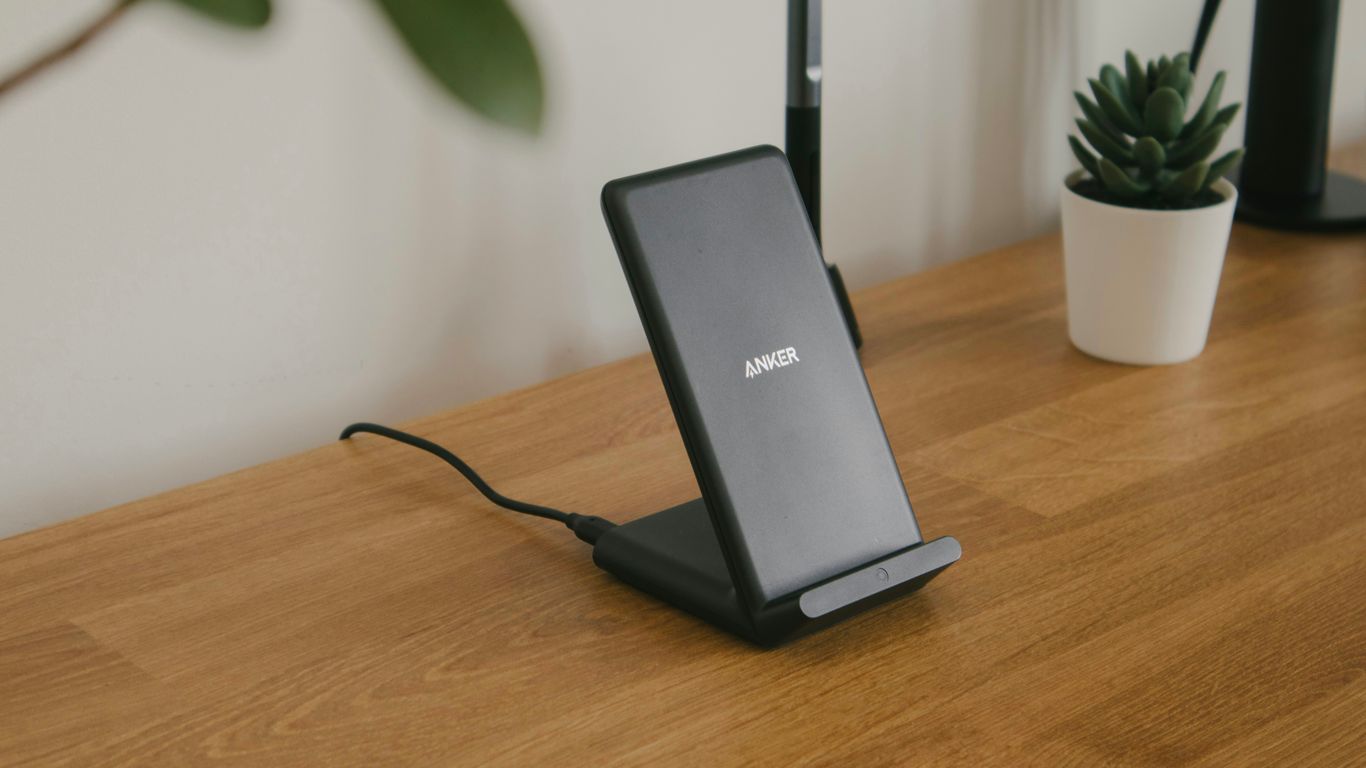
When you’re looking for a solid speakerphone that doesn’t break the bank, Anker often has some good options. The Anker PowerConf, for instance, is a pretty decent choice if you need something reliable for conference calls. It packs six microphones, which is quite a bit, and they’re set up in a 360-degree arrangement. This means it should pick up voices from pretty much anywhere in a medium-sized room, handling up to eight people without much fuss.
Connectivity is straightforward. You can plug it into your computer using USB-C if you prefer a wired connection, or you can just pair it up with your phone or tablet via Bluetooth. It’s nice that it can also act as a power bank to charge your other devices, which is a handy bonus. The battery life is rated at a solid 24 hours, so you’re not going to run out of juice halfway through a long day of meetings. Sound quality is generally good, with decent clarity and noise reduction, though it might not sound quite as full as some of the pricier Jabra models. It’s definitely a big step up from just using your phone’s built-in speaker, though. It’s a good all-around performer for everyday conference calls.
Key Features:
- Six microphones for 360-degree voice pickup
- Bluetooth and USB-C connectivity
- Up to 24 hours of battery life
- Can charge other devices
- Includes a carrying case
Wrapping It Up
So, there you have it. Picking the right speakerphone can really make a difference, whether you’re trying to nail a work meeting from your home office or just want better sound for calls with friends. We looked at a bunch of them, checking how clear the sound was, how well they connected, and if they could handle background noise. Hopefully, this guide helps you find one that fits your needs and budget. It’s not just about having a loud speaker; it’s about making sure everyone can hear and be heard clearly. Happy calling!
Frequently Asked Questions
Why should I use a speakerphone instead of my phone’s speaker?
Using a dedicated speakerphone can really improve the sound quality for everyone on a call. It’s especially helpful when you have multiple people in the room, making sure everyone can hear and be heard clearly, unlike a regular phone speaker which can sound tinny or muffled.
What’s the most important thing to look for in a speakerphone?
It really depends on what you need! But generally, you’ll want to consider how well it picks up voices (microphone quality), how clear the sound is when others speak, how easily it connects (like with Bluetooth or USB), and how well it handles background noise. Battery life is also a big plus if you plan to use it on the go.
Are expensive speakerphones always better?
Not necessarily! While pricier models often have more advanced features and better sound, there are many great speakerphones available in the mid-range ($80-$150) that offer excellent performance. Even budget options under $50 can be a significant upgrade from your phone’s built-in speaker.
Can I use a speakerphone for music too?
Absolutely! Many speakerphones sound good enough to enjoy music. Some premium models, like the Beyerdynamic Space Max, are even designed to offer a richer music listening experience with more bass than typical speakerphones.
What does ‘noise reduction’ mean for a speakerphone?
Noise reduction means the speakerphone has technology to cut down on background sounds like keyboard typing, air conditioning, or street noise. This helps make sure the person speaking comes through clearly without annoying distractions for the listener.
Do I need a speakerphone if I only take calls by myself?
While not essential, a personal speakerphone can still be a good choice. They offer a more comfortable, hands-free experience compared to holding your phone, and the sound quality is usually better. Plus, many are compact and easy to move around if you ever need to join a group call.