
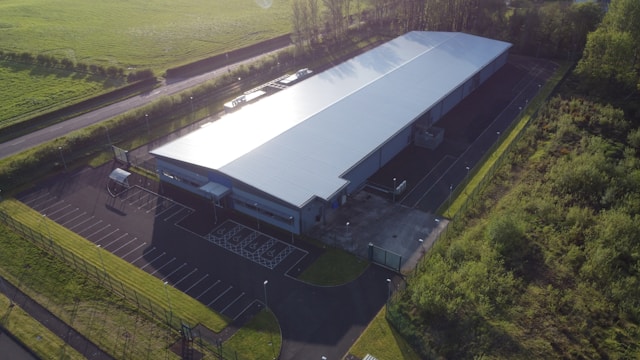
For years, data center developers have treated community resistance as a given. The assumption has been that no matter how essential digital infrastructure becomes, neighbors will always push back once a facility moves from abstract necessity to physical presence. But new data suggests that the familiar “not in my backyard” narrative is starting to fray.
A recent national survey from Airedale by Modine, points to a more nuanced reality: Americans are not categorically opposed to nearby data centers. Instead, the Airedale Data Center Community Acceptance Report shows they are pragmatic. Support hinges less on distance and more on whether a facility delivers visible benefits, minimizes disruption, and fits into the local environment. In other words, communities are not saying “no” to data centers—they are saying “do it right.”
Proximity Isn’t the Problem Many Assume
As demand for cloud services, AI workloads, and edge computing continues to accelerate, data centers are being built closer to where people live and work. That proximity has often been framed as the root cause of community concern. Yet the survey data challenges that premise.
When respondents were given a direct choice between a data center located about one mile from their home that provided faster, more reliable internet and local jobs, or a data center eight miles away that offered no such benefits, the closer facility won decisively. A clear majority preferred proximity with purpose over distance with no return. The finding suggests that resistance is not about physical closeness alone, but about perceived value.
This matters for the technology sector because it reframes community acceptance as a solvable design and deployment problem rather than an inevitable political battle. If benefits are tangible and clearly communicated, proximity becomes negotiable.
Economic Value Still Anchors Support
Among all the factors tested in the survey, economic contribution stood out as the strongest driver of support. Job creation generated the highest level of enthusiasm, followed closely by local tax benefits. These were not lukewarm responses. In many cases, they translated into strong support, indicating residents who would be inclined to advocate for projects rather than merely tolerate them.
For an industry sometimes criticized for being capital-intensive but labor-light, the message is clear. When data centers demonstrate that they will hire locally, contribute to municipal budgets, and strengthen regional infrastructure, public opinion shifts meaningfully. Community acceptance is about mitigating negatives and demonstrating shared upside.
Noise Concerns Are Real—but Highly Addressable
Noise has long been one of the most frequently cited concerns in debates over data center development, particularly around cooling systems. However, the survey reveals that the public perception of noise is far less severe than commonly assumed. Only a small fraction of respondents consider data centers to be extremely loud, on par with airports or highways. Most compare them to the moderate hum of everyday equipment, such as air conditioners.
What does influence opinion is not generalized fear of noise, but confidence that developers are making thoughtful equipment choices. A majority of respondents said quieter cooling technologies would ease their concerns, and many were receptive to specific mitigation measures like sound barriers or restricted operating hours.
For engineers and operators, this elevates cooling design from a behind-the-scenes efficiency decision to a visible component of community experience. Advances in quieter, more efficient cooling systems do more than improve PUE or WUE metrics. They also directly affect how nearby residents perceive a facility.
Data Centers as Everyday Infrastructure
Another striking insight from the survey is how people mentally connect data centers to daily life. When asked what they most associate with data centers, improved internet reliability topped the list. This association helps explain why communities are open to nearby facilities when benefits are clear. Data centers are increasingly understood as the backbone of modern connectivity.
This framing matters. Infrastructure that people see as enabling work, education, healthcare, and entertainment is judged differently from infrastructure that feels abstract or extractive. When developers make that connection explicit by linking facilities to better service quality, the conversation shifts from tolerance to utility.
Property Values: A Persistent Myth
One of the most enduring fears raised in community discussions is the idea that nearby data centers will depress property values. The survey data suggests this concern is overstated. A plurality of respondents expect no impact on property values at all, while a meaningful share even anticipate slight increases. Among those who do expect a decline, most foresee only modest effects.
This does not mean property concerns should be dismissed. Rather, it indicates that they may be less of a barrier than developers often assume. Transparent communication and evidence-based discussion can go a long way toward neutralizing this issue before it hardens into opposition.
Acceptance as an Engineering Challenge
Taken together, the findings point to a broader conclusion. Community acceptance is increasingly shaped by technical and design decisions. Economic integration, cooling technology, energy use, and visual fit are no longer peripheral considerations. They are part of the public interface of data centers.
For operators facing surging demand and tighter timelines, this represents both a constraint and an opportunity. Facilities that are engineered to minimize disruption and deliver measurable benefits can move more smoothly through approvals and build longer-term trust. Those that do not risk delays, resistance, and reputational drag.
From Resistance to Partnership
The blueprint emerging from the data is practical rather than ideological. Communities want data centers that contribute, operate quietly, and respect local context. They want proof, not platitudes. When those conditions are met, conditional acceptance often turns into active support.
As digital infrastructure becomes more deeply woven into everyday life, winning community trust will matter as much as uptime and efficiency. The shift from “NIMBY” to neighbor is not automatic, but the path is clearer than many in the industry may have believed.